The Salt of the Earth Myth Meaning & Symbolism
A myth of a king who, in his arrogance, defies the sea, and is transformed into the primal, preserving essence of salt by the gods.
The Tale of The Salt of the Earth
Hear now a tale not of glorious heroes, but of a king who forgot the taste of humility. In a land where the olive groves whispered to the mountains and the vineyards sloped down to kiss [the sea](/myths/the-sea “Myth from Greek culture.”/), there ruled a man named Hals. His kingdom was rich, his people prosperous, but his heart was a dry well, parched by a thirst that no earthly wine could quench: the thirst for absolute dominion.
He looked upon the wine-dark sea, that realm of [Poseidon](/myths/poseidon “Myth from Greek culture.”/), and saw not a divine mystery, but a challenge. “The land bows to me,” he declared to his court, his voice echoing in the marble halls. “Why should the sea remain wild and free? It, too, shall acknowledge my sovereignty.”
His advisors, pale as ghosts, warned of the god’s wrath. But Hals, his pride a fortress, would not listen. He commanded his finest architects to build a mighty wall, a bulwark of stone and mortar meant to hold back the very tides. For years, the sound of chisels was a constant insult to the shore. When [the great wall](/myths/the-great-wall “Myth from Chinese culture.”/) was finally complete, Hals stood before it, a tiny figure against his own arrogance. He held a grand feast upon the ramparts, pouring libations of the finest wine not to the gods, but into the dirt at his feet. “Let Poseidon hear my decree!” he shouted to the gathering clouds. “This sea is now a subject of my crown. Its waves shall kneel at this wall.”
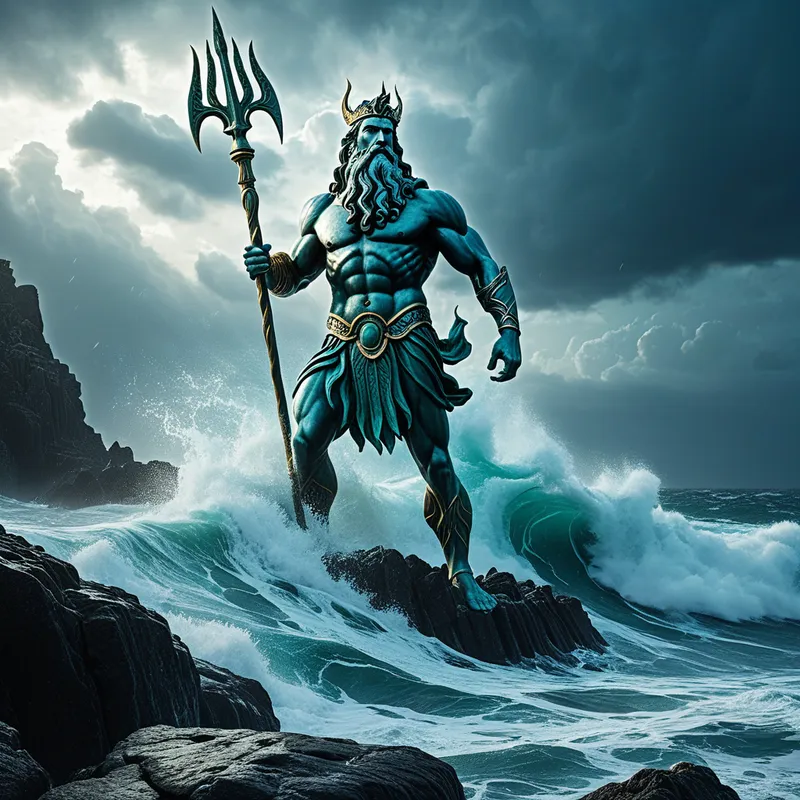
The air grew still. The cheerful cries of gulls ceased. Then, from the deep, came a sound like a mountain cracking. [The horizon](/myths/the-horizon “Myth from Various culture.”/) darkened, not with clouds, but with a wall of [water](/myths/water “Myth from Chinese culture.”/) taller than any tower. Upon its crest stood the Earth-Shaker himself, his beard foaming with fury, his eyes like submerged lightning. He did not speak with words, but with a gesture of his trident.
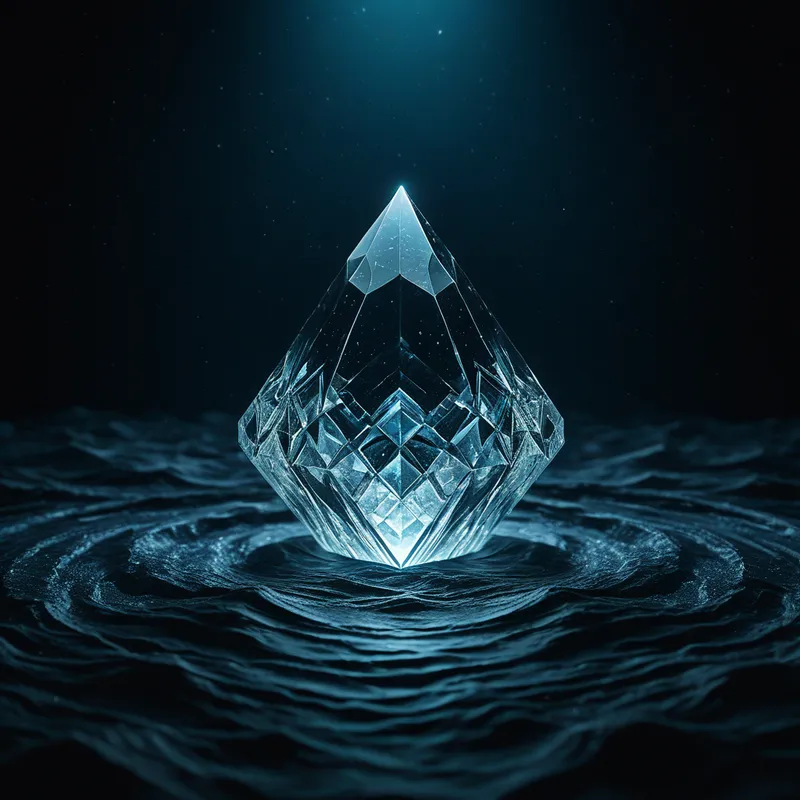
The wall, that monument to human folly, dissolved like sand before the tsunami. The wave did not crash; it consumed. It swept over the feasting tables, the terrified nobles, and finally, over King Hals himself. He did not drown. The sea, in its infinite, cruel wisdom, had a different sentence. As the water receded, it left him standing, but utterly changed. His skin, his robes, his very flesh had been transmuted. He was no longer a man of blood and bone, but a statue of pure, white salt—a bitter, preserving mineral drawn from the very element he sought to command.
The sun rose on a silent shore. Where a proud king had stood, a crystalline effigy remained, tasting of the sea and of endless, unshed tears. The people, when they dared approach, would sometimes break a tiny piece from his form to season their food. With each bite, they remembered: the gods do not tolerate the arrogance that seeks to chain the wild, [sacred heart](/myths/sacred-heart “Myth from Christian culture.”/) of [the world](/myths/the-world “Myth from Tarot culture.”/).

Cultural Origins & Context
The tale of the man turned to salt is a powerful myth that resonates across cultures, most famously in the biblical story of [Lot’s wife](/myths/lots-wife “Myth from Biblical culture.”/). Within the broader tapestry of Greek thought, however, such a story would function as a potent parable. While no singular “Greek” myth titled “The [Salt of the Earth](/myths/salt-of-the-earth “Myth from Biblical culture.”/)” exists in canonical texts like Hesiod or Ovid, the archetype is deeply consistent with Hellenic worldview.
It is the kind of story told not by epic poets at royal courts, but by elders in fishing villages and farmers in remote hills. It is a folk-warning born from a culture intimately tied to the capricious Aegean. For the Greeks, the sea was both provider and destroyer, a highway for commerce and a grave for the unwary. To defy it was not just foolish; it was hubris of the highest order, an insult to the natural and divine order. This story served as a societal anchor, teaching the critical balance between human ambition and pious respect for forces greater than oneself. Salt itself, a precious commodity for preservation and life, becomes the perfect symbol of this lesson—a vital essence born from a deadly transgression.
Symbolic Architecture
The myth’s power lies in its stark, alchemical [symbolism](/symbols/symbolism “Symbol: The use of symbols to represent ideas or qualities, often conveying deeper meanings beyond literal interpretation. In dreams, it’s the language of the unconscious.”/). The [king](/symbols/king “Symbol: A symbol of ultimate authority, leadership, and societal order, often representing the dreamer’s inner power or external control figures.”/) represents the uninitiated ego, the part of the [psyche](/myths/psyche “Myth from Greek culture.”/) that believes it is the sole ruler of its internal and external world. His [wall](/symbols/wall “Symbol: Walls in dreams often symbolize boundaries, protection, or obstacles in one’s life, reflecting the dreamer’s feelings of confinement or security.”/) is the rigid [defense](/symbols/defense “Symbol: A protective mechanism or barrier against perceived threats, representing boundaries, security, and resistance to external or internal challenges.”/), the intellectual arrogance that seeks to compartmentalize and control the deep, unconscious, and emotional forces (the sea) that truly govern [life](/symbols/life “Symbol: The symbol of ‘Life’ represents a journey of growth, interconnectedness, and existential meaning, encompassing both the joys and challenges that define human experience.”/).
The sea does not argue; it simply demonstrates its sovereignty. The unconscious does not debate the ego; it overwhelms it with a tide of symptom, dream, and emotion.
The transformation into [salt](/symbols/salt “Symbol: Salt represents purification, preservation, and the essence of life. It is often tied to the balance of emotions and spiritual cleansing.”/) is the profound core. Salt preserves; it prevents decay and enhances flavor. Psychologically, the king’s catastrophic failure is preserved, crystallized into a permanent [lesson](/symbols/lesson “Symbol: A lesson in a dream signifies a learning opportunity, often reflecting personal growth or unresolved issues requiring attention.”/). He becomes the lesson. His arrogant, fluid [identity](/symbols/identity “Symbol: Identity represents the sense of self, encompassing personal beliefs, cultural background, and social roles.”/) is solidified into a mineral [truth](/symbols/truth “Symbol: Truth represents authenticity, honesty, and the quest for knowledge beyond mere appearances.”/). He is no longer a person, but a principle—the “[salt](/symbols/salt “Symbol: Salt represents purification, preservation, and the essence of life. It is often tied to the balance of emotions and spiritual cleansing.”/) of the [earth](/symbols/earth “Symbol: The symbol of Earth often represents grounding, stability, and the physical realm, embodying a connection to nature and the innate support it provides.”/)” in its most literal and tragic sense: the essential, foundational wisdom that can only be born from the utter [dissolution](/symbols/dissolution “Symbol: The process of breaking down, dispersing, or losing form, often representing transformation, release, or the end of a state of being.”/) of pride. He becomes a [monument](/symbols/monument “Symbol: A structure built to commemorate a person, event, or idea, often representing legacy, memory, and cultural identity.”/) to the cost of severing the [connection](/symbols/connection “Symbol: Connection symbolizes relationships, communication, and bonds among individuals.”/) between the conscious mind (the land) and the unconscious [depth](/symbols/depth “Symbol: Represents profound layers of consciousness, hidden truths, or the unknown aspects of existence, often symbolizing introspection and existential exploration.”/) (the sea).
The Dreamer’s Resonance
When this myth stirs in the modern soul, it may surface in dreams of profound, irreversible change. One might dream of standing before a vast, impending wave, feeling not fear, but a strange, defiant stillness—a somatic memory of [the ego](/myths/the-ego “Myth from Jungian culture.”/)’s last stand. The dreamer may find themselves turning to stone, glass, or crystal, feeling their body become heavy, immobile, and strangely lucid.
This is the psyche processing a “salting” event in waking life: a humiliation, a devastating failure, or a truth so undeniable it shatters one’s self-concept. The dream is not merely replaying trauma; it is performing the alchemy. The feeling of crystalline transformation is the somatic signature of a core identity being re-structured from a fluid, ego-centric narrative into a harder, more enduring truth. The dreamer is experiencing the death of an old self-illusion and the simultaneous, painful birth of a more authentic, if more burdensome, awareness. The salt statue in the dream is the new, sober self that remains after the storm of emotion has passed.

Alchemical Translation
The individuation process, the journey toward psychic wholeness, is mirrored perfectly in this harsh myth. [The first stage](/myths/the-first-stage “Myth from Alchemical culture.”/) is the ego’s inflation—the “kingdom” of the [persona](/myths/persona “Myth from Greek culture.”/) seems secure, but it is built on the repression of the deep, instinctual self (Poseidon). The building of the wall represents a life spent fortifying this repression through willpower, intellectualization, or rigid control.
The inevitable crisis is the god’s response: the unconscious rises up in a tidal wave of depression, anxiety, relationship breakdown, or creative block. This is not a punishment, but a brutal act of rebalancing. The old ego-structure is annihilated.
The goal is not to avoid the wave, but to be transformed by it. Individuation is the process of learning to become salt—to have one’s temporary, arrogant form dissolved so that only the essential, preserving wisdom remains.
The final, silent statue of salt is the symbol of the Self. It is no longer the blustering king (the ego), but a crystallized integration of the conflict. The salt is the awareness that remains when the storm between conscious and unconscious subsides. It is bitter, it is essential, and it preserves the soul from the decay of further illusion. To become “the salt of [the earth](/myths/the-earth “Myth from Hindu culture.”/)” is the alchemical outcome: to be grounded, real, seasoned by suffering, and indispensable to the flavor of your own authentic life.
Associated Symbols
Explore related symbols from the CaleaDream lexicon: