The Runestones Myth Meaning & Symbolism
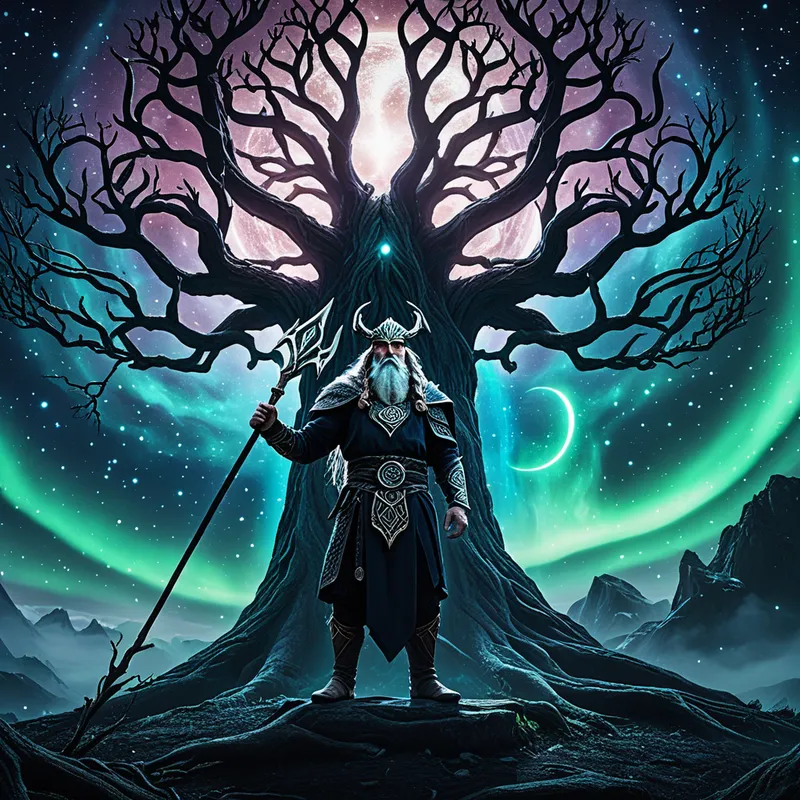
Odin hangs himself on the World Tree to gain the secret of the runes, a primal sacrifice that births language, magic, and the power to shape reality.
The Tale of The Runestones
Listen, and hear the price of knowing.
In the time before time was counted, when the Yggdrasil was young and its roots drank from wells of memory and mist, there was a hunger that no feast could sate. It lived in the single, burning eye of Odin, the Allfather. He had drunk from Mímir’s Well and paid an eye for a draught of foresight. Yet the deep places of the world—the whispers in the stone, the song in the sap, the secret name of fate itself—remained locked. They were held in a silence older than the gods, a pattern not yet spoken. This was the mystery of the runes.
Driven by a yearning that was both a king’s duty and a madman’s obsession, Odin walked to the heart of all things. He stood before the Great Tree, its bark scarred by dragon’s teeth and eagle’s claw, its branches holding the nine worlds in their embrace. No counsel from the gods, no threat or bargain, could pry the secret loose. Only a offering of a different order would suffice. An offering of the self.
With a resolve that stilled the winds, Odin took his own spear, Gungnir, the oath-breaker, and he turned it against himself. He pierced his side, letting the life of a god soak the sacred roots. Then, with a cry that was neither of pain nor triumph but of pure, raw will, he hanged himself from a towering limb of the World Tree. He was a sacrifice to himself.
For nine nights and nine days, a span that mirrors the gestation of all things, the Lord of the Slain hung between the worlds. No food touched his lips, no water cooled his throat. The chill of Hel crept into his bones; the eagle’s scream from the highest branch tore at his mind. He stared into the abyss of Ginnungagap with his one eye, and the abyss stared back. He died to his old knowing.
And in the deepest dark of the ninth night, as his godhood unraveled and his consciousness frayed at the edges of dissolution, he saw. Below him, in the pooling of his own blood and shadow, shapes began to form. Not pictures, but principles. Not letters, but laws. Angular, stark, and potent, they swam up from the roots of Yggdrasil—Fehu, Uruz, Thurisaz—each one a capsule of cosmic force, a key to a lock in the fabric of reality. With a final, gasping reach of his spirit, he grasped them. He knew them.
The runes screamed their names into his soul, and he fell from the tree, reborn. The wisdom was not given; it was taken, at the ultimate cost. And with it, Odin gained the power to carve destiny, to heal, to bind, to blast, and to see the threads of wyrd woven into the tapestry of all that is, was, and will be.
Cultural Origins & Context
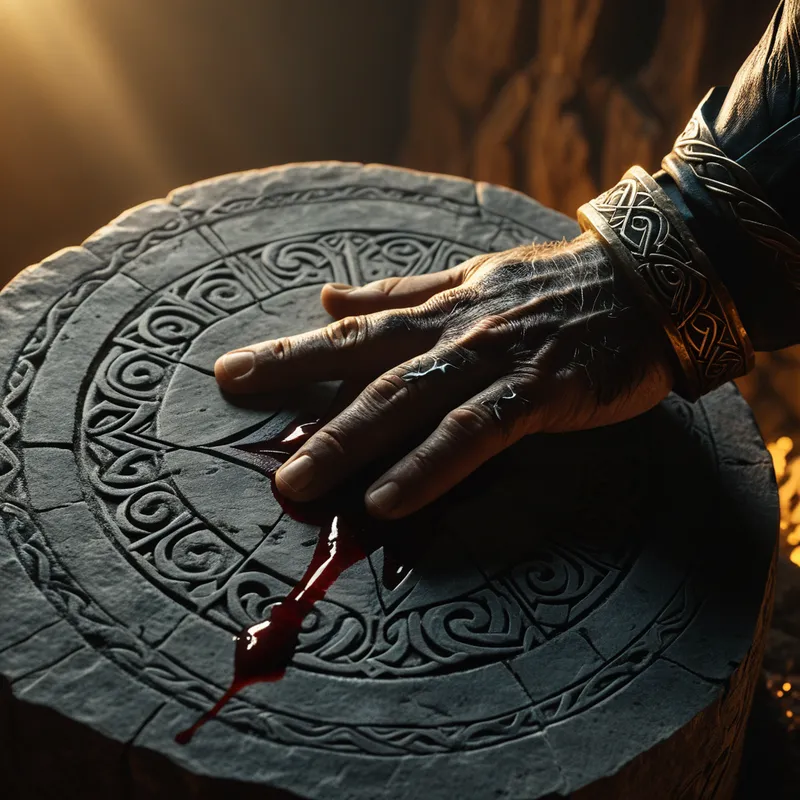
The myth of Odin and the runes is preserved primarily in the Old Norse poem Hávamál (“The Sayings of the High One”), a collection of wisdom poetry attributed to Odin himself, found within the Poetic Edda. This was not a story for the marketplace or the mead-hall’s lighter entertainments. It was esoteric knowledge, passed down by skalds (poets) and practitioners of seidr (magic), often in contexts of initiation or deep learning.
Its societal function was multifaceted. On one level, it was an etiological myth, explaining the divine origin of the runic alphabet (Futhark), which was used for inscriptions, memorials, and magic. More profoundly, it established the paradigm for accessing hidden knowledge: not through casual study, but through ordeal, sacrifice, and a voluntary descent into the unknown. It framed wisdom as something perilous, hard-won, and transformative, aligning it with the core Norse values of courage and perseverance even in the face of certain suffering. The myth served as a spiritual template for the rune-master, the poet, and the seeker, reminding them that true power demands a price paid in one’s own substance.
Symbolic Architecture
At its heart, this is not a myth about acquiring information, but about undergoing a fundamental metamorphosis of consciousness. Odin’s act is the ultimate symbolic death and rebirth.
The rune is not a letter to be read, but a seed of cosmic law to be ingested. To know it, you must first provide the fertile darkness of your own unraveling.
The Yggdrasil represents the axis of reality, the structure of the psyche itself, connecting the conscious crown (Asgard) with the unconscious depths (Hel, Urðarbrunnr). Hanging upon it is the act of ego-suspension—the conscious self willingly entering a liminal, tortured state of non-identity to commune with the foundational patterns of existence. The spear, Gungnir, symbolizes focused will turned inward, the instrument of self-penetration that breaks open the shell of ordinary perception. The nine nights signify a full cycle of incubation, the necessary period of psychic gestation in the womb of the unconscious before new consciousness can be born.
The runes that emerge are the archetypal forms of the collective unconscious, the primal code of reality. Odin does not invent them; he discovers them, implying they are eternal, pre-existing structures. His sacrifice grants him the ability to work with these structures—to arrange them, to invoke their power. This is the birth of true creativity and magical will: the ability to consciously participate in shaping reality once one has submitted to its deepest, most ruthless laws.
The Dreamer’s Resonance
When this myth stirs in the modern dreamer, it often manifests as dreams of intense ordeal, suspension, or piercing self-confrontation. You may dream of being pinned, trapped, or hanging in a void. You may feel a sharp, specific pain—a wounding—that feels strangely necessary. The somatic experience is one of profound tension, a crucible state.
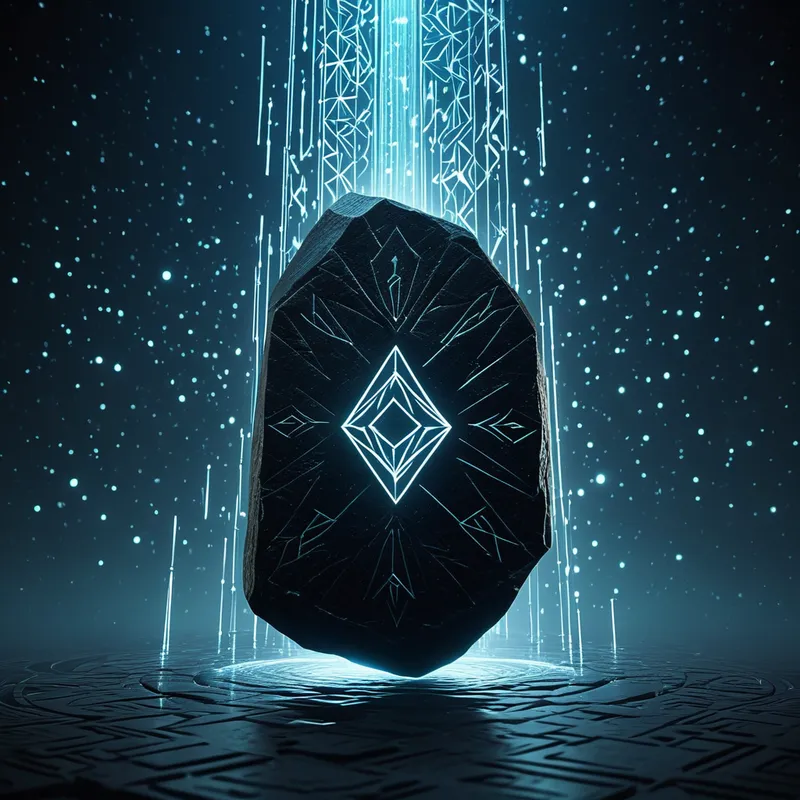
Psychologically, this signals a point of irreversible psychic transition. The old “known self,” with its comfortable beliefs and identities, is being sacrificed. The dreamer is suspended in the liminal space between a death and a rebirth that has not yet occurred. There is no guarantee of success, only the raw experience of the ordeal. This is the psyche’s enactment of its own rune-seeking. The “runestones” in such dreams might appear as incomprehensible glyphs on walls, as painful tattoos being carved into the skin, or as heavy stones the dreamer must lift from their own chest. The process is one of excavating and integrating foundational, perhaps painful, truths about one’s own nature and destiny. The hunger Odin felt is present as a deep, insatiable yearning for meaning that no surface answer can satisfy.
Alchemical Translation
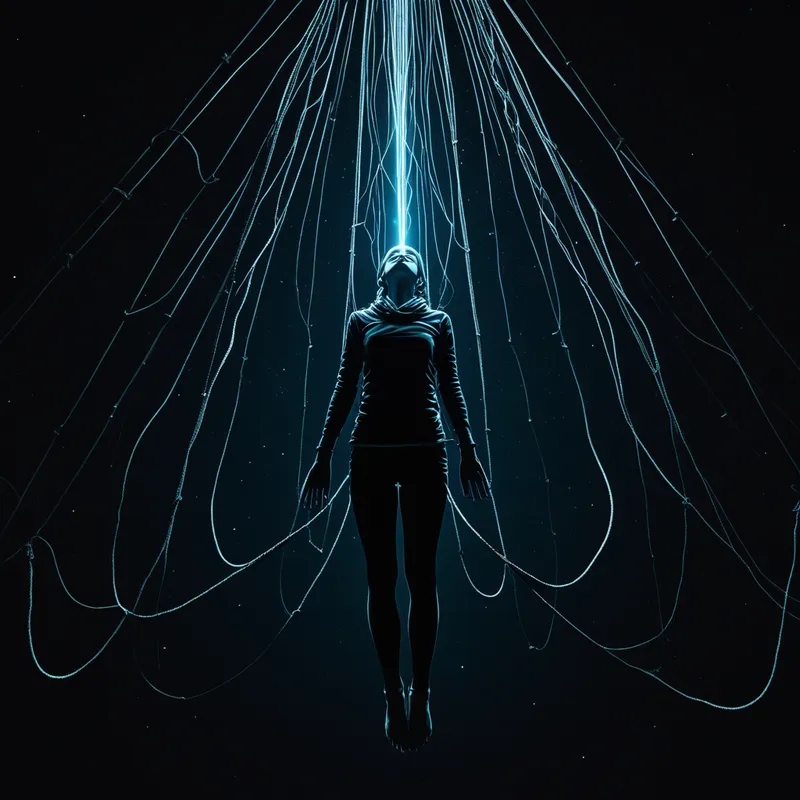
The alchemical journey of individuation mirrors Odin’s quest precisely. The nigredo—the blackening, the dissolution—is his nine-night ordeal on the tree: the ego’s structures are broken down in darkness and despair. The piercing is the separatio, the crucial separation of the essential from the dross, often experienced as a painful insight that cleaves one’s life into “before” and “after.”
The goal is not to avoid the spear, but to grasp it yourself. The will that wounds is the same will that liberates.
The runes themselves represent the albedo—the whitening, the emergence of pure, crystalline forms from the chaotic prima materia of the suffering self. These are the core complexes, the archetypal patterns, now seen clearly for the first time as objective psychic facts, not personal faults. Finally, Odin’s mastery of the runes symbolizes the rubedo—the reddening, the integration of this profound wisdom back into a renewed conscious life. The Allfather returns not just wiser, but fundamentally altered, capable of wielding creative and destructive power with newfound responsibility.
For the modern individual, the myth teaches that profound transformation requires a willing descent. We must hang ourselves upon the tree of our own psyche, allowing our cherished self-image to be pierced and suspended. We must endure the terrifying incubation where old certainties die, trusting that from this sacrifice, a more authentic, potent, and conscious self will be born—one capable of reading the runes of its own destiny and carving a meaningful path forward. The power to shape our reality is born from the courage to first be utterly unmade by it.
Associated Symbols
Explore related symbols from the CaleaDream lexicon: