The Ring of the Fisher King Myth Meaning & Symbolism
A sacred ring, a wounded king, and a blighted land. The myth reveals the deep bond between sovereign, relic, and the soul's capacity for restoration.
The Tale of The Ring of the Fisher King
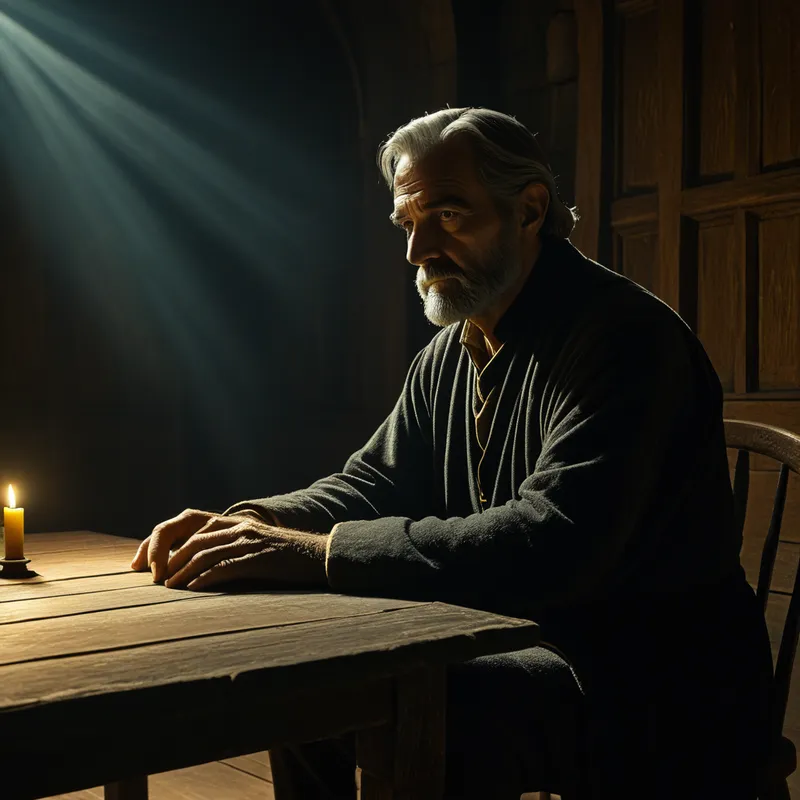
Listen, and let the mists of Avalon gather. The air in the hall is thick with the scent of damp stone and forgotten roses. Here, in the heart of the Castle of Corbenic, time does not flow; it pools, stagnant and heavy. At its center sits the king. He is called the [Fisher King](/myths/fisher-king “Myth from Arthurian culture.”/), for in his youth, he was pierced through the thighs by a Dolorous Stroke, a wound that will not heal. Now he can only sit by the waters of his land and fish, a quiet, perpetual motion of waiting.
His kingdom is a mirror of his flesh. The rivers run slow and thick. The trees bear no fruit. The laughter of children has been swallowed by the silence of [the earth](/myths/the-earth “Myth from Hindu culture.”/). The court is a gallery of ghosts, moving through rituals without joy. The king’s pain is the land’s pain; his impotence, its barrenness.
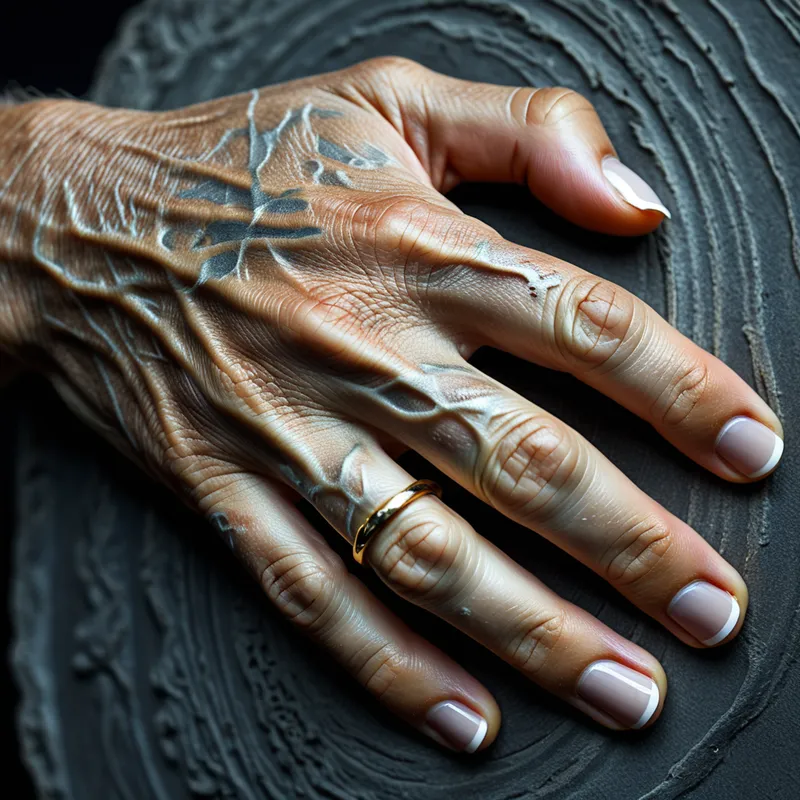
But upon his finger rests a circle of pale gold—the Ring. It is not ornate, but its simplicity speaks of an older world. It was not forged in a mortal fire but was given, it is said, by powers that watch over the sacred intersections of this world and the [Otherworld](/myths/otherworld “Myth from Celtic culture.”/). It is [the sigil](/myths/the-sigil “Myth from Global culture.”/) of his sovereignty, the seal of his covenant with the land. When he wore it in health, the fields were golden, and the springs ran clear. Now, the Ring seems a mockery, a glittering band on a decaying hand, a symbol of a kingship that cannot enact its will.
Into this twilight realm comes the seeker. Perhaps it is Sir Percival, young and untested. He is led through the desolate landscape to the castle, welcomed as a guest. He witnesses the solemn procession: the [Holy Grail](/myths/holy-grail “Myth from Arthurian culture.”/), the bleeding spear, the silver platter. He sees the king’s suffering. But, caught in a web of false courtesy or his own unspoken confusion, he fails to ask the healing question: “Whom does [the Grail](/myths/the-grail “Myth from Arthurian culture.”/) serve?” or “What ails you, my lord?”
The moment passes. The vision fades. In the morning, he awakens to an empty moor, the castle vanished. The opportunity for healing is lost, and [the wasteland](/myths/the-wasteland “Myth from Arthurian culture.”/) remains. The Ring on [the Fisher King](/myths/the-fisher-king “Myth from Arthurian culture.”/)’s finger continues its silent vigil, a promise unfulfilled, a circuit of power left open and bleeding. The tale ends not with a resolution, but with a haunting suspension—the king fishing, the land waiting, the Ring glowing softly in the perpetual dusk, holding the memory of wholeness within its golden circle.
Cultural Origins & Context
This poignant strand of the [Grail](/myths/grail “Myth from Christian culture.”/) mythology is woven deeply into the later Arthurian Romances, particularly those of the French tradition like Chrétien de Troyes’ [Perceval](/myths/perceval “Myth from Arthurian culture.”/) and the subsequent Didot-Perceval. It represents a fascinating fusion of Celtic sovereignty myths with Christian quest imagery. In ancient Celtic kingship, the health of the ruler and the fertility of the land were one. A maimed or unjust king meant a blighted kingdom.
The Fisher King himself is a complex figure, often identified with figures like Pelles or Maimed King. The Ring, while less emphasized than the Grail or Lance in some texts, is a critical symbol of this sacred bond. These stories were not mere entertainment for feudal courts; they were psychic maps. Told by poets and scribes, they framed the ultimate spiritual and psychological quest: the restoration of a broken world, which begins with the courage to confront the wound at its center.
Symbolic Architecture
The myth is a masterful depiction of the [psyche](/myths/psyche “Myth from Greek culture.”/) in a state of profound injury. The Fisher [King](/symbols/king “Symbol: A symbol of ultimate authority, leadership, and societal order, often representing the dreamer’s inner power or external control figures.”/) is the [archetype](/symbols/archetype “Symbol: A universal, primordial pattern or prototype in the collective unconscious that shapes human experience, behavior, and creative expression.”/) of the wounded ego, or more accurately, the wounded guiding principle of [the Self](/myths/the-self “Myth from Jungian culture.”/). His thigh wound—a blow to his generative and mobile power—symbolizes a [trauma](/symbols/trauma “Symbol: A deeply distressing or disturbing experience that overwhelms the psyche, often manifesting in dreams as unresolved emotional wounds or psychological injury.”/) that has halted the forward [movement](/symbols/movement “Symbol: Movement symbolizes change, progress, and the dynamics of personal growth, reflecting an individual’s desire or need to transform their circumstances.”/) of [life](/symbols/life “Symbol: The symbol of ‘Life’ represents a journey of growth, interconnectedness, and existential meaning, encompassing both the joys and challenges that define human experience.”/).
The Ring is the symbol of wholeness and connection that persists even in brokenness. It is the unbroken circle of the Self, the timeless pattern of identity and purpose that remains intact beneath the injury.
The blighted land is the externalized [reality](/symbols/reality “Symbol: Reality signifies the state of existence and perception, often reflecting one’s understanding of truth and life experiences.”/) of inner desolation—creativity dries up, relationships become barren, life loses its savor. The failure of the questing [knight](/symbols/knight “Symbol: The knight symbolizes honor, chivalry, and the pursuit of noble causes, reflecting the ideal of the noble warrior.”/) (often Percival) to ask the crucial question represents [the ego](/myths/the-ego “Myth from Jungian culture.”/)’s initial [blindness](/symbols/blindness “Symbol: Represents a lack of awareness, insight, or refusal to see truth, often tied to emotional avoidance or spiritual ignorance.”/), its inability to properly perceive and engage with the core wound. It is the failure of [compassion](/symbols/compassion “Symbol: A deep feeling of empathy and concern for others’ suffering, often involving a desire to help or alleviate their pain.”/), born of a disconnected intellect or rigid social conditioning. The entire tableau exists in a state of [suspended animation](/symbols/suspended-animation “Symbol: A state where biological processes are halted or slowed dramatically, often used in science fiction for space travel or medical preservation.”/), a psychic freeze, waiting for the correct, heartfelt intervention to complete the circuit and allow life to flow again.

The Dreamer’s Resonance
When this mythic pattern stirs in the modern dreamer, it speaks to a profound experience of stuckness. To dream of a forgotten, decaying castle is to encounter the neglected structures of one’s own psyche. To dream of a revered but silent, suffering figure is to meet an aspect of the inner authority—perhaps one’s own potential for leadership, creativity, or wisdom—that has been wounded and immobilized.
The somatic feeling is one of heaviness, paralysis, or navigating through a thick, resistant atmosphere. Psychologically, the dreamer may be in a period where their outer life feels barren and meaningless, mirroring an inner injury they have not yet addressed. The dream is an invitation from the unconscious to stop and attend to the foundational wound. It asks: What in you is the Fisher King? What generative power has been struck down? And most importantly, what is the healing question you have been afraid to ask—of yourself, or of life?
Alchemical Translation
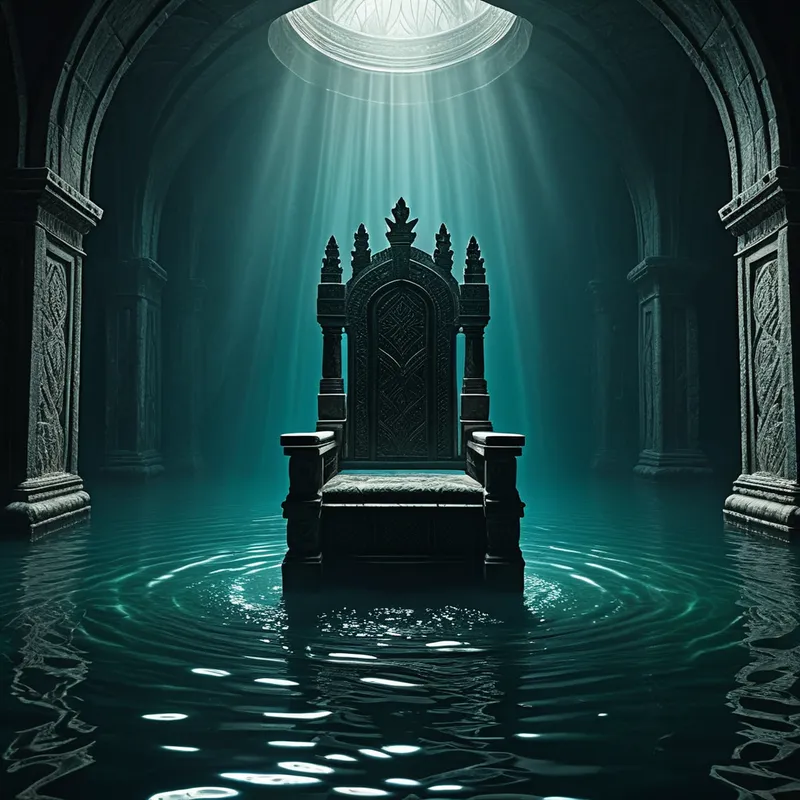
The process modeled here is the alchemy of healing the [prima materia](/myths/prima-materia “Myth from Alchemical culture.”/) of our deepest wounds into the gold of integrated consciousness. The Fisher King’s condition is the [nigredo](/myths/nigredo “Myth from Alchemical culture.”/), the blackening, the initial state of despair and putrefaction. The questing knight represents the active, seeking consciousness that must enter this darkness.
The alchemical operation is not one of battle, but of compassionate inquiry. The healing question is the solutio—the dissolving waters of empathy that begin to soften the hardened, calcified pain.
Asking “What ails you?” is an act of profound inner relationship. It means turning toward the wounded part with curiosity instead of contempt, with a desire to understand rather than to fix. This engagement initiates the albedo, the whitening, where the light of awareness begins to cleanse the wound. The restoration of the king—and by extension, the land—symbolizes the [rubedo](/myths/rubedo “Myth from Alchemical culture.”/), the reddening, the return of vitality, passion, and life-force to the entire personality.
The Ring, worn once more by a healed sovereign, then becomes the symbol of the fully realized Self. The circle is closed. The individual is no longer ruled by their wound but has integrated its lesson, becoming the true ruler of their inner realm. The wasteland blooms because the source of life within has been reconnected. The myth, therefore, is a timeless map for the journey from fragmentation to sovereignty, teaching that the key to healing [the world](/myths/the-world “Myth from Tarot culture.”/) lies first in having the courage to ask the right question of the wounded king within.
Associated Symbols
Explore related symbols from the CaleaDream lexicon: