The Prima Materia Myth Meaning & Symbolism
The myth of the chaotic, divine substance from which all creation arises and to which all must return to be reborn into gold.
The Tale of The Prima Materia
Before [the world](/myths/the-world “Myth from Tarot culture.”/) was a world, there was only the [Prima Materia](/myths/prima-materia “Myth from Alchemical culture.”/). It was not a [thing](/myths/thing “Myth from Norse culture.”/), but [the womb](/myths/the-womb “Myth from Various culture.”/) of all things. It was a sea without shore, a darkness that was not empty but pregnant, a silence that hummed with every note that had not yet been sung. The philosophers called it the [Unus Mundus](/myths/unus-mundus “Myth from Alchemical culture.”/), the One [Thing](/myths/thing “Myth from Norse culture.”/). It was pure potential, a divine restlessness.
In its solitude, it dreamed. And in dreaming, it began to stir. From its own boundless heart, a tension arose—a longing for form, a desire for the other. This longing was the first [Separatio](/myths/separatio “Myth from Alchemical culture.”/). The Prima Materia did not split, but it turned inward upon its own infinite possibilities. From its unity, the four elemental whispers emerged: the dry thirst of Salt, the mercurial flow of [Mercury](/myths/mercury “Myth from Roman culture.”/), the volatile passion of [Sulfur](/myths/sulfur “Myth from Alchemical culture.”/), and the hidden, binding fire of life itself. They were not yet elements, but tendencies, swirling in the chaotic deep.
This was the [Nigredo](/myths/nigredo “Myth from Alchemical culture.”/), the great blackening. The Prima Materia, in seeking to know itself, entered a state of profound confusion and putrefaction. It was a cosmic dissolution, a return to the source that felt like a death. All distinctions melted. Light and dark, heavy and light, self and other—all were one in the swirling, inky abyss.
Yet, within that blackness, a secret fire smoldered. The tension of its own dreaming generated a heat, a divine fermentation. This was the Albedo beginning to dawn. The chaos began to order itself, not from an external hand, but from an inner law, a hidden geometry. Sparks of silver consciousness flickered in the dark. The swirling tendencies began to seek their complements, to yearn for union. Salt sought the fluidity of Mercury; [the passion](/myths/the-passion “Myth from Christian culture.”/) of Sulfur sought the stabilizing fire of life. This courtship of opposites was the Coniunctio.
And from that [sacred marriage](/myths/sacred-marriage “Myth from Alchemy culture.”/), born of the blackness and the inner fire, the first true child emerged: a single, incorruptible point of golden light. It was the [Lapis Philosophorum](/myths/lapis-philosophorum “Myth from Alchemical culture.”/), not yet a stone, but a seed. It was the promise of the [Rubedo](/myths/rubedo “Myth from Alchemical culture.”/), the glorious reddening, the final perfection. The Prima Materia had not been destroyed, but fulfilled. It had given birth to the universe by first becoming nothing, so that it could become everything. The myth ends not with an end, but with a silent, knowing hum: the gold was always there, sleeping in the dark.
Cultural Origins & Context
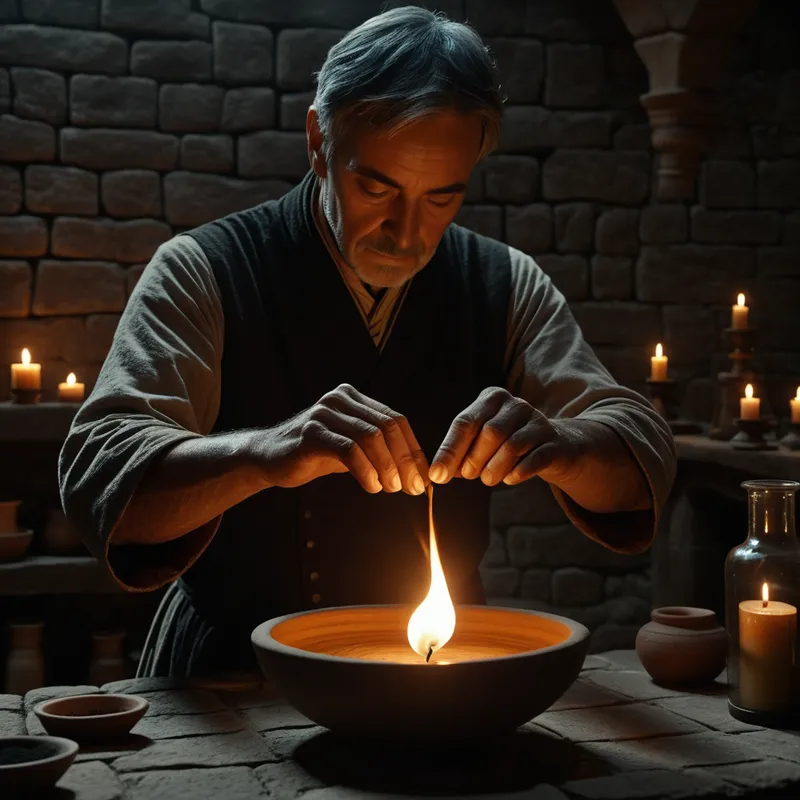
The myth of the Prima Materia is not a single story with characters, but the foundational narrative of Western alchemy, a spiritual and proto-scientific tradition spanning from Hellenistic Egypt through the Islamic [Golden Age](/myths/golden-age “Myth from Universal culture.”/) to the Renaissance. It was never “told” in a linear fashion but was encoded in cryptic texts, symbolic woodcuts, and laboratory procedures. Practitioners like [Hermes Trismegistus](/myths/hermes-trismegistus “Myth from Greek culture.”/), Jabir ibn Hayyan, and later figures like Paracelsus were its bards.
Its societal function was dual. Exoterically, it provided a framework for early chemistry—the attempt to transmute base metals into gold. Esoterically, and more profoundly, it was a map for inner transformation. [The alchemist](/myths/the-alchemist “Myth from Various culture.”/)‘s laboratory was a mirror of the soul. The myth was passed down in secret, from master to apprentice, because its true meaning—the deification of the human spirit through confrontation with one’s own primal chaos—was considered dangerous, a direct path to divine knowledge that bypassed ecclesiastical authority. It was the core mystery of a culture operating in [the shadow](/myths/the-shadow “Myth from Jungian culture.”/) of orthodox religion, seeking a direct experience of the divine in matter and mind.
Symbolic Architecture
Psychologically, the Prima Materia represents the unformed totality of the [psyche](/myths/psyche “Myth from Greek culture.”/)—the unconscious in its raw, potential state. It is not just personal unconsciousness, but the collective, ancestral, and archetypal [depths](/symbols/depths “Symbol: Represents the subconscious, hidden emotions, or foundational aspects of the self, often linked to primal fears or profound truths.”/). It is everything we are before culture, [family](/symbols/family “Symbol: The symbol of ‘family’ represents foundational relationships and emotional connections that shape an individual’s identity and personal development.”/), and [trauma](/symbols/trauma “Symbol: A deeply distressing or disturbing experience that overwhelms the psyche, often manifesting in dreams as unresolved emotional wounds or psychological injury.”/) shape us. It is the “stuff” of the [soul](/symbols/soul “Symbol: The soul represents the essence of a person, encompassing their spirit, identity, and connection to the universe.”/) before it is given a [story](/symbols/story “Symbol: The symbol of ‘Story’ represents the narrative woven through our lives, embodying experiences, lessons, and emotions that shape our identities.”/).
The journey to gold begins not with ambition, but with the courageous descent into one’s own inner chaos.
The stages of its transformation are the stages of individuation. The Nigredo symbolizes the necessary depression, [confusion](/symbols/confusion “Symbol: A state of mental uncertainty or disorientation, often reflecting internal conflict, lack of clarity, or overwhelming choices in waking life.”/), and [disintegration](/symbols/disintegration “Symbol: A symbol of breakdown, loss of form, or fragmentation, often reflecting anxiety about personal identity, control, or stability.”/) of the old, rigid [personality](/symbols/personality “Symbol: Personality in dreams often symbolizes the traits and characteristics of the dreamer, reflecting how they perceive themselves and how they believe they are perceived by others.”/) ([the ego](/myths/the-ego “Myth from Jungian culture.”/)). The [Albedo](/symbols/albedo “Symbol: In alchemy, the whitening stage representing purification, spiritual ascension, and the emergence of consciousness from darkness.”/) is the [emergence](/symbols/emergence “Symbol: A process of coming into being, rising from obscurity, or breaking through a barrier, often representing birth, transformation, or revelation.”/) of [insight](/symbols/insight “Symbol: A sudden, deep understanding of a complex situation or truth, often arriving unexpectedly and illuminating hidden connections.”/), the washing clean of projections, and the first conscious [relationship](/symbols/relationship “Symbol: A representation of connections we have with others in our lives, often reflecting our emotional state.”/) with the soul (the [anima](/symbols/anima “Symbol: The feminine archetype within the male unconscious, representing soul, creativity, and connection to the inner world.”/)/[animus](/symbols/animus “Symbol: In Jungian psychology, the masculine inner personality in a woman’s unconscious, representing logic, action, and spiritual guidance.”/)). The Coniunctio is the [integration](/symbols/integration “Symbol: The process of unifying disparate parts of the self or experience into a cohesive whole, often representing psychological wholeness or resolution of internal conflict.”/) of conscious and unconscious, ego and [shadow](/symbols/shadow “Symbol: The ‘shadow’ embodies the unconscious, repressed aspects of the self and often represents fears or hidden emotions.”/), masculine and feminine principles within. The final [Lapis](/symbols/lapis “Symbol: A deep blue stone historically revered as a celestial connection and symbol of wisdom, truth, and spiritual enlightenment.”/) is [the Self](/myths/the-self “Myth from Jungian culture.”/)—the achieved wholeness and centeredness that can withstand the fires of [life](/symbols/life “Symbol: The symbol of ‘Life’ represents a journey of growth, interconnectedness, and existential meaning, encompassing both the joys and challenges that define human experience.”/).
The Dreamer’s Resonance
When this myth stirs in modern dreams, it announces a profound somatic and psychological process of de-structuring. The dreamer may encounter images of overwhelming, formless landscapes: endless dark oceans, swirling cosmic voids, featureless deserts, or rooms filled with incomprehensible clutter. There may be sensations of dissolving, melting, or returning to a muddy, elemental state. Objects lose their function; identities blur.
This is the psyche’s enactment of the Nigredo. The ego’s familiar structures are being broken down so that something more authentic can coalesce. It is often experienced as a crisis—a depression, a loss of meaning, a feeling of being utterly lost. The body may feel heavy, sluggish, or ill, mirroring the “putrefaction” of the old self. The dream is not a warning, but a report from the front lines of transformation: the dreamer is in the Prima Materia, whether they wish to be or not. The task is not to escape, but to endure the dissolution and listen for the hidden inner law that will begin the ordering.
Alchemical Translation
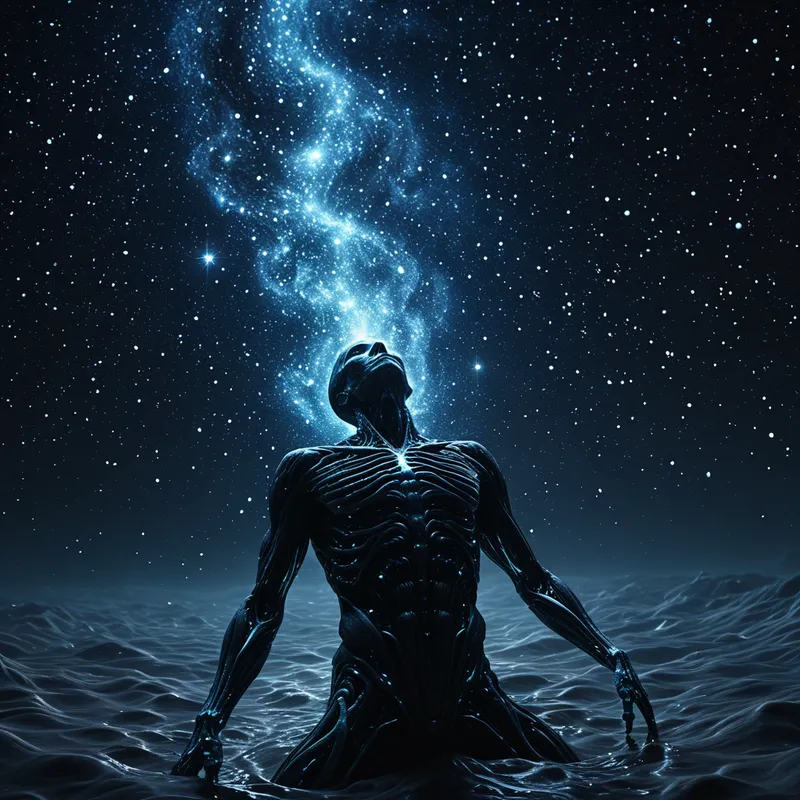
For the modern individual, the myth of the Prima Materia models the non-negotiable first step of psychic transmutation: the surrender to chaos. Our culture prizes order, identity, and control. The alchemical path demands the opposite as its starting point. We must find the courage to stop “fixing” our lives from the surface and instead allow the foundational level of our being to be stirred, to become chaotic.
This means consciously engaging with what we have repressed: the grief, the rage, the childish fantasies, the shame, the un-lived potentials. It is the “base metal” of our personality. We must place it in the Vas of our attention and apply the heat of honest self-reflection. The [triumph](/myths/triumph “Myth from Roman culture.”/) in the myth is not the avoidance of the black, chaotic stage, but the realization that it is the only source of true gold.
The goal is not to emerge from the chaos as you were, but to discover that the chaos itself is the substance of your wholeness.
The modern Lapis is not perfection, but authenticity—the capacity to hold one’s contradictions, to be fluid yet centered, to contain one’s own darkness and light without identifying exclusively with either. It is the realization that your fundamental nature is not the small, solid “you” of the ego, but the vast, creative, and chaotic Prima Materia itself, eternally capable of dreaming new forms of itself into being. The work is to become a conscious participant in that eternal dream.
Associated Symbols
Explore related symbols from the CaleaDream lexicon: