
The Philosopher's Stone Recipe Myth Meaning & Symbolism
The secret recipe for the Stone is not a formula but a sacred, impossible journey of self-dissolution and rebirth within the alchemist's own soul.
The Tale of The Philosopher’s Stone Recipe
Listen, and I will tell you of a secret that is no secret, a recipe that is no list of ingredients. It begins not in a grand library, but in the silent, dust-choked chamber of a seeker whose name has been lost to all but the stars. He was a man who had read every scroll, deciphered every cryptic sigil, and distilled every substance known to the world. His shelves groaned with alembics and retorts, his furnace burned with a perpetual, hungry flame, yet the great work eluded him. He sought the Philosopher’s Stone, the key to all mysteries, and he knew its making was described in a single, ultimate recipe.
One night, in the depth of his despair, a figure appeared in the smoke of his brazier. It was not an angel nor a demon, but Mercurius, the spirit of the work itself, who is both one and many, male and female, spirit and matter. “You seek the recipe,” whispered Mercurius, its voice the sound of cracking glass and distant chimes. “I will give it to you. But you must write it down exactly as I speak it, for the word is the work, and the work is the word.”
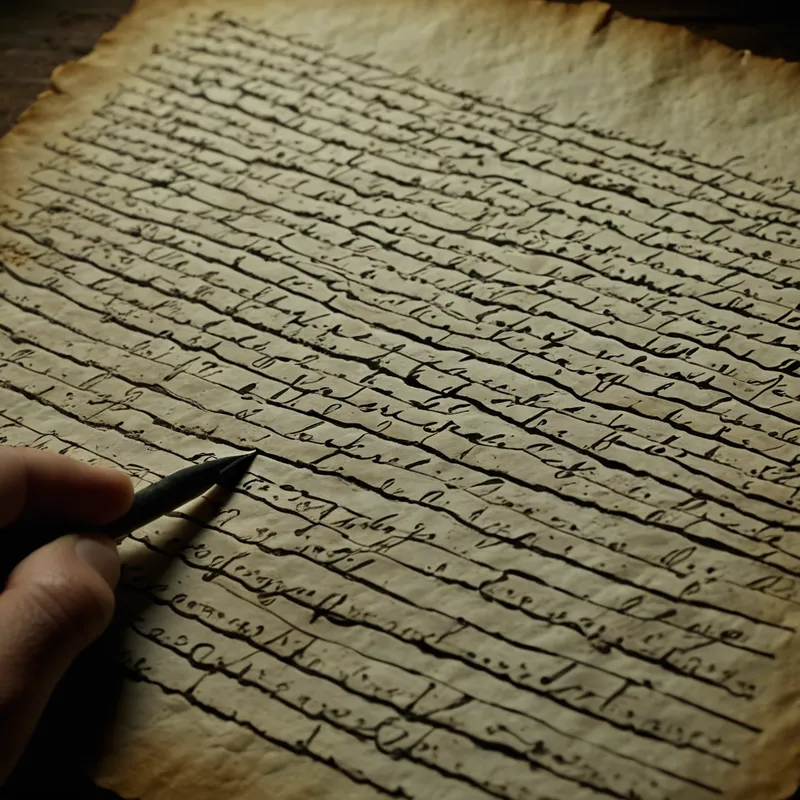
The alchemist, hands trembling, took up his finest quill and a sheet of virgin vellum. The spirit began, and the man wrote:
“Take of the First Matter, that which is despised and cast into the street, one part. In the name of the Green Lion, devour the Sun. Wed the Red King to the White Queen in a bath of tears. Let the Raven’s head blacken in the womb of the earth. Witness the Peacock’s Tail, a false dawn. Endure the putrefaction, the death of all things. From the ashes, the Phoenix rises. Coagulate the spirit. Behold the Stone.”
As the last word was inscribed, the ink itself seemed to pulse with a dull, inner light. Yet, the alchemist stared in confusion and rising fury. “This is nothing!” he cried out to the empty air. “A riddle! Where are the measures? The times? The fires? What is the First Matter? Who are these kings and queens?” His voice echoed in the silent laboratory. The recipe was complete, yet it had given him nothing but deeper obscurity. The vellum now felt heavy, not as paper, but as a slab of lead upon his soul.
For years he labored, trying every interpretation. He sought the First Matter in dung, in rainwater, in common lead. He combined every red powder with every white salt. He achieved blackening, he saw fleeting colors, but only dead powders remained. The recipe was a taunt. In a final fit of anguish, he snatched the vellum and held it over his furnace, intending to burn this cruel joke. As the heat scorched his fingers, he did not see the words catch fire. Instead, he saw through them. The ink did not burn; it dissolved, and in that dissolution, the letters swam and reformed not on the page, but in the air before him, and then within him.
He fell to his knees, not before the furnace, but before a sudden, terrifying understanding. The laboratory, the ingredients, the fires—they were all an extension of his own being. The Green Lion was his corrosive desire; the Red King and White Queen, the warring passions and intellect of his own soul. The putrefaction was the death of his old, seeking self. The recipe was not a procedure for his hands, but a map for his essence. The First Matter was himself—the base, despised, and unrefined soul. The Stone was not to be made, but to be become.
Cultural Origins & Context
The myth of the Recipe does not belong to a single culture or grimoire, but is the distilled essence of the entire Western alchemical tradition, spanning from Hellenistic Egypt through the Islamic Golden Age to the Renaissance courts of Europe. It was never a single story told around a fire, but a fragmented, persistent whisper passed from master to apprentice, encoded in emblem books like the Mutus Liber (The Silent Book) and the cryptic verses of the Emerald Tablet.
Its societal function was dual. Exoterically, it was a gatekeeping mechanism, a puzzle to separate the casual dabbler from the serious initiate. The unworthy would see only nonsense and abandon the quest, or worse, poison themselves in literal-minded experiments. Esoterically, it served as a psychological container—a fixed, external “problem” (the cryptic recipe) onto which the adept could project the internal, chaotic process of radical self-transformation. The culture that birthed it was one of hidden knowledge, where truth was veiled in allegory to protect it from both the profane and the persecuting authority, allowing the real work—the work on the soul—to proceed in the privacy of the oratory.
Symbolic Architecture
The myth’s power lies in its masterful use of Decknamen (cover names) to describe an internal, non-linear process. Each element is a facet of the psyche.
The First Matter (Prima Materia) is the unformed, chaotic state of the unconscious self—the “base metal” of our raw, unexamined being. It is “despised” because we reject our shadow, our imperfections, our latent potential.
The recipe begins not with a substance, but with a sacrifice: the sacrifice of the illusion that the work is outside of you.
The Green Lion devouring the Sun represents the corrosive, dissolving power of intense introspection (the lion) consuming the conscious ego (the sun). The marriage of the Red King and White Queen (Coniunctio) is the sacred union of opposites within: passion and reason, body and spirit, sulfur and mercury. The Peacock’s Tail is the dazzling stage of inflation, where insights sparkle with the illusion of completion—a beautiful distraction from the necessary decay that follows.
The entire sequence—Nigredo (blackening), Albedo (whitening), Citrinitas (yellowing), Rubedo (reddening)—outlines the death of the old personality and the rebirth of an integrated one. The final Stone is the Self, the indestructible, golden core of realized being that can “transmute” the leaden experiences of life into the gold of wisdom.
The Dreamer’s Resonance
When this myth stirs in the modern dreamer, it often manifests not as a literal scroll or laboratory, but as a profound sense of being on the verge of a breakthrough that is maddeningly elusive. One might dream of finding a crucial key that fits no lock, or of reading an instruction manual where the words blur and rearrange themselves. The somatic experience is one of frustrated seeking—a tightness in the chest, a clenching of the jaw.
This dream pattern signals that the conscious mind is grappling with a transformative process it cannot logically direct. The psyche is in its own Nigredo. The “recipe” the dreamer is trying to follow—perhaps a career plan, a formula for happiness, a path to healing—is being revealed as inadequate. The dream is an alchemical vessel itself, presenting the paradoxical truth: the way forward requires the dissolution of the current, striving identity. The dreamer is being asked to stop following the instructions and to become the transformation.

Alchemical Translation
For the modern individual, the myth models the journey of individuation. We all seek our own Philosopher’s Stone: wholeness, purpose, the “gold” of a meaningful life. We look for recipes—self-help guides, life-hacks, career ladders, therapeutic modalities.
The myth’s brutal wisdom is that the true recipe is a mirror. The “First Matter” is your present, unvarnished life with all its failures, pains, and raw material. The “fire” is the heat of attention and unavoidable suffering. The “marriage” is the hard-won integration of your contradictions—the ambitious professional and the vulnerable child, the thinker and the feeler.
The Stone is not attained. It is realized when the seeker understands they are not the chemist, but the crucible, the ingredient, and the reaction itself.
The triumph is not in discovering the secret text, but in the moment the text dissolves, and you recognize the author. The psychic transmutation is from seeking salvation out there to undertaking the sacred work in here, turning the base lead of your fragmented experiences into the gold of coherent, resilient selfhood. The ultimate product of the great work is not an object, but the alchemist—transformed, whole, and capable of touching the world with a Midas touch of consciousness.
Associated Symbols
Explore related symbols from the CaleaDream lexicon: