The Pharaoh Myth Meaning & Symbolism
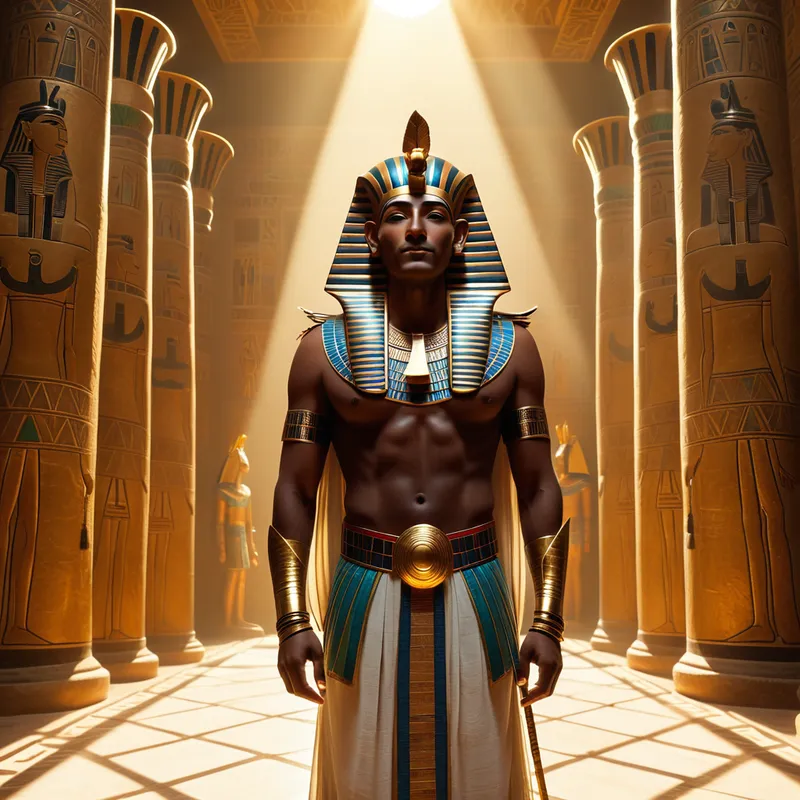
The Pharaoh is the living god-king, the human vessel for divine power who maintains cosmic order against the forces of chaos and disintegration.
The Tale of The Pharaoh
Hear now the tale of the Living God, the one who walks in two worlds. The air of Kemet is thick with the scent of [lotus](/myths/lotus “Myth from Hindu culture.”/) and sacred incense, and the sun, Ra, beats down upon the black earth like a golden hammer. From the reeds of the Nile, a truth is born: the land cannot thrive under a divided sky. Chaos, the serpent Apep, coils in the deep waters and the barren deserts, waiting to swallow the sun and return all to formless void.
But upon the throne of the Two Lands sits the Per-aa. He is not merely a man. At the moment of his ascension, the breath of [Horus](/myths/horus “Myth from Egyptian culture.”/) enters him. The spirit of his father, the departed [Osiris](/myths/osiris “Myth from Global/Universal culture.”/), Lord of the Dead, anoints him from the Duat. He becomes the [Horus](/myths/horus “Myth from Egyptian culture.”/)-on-Earth, the perfect point where the divine will pierces the fabric of the mortal realm. His scepter is not just wood and gold; it is the spine of order itself. His crown—the white miter of the South woven with the red basket of the North—is the weight of the unified cosmos upon his brow.
Each dawn, he stands on the palace balcony as Ra’s barque crests [the horizon](/myths/the-horizon “Myth from Various culture.”/). He raises his arms, and through his voice, the sun is commanded to rise. He presides over the inundation, and the Nile responds, its floods bringing life, not destruction. He offers hetep to the gods in the cool, dark sanctuaries, and in return, [Ma’at](/myths/maat “Myth from Egyptian culture.”/)—the principle of truth, balance, and cosmic harmony—is sustained. The people see not a man, but a function, a living ritual. They see the guarantee that [the world](/myths/the-world “Myth from Tarot culture.”/) will not unravel.
But the weight is eternal. The whispers of Apep are the whispers of drought, of rebellion, of sickness, of doubt. The [Pharaoh](/myths/pharaoh “Myth from Egyptian culture.”/) feels them in the ache of his limbs after the [Sed festival](/myths/sed-festival “Myth from Egyptian culture.”/), in the silence of the night when the god’s presence feels distant. He must be warrior, priest, judge, and son. He must build monuments that scrape [the sky](/myths/the-sky “Myth from Persian culture.”/), not for vanity, but to create eternal anchors for Ma’at in stone. His every action is a spell against entropy. And he knows, in the secret chamber of his heart, that his mortal body is a temporary shrine. One day, the falcon will fly from his shoulders. The heavy double crown will be lifted. He will walk alone into the hall of Osiris, where his heart will be placed upon the scale against [the feather of Ma’at](/myths/the-feather-of-maat “Myth from Egyptian culture.”/). This is his final, most sacred duty: to prove that the god who ruled through him left the heart lighter than truth.
Cultural Origins & Context
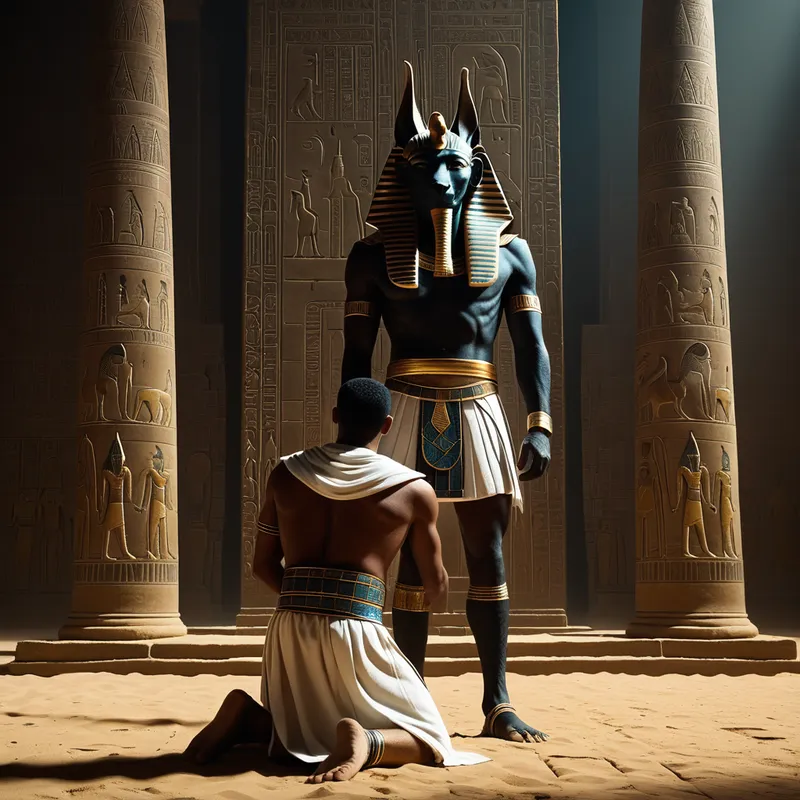
The myth of the divine Pharaoh was not a single story told around a fire, but the foundational operating system of Egyptian civilization for over three millennia. It was enacted daily in temple ritual, carved eternally into tomb and temple walls, and performed in state ceremonies like the Heb-Sed. The primary tellers of this myth were the priesthoods of major cult centers like Heliopolis (center of the Ra cult) and later Thebes (center of the Amun-Ra cult). They were the theologians who articulated and maintained the doctrine of the king’s divine nature.
Societally, its function was paramount. It provided a complete cosmological and political rationale for the state. The Pharaoh was the sole, essential link between the gods and humanity. Natural disasters or social unrest were not mere accidents; they were signs that this link was weakened, that the Pharaoh’s ritual duty was failing. Thus, the myth created a universe of profound responsibility and order. It justified the Pharaoh’s absolute authority, but it also burdened him with an absolute, sacred duty to maintain the balance of the entire world. The people’s prosperity was directly tied to his spiritual efficacy. This was a myth lived by everyone, from the farmer whose fields depended on the Pharaoh’s correct rituals to ensure [the Nile flood](/myths/the-nile-flood “Myth from Egyptian culture.”/), to the vizier who administered [the law](/myths/the-law “Myth from Biblical culture.”/) as the Pharaoh’s earthly extension.
Symbolic Architecture
The Pharaoh is the ultimate [symbol](/symbols/symbol “Symbol: A symbol can represent an idea, concept, or belief, serving as a powerful tool for communication and understanding.”/) of the conscious ego in its highest, most responsible form. He represents [the principle](/symbols/the-principle “Symbol: A fundamental truth, law, or doctrine that serves as a foundation for a system of belief, behavior, or reasoning, often representing moral or ethical standards.”/) of order (Ma’at) imposed upon the chaotic, undifferentiated waters of the unconscious (Nun, embodied by Apep).
The crown is not an ornament, but the conscious mind bearing the weight of the cosmos. The scepter is not a tool of force, but the directed will that channels divine energy into worldly structure.
The unification of Upper and Lower Egypt under his [crown](/symbols/crown “Symbol: A crown symbolizes authority, power, and achievement, often representing an individual’s aspirations, leadership, or societal role.”/) symbolizes the [integration](/symbols/integration “Symbol: The process of unifying disparate parts of the self or experience into a cohesive whole, often representing psychological wholeness or resolution of internal conflict.”/) of opposites within the [psyche](/myths/psyche “Myth from Greek culture.”/)—the rational, ordered South (Upper Egypt) and the fertile, instinctual [Delta](/symbols/delta “Symbol: A triangular river mouth symbolizing transition, convergence, and the fertile merging of separate paths into a new whole.”/) (Lower Egypt). His dual [nature](/symbols/nature “Symbol: Nature symbolizes growth, connectivity, and the primal forces of existence.”/), both [human](/symbols/human “Symbol: The symbol of a human represents individuality, complexity of emotions, and social relationships.”/) and divine, mirrors the human [condition](/symbols/condition “Symbol: Condition reflects the state of being, often focusing on physical, emotional, or situational aspects of life.”/) itself: we are mortal flesh temporarily hosting an immortal spark of [consciousness](/symbols/consciousness “Symbol: Consciousness represents the state of awareness and perception, encompassing thoughts, feelings, and experiences.”/) and [purpose](/symbols/purpose “Symbol: Purpose signifies direction, meaning, and intention in life, often reflecting personal ambitions and core values.”/). The judgment before Osiris is the ultimate psychological [truth](/symbols/truth “Symbol: Truth represents authenticity, honesty, and the quest for knowledge beyond mere appearances.”/): the value of the ruling consciousness (the Pharaoh’s reign) is measured not by its monuments, but by the [condition](/symbols/condition “Symbol: Condition reflects the state of being, often focusing on physical, emotional, or situational aspects of life.”/) of the [heart](/symbols/heart “Symbol: The heart symbolizes love, emotion, and the core of one’s existence, representing deep connections with others and self.”/)—the seat of conscience, [emotion](/symbols/emotion “Symbol: Emotion symbolizes our inner feelings and responses to experiences, often guiding our actions and choices.”/), and authentic being. Was the order he imposed true and just, or was it mere tyranny? The [feather](/symbols/feather “Symbol: A feather represents spiritual elevation, lightness, and the freedom of the spirit. It often symbolizes messages from the divine and connection to ancient wisdom.”/) is the litmus test of integrity.
The Dreamer’s Resonance
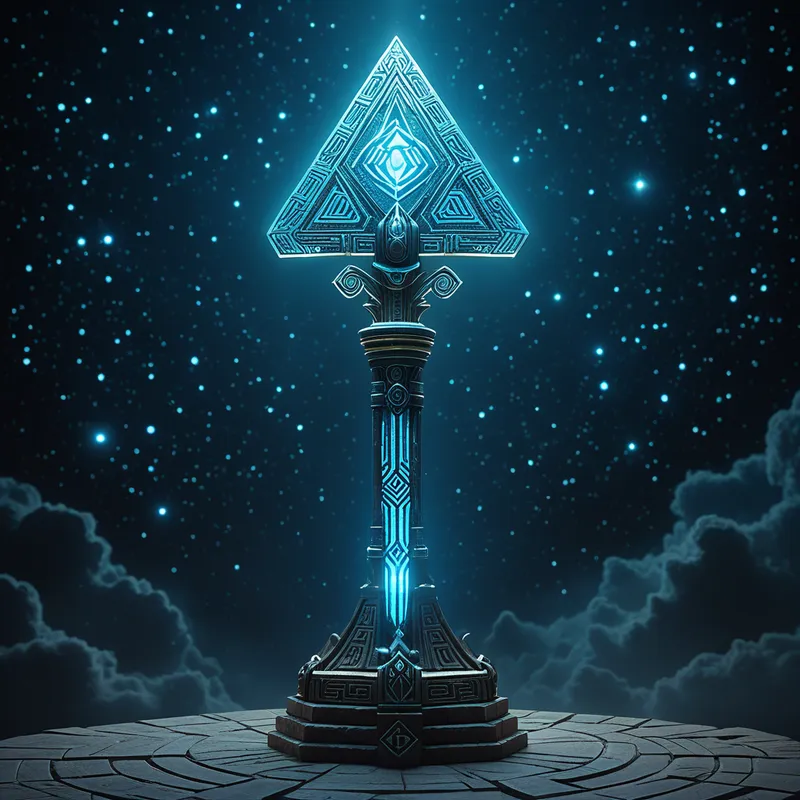
When the archetype of the Pharaoh stirs in modern dreams, it often signals a profound encounter with the Ruler archetype within. The dreamer may find themselves in a position of unexpected authority, wearing regalia that feels both alien and strangely fitting, or struggling to uphold a crumbling structure.
Somatically, this can manifest as a feeling of immense pressure on the head and shoulders—the literal weight of [the crown](/myths/the-crown “Myth from Various culture.”/). There may be a sense of profound isolation (“it’s all up to me”) coupled with a burning duty. The conflict is between the burden of conscious responsibility and the longing to abdicate, to let chaos reign. Dreaming of a failed Pharaoh—one whose land is barren or whose crown is stolen—points to a crisis of legitimate authority in the dreamer’s life. They may feel their conscious will, their “ruling principle,” is ineffective or fraudulent. Conversely, dreaming of successfully performing a sacred ritual as Pharaoh indicates [the ego](/myths/the-ego “Myth from Jungian culture.”/) successfully organizing and directing powerful psychic energies toward a life-sustaining goal.

Alchemical Translation
The Pharaoh’s journey is a masterclass in the alchemy of individuation. It begins with the [nigredo](/myths/nigredo “Myth from Alchemical culture.”/), the recognition of chaos—both in the outer world and the inner psyche ([the desert](/myths/the-desert “Myth from Biblical culture.”/) threats, the whispers of Apep). The individual must first confront the disorganized, instinctual forces within.
The ascension to the throne is the albedo, the assumption of conscious responsibility. The individual “puts on the crown,” deciding to no longer be a passive victim of circumstance but to actively engage in structuring their life and integrating their disparate parts (unifying the “Two Lands” of their own nature). The daily rituals—the maintenance of Ma’at—represent the hard, repetitive work of psychological hygiene: setting boundaries (laws), making conscious choices (offerings), and building a stable identity (monuments).
The ultimate alchemical gold is not eternal physical life, but a heart lighter than the feather of Ma’at—a psyche whose central governing principle (the ego/Pharaoh) has acted with such integrity that it leaves no residue of guilt, denial, or un-lived life.
The final journey to the Hall of Judgment is the [rubedo](/myths/rubedo “Myth from Alchemical culture.”/), the culminating test. It is the honest, terrifying self-assessment at the end of a life stage or the life itself. Has one’s ruling consciousness been in service to the true Self (the divine within), or merely to the petty tyrant of the ego? The successful outcome is transcendence: the mortal Pharaoh dies, but the essential, justified being joins the circumpolar stars—the eternal, ordered pattern. For the modern individual, this translates to the achievement of a personality that is both fully realized and transparent to [the Self](/myths/the-self “Myth from Jungian culture.”/), where the personal will has become a perfect vessel for a transpersonal purpose. The rule of the inner Pharaoh, when just, results in a kingdom of the soul where order is not oppression, but the necessary ground for freedom and flourishing.
Associated Symbols
Explore related symbols from the CaleaDream lexicon: