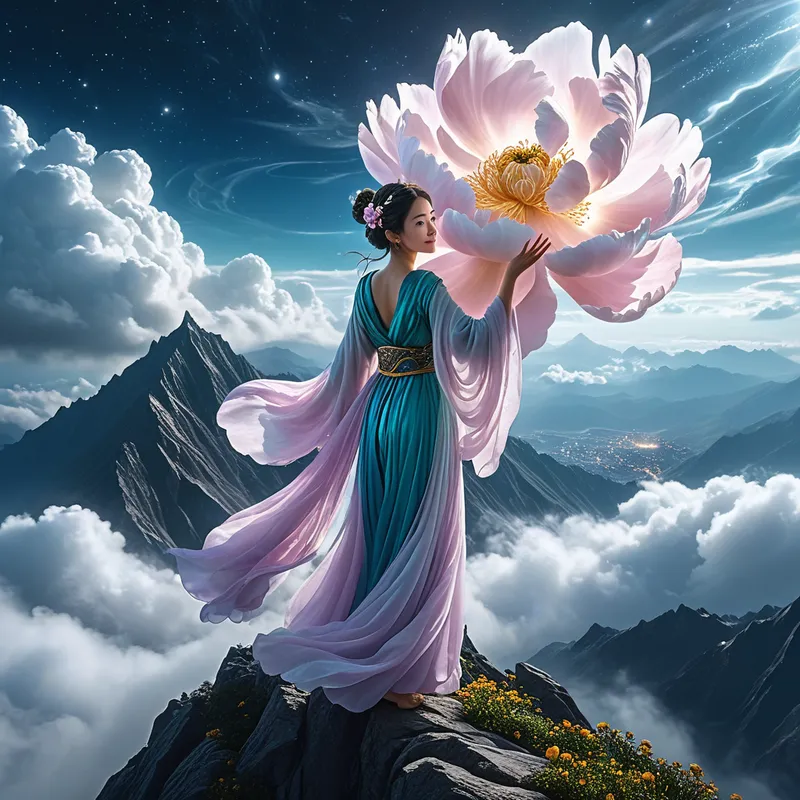
The Peony Fairy Myth Meaning & Symbolism
A celestial fairy defies the Jade Emperor to bring the peony's beauty to the mortal world, embodying the soul's sacrifice for love and transcendent beauty.
The Tale of The Peony Fairy
Listen, and hear a tale spun from the mists between heaven and earth, a story of beauty so profound it shook the very pillars of the celestial court.
In the [Jade Emperor](/myths/jade-emperor “Myth from Chinese culture.”/)‘s garden, where time flows like honey and seasons are but a whim, there bloomed flowers of impossible splendor. But the queen among them, the undisputed sovereign of fragrance and form, was the [Peony](/myths/peony “Myth from Chinese culture.”/). And she was not merely a flower; she was a fairy, a spirit of such breathtaking beauty that [the moon](/myths/the-moon “Myth from Tarot culture.”/) would hide in shame and the stars would cluster close just to catch her glow. She was the Mu Dan Xian Zi, and her home was a paradise of perpetual spring.
Yet, paradise can become a gilded cage. From her heavenly perch, the Peony Fairy gazed down upon the mortal world. She saw its struggles, its fleeting joys, and its stark, unadorned landscapes. A deep yearning stirred within her petal-heart—a desire not just to be admired in a divine menagerie, but to give, to bring a measure of her celestial solace to the dust and toil below.
The conflict arose like a thunderhead. The Jade Emperor, arbiter of all order, celestial and terrestrial, decreed that the flowers of his garden were treasures of heaven alone. To bestow them upon the mortal realm was to disrupt the natural hierarchy, to give pearls to swine. His word was law, etched into the fabric of the cosmos.
But the heart, especially one born of beauty and compassion, knows laws of its own. In an act of sublime defiance, the Peony Fairy gathered her essence. One night, when the heavenly guards were lulled by [the music of the spheres](/myths/the-music-of-the-spheres “Myth from Greek culture.”/), she plucked the most perfect seed from her own celestial bloom and, with a whisper of regret and hope, let it fall. It tumbled through the layers of cloud, a tiny, burning ember of potential, down to the cold, hard earth of Song Mountain.
The Emperor’s wrath was immediate and terrible. The harmonious music of the heavens ceased. The Peony Fairy was stripped of her immortal station and cast out of the garden. She was exiled to the very mortal realm she sought to grace, condemned to become one with [the earth](/myths/the-earth “Myth from Hindu culture.”/), her spirit bound to the seed she had sown.
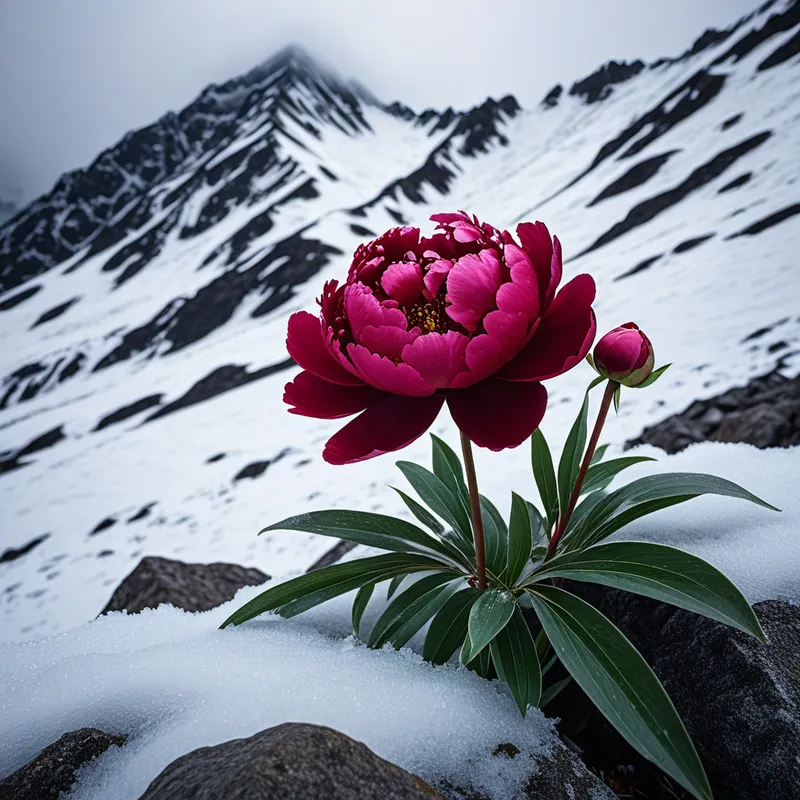
On the barren, windswept slopes of Song Mountain, that seed took root. It fought through the frozen ground, endured scorching sun and biting frost. And then, it bloomed. Not a timid bud, but a glorious, triumphant explosion of color and scent—a cascade of crimson, pink, and white petals, richer and more vibrant than any mortal flower had a right to be. The Peony Fairy had not just been banished; she had transformed. Her celestial spirit now lived in every peony that bloomed, a permanent, defiant gift of beauty born from sacrifice. She traded the sterile perfection of heaven for the resonant, suffering, and glorious beauty of [the world](/myths/the-world “Myth from Tarot culture.”/).
Cultural Origins & Context
The myth of the Peony Fairy is woven from the rich tapestry of Chinese folk belief and literati culture, finding its most enduring expressions in local folklore, particularly around Luoyang—the historical capital famed as the “City of Peonies.” Unlike the canonical myths preserved in ancient texts like the Classic of Mountains and Seas, this story flourished through oral tradition, operatic adaptations, and popular religious devotion. It belongs to the vast genre of xianhua (flower fairy) tales, where natural entities are personified as spirits, often interacting with the celestial bureaucracy.
Its societal function was multifaceted. For an agrarian society, it explained the origin of a beloved flower, imbuing the peony’s spectacular, almost arrogant beauty with a noble, tragic cause. For the literati, the peony was the “King of Flowers,” a symbol of wealth, honor, and prosperity. The fairy’s story added a layer of poetic depth, transforming the flower from a mere status symbol into an emblem of righteous rebellion and compassionate sacrifice. It served as a subtle, sanctioned narrative about the tension between rigid authority (the Jade Emperor) and heartfelt, generative impulse—a theme that resonated deeply within a Confucian framework that prized order but also venerated benevolent action.
Symbolic Architecture
At its core, the myth is an alchemical map of the [soul](/symbols/soul “Symbol: The soul represents the essence of a person, encompassing their spirit, identity, and connection to the universe.”/)’s [journey](/symbols/journey “Symbol: A journey in dreams typically signifies adventure, growth, or a significant life transition.”/) from contained potential to embodied, sacrificial [beauty](/symbols/beauty “Symbol: This symbol embodies aesthetics, harmony, and the appreciation of life’s finer qualities.”/). The [Peony](/symbols/peony “Symbol: A flower symbolizing prosperity, romance, and spiritual healing, often linked to feminine energy and divine protection.”/) [Fairy](/symbols/fairy “Symbol: Fairies represent the magical and whimsical aspects of life, often symbolizing transformation and the unseen forces that guide us.”/) represents the archetypal [Anima](/symbols/anima “Symbol: The feminine archetype within the male unconscious, representing soul, creativity, and connection to the inner world.”/) in its most celestial form: the [impulse](/symbols/impulse “Symbol: A sudden, powerful urge or drive that arises without conscious deliberation, often linked to primal instincts or emotional surges.”/) toward relatedness, feeling, and aesthetic [life](/symbols/life “Symbol: The symbol of ‘Life’ represents a journey of growth, interconnectedness, and existential meaning, encompassing both the joys and challenges that define human experience.”/).
The highest beauty is not that which is hoarded, but that which is given, even at the cost of the giver’s original form.
The [celestial garden](/symbols/celestial-garden “Symbol: Symbolizes growth, abundance, and the nurturing of ideas and relationships in a cosmic space.”/) symbolizes the unconscious in its primordial, undifferentiated state—perfect, orderly, but ultimately [static](/symbols/static “Symbol: Static represents interference, disruption, and the breakdown of clear communication or signal, often evoking feelings of frustration and disconnection.”/) and unrelated. The mortal world represents the field of [consciousness](/symbols/consciousness “Symbol: Consciousness represents the state of awareness and perception, encompassing thoughts, feelings, and experiences.”/), of [relationship](/symbols/relationship “Symbol: A representation of connections we have with others in our lives, often reflecting our emotional state.”/), suffering, and growth. The Fairy’s “[crime](/symbols/crime “Symbol: Crime in dreams often symbolizes guilt, inner conflict, or societal rules that are being challenged or broken.”/)” is the essential psychic act: the [decision](/symbols/decision “Symbol: A decision in a dream reflects the choices one faces in waking life and can symbolize the pursuit of clarity and resolution.”/) to bring a content of the unconscious (beauty, feeling, soul) into the light of day, into the [realm](/symbols/realm “Symbol: The symbol of ‘Realm’ often signifies the boundaries of one’s consciousness, experiences, or emotional states, suggesting aspects of reality that are either explored or ignored.”/) of [human](/symbols/human “Symbol: The symbol of a human represents individuality, complexity of emotions, and social relationships.”/) experience. The [Jade](/symbols/jade “Symbol: A precious stone symbolizing purity, protection, and spiritual connection, often associated with wisdom, longevity, and harmony.”/) Emperor embodies the tyrannical [aspect](/symbols/aspect “Symbol: A distinct feature, quality, or perspective of something, often representing a partial view of a larger whole.”/) of the ego or the super-ego, which seeks to maintain control and keep the [psyche](/myths/psyche “Myth from Greek culture.”/)‘s treasures safely locked away, fearing the [chaos](/symbols/chaos “Symbol: In Arts & Music, chaos represents raw creative potential, uncontrolled expression, and the breakdown of order to forge new artistic forms.”/) of genuine feeling.
Her [exile](/symbols/exile “Symbol: Forced separation from one’s homeland or community, representing loss of belonging, punishment, or profound isolation.”/) is not a [punishment](/symbols/punishment “Symbol: A dream symbol representing consequences for actions, often tied to guilt, societal rules, or internal moral conflicts.”/), but the necessary [condition](/symbols/condition “Symbol: Condition reflects the state of being, often focusing on physical, emotional, or situational aspects of life.”/) of incarnation. The seed is the nascent [symbol](/symbols/symbol “Symbol: A symbol can represent an idea, concept, or belief, serving as a powerful tool for communication and understanding.”/), the potential for new life. Song [Mountain](/symbols/mountain “Symbol: Mountains often symbolize challenges, aspirations, and the journey toward self-discovery and enlightenment.”/), the place of [exile](/symbols/exile “Symbol: Forced separation from one’s homeland or community, representing loss of belonging, punishment, or profound isolation.”/) and blooming, is the individuation process itself—hard, isolated, and demanding. The glorious [bloom](/symbols/bloom “Symbol: Represents growth, vitality, and the flourishing of potential, often tied to emotional awakening or physical health.”/) is the [symbol](/symbols/symbol “Symbol: A symbol can represent an idea, concept, or belief, serving as a powerful tool for communication and understanding.”/) made manifest, the psychic content now alive in the world, enriching it. The Fairy [doesn](/symbols/doesn “Symbol: The word ‘doesn’ typically points to a lack or feeling of uncertainty regarding action or inactivity in one’s life.”/)‘t die; she disperses. Her [spirit](/symbols/spirit “Symbol: Spirit symbolizes the essence of life, vitality, and the spiritual journey of the individual.”/) becomes immanent in every peony, representing how a soul-quality, once integrated, forever changes the [landscape](/symbols/landscape “Symbol: Landscapes in dreams are powerful symbols representing the dreamer’s emotional state, personal journey, and the broader context of life situations.”/) of the [personality](/symbols/personality “Symbol: Personality in dreams often symbolizes the traits and characteristics of the dreamer, reflecting how they perceive themselves and how they believe they are perceived by others.”/).
The Dreamer’s Resonance
When this myth stirs in the modern dreamer, it often signals a profound crossroads between the safety of the known self and the call of a deeper, more beautiful, but risky authenticity. To dream of a forbidden, breathtaking flower; of stealing a treasure from a stern, authoritative figure; or of being cast out of a pristine but cold place into a wild landscape—these are somatic echoes of the Peony Fairy’s journey.
Psychologically, the dreamer may be grappling with the need to express a long-repressed aspect of their creativity, sensuality, or vulnerability (the “beauty”). The internal Jade Emperor—perhaps an internalized critical parent, societal expectation, or a rigid self-concept—forbids this expression, warning of shame, failure, or loss of control. The somatic process is one of tension between the heart (yearning, warmth) and a constriction in the chest or throat ([the law](/myths/the-law “Myth from Biblical culture.”/), the prohibition). The dream is the psyche’s argument for defiance, showing that the act of “sowing the seed,” despite the consequences, leads not to annihilation, but to a more resonant, embodied, and generative state of being. The exile felt in the dream is the painful, necessary loneliness of stepping onto one’s own path.
Alchemical Translation
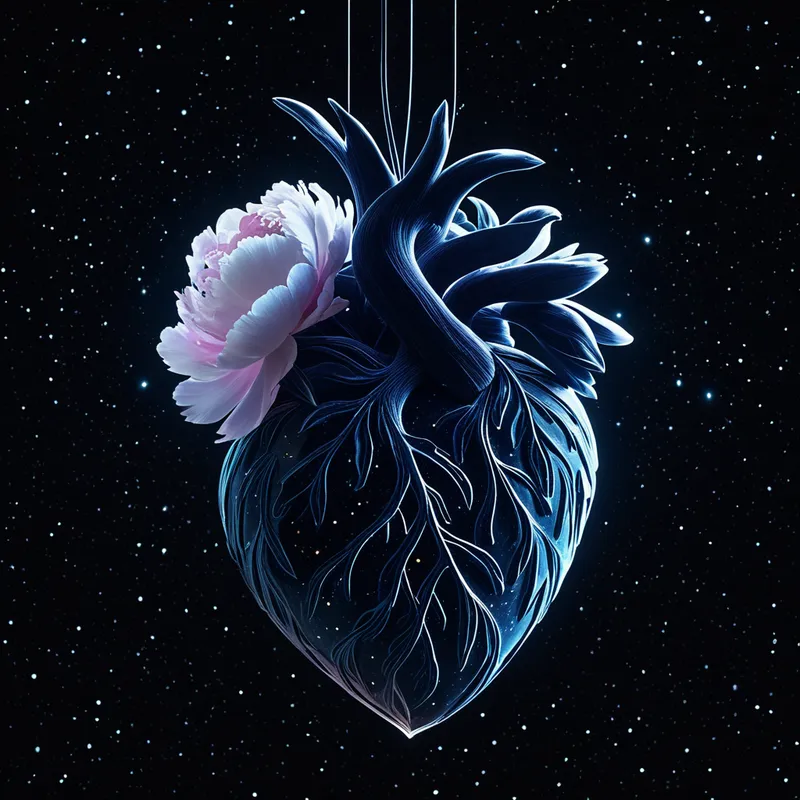
The myth models the complete cycle of psychic transmutation: [Solve et Coagula](/myths/solve-et-coagula “Myth from Alchemical culture.”/) (dissolve and coagulate). The Peony Fairy begins in a state of coagulated perfection—fixed, identified, and secure in her heavenly role. Her yearning is the solvent, the solve that begins to dissolve this fixed identity.
Individuation is the willing exile from the paradise of who you thought you were, for the wilderness of who you are meant to become.
The act of taking the seed is the crucial [separatio](/myths/separatio “Myth from Alchemical culture.”/)—distinguishing a precious part of [the self](/myths/the-self “Myth from Jungian culture.”/) from the whole. [The fall](/myths/the-fall “Myth from Biblical culture.”/) to earth is the mortificatio, the death of the old celestial identity. The banishment is the [nigredo](/myths/nigredo “Myth from Alchemical culture.”/), [the dark night of the soul](/myths/the-dark-night-of-the-soul “Myth from Christian Mysticism culture.”/) where all former securities are lost. The rooting in the harsh mountain soil is the albedo, the purification and whitening through struggle.
Finally, the glorious bloom is the [rubedo](/myths/rubedo “Myth from Alchemical culture.”/), the reddening, the achievement of [the philosopher’s stone](/myths/the-philosophers-stone “Myth from Alchemical culture.”/). The Fairy’s spirit, now diffused into all peonies, represents the multiplicatio—the multiplication of the achieved gold, where the integrated quality (beauty-as-compassion) becomes a renewable resource within the personality, capable of touching the world. For the modern individual, the alchemy is this: we must be willing to “break heaven’s law”—to defy our own internal rigidities and the expectations that confine our soul’s beauty. We must choose the meaningful exile of authenticity over the secure imprisonment of a false self. The bloom that follows is not just personal success, but a contribution to the human garden, a beauty that now exists in relation, having paid the ultimate price of its original form to become real.
Associated Symbols
Explore related symbols from the CaleaDream lexicon: