The Peddler's Pack Myth Meaning & Symbolism
A weary peddler makes a fateful bargain to lighten his load, only to discover his pack carries the weight of the world's forgotten sorrows.
The Tale of The Peddler’s Pack
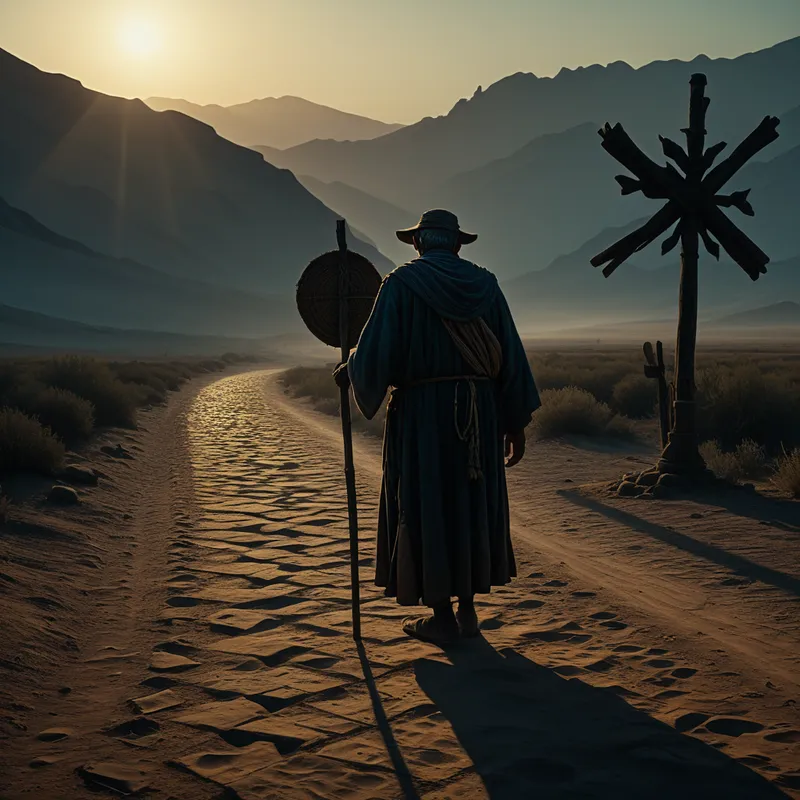
Listen. Listen to the whisper of [the wind](/myths/the-wind “Myth from Various culture.”/) through the mountain pass, to the crunch of weary feet on the stony path. Here comes a figure, bent double, his shadow long and thin in the failing light. This is the Peddler, and upon his back rests a pack. Not a simple sack of trinkets and tools, but a [thing](/myths/thing “Myth from Norse culture.”/) of worn leather and ancient stitching, bulging with a weight that seems to pull at the very earth.
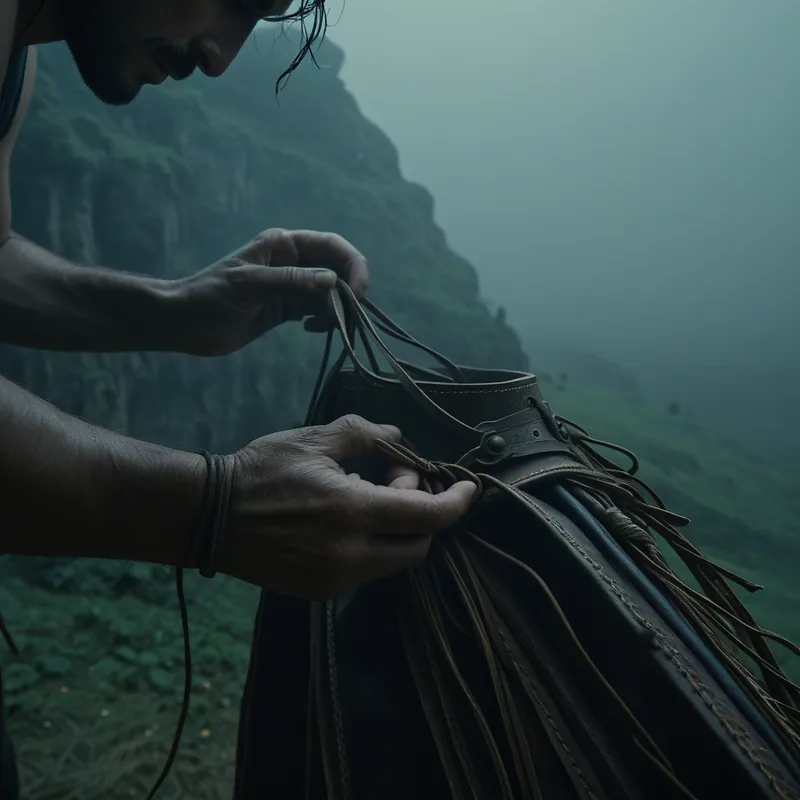
For years uncounted, he has walked the roads between sleeping villages and lonely hearths. His trade is memory. A polished stone for a forgotten promise, a spool of silver thread for a secret regret, a vial of mountain air for a stifled sigh. He takes what people no longer wish to carry and gives in return small comforts: a tune for a lonely evening, a story for a dark night. His pack grew. With every transaction, a new knot was tied in the leather, a new strain added to the strap. It held the quiet grief of widows, the unspoken shame of thieves, the abandoned dreams of the young. It became a universe of subdued sorrows.
One evening, as a violet dusk bled into black, the path grew steep. The pack’s weight was a mountain of its own. The Peddler’s breath came in ragged gasps, his heart a frantic drum against his ribs. At the crest of the hill, where three ancient oaks stood sentinel, he stumbled and fell to his knees. The pack did not slide from him; it held him down, a patient, terrible anchor. In that moment of pure, animal exhaustion, a voice, dry as autumn leaves and deep as a well, spoke from the shadows of the trees.
“You carry a world, little merchant. Trade with me. I will lighten your load.”
From the gloom stepped a figure—tall, indistinct, with eyes that held the cool gleam of a distant star. This was the Keeper of [the Crossroads](/myths/the-crossroads “Myth from Celtic culture.”/). The Peddler, desperate, agreed. “Take it. Take the weight.”
The Keeper smiled, a crack in the stillness. “Not take. Exchange. You will walk light as a dandelion seed. But in return, you will feel nothing of the road beneath your feet, taste nothing of the food you eat, hear no laughter in the village square. Your senses will be mine. A fair trade for such a burden, yes?”
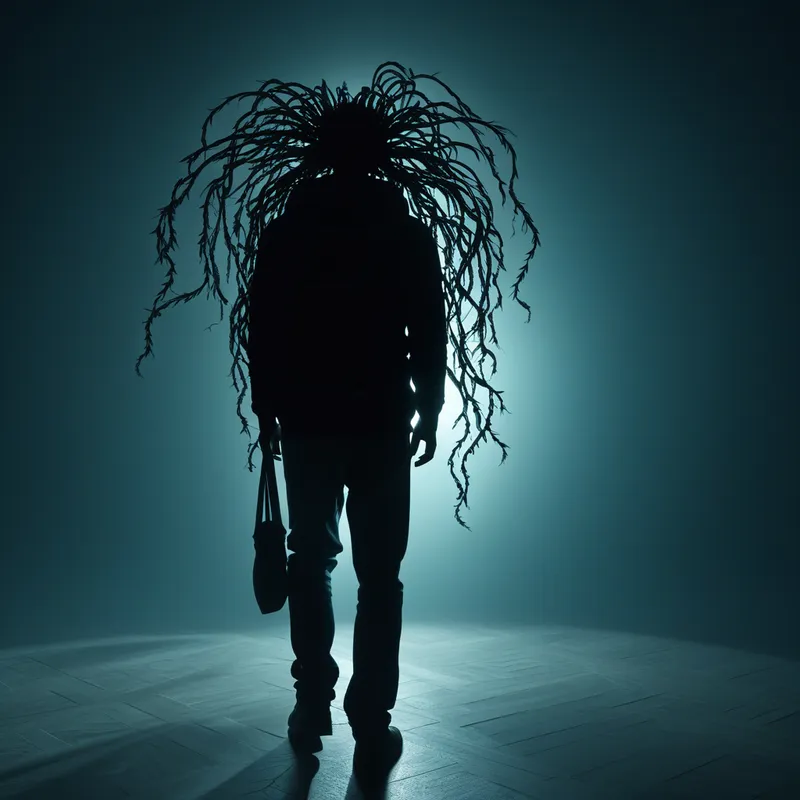
The Peddler, his bones aching, agreed. With a touch like cold moonlight, the Keeper unbound the straps. The colossal pack slid to the ground with a soft thud that seemed to sigh. Instantly, the Peddler stood upright. He felt… nothing. No pain, but also no warmth from the rising sun. He took a step and felt no stone. He raised his hand to his face and felt no skin. He had become a ghost in his own life.
He wandered on, a hollow man. He passed a child crying over a lost toy and felt no urge to comfort. He saw a couple embrace and felt no echo of warmth. [The world](/myths/the-world “Myth from Tarot culture.”/) was a silent, flat painting. The terrible truth dawned: the weight had been his connection to life itself. His pack was not just sorrow; it was the condensed substance of human feeling—the raw material of empathy, the proof of a soul engaged in the messy, painful, beautiful act of living.
Driven by a new, desperate hunger—the hunger to feel—he turned back. He retraced his steps through a world now muted and distant. After a journey that felt both instant and eternal, he found the three oaks. The pack lay where it had fallen, but the Keeper was gone. The Peddler did not hesitate. He knelt, not in exhaustion, but in reverence. He shouldered the straps once more. The weight slammed into him, a wave of every sorrow, every regret, every stifled joy he had ever collected. And in that crushing, glorious pressure, he wept. He felt the salt of his tears, the ache in his muscles, the sweet, solid earth beneath his knees. He was whole. He stood, not bent by the burden, but strengthened by its truth, and continued down the road, his pack now a sacred trust, his step firm, his heart full of the world’s heavy, precious song.
Cultural Origins & Context
The myth of the Peddler’s Pack is a quintessential folktale, found in countless variations across Europe, Asia, and the indigenous Americas. It belongs not to a single culture, but to the human condition of itinerancy and trade. It was the story of the traveling merchant, the tinker, the spice-seller—figures who moved between settled communities, carrying news, goods, and stories. Told around hearths and campfires, it served as a profound cautionary tale for a life in transit.
Its tellers were the peddlers themselves, using it as a metaphorical ledger of their trade, and the villagers, who saw in [the wanderer](/myths/the-wanderer “Myth from Taoist culture.”/) a mirror for their own static burdens. Societally, it functioned on multiple levels: as a warning against the dehumanizing nature of pure commerce (trading feeling for comfort), as an affirmation of community (our shared sorrows connect us), and as a spiritual map for the existential loneliness that can accompany any profound journey, physical or psychological. It taught that the role of the intermediary—the one who carries things between realms—is sacred and perilous.
Symbolic Architecture
The myth’s power lies in its stark, elegant [symbolism](/symbols/symbolism “Symbol: The use of symbols to represent ideas or qualities, often conveying deeper meanings beyond literal interpretation. In dreams, it’s the language of the unconscious.”/). The Pack is the central [image](/symbols/image “Symbol: An image represents perception, memories, and the visual narratives we create in our minds.”/). It is not a simple burden of labor, but the accumulated [weight](/symbols/weight “Symbol: Weight symbolizes burdens, responsibilities, and emotional loads one carries in life.”/) of lived experience, [memory](/symbols/memory “Symbol: Memory symbolizes the past, lessons learned, and the narratives we construct about our identities.”/), and, crucially, empathic [resonance](/symbols/resonance “Symbol: A deep, sympathetic vibration or connection, often in sound or feeling, that amplifies and harmonizes across systems.”/). It represents the psychological and somatic [truth](/symbols/truth “Symbol: Truth represents authenticity, honesty, and the quest for knowledge beyond mere appearances.”/) that to engage with the world is to take on its substance.
The burden is not what you carry for yourself, but what you consent to carry for the world. In that consent, you find your gravity, your place in the order of things.
The Keeper of the [Crossroads](/symbols/crossroads “Symbol: A powerful spiritual symbol representing a critical decision point where paths diverge, often associated with fate, transformation, and life-altering choices.”/) symbolizes the seductive, impersonal [logic](/symbols/logic “Symbol: The principle of reasoning and rational thought, often representing order, structure, and intellectual clarity in dreams.”/) of the [psyche](/myths/psyche “Myth from Greek culture.”/) that seeks to resolve complexity through severance. It is the voice of [dissociation](/symbols/dissociation “Symbol: A psychological separation from one’s thoughts, feelings, or identity, often experienced as a journey away from the self during trauma or stress.”/), of spiritual bypassing, offering the illusion of freedom through [numbness](/symbols/numbness “Symbol: A state of reduced or absent physical sensation, often symbolizing emotional disconnection, psychological defense, or spiritual stagnation.”/). The [crossroads](/symbols/crossroads “Symbol: A powerful spiritual symbol representing a critical decision point where paths diverge, often associated with fate, transformation, and life-altering choices.”/) setting is the critical point of [choice](/symbols/choice “Symbol: The concept of choice often embodies decision-making, freedom, and the multitude of paths available in life.”/), where one decides the [direction](/symbols/direction “Symbol: Direction in dreams often relates to life choices, guidance, and the path one is following, emphasizing the importance of navigation in personal journeys.”/) of the [soul](/symbols/soul “Symbol: The soul represents the essence of a person, encompassing their spirit, identity, and connection to the universe.”/)—toward engagement or escape.
The bargain itself is the core [human](/symbols/human “Symbol: The symbol of a human represents individuality, complexity of emotions, and social relationships.”/) dilemma: the temptation to trade [depth](/symbols/depth “Symbol: Represents profound layers of consciousness, hidden truths, or the unknown aspects of existence, often symbolizing introspection and existential exploration.”/) for ease, feeling for function, soulful weight for spiritual weightlessness. The Peddler’s hollow [journey](/symbols/journey “Symbol: A journey in dreams typically signifies adventure, growth, or a significant life transition.”/) afterward is a perfect depiction of depression or profound alienation—a [life](/symbols/life “Symbol: The symbol of ‘Life’ represents a journey of growth, interconnectedness, and existential meaning, encompassing both the joys and challenges that define human experience.”/) lived without psychic [friction](/symbols/friction “Symbol: Friction represents resistance, conflict, or the necessary tension required for movement and transformation in dreams.”/), and therefore without traction or meaning.

The Dreamer’s Resonance
When this myth stirs in the modern dreamer, it often manifests as dreams of being crushed by a backpack, suitcase, or an unnamed but immense pressure on the shoulders and spine. The dreamer may be trying to reach a train or plane but cannot move under the load. Alternatively, they may dream of finally setting the burden down, only to find themselves floating away, unmoored and terrified, into a void.
Somatically, this is the psyche processing the literal and metaphorical burdens of responsibility, care, inherited trauma, or unprocessed emotion. The body in the dream registers the truth that these burdens have a physical component—they are held in the musculature, the breath, the posture. The psychological process is one of burden differentiation: the dream is asking, “What in this pack is truly yours to carry, and what have you unconsciously taken on from others, from culture, from family?” The turning point in the dream, if it comes, is the moment the dreamer chooses, in terror and hope, to pick the pack up again, realizing it contains not just pain, but their own capacity to feel.
Alchemical Translation
In the alchemy of individuation, the myth of the Peddler models the process of conscious burden-bearing, which is the antithesis of martyrdom. The initial state is the [nigredo](/myths/nigredo “Myth from Alchemical culture.”/)—the blackening, the crushing weight of the unlived life and unmetabolized experience. The temptation by the Keeper is the false albedo—the whitening, a purity offered through negation and dissociation, which leads not to light but to a sterile, ghostly existence.
The Peddler’s return and re-shouldering of the pack is the true albedo. It is a washing not by escaping the material, but by fully immersing in it with conscious awareness. He purifies the burden not by discarding it, but by understanding its nature and claiming it as his own work.
The ultimate transmutation is not of lead into gold, but of weight into wisdom, of burden into foundation. The pack becomes the Philosopher’s Stone—not because it is light, but because its density has become the core of one’s being, the irreducible truth that allows one to stand solid in the world.
For the modern individual, the alchemical instruction is clear: our wounds, our responsibilities, our cares are not obstacles to our spiritual journey; they are the very substance from which the soul is forged. The path to [the Self](/myths/the-self “Myth from Jungian culture.”/) is not a path of shedding weight, but of learning to carry it with conscious, willing dignity, transforming the pack from a curse into a covenant. We are all peddlers on this road, and our greatest trade is never for less, but for more—more depth, more connection, more of the beautifully terrible weight of being alive.
Associated Symbols
Explore related symbols from the CaleaDream lexicon: