The Pearl that Shines by Night Myth Meaning & Symbolism
A celestial dragon's luminous pearl is lost to the mortal world, becoming a beacon of hidden wisdom and the enduring light of the soul.
The Tale of The Pearl that Shines by Night
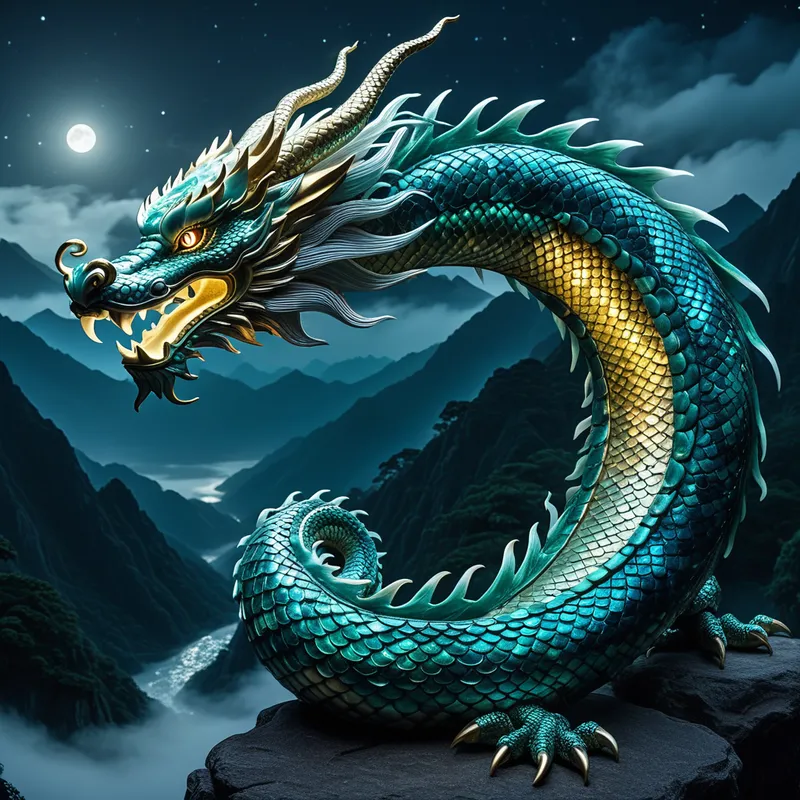
Listen, and hear a tale from when [the world](/myths/the-world “Myth from Tarot culture.”/) was softer, and the boundaries between heaven, earth, and [water](/myths/water “Myth from Chinese culture.”/) were mere whispers. In the celestial courts of the [Jade Emperor](/myths/jade-emperor “Myth from Chinese culture.”/), there lived a Long Wang, a Dragon King of the Eastern Sea. This was no beast of wrath, but a being of profound majesty, whose scales held the patina of ancient bronze and whose breath was the morning mist. His most treasured possession was a [pearl](/myths/pearl “Myth from Chinese culture.”/), but no ordinary gem. This was the Ye Ming Zhu.
By day, it was a sphere of perfect, milky white, cool to the touch. But when the sun fled and the world was swallowed by the velvet cloak of night, the pearl awoke. It emitted a light that was not of fire, but of condensed moonlight and forgotten starlight—a soft, silvery radiance that illuminated truth, revealed hidden paths, and brought calm to the most turbulent spirit. [The Dragon](/myths/the-dragon “Myth from Chinese culture.”/) King would often ascend to the highest cloud-peak, cradling the pearl, and its light would weave through the constellations, a silent hymn to the harmony of the cosmos.
Yet, the mortal realm below was often steeped in a darker night—one of fear, ignorance, and stumbling blindness. Fishermen dreaded the moonless black of [the sea](/myths/the-sea “Myth from Greek culture.”/), villages huddled against the oppressive dark, and souls lost their way. The Dragon King, in a moment of celestial compassion—or perhaps a sage’s calculated risk—decided to bestow a glimpse of this light upon the world. On a night thick with clouds, he descended to the mouth of a great river where it met the sea. Holding the pearl aloft, he let its radiance spill across the waves, guiding a lost fleet to safety.
But in that moment of connection between the divine and the mortal, a great wave, born of the dragon’s own powerful presence, surged. The Ye Ming Zhu, for all its power, was a [thing](/myths/thing “Myth from Norse culture.”/) of balance, not force. It slipped from his claw and was taken by the retreating waters, tumbling into the murky depths of [the river](/myths/the-river “Myth from Buddhist culture.”/) estuary. The dragon’s roar of dismay was the thunder that night. He searched, but the pearl had chosen to hide. Its light was now buried, not in celestial vaults, but in the mud and reeds of the earthly realm.
It did not die. On the darkest nights, when despair was deepest, a lone fisherman or a heart-sick wanderer might see a gentle glow emanating from the water’s edge or deep within a forest pool. It was never found for long; if sought with greed, it would vanish. But to the pure of heart, the truly lost, or the one who had given up searching, it would appear—a silent, shining companion in the dark, showing the next step, and the next, until dawn.

Cultural Origins & Context
The myth of the Ye Ming Zhu is woven from the rich tapestry of Chinese folklore, Daoist philosophy, and local animist beliefs. It is not a myth confined to a single canonical text like the Shan Hai Jing, but a fluid story passed down through oral tradition, often told by village elders, Daoist monks, and traveling storytellers. Its primary function was not just entertainment, but moral and spiritual instruction.
It exists within a worldview where dragons are not monsters, but divine, often benevolent rulers of waterways and weather, responsible for rain and thus, agricultural life. The pearl is a common symbol of a dragon’s power, wisdom, and spiritual essence. This specific tale served multiple societal roles: it explained the phenomenon of faint, mysterious lights in swamps or forests (often attributed to ghost fire or Jing), it emphasized the Daoist virtue of [Wu Wei](/myths/wu-wei “Myth from Taoist culture.”/)—that the greatest treasures come not through forceful seeking but through alignment—and it offered hope. In a peasant society vulnerable to the literal and metaphorical darkness of nature, the story affirmed that guidance was always present, hidden but accessible, if one’s heart was right.
Symbolic Architecture
At its core, the myth is an exquisite map of the [psyche](/myths/psyche “Myth from Greek culture.”/). The Long Wang represents the transcendent, ordered Self—the [aspect](/symbols/aspect “Symbol: A distinct feature, quality, or perspective of something, often representing a partial view of a larger whole.”/) of our [consciousness](/symbols/consciousness “Symbol: Consciousness represents the state of awareness and perception, encompassing thoughts, feelings, and experiences.”/) connected to the cosmic and the eternal. His [pearl](/symbols/pearl “Symbol: The pearl symbolizes purity, wisdom, and the beauty derived from overcoming adversity.”/) is the [symbol](/symbols/symbol “Symbol: A symbol can represent an idea, concept, or belief, serving as a powerful tool for communication and understanding.”/) of integrated consciousness, the “[treasure](/symbols/treasure “Symbol: A hidden or valuable object representing spiritual wealth, inner potential, or divine reward.”/) hard to attain” in Jungian terms, which contains the light of [awareness](/symbols/awareness “Symbol: Conscious perception of self, surroundings, or internal states. Often signifies awakening, insight, or heightened sensitivity.”/) and wholeness.
The pearl that shines by night is the light of the soul that is only visible when the garish sun of the conscious ego sets.
The [dragon](/symbols/dragon “Symbol: Dragons are potent symbols of power, wisdom, and transformation, often embodying the duality of creation and destruction.”/)’s “[loss](/symbols/loss “Symbol: Loss often symbolizes change, grief, and transformation in dreams, representing the emotional or psychological detachment from something or someone significant.”/)” of the pearl is not an [accident](/symbols/accident “Symbol: An accident represents unforeseen events or mistakes that can lead to emotional turbulence or awakening.”/), but a necessary descent. For the light of consciousness to be of any real, transformative value, it must leave the pristine [heights](/symbols/heights “Symbol: Represents ambition, fear, or spiritual elevation. Often symbolizes life challenges or a desire for perspective.”/) of potential and plunge into the muddy, chaotic, and [unconscious depths](/symbols/unconscious-depths “Symbol: The hidden, primordial layers of the psyche containing repressed memories, instincts, archetypes, and collective wisdom beyond conscious awareness.”/) of the [human](/symbols/human “Symbol: The symbol of a human represents individuality, complexity of emotions, and social relationships.”/) experience—the [river](/symbols/river “Symbol: A river often symbolizes the flow of emotions, the passage of time, and life’s journey, reflecting transitions and movement in one’s life.”/) [estuary](/symbols/estuary “Symbol: A transitional zone where freshwater meets saltwater, symbolizing liminality, transformation, and the merging of different states or identities.”/) of our personal and collective shadows. The pearl hidden in the earthly muck symbolizes wisdom buried in our [trauma](/symbols/trauma “Symbol: A deeply distressing or disturbing experience that overwhelms the psyche, often manifesting in dreams as unresolved emotional wounds or psychological injury.”/), our instincts, our forgotten memories, and our bodily existence. It is the light within the darkness, not opposed to it.
The pearl’s elusive [nature](/symbols/nature “Symbol: Nature symbolizes growth, connectivity, and the primal forces of existence.”/)—appearing only to those who are lost, desperate, or not actively greed-seeking—speaks to the nature of profound psychological [insight](/symbols/insight “Symbol: A sudden, deep understanding of a complex situation or truth, often arriving unexpectedly and illuminating hidden connections.”/). It cannot be captured by the willful ego. It reveals itself in moments of surrender, during a “dark [night](/symbols/night “Symbol: Night often symbolizes the unconscious, mystery, and the unknown, representing the realm of dreams and intuition.”/) of the [soul](/symbols/soul “Symbol: The soul represents the essence of a person, encompassing their spirit, identity, and connection to the universe.”/),” when our usual strategies fail. It is the intuitive flash, the dream symbol, the sudden [clarity](/symbols/clarity “Symbol: A state of mental transparency and sharp focus, often representing resolution of confusion or attainment of insight.”/) that emerges not from striving, but from exhaustion and openness.
The Dreamer’s Resonance
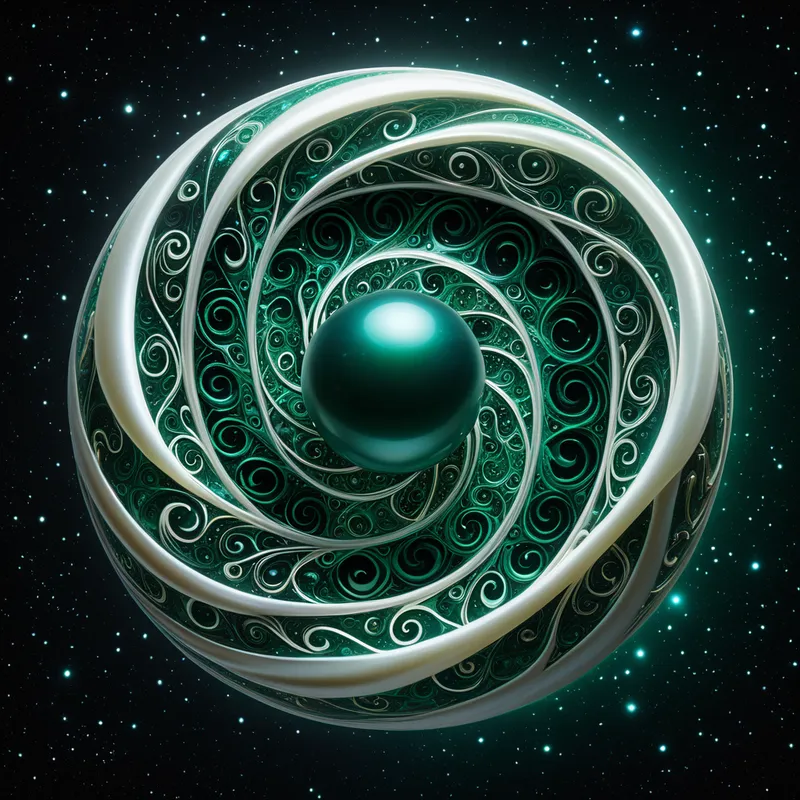
When this mythic pattern stirs in the modern dreamer, it often signals a profound encounter with [the Self](/myths/the-self “Myth from Jungian culture.”/) during a period of disorientation or depression. To dream of searching for, or serendipitously finding, a glowing object in dark water is a somatic experience of hope. The body in the dream feels the relief, the gentle guidance.
Psychologically, this is the process of connecting with inner resources that are felt to be lost or inaccessible. The “dark water” is the unconscious, often charged with emotion (sadness, fear, grief). The glowing pearl is the nascent awareness of a core truth, a latent talent, or a deep resilience that the dreamer possesses but has forgotten. The dream is not presenting a solution from outside, but illuminating a resource that has been within all along, buried under the “mud” of life’s difficulties, societal expectations, or personal neglect. It is the psyche’s way of initiating a process of recovery, not by fighting the dark, but by discovering the light that is native to it.
Alchemical Translation
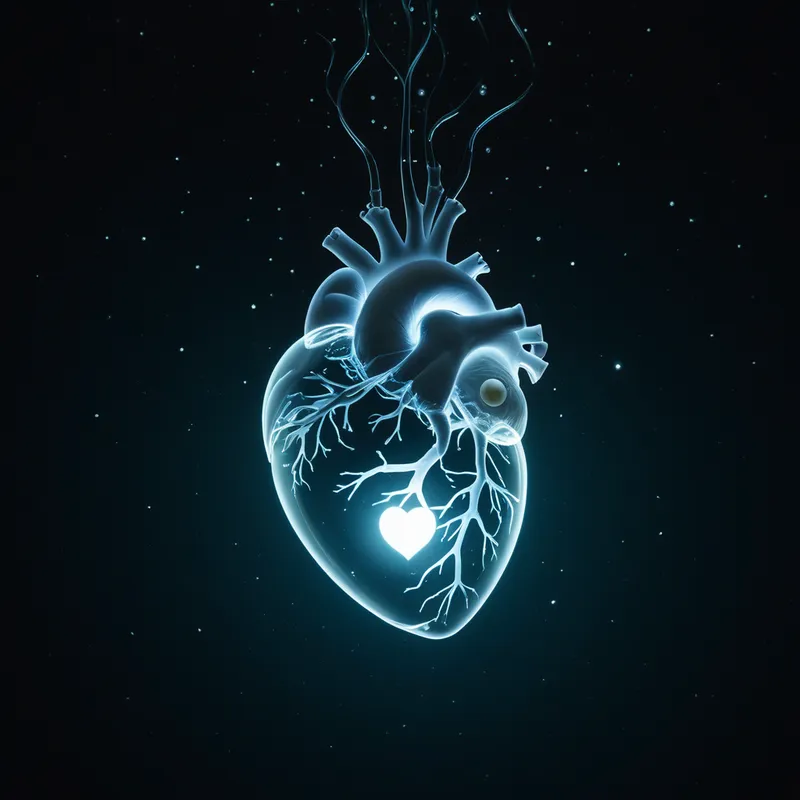
The journey of the Ye Ming Zhu is a perfect allegory for the alchemical process of individuation—the psychic transmutation of base lead into spiritual gold.
[The first stage](/myths/the-first-stage “Myth from Alchemical culture.”/) ([Nigredo](/myths/nigredo “Myth from Alchemical culture.”/), the blackening) is the pearl’s fall into the murky estuary. This corresponds to a life crisis, a depression, or a painful realization that shatters our previous conscious identity. We are plunged into the “mud.” The second stage (Albedo, the whitening) is the pearl’s faint, persistent glow in that darkness. This is the slow emergence of reflection, of beginning to see the patterns in our pain, the first hints of meaning in our suffering. We do not escape the mud; we start to see by a light that works within it.
The goal is not to retrieve the pearl and return it to the dragon’s sterile claw, but to become the estuary that cradles the light—to integrate the divine spark into the very fabric of our human experience.
The final, elusive stage ([Rubedo](/myths/rubedo “Myth from Alchemical culture.”/), the reddening) is not a single act of finding, but the ongoing relationship. The modern individual’s task is to cultivate the “fisherman’s” receptivity: to navigate their dark nights with a heart open enough to perceive the inner glow when it appears. It is to understand that our deepest wisdom and guiding light are not “out there” in spiritual bypass or perfection, but are embedded in our wounds, our failures, and our earthly journey. We do not become the dragon on the cloud; we become the humble, darkened shore that, on the right night, for the right seeker, can miraculously shine.
Associated Symbols
Explore related symbols from the CaleaDream lexicon: