
The Peacemaker Myth Meaning & Symbolism
A prophet emerges from the mist to heal a land shattered by bloodshed, bringing a message of peace, reason, and the Great Law.
The Tale of The Peacemaker
In the time before memory, when the land was a tapestry of war. The people of the longhouses, the Haudenosaunee, had forgotten the original instructions. Grief was the only harvest. The rivers ran with stories of vengeance, and the smoke from burning villages was a permanent stain upon [the sky](/myths/the-sky “Myth from Persian culture.”/). Brother turned against brother, clan against clan, in a cycle as old and as relentless as the turning seasons. [The world](/myths/the-world “Myth from Tarot culture.”/) was a wound, and the spirits wept.
From [the mist](/myths/the-mist “Myth from Celtic culture.”/)-shrouded waters of Lake Ontario, a vessel appeared. Not a canoe of birchbark, but one carved from pure, white stone. And within it stood a man. He was not a warrior; he carried no weapons. His power was in his bearing, in the clarity of his eyes that held the stillness of a deep lake. He was Deganawida, the Peacemaker, sent by the Creator. His mother had dreamed of his coming, a dream of a great white pine that would pierce the sky and shelter all nations.
His first test was a man consumed by the very darkness he sought to heal. Hiawatha was lost in a fog of madness and rage, his mind shattered by the murder of his beloved family. He wandered the forests, a ghost of vengeance. The Peacemaker found him not with force, but with words that were like cool [water](/myths/water “Myth from Chinese culture.”/) on a fevered brow. He helped Hiawatha gather the shells of the mourning wampum, stringing each one as a bead of grief, until the weight of sorrow was lifted and his mind was made clear again. From that moment, Hiawatha’s tongue became the instrument of the Peacemaker’s message.
But words alone could not stop the war. They needed a heart that was already a fortress of neutrality. They sought out Jigonsaseh, the woman who fed warriors from all sides at her hearth. In her longhouse, no blood could be shed. The Peacemaker recognized her authority, the power of the women, and made her the keeper of the council fire. He planted the seeds of a new law in the fertile ground of her compassion.
Their greatest adversary was the powerful sorcerer Tadodaho
. He ruled from Onondaga, his body twisted like the roots of a gnarled tree, his hair a nest of living serpents, his mind a whirlwind of suspicion and dark magic. To approach him was to court death. Yet the Peacemaker, with Hiawatha and Jigonsaseh, walked into the serpent’s den. They did not bring threats, but the logic of peace, the promise of strength through unity. They offered to comb the snakes from Tadodaho’s hair, to straighten his twisted body with the truth of their message. As they spoke, as they tended to him, the writhing serpents stilled and fell away. The whirlwind in his mind calmed. Tadodaho was healed, and in his healing, he became the Firekeeper, the central pillar of the new confederacy.
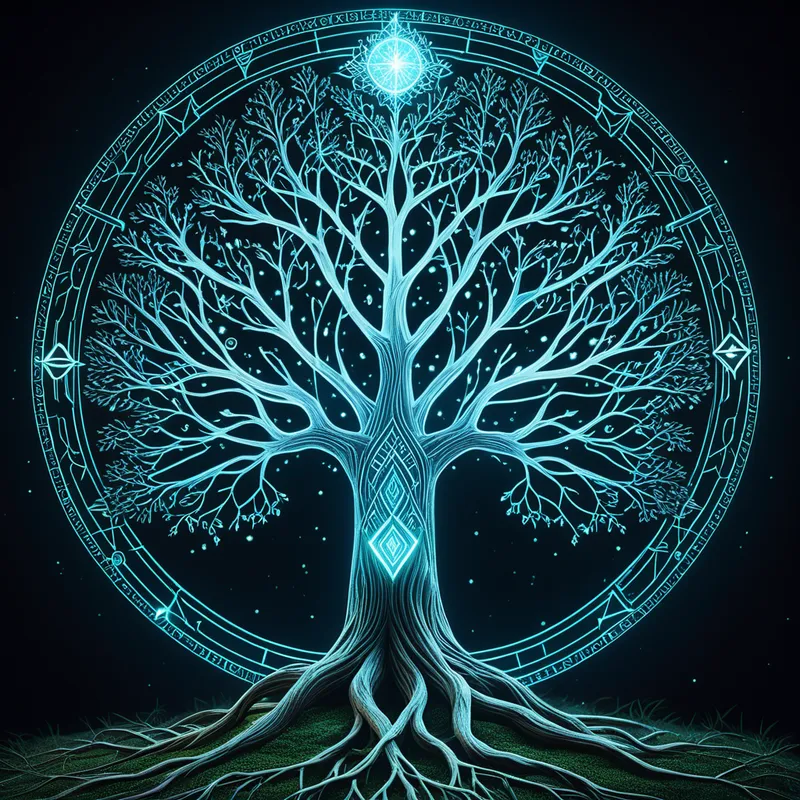
On the shores of Onondaga Lake, the Peacemaker performed the final miracle. He uprooted a towering white pine, casting the weapons of war into the chasm beneath its roots. He replanted the tree, the Tree of Peace, its roots spreading to the four directions. Upon its highest branches, he placed the Eagle That Sees Far. Then, he gathered five arrows—one for each nation: Mohawk, Oneida, Onondaga, Cayuga, and Seneca. Individually, they could be snapped. But bound together, no force on earth could break them. The Great Law was established, a law not of men, but of nature itself, built upon health, reason, and power.
His work complete, the Peacemaker returned to the mist. He entered his white stone canoe, promising that if the people ever forgot the Great Law, he would return. He vanished as he came, leaving behind not a tomb, but a living, breathing nation, rooted in peace.
Cultural Origins & Context
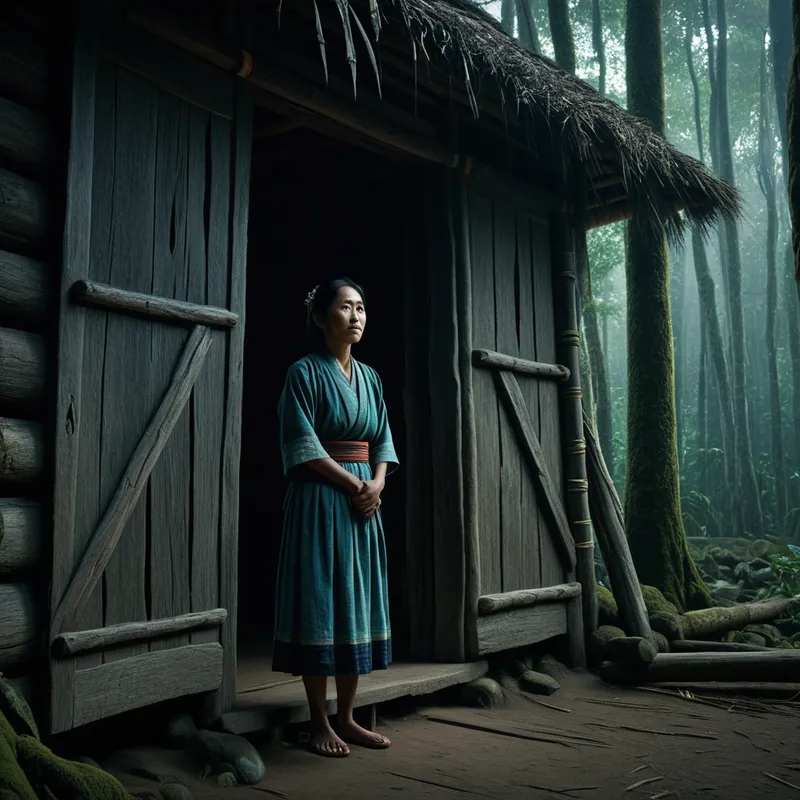
This is not merely a story; it is the constitutional epic of the Haudenosaunee Confederacy. It is a sacred narrative, passed down for centuries through oral tradition by specially designated Hodiyahnehsonh. Its recitation is a ceremonial act, often taking days to complete in its full form, performed at the opening of Grand Councils and other significant gatherings.
Historically, scholars place the formation of the Confederacy sometime between the 12th and 15th centuries AD, though Haudenosaunee tradition holds it as far older. The myth served—and continues to serve—multiple vital functions. It is a historical record, a political constitution (influencing, some argue, later democratic ideas), a legal framework, and a spiritual guide. It encodes the sophisticated governance system where clan mothers hold the power to appoint and remove chiefs, and where consensus, not coercion, is the rule. The story is the psychic and social glue that binds the nations, a constant reminder that their strength is not in conquest, but in unity and right relationship.
Symbolic Architecture
The myth is a masterclass in symbolic [psychology](/symbols/psychology “Symbol: Psychology in dreams often represents the exploration of the self, the subconscious mind, and emotional conflicts.”/). The Peacemaker himself is not a god, but a [prophet](/symbols/prophet “Symbol: A messenger or seer who receives divine revelations, often warning of future events or guiding moral direction.”/)—a manifestation of an awakened [consciousness](/symbols/consciousness “Symbol: Consciousness represents the state of awareness and perception, encompassing thoughts, feelings, and experiences.”/) that emerges from the [collective unconscious](/symbols/collective-unconscious “Symbol: The Collective Unconscious refers to the part of the unconscious mind shared among beings of the same species, embodying universal experiences and archetypes.”/) when the [psyche](/myths/psyche “Myth from Greek culture.”/) is in extreme distress. He represents the archetypal principle of Eros, not as romantic love, but as the connective, binding, and reconciling force that opposes the fragmenting power of Thanatos (the [death](/symbols/death “Symbol: Symbolizes transformation, endings, and new beginnings; often associated with fear of the unknown.”/) drive) seen in the endless war.
The white stone canoe is the vessel of a consciousness that is both immovable and fluid. It travels on the waters of the unconscious, but is not dissolved by them. It is a thought so clear, a purpose so pure, that it can navigate the deepest, most turbulent emotions without sinking.
Hiawatha embodies the redeemed intellect. His mind, once shattered by [trauma](/symbols/trauma “Symbol: A deeply distressing or disturbing experience that overwhelms the psyche, often manifesting in dreams as unresolved emotional wounds or psychological injury.”/) (the murder of his [family](/symbols/family “Symbol: The symbol of ‘family’ represents foundational relationships and emotional connections that shape an individual’s identity and personal development.”/)), is made whole through the ritualized [expression](/symbols/expression “Symbol: Expression represents the act of conveying thoughts, emotions, and individuality, emphasizing personal communication and creativity.”/) of [grief](/symbols/grief “Symbol: A profound emotional response to loss, often manifesting as deep sorrow, yearning, and a sense of emptiness.”/) (the mourning wampum). He symbolizes how raw, paralyzing pain must be consciously gathered, acknowledged, and strung into a narrative before it can be transformed into eloquence and [purpose](/symbols/purpose “Symbol: Purpose signifies direction, meaning, and intention in life, often reflecting personal ambitions and core values.”/). Tadodaho is the ultimate [shadow figure](/symbols/shadow-figure “Symbol: The shadow figure represents the repressed or hidden aspects of oneself, often embodying fears or unresolved conflicts that can impact personal growth.”/)—the twisted, paranoid, and powerful [aspect](/symbols/aspect “Symbol: A distinct feature, quality, or perspective of something, often representing a partial view of a larger whole.”/) of the psyche that believes only in domination and suspicion. His healing is not a defeat, but an [integration](/symbols/integration “Symbol: The process of unifying disparate parts of the self or experience into a cohesive whole, often representing psychological wholeness or resolution of internal conflict.”/). The serpents in his [hair](/symbols/hair “Symbol: Hair often symbolizes identity, power, and self-expression, reflecting how we perceive ourselves and how we wish to be perceived by others.”/) represent chaotic, poisonous thoughts; to comb them out is to bring order to madness, to make the [shadow](/symbols/shadow “Symbol: The ‘shadow’ embodies the unconscious, repressed aspects of the self and often represents fears or hidden emotions.”/) a [guardian](/symbols/guardian “Symbol: A protector figure representing safety, authority, and guidance, often embodying parental, societal, or spiritual oversight.”/) (the Firekeeper) rather than an [enemy](/symbols/enemy “Symbol: An enemy in dreams often symbolizes an internal conflict, self-doubt, or an aspect of oneself that one struggles to accept.”/).
The central [symbol](/symbols/symbol “Symbol: A symbol can represent an idea, concept, or belief, serving as a powerful tool for communication and understanding.”/), the [Tree](/symbols/tree “Symbol: In dreams, the tree often symbolizes growth, stability, and the interconnectedness of life.”/) of [Peace](/symbols/peace “Symbol: Peace represents a state of tranquility and harmony, both internally and externally, often reflecting a desire for resolution and serenity in one’s life.”/), is a profound [image](/symbols/image “Symbol: An image represents perception, memories, and the visual narratives we create in our minds.”/) of [the Self](/myths/the-self “Myth from Jungian culture.”/) in Jungian terms—the fully integrated psyche. Its roots (the past, the unconscious) spread in all directions, drawing nourishment. Its [trunk](/symbols/trunk “Symbol: The trunk in dreams typically denotes the core structure or foundation of one’s identity, values, or beliefs.”/) is the enduring [structure](/symbols/structure “Symbol: Structure in dreams often symbolizes stability, organization, and the framework of one’s life, reflecting how one perceives their environment and personal life.”/) of the individual or collective consciousness. Its high branches and the [eagle](/symbols/eagle “Symbol: The eagle is a symbol of power, freedom, and transcendence, often representing a person’s aspirations and higher self.”/) represent a vigilant [connection](/symbols/connection “Symbol: Connection symbolizes relationships, communication, and bonds among individuals.”/) to the spiritual, the [ability](/symbols/ability “Symbol: In dreams, ‘ability’ often denotes a recognition of skills or potential that one possesses, whether acknowledged or suppressed.”/) to see approaching dangers (neuroses, conflicts) from a higher [perspective](/symbols/perspective “Symbol: Perspective in dreams reflects one’s viewpoints, attitudes, and how one interprets experiences.”/). The weapons buried beneath it signify the subjugation of violent instincts to a greater purpose.
The Dreamer’s Resonance
When this myth stirs in the modern dreamer, it signals a profound internal conflict reaching a crisis point. You may dream of being in a landscape of ruin, caught between warring factions that feel like parts of yourself—the critical voice vs. the vulnerable heart, ambition vs. compassion, logic vs. intuition. The somatic feeling is one of fragmentation, a literal ache of being torn apart.
Dreaming of a stone object (a canoe, a bowl) in water suggests the emergence of a new, solid principle amidst emotional turmoil. A dream of trying to comb tangled, living hair speaks to the exhausting, intricate work of untangling a knotted and anxious mind. To dream of gathering scattered objects—like shells or stones—into a meaningful pattern is the psyche’s rehearsal for gathering disparate, painful memories or personality fragments into a coherent whole. The appearance of a serene, authoritative figure who speaks with calm logic amidst chaos is the dream-ego’s invocation of the inner Peacemaker, the Self arriving to broker a truce in your inner civil war.

Alchemical Translation
For the individual, the myth of the Peacemaker is a blueprint for psychic individuation. The initial state of perpetual war mirrors the neurotic, self-sabotaging state where complexes battle for dominance, wasting life-force.
The alchemical process begins with the emergence of the stone vessel: the first, fragile crystallization of a new attitude. It is the moment you step back from reactive anger or despair and ask, “What would peace look like here?” This is the opus contra naturam—the work against the habitual, violent nature of the psyche.
The journey to heal Hiawatha is the nigredo, the blackening. It is the necessary descent into the black waters of grief, regret, and trauma. You must string your own wampum, bead by painful bead, until the mourning is complete and the mind is cleared for a new purpose.
Recruiting Jigonsaseh represents acknowledging the reconciling, nourishing, and often overlooked feminine principle within (which exists in all genders). It is creating an inner sanctuary—a meditative practice, a creative outlet, a therapeutic space—where opposing impulses can meet without violence, fed by compassion.
The confrontation with Tadodaho is the central ordeal, the confrontation with the shadow. This is the twisted, powerful, and ugly part of you that thrives on conflict, suspicion, and control. You cannot kill it; you must heal it with the truth of your broader purpose. Combing the snakes from its hair is the meticulous, patient work of shadow integration: acknowledging your capacity for malice, your paranoias, your manipulative tendencies, and bringing them into the light of consciousness, where they lose their autonomous, demonic power and become useful energy.
Finally, planting the Tree of Peace is the establishment of a new inner constitution. It is the moment when your core values (the roots), your daily practices and integrity (the trunk), and your highest aspirations and awareness (the eagle) are aligned. You bury the weapons of self-hatred, harsh judgment, and internal division. You bind your disparate talents, drives, and roles (the five arrows) into a single, unbreakable purpose. The Peacemaker then departs, not because he is gone, but because he is no longer an external figure. He has become the ruling principle of your own psyche—the Great Law of your own being.
Associated Symbols
Explore related symbols from the CaleaDream lexicon: