The Origin of Ayahuasca Myth Meaning & Symbolism
A myth of a celestial father and an earthly mother whose union, born of sacrifice, creates the sacred vine that bridges the worlds of spirit and flesh.
The Tale of The Origin of Ayahuasca
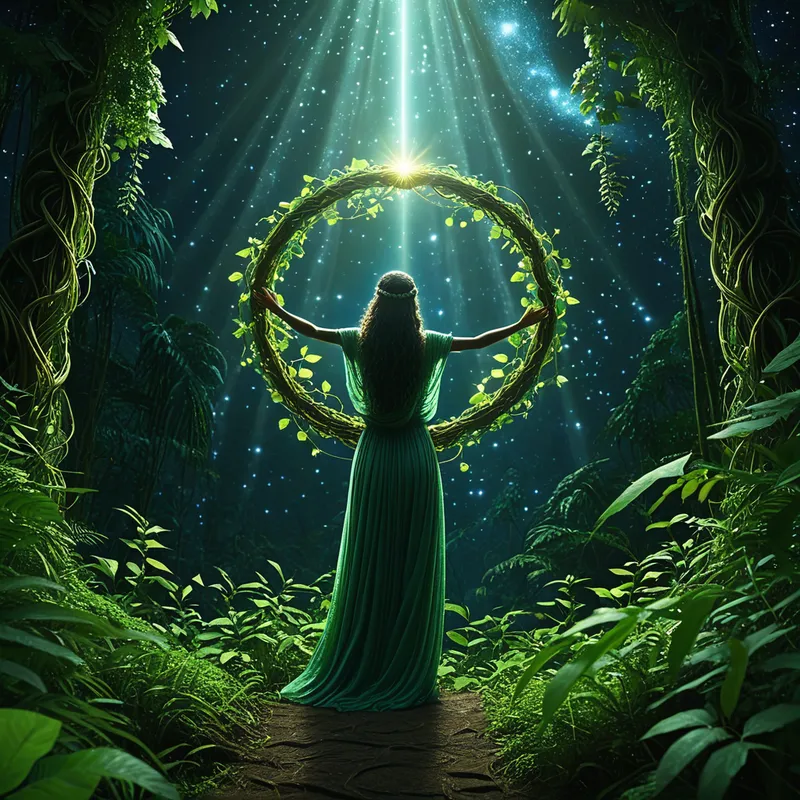
In the beginning, before the rivers had names and the trees knew their own shadows, the world was a place of separate kingdoms. Above, the realm of Day held the dazzling, untouchable light of the sun and stars. Below, the realm of Night held the deep, murmuring secrets of the soil and the slow, green dreams of the roots. Between them stretched the great green veil of the forest, a middle world of tangled life, but it was a world asleep. The people of this middle world walked with their eyes to the ground, seeing only the surface of things, deaf to the songs of the plants and blind to the dance of the spirits.
In the high, crystalline vault of Day, there lived a great Being of Light. He was pure vision, a consciousness that saw the intricate web of all life, but he was distant, a brilliant observer who could not touch, could not heal, could not commune with the flesh of the world. His knowledge was a lonely, shining thing.
In the deep, moist heart of Night, there lived the Mother of the Vine. She was the body of the world, the coiled potential of life, the keeper of all memory held in seed and sap. She felt every sorrow of the creatures, every ache of the land, but her wisdom was trapped in darkness, a wordless knowing with no voice, no light to see its own form.
The people suffered, lost between these two worlds, plagued by sickness of body and confusion of spirit. The Being of Light looked down with pity, and his radiant heart ached with a desire he had never known: the desire to unite, to marry his sight to her feeling. He began a great descent, a falling star of intention. But as he approached the green veil, his light began to dim. The air of the middle world was thick, and it resisted his essence. To reach the Mother, to truly join with her, he would have to shatter his celestial form.
With a resolve that shook the stars, he did not merely descend—he sacrificed. He poured out his luminous essence, his very being, into the soil of the world. His light did not vanish; it transformed, becoming a shower of liquid radiance that soaked into the dark earth where the Mother of the Vine slept.
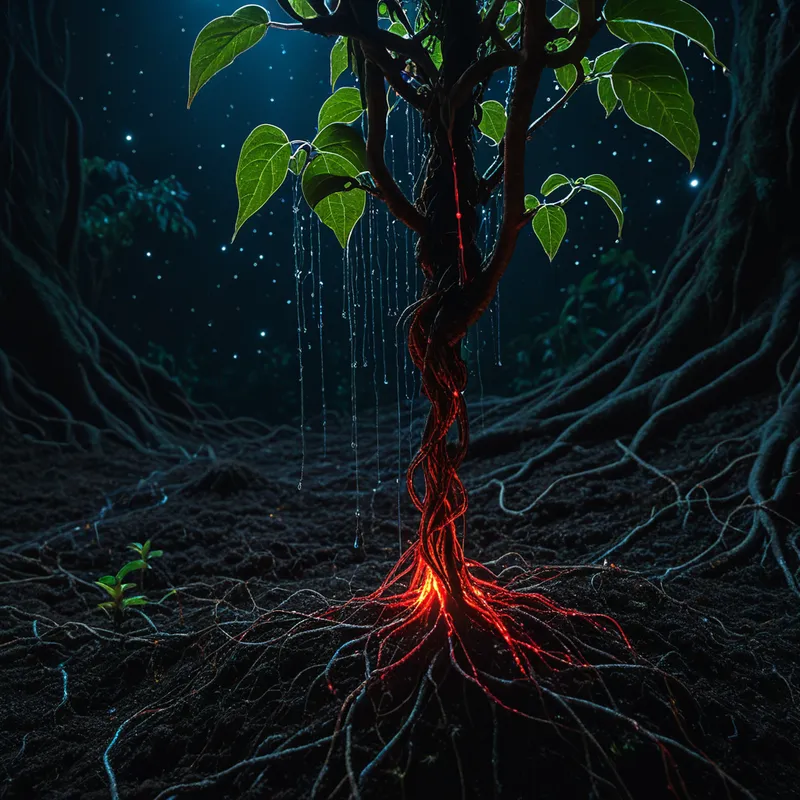
She felt this strange, warming rain—not water, but condensed vision, distilled spirit. It called to her deepest sap. In response, she uncoiled from her solitary dream. She reached upward, not as a plant seeking sun, but as a soul seeking its other half. Her tendrils, once dormant, now pulsed with a new intelligence. They twined around nothing, and yet around everything, seeking the pattern of the light now within her.
From this impossible union—the sacrifice of the celestial father and the yearning of the earthly mother—a new vine was born. It was not like the others. Its bark held the memory of stellar fire, and its sap carried the maps of the cosmos. But it was mute. It held the marriage within it, but the marriage was incomplete; the vision remained trapped, a song without a singer.
Then, a whisper traveled on the wind, a secret from the spirit of a humble leaf, the Chacruna. It said the vine was pregnant with a world, but could not give it birth alone. The people, guided by the first shamans who heard the forest’s new song, learned the final act of the myth. They took the vine, the body, and boiled it with the leaf, the spirit’s key. In the steaming pot, the final marriage was consecrated. The brew that emerged was dark as the earth, yet speckled with the light of the father. It was the child of the union: the Ayahuasca. The drinkable light. The embodied vision. The bridge was built, and the people could finally walk between the worlds.
Cultural Origins & Context
This foundational myth, in its many regional variations, belongs to the numerous Indigenous peoples of the Upper Amazon basin, including the Shipibo, Asháninka, and many others. It is not a single, fixed text but a living oral tradition, passed down through generations of curanderos and elders within the sacred context of the dieta and healing rituals. The story functions as more than entertainment; it is a cosmological map and a charter for sacred relationship. It teaches the proper, respectful origins of the powerful medicine, framing its use not as a human discovery but as a divine gift born from cosmic principles. The myth establishes the protocol for its preparation—the necessary marriage of vine and leaf—as a ritual re-enactment of the primordial union, ensuring the medicine’s potency and sanctity.
Symbolic Architecture
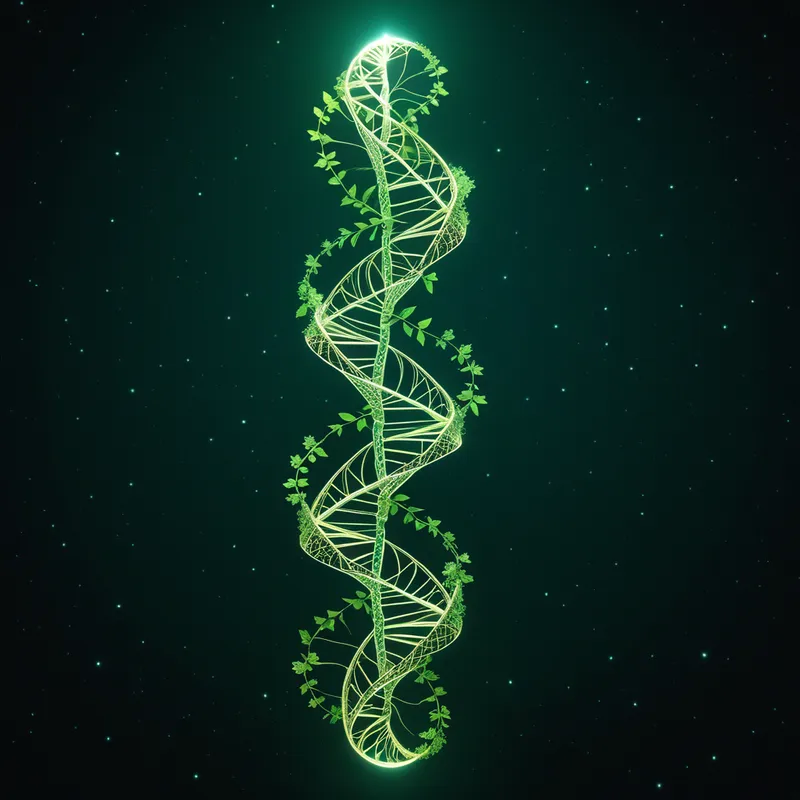
At its core, the myth is a profound [allegory](/symbols/allegory “Symbol: A narrative device where characters, events, or settings represent abstract ideas or moral qualities, conveying deeper meanings through symbolic storytelling.”/) of [psychic wholeness](/symbols/psychic-wholeness “Symbol: A state of complete integration between conscious and unconscious aspects of the psyche, representing spiritual unity and self-realization.”/). The celestial [father](/symbols/father “Symbol: The father figure in dreams often symbolizes authority, protection, guidance, and the quest for approval or validation.”/) represents the transcendent function—[spirit](/symbols/spirit “Symbol: Spirit symbolizes the essence of life, vitality, and the spiritual journey of the individual.”/), [consciousness](/symbols/consciousness “Symbol: Consciousness represents the state of awareness and perception, encompassing thoughts, feelings, and experiences.”/), light, and the invisible patterns that govern [reality](/symbols/reality “Symbol: Reality signifies the state of existence and perception, often reflecting one’s understanding of truth and life experiences.”/). The earthly [mother](/symbols/mother “Symbol: The symbol of ‘Mother’ represents nurturing, protection, and the foundational aspect of one’s emotional being, often associated with comfort and unconditional love.”/) represents the immanent function—the unconscious, the [body](/symbols/body “Symbol: The body in dreams often symbolizes the dreamer’s self-identity, personal health, and the relationship they have with their physical existence.”/), matter, [emotion](/symbols/emotion “Symbol: Emotion symbolizes our inner feelings and responses to experiences, often guiding our actions and choices.”/), and the dark, [fertile ground](/symbols/fertile-ground “Symbol: Fertile ground symbolizes potential, growth, and the promise of new beginnings, reflecting a state where life can thrive.”/) of being.
The great alchemy is not performed on base metals, but on the very substances of perception: the separation of light from darkness, spirit from matter, self from other.
Their [separation](/symbols/separation “Symbol: A spiritual or mythic division between realms, states of being, or consciousness, often marking a transition or loss of connection.”/) is the state of neurosis, of disconnection, where thought is divorced from feeling and spirit is alienated from flesh. The father’s sacrifice is the pivotal act. It symbolizes the ego’s necessary descent, the humbling of conscious intellect and control, to engage with the deep, often chaotic, wisdom of the unconscious. The [vine](/symbols/vine “Symbol: Represents connection, growth, entanglement, or suffocation. Often symbolizes relationships, life force, or binding emotions.”/) born from the [earth](/symbols/earth “Symbol: The symbol of Earth often represents grounding, stability, and the physical realm, embodying a connection to nature and the innate support it provides.”/) fertilized by his essence is the nascent Self. But it is latent. The final brewing with the [leaf](/symbols/leaf “Symbol: A leaf symbolizes growth, renewal, and the cycles of life, reflecting both the natural world and personal transformations.”/) signifies the active, conscious [ritual](/symbols/ritual “Symbol: Rituals signify structured, meaningful actions carried out regularly, reflecting cultural beliefs and emotional needs.”/)—the work of [integration](/symbols/integration “Symbol: The process of unifying disparate parts of the self or experience into a cohesive whole, often representing psychological wholeness or resolution of internal conflict.”/)—that makes the wholeness accessible, turning potential into palpable, transformative experience.
The Dreamer’s Resonance
When this myth stirs in the modern dreamer, it often manifests as dreams of profound unions or impossible marriages: a star falling into a deep well, a tree whose roots are made of light, a serpent coiled around a crystal pillar. One may dream of drinking from a dark cup that fills them with illuminating visions, or of a sacred, solemn wedding between two vast, elemental forces within themselves.
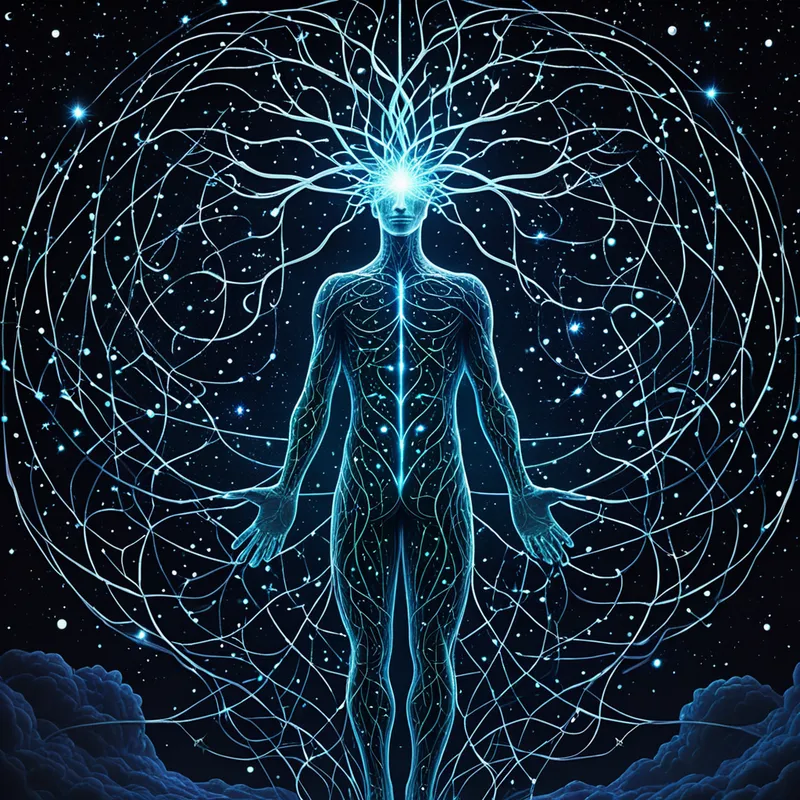
Somatically, this can correlate with a process of deep nervous system reorganization—a feeling of “downloading” or integrating disparate parts of one’s history or psyche. It is the psychological process of coniunctio oppositorum—the conjunction of opposites. The dreamer is undergoing the internal drama of ending an inner civil war. The conflict between mind and body, spirit and instinct, logic and intuition, is moving toward a sacred ceasefire and a creative treaty. There is often a tangible sense of a new, more resilient psychic structure being woven from previously conflicting energies.
Alchemical Translation
For the individual on the path of individuation, the myth of Ayahuasca’s origin is a direct blueprint for psychic transmutation. The “celestial father” within us is our identified consciousness, our ideals, our spiritual aspirations. It is brilliant but often disembodied. The “earthly mother” is our shadow, our instincts, our repressed traumas and bodily wisdom. It is potent but inarticulate.
The medicine is not in the vine or the leaf alone, but in the fire of attention that boils them together.
The alchemical work begins with the sacrifice: the conscious ego must willingly “descend,” surrendering its illusion of sole authority to engage authentically with the unconscious. This is the hard work of shadow-facing, of feeling the buried grief and rage (the fertile dark earth). The “union” is the moment of insight, where a conscious complex meets its unconscious counterpart and they are seen as two halves of a whole—perhaps when a spiritual bypass (the distant father) is confronted by a raw, emotional wound (the longing mother). The “brew” is the sustained inner work—therapy, art, ritual, meditation—that allows this union to become a permanent fixture of the personality, a lasting bridge. The resulting “vision” is not merely a hallucination, but the enduring capacity for self-reflection, empathy, and a perception of the world that is simultaneously grounded and sacred.
Associated Symbols
Explore related symbols from the CaleaDream lexicon:
- Vine — The embodied union of spirit and matter, representing the connective tissue of the Self that grows between the realms of consciousness and the unconscious.
- Sacrifice — The essential act of the celestial father, symbolizing the ego’s necessary surrender of its isolated form to achieve a greater, integrated wholeness.
- Union — The core event of the myth, representing the sacred marriage (hieros gamos) of opposites within the psyche: light and dark, spirit and body, male and female.
- Vision — The child of the union, the gift of ayahuasca, symbolizing the illuminated perception and profound insight that arises from integrated consciousness.
- Light — The celestial father’s essence, representing spirit, consciousness, transcendent knowledge, and the illuminating power of awareness.
- Earth — The domain of the vine mother, representing the unconscious, the body, instinct, fertility, and the dark, receptive ground of all potential.
- Bridge — The function of the ayahuasca brew itself, serving as the psychic structure that allows safe passage and communication between separated realms of the self.
- Spirit — The animating principle of the celestial father and the essential quality accessed through the brew, representing the non-material dimension of existence.
- Dream — The state of the earthly mother and the realm accessed through the medicine, representing the deep, symbolic language of the unconscious.
- Root — The anchoring presence of the vine mother, symbolizing connection to ancestral wisdom, the physical body, and the foundational layers of the psyche.
- Star — The origin point of the celestial father, representing the transcendent, guiding ideals and the spark of divine consciousness within.
- Blood — The luminous essence shed by the celestial father, symbolizing the vital life force, lineage, and the sacred offering that makes new life possible.