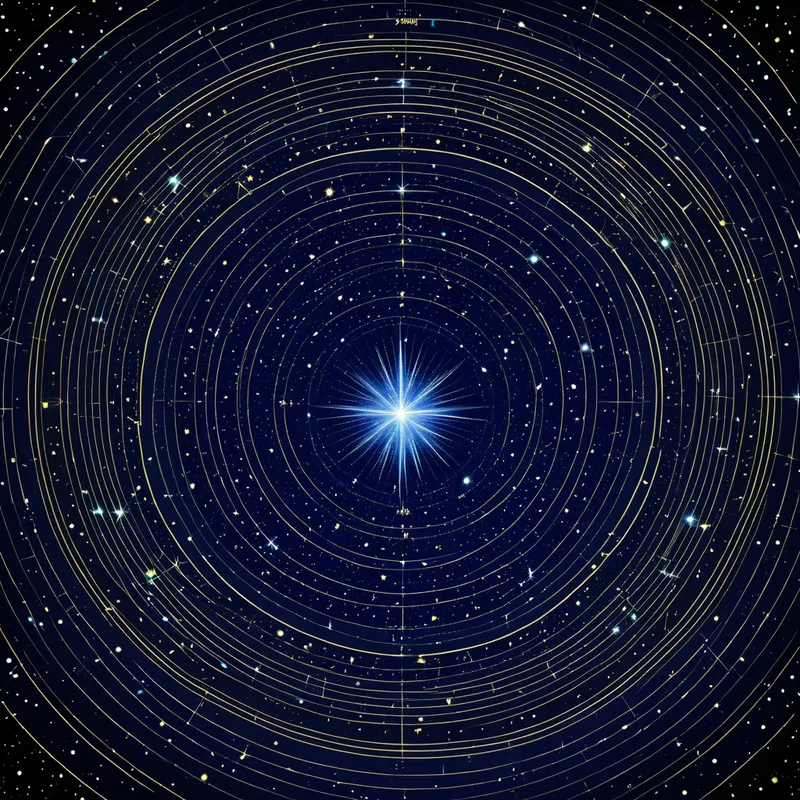
The North Star Myth Meaning & Symbolism
A celestial anchor, fixed and eternal, around which the heavens turn and the lost soul finds its way home.
The Tale of The North Star
Listen. Before maps were drawn on parchment, before iron needles swung toward the pole, there was only the dark and the cold and the terrible, beautiful turning of [the sky](/myths/the-sky “Myth from Persian culture.”/). [The world](/myths/the-world “Myth from Tarot culture.”/) was adrift. The great bear prowled the heavens, [the hunter](/myths/the-hunter “Myth from African culture.”/) chased his prey, but all spun in a dizzying, endless dance. Sailors on the wine-dark sea vanished into [the horizon](/myths/the-horizon “Myth from Various culture.”/)’s maw. Nomads on the steppe, their world a flat disk of grass, lost their way between one hill and the next. The human heart, small beneath the vault of night, knew the primal fear of being unmoored.
But in the highest dome of the north, a promise was kept.
It did not blaze with the desperate fire of a planet, nor flicker with the birth-throes of a distant sun. It was a pinprick of cold, clear certainty. While its brethren wheeled and fled across the black, this one held fast. It was the nail upon which the turning plate of the cosmos was hung. The Pivot of Heaven. The Unmoved Mover.
The old ones, their faces etched by wind and starlight, saw it first. They watched the celestial river of [the Milky Way](/myths/the-milky-way “Myth from Greek culture.”/) pour its light across the zenith, and they saw that one star, alone, was untouched by the flow. It was the tent peg of the gods, driven deep into the firmament. To the ones who walked the ice, it was the Nail Star, the fixed point around which the great frosty bear of the Great Wain forever circled. To those who sailed by the smell of [the wind](/myths/the-wind “Myth from Various culture.”/) and the taste of the spray, it was the Phœnician Star, the silent guide who did not lie.
A story was born not of a single hero, but of every traveler who lifted their eyes. It is the story of the shepherd on the Anatolian hillside, driving his flock home as that star brightened above the mountain pass. It is the story of the Polynesian wayfinder, chanting star-paths, his canoe pointed unerringly at the Hoku Pa’a, the “Fixed Star,” even as swell and cloud tested his resolve. It is the story of the fugitive slave on the American frontier, whispering “follow the drinking gourd,” its handle ever pointing to freedom’s promise.
The conflict was the chaos of the journey; the rising action, the growing trust in a light that did not change. The resolution was not an epic battle, but a quiet arrival. The sighting of a familiar coastline. The smell of home fires burning. The moment [the wanderer](/myths/the-wanderer “Myth from Taoist culture.”/) steps across [the threshold](/myths/the-threshold “Myth from Folklore culture.”/), looks back once at the night sky, and nods in silent thanks to the fixed point in the turning world.

Cultural Origins & Context
The myth of the [North Star](/myths/north-star “Myth from Various culture.”/) is perhaps humanity’s first and most universal scientific-spiritual observation. It is not the property of a single culture, but a shared inheritance born from a shared need: orientation. Its “various” origins span continents and epochs. In ancient Egypt, it was associated with the goddess [Seshat](/myths/seshat “Myth from Egyptian culture.”/) and the concept of cosmic order, Maat. For the Chinese, it was Ziwei, the celestial emperor’s throne, the axis of the bureaucratic heavens.
It was passed down not in a single sacred text, but in the practical poetry of oral tradition: in the chants of Micronesian navigators, [the star](/myths/the-star “Myth from Tarot culture.”/) lore of Norse skalds, the astronomical alignments of Mayan priests, and the folk songs of the Underground Railroad. Its societal function was profoundly dual. On the material plane, it was a vital technology for survival, enabling migration, trade, and exploration. On the spiritual plane, it modeled constancy, sovereignty, and divine law. It was the proof that amidst flux, a principle of order existed. Kings aligned their thrones with it; temples were oriented to it. It was the symbol of the center that holds, the still point in the turning world that makes movement and life possible.
Symbolic Architecture
Psychologically, the North Star is the [archetype](/symbols/archetype “Symbol: A universal, primordial pattern or prototype in the collective unconscious that shapes human experience, behavior, and creative expression.”/) of the Self. It represents the innate, unchanging core of the [personality](/symbols/personality “Symbol: Personality in dreams often symbolizes the traits and characteristics of the dreamer, reflecting how they perceive themselves and how they believe they are perceived by others.”/) around which the complex rotations of [the ego](/myths/the-ego “Myth from Jungian culture.”/), the [persona](/symbols/persona “Symbol: The social mask or outward identity one presents to the world, often concealing the true self.”/), and the unconscious revolve.
The ego journeys; the Self guides. The personality is the wandering constellation; the North Star is the point of origin and return.
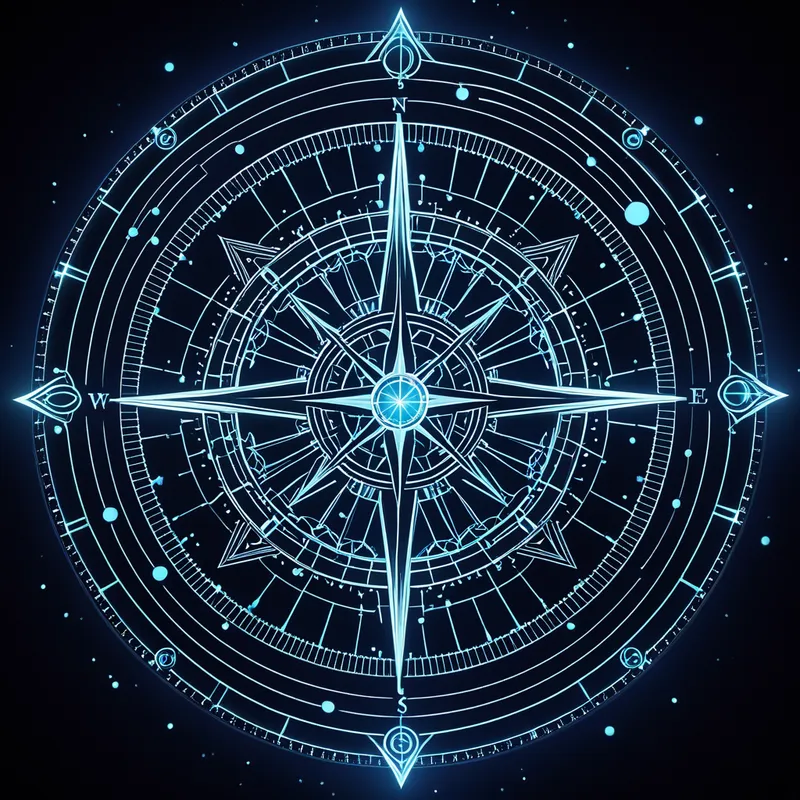
It symbolizes conscious [direction](/symbols/direction “Symbol: Direction in dreams often relates to life choices, guidance, and the path one is following, emphasizing the importance of navigation in personal journeys.”/) in the face of [life](/symbols/life “Symbol: The symbol of ‘Life’ represents a journey of growth, interconnectedness, and existential meaning, encompassing both the joys and challenges that define human experience.”/)‘s [chaos](/symbols/chaos “Symbol: In Arts & Music, chaos represents raw creative potential, uncontrolled expression, and the breakdown of order to forge new artistic forms.”/). The star itself is not the [destination](/symbols/destination “Symbol: Signifies goals, aspirations, and the journey one is on in life.”/); it is the [reference](/myths/reference “Myth from Global/Universal culture.”/) point that makes the [journey](/symbols/journey “Symbol: A journey in dreams typically signifies adventure, growth, or a significant life transition.”/) meaningful. It is the internal compass of values, ethics, and ultimate [purpose](/symbols/purpose “Symbol: Purpose signifies direction, meaning, and intention in life, often reflecting personal ambitions and core values.”/). To be “oriented” literally means to face east, but symbolically, it means to have found one’s true north—to know what one stands for, even when buffeted by the storms of [emotion](/symbols/emotion “Symbol: Emotion symbolizes our inner feelings and responses to experiences, often guiding our actions and choices.”/), societal pressure, or existential doubt.
Furthermore, its fixed [nature](/symbols/nature “Symbol: Nature symbolizes growth, connectivity, and the primal forces of existence.”/) amidst [motion](/symbols/motion “Symbol: Represents change, progress, or the flow of life energy. Often signifies transition, personal growth, or the passage of time.”/) speaks to the [paradox](/symbols/paradox “Symbol: A contradictory yet true concept that challenges logic and perception, often representing unresolved tensions or profound truths.”/) of finding [stability](/symbols/stability “Symbol: A state of firmness, balance, and resistance to change, often represented by solid objects, foundations, or steady tools.”/) through change. The heavens move, yet the center is still. We grow, learn, and transform, yet a thread of essential [identity](/symbols/identity “Symbol: Identity represents the sense of self, encompassing personal beliefs, cultural background, and social roles.”/) remains. It is the [symbol](/symbols/symbol “Symbol: A symbol can represent an idea, concept, or belief, serving as a powerful tool for communication and understanding.”/) of the individuation process itself: a distant, [guiding light](/symbols/guiding-light “Symbol: This symbol represents hope, truth, and the illumination of one’s path, serving as a beacon in times of uncertainty.”/) that becomes clearer as one moves through the dark [night](/symbols/night “Symbol: Night often symbolizes the unconscious, mystery, and the unknown, representing the realm of dreams and intuition.”/) of [confusion](/symbols/confusion “Symbol: A state of mental uncertainty or disorientation, often reflecting internal conflict, lack of clarity, or overwhelming choices in waking life.”/).
The Dreamer’s Resonance
When the North Star appears in a modern dream, it rarely comes as a simple astronomical feature. It manifests as a somatic experience of oriented relief. The dreamer might be lost in a labyrinthine city or a featureless landscape, gripped by panic. Then, a single, unwavering light appears—sometimes in the sky, sometimes as a lamp in a window, a lone candle, or a steady beacon on a dashboard. The feeling is visceral: a release of tension in the chest, a deep breath finally drawn.
This dream signals a critical psychological process: the emergence of inner guidance during a period of disorientation. The conscious mind (the ego) is lost, overwhelmed by life transitions, moral dilemmas, or creative blocks. The dream presents the North Star as an emissary from the deeper Self, offering not a map, but a fixed bearing. It says, “You do not need to see the whole path. You only need to know the one true direction.” The dreamer is being called to identify what, for them, is non-negotiable—what principle, value, or core truth can serve as their psychic polestar.
Alchemical Translation
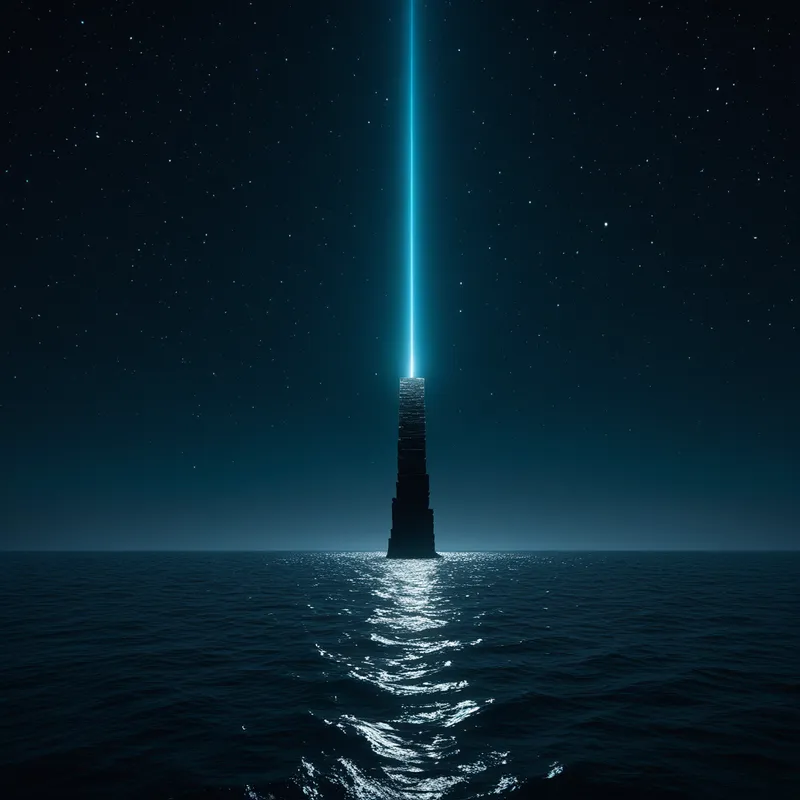
The alchemical work modeled by this myth is the opus contra naturam—the work against nature’s entropy. The base metal of the human condition is confusion, reactivity, and being driven by external winds. The North Star myth teaches the process of creating [the Philosopher’s Stone](/myths/the-philosophers-stone “Myth from Alchemical culture.”/) of inner authority.
[The first stage](/myths/the-first-stage “Myth from Alchemical culture.”/) is [nigredo](/myths/nigredo “Myth from Alchemical culture.”/), the blackening: the experience of being lost, the dissolution of old, ego-based certainties. This is the stormy sea, the trackless desert. The second is albedo, the whitening: the piercing, cold clarity of the star’s light. It is not a warm, embracing light, but a precise, demanding one. It asks for observation and alignment.
To find your north is to perform a celestial calculation: you must subtract all that is transient, all that spins with the fashion of the age, until only the essential equation remains.
The final stage is [rubedo](/myths/rubedo “Myth from Alchemical culture.”/), the reddening, or here, the golden fixing. This is not merely seeing the star, but internalizing its constancy. The external symbol becomes an inner function. The individual no longer looks up to find their way; they carry the pole within. They become, in their own sphere, a center of gravity—calm, decisive, and oriented. Their actions, like the star, become predictable not from rigidity, but from fidelity to a deep, unchanging principle. They have achieved the psychic transmutation from a wanderer subject to every cross-current, to a navigator, master of their own voyage, guided by the eternal light of their own realized Self.
Associated Symbols
Explore related symbols from the CaleaDream lexicon: