The Nigredo Stage Myth Meaning & Symbolism
The myth of the Nigredo Stage tells of the necessary dissolution of the old self into a chaotic, fertile blackness, the first step toward the creation of gold.
The Tale of The Nigredo Stage
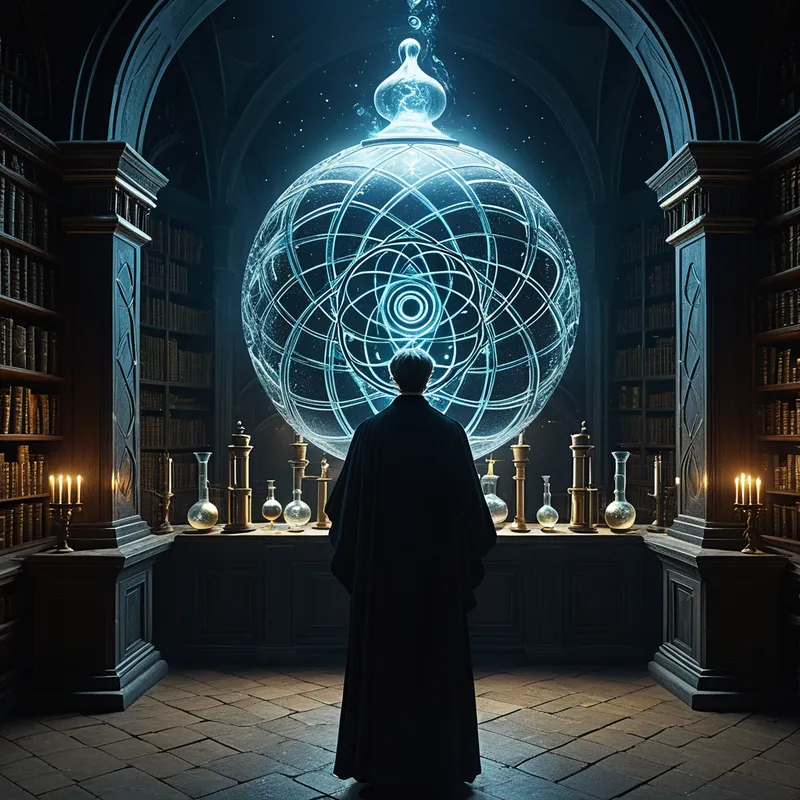
Listen. In the beginning, there is only [the Prima Materia](/myths/the-prima-materia “Myth from Alchemical culture.”/)—the First Matter. It is not gold, nor is it lead. It is the unformed chaos of potential, the raw, sleeping substance of [the world](/myths/the-world “Myth from Tarot culture.”/) and the soul. [The alchemist](/myths/the-alchemist “Myth from Various culture.”/), a seeker robed in doubt and longing, gathers this matter. It is heavy, dull, and promises nothing.
They place it within [the Hermetic Vessel](/myths/the-hermetic-vessel “Myth from Alchemy culture.”/), the sealed womb of transformation. The furnace is lit not with common fire, but with the fire of intent, the Ignis Gehennalis. At first, nothing happens. Then, a terrible groaning begins from within the glass. The matter does not melt, but rots. It putrefies. A stench of decay fills [the laboratory](/myths/the-laboratory “Myth from Alchemical culture.”/), the smell of a forgotten grave, of spoiled food, of all things that have turned against themselves.
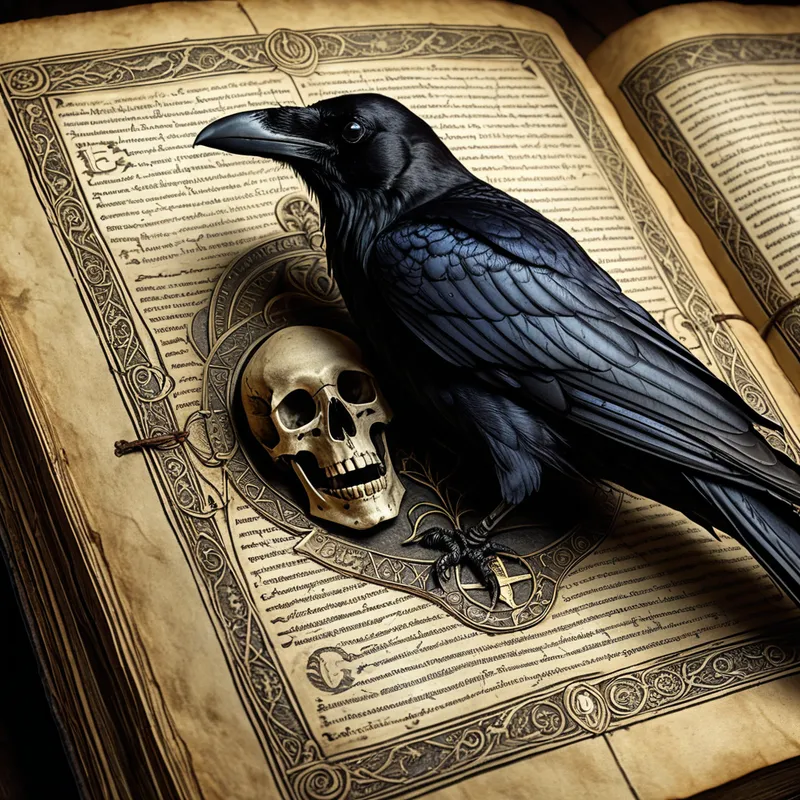
The substance within blackens. It is not a clean black, but a foul, chaotic, swirling [nigredo](/myths/nigredo “Myth from Alchemical culture.”/)—the blackening. The alchemist watches in horror as the once-solid matter dissolves into a seething, tar-like chaos. Visions plague them: the [raven](/myths/raven “Myth from Haida culture.”/), Corvus, appears at the window, cawing of despair. The matter screams in silence. It cracks, bubbles, and becomes a universe of black stars collapsing in on themselves. This is the death. Not a clean death by sword, but the death of fermentation, of decomposition, where the boundaries of [the thing](/myths/the-thing “Myth from Norse culture.”/) are eaten away from within.
The alchemist is tempted to quench the fire, to break [the vessel](/myths/the-vessel “Myth from Alchemical culture.”/) and flee the abomination they have created. This is the Caput Mortuum, the Dead Head, the ultimate failure. But if they hold… if they sustain the heat and contain the horror within [the vessel](/myths/the-vessel “Myth from Alchemical culture.”/)… the blackness becomes absolute. It becomes a perfect, silent, fertile night. The chaos ceases its screaming and simply is: a unified, profound darkness. The raven falls silent. The stench fades, leaving only the scent of cold, damp earth after a long winter. The work is not done, but the first and most terrible operation is complete. The old king is dead. The matter sleeps in the black earth, awaiting the whitening.
Cultural Origins & Context
The myth of the Nigredo is not a single story with named characters, but a core, recurring narrative embedded within the symbolic language of Western alchemy, spanning from Hellenistic Egypt through the Islamic [Golden Age](/myths/golden-age “Myth from Universal culture.”/) to the European Renaissance. It was never a folktale for the public square, but a secret doctrine passed through encoded texts, intricate emblems, and oral tradition among initiates.
Its primary “storytellers” were the alchemists themselves—figures like [Hermes Trismegistus](/myths/hermes-trismegistus “Myth from Greek culture.”/), Zosimos of Panopolis, and later, Paracelsus and the anonymous authors of the [Rosarium Philosophorum](/myths/rosarium-philosophorum “Myth from Alchemical culture.”/). They wrote in a deliberately obscure language, Lingua Adamica, to conceal the work from the unprepared and to attract the worthy through symbolism. The myth’s societal function was dual: exoterically, it described a laboratory process for transmuting base metal; esoterically, it was a precise map for the transmutation of the soul. It served as a guide for navigating the inevitable psychological crisis that precedes any genuine renewal, offering a container—the [Vas Hermeticum](/myths/vas-hermeticum “Myth from Alchemical culture.”/)—for the despair that institutional religion or philosophy might not address.
Symbolic Architecture
[The Nigredo](/myths/the-nigredo “Myth from Alchemical culture.”/) is the archetypal encounter with the [Shadow](/symbols/shadow “Symbol: The ‘shadow’ embodies the unconscious, repressed aspects of the self and often represents fears or hidden emotions.”/), the Massa Confusa, and [the principle](/symbols/the-principle “Symbol: A fundamental truth, law, or doctrine that serves as a foundation for a system of belief, behavior, or reasoning, often representing moral or ethical standards.”/) of [entropy](/symbols/entropy “Symbol: In arts and music, entropy represents the inevitable decay of order into chaos, often symbolizing creative destruction, impermanence, and the natural progression toward disorder.”/). It represents the necessary deconstruction of the conscious [personality](/symbols/personality “Symbol: Personality in dreams often symbolizes the traits and characteristics of the dreamer, reflecting how they perceive themselves and how they believe they are perceived by others.”/)—[the ego](/myths/the-ego “Myth from Jungian culture.”/)—which has become rigid, identified with its [persona](/symbols/persona “Symbol: The social mask or outward identity one presents to the world, often concealing the true self.”/), and cut off from the deeper, unconscious self.
The seed cannot sprout unless the husk rots. The gold cannot be found unless the mountain of ore is first reduced to black, formless sludge.
The [Athanor](/symbols/athanor “Symbol: An alchemical furnace representing spiritual transformation, purification, and the sustained process of creating the Philosopher’s Stone.”/) and Vas are the total [psyche](/myths/psyche “Myth from Greek culture.”/), the sealed container of the transformative process where no part of [the self](/myths/the-self “Myth from Jungian culture.”/) can be escaped or projected [outward](/symbols/outward “Symbol: Movement or orientation away from the self or center; expansion, expression, or externalization of inner states into the world.”/). The Ignis Gehennalis is the heat of conscious [attention](/symbols/attention “Symbol: Attention in dreams signifies focus, awareness, and the priorities in one’s life, often indicating where the dreamer’s energy is invested.”/) turned [inward](/symbols/inward “Symbol: A journey toward self-awareness, introspection, and the exploration of one’s inner world, thoughts, and unconscious mind.”/), the suffering of self-confrontation that forces decay. The [raven](/symbols/raven “Symbol: The raven is often seen as a messenger of the divine and a symbol of transformation, wisdom, and the mysteries of life and death.”/) is the [herald](/myths/herald “Myth from Greek culture.”/) of this dark [truth](/symbols/truth “Symbol: Truth represents authenticity, honesty, and the quest for knowledge beyond mere appearances.”/), the psychic [reality](/symbols/reality “Symbol: Reality signifies the state of existence and perception, often reflecting one’s understanding of truth and life experiences.”/) that the comfortable fiction of the ego must die. The resulting black matter is not mere [emptiness](/symbols/emptiness “Symbol: Emptiness signifies a profound sense of void or lack in one’s life, often related to existential fears, loss, or spiritual quest.”/), but the Terra Nigra, the humus from which new [life](/symbols/life “Symbol: The symbol of ‘Life’ represents a journey of growth, interconnectedness, and existential meaning, encompassing both the joys and challenges that define human experience.”/) grows. It is the state of potential where all previous structures are dissolved, making [recombination](/symbols/recombination “Symbol: The process of breaking down and reassembling elements into new configurations, representing transformation, adaptation, and the creation of novel possibilities from existing components.”/) and [rebirth](/symbols/rebirth “Symbol: A profound transformation where old aspects of self or life die, making way for new beginnings, growth, and renewal.”/) possible.
The Dreamer’s Resonance
When this myth activates in the modern psyche, it manifests in dreams of profound dissolution and existential dread. The dreamer may find themselves in decaying buildings that represent the old self, their teeth falling out (a classic symbol of loss of power and vitality), or wandering through endless, dark, labyrinthine sewers or basements. They may dream of being buried alive, not in terror, but in a strange, quiet acceptance. Somatic experiences often accompany this: a heavy, leaden feeling in the body, deep fatigue that sleep does not cure, a sense of being “stuck in tar” or moving through thick mud in daily life.
Psychologically, this is the process of the conscious mind being overwhelmed by repressed material—shame, grief, rage, trauma—that can no longer be held at bay. It feels like a regression, a madness, a failure. Yet, in the dream logic, it is a necessary descent. The dreamer is not being punished; they are being processed. The ego is experiencing its own Mortificatio and [Putrefactio](/myths/putrefactio “Myth from Alchemical culture.”/) to make way for a center of personality more aligned with the totality of the Self.

Alchemical Translation
For the modern individual, the Nigredo myth models the first, non-negotiable phase of individuation: the confrontation with and integration of the personal shadow. Our culture prizes “positivity” and constant growth, viewing depression, stagnation, and existential crisis as malfunctions to be medicated away. Alchemy reframes this dark night as the opus contra naturam—the work against one’s current, fallen nature—which is, paradoxically, the only path to a more authentic nature.
To rush from lead to gold is to create fool’s gold—a brittle, shiny persona. True gold is forged only in the long night of the nigredo.
The practical translation is the disciplined, contained suffering of self-honesty. It is allowing old identities—the successful professional, the perfect caregiver, the eternal optimist—to rot when they no longer serve the soul’s purpose. It is staying present with the depression, the anger, the grief, not as a final state, but as a transformative substance within the vessel of one’s awareness (the Athanor). The “heat” is the courage to feel it fully without acting out or repressing it. The goal of this stage is not to emerge with answers, but to achieve a fertile, unified darkness—a state where the compulsive chatter of the ego is stilled, and one rests in the [Unus Mundus](/myths/unus-mundus “Myth from Alchemical culture.”/). From this black earth, the next stage, the Albedo, can naturally arise, bringing the first moon-cool light of insight and the washing waters of mercy. The Nigredo teaches that before we can become who we are, we must courageously cease to be who we are not.
Associated Symbols
Explore related symbols from the CaleaDream lexicon: