The Mantle of Sovereignty Myth Meaning & Symbolism
A myth where a king's union with a goddess, symbolized by a mantle, binds his rule to the land's vitality, revealing the sacred contract of true authority.
The Tale of The Mantle of Sovereignty
Listen. The wind carries a whisper older than stone, a tale not of conquest by sword, but of union by rite. In a time when the world was thin, and the Sídhe walked close, the fate of a tribe rested not on a crown, but on a cloak.
The king is dead. The Lia Fáil remains silent. The land itself mourns; rivers run sluggish, cattle give thin milk, and a grey pall hangs over the hills. The warriors and druids gather, but their debates are empty echoes. True kingship cannot be claimed; it must be given.
On the eve of the choosing, a figure appears at the edge of the sacred grove. She is an old woman, her back bent, her cloak ragged and stained with the peat of bogs. Her eyes, however, hold the deep, still light of forgotten pools. In her arms, she carries a bundle—a mantle of such weight and splendor it seems woven from twilight itself: threads of deep purple like heather at dusk, embroidered with gold that mimics the path of the sun, and silver that holds the cold gleam of starlight.
She speaks, her voice the crackle of autumn leaves and the murmur of underground streams. “I am the land. I am its bounty and its barrenness. He who would be king must wed me. He must take this mantle and wear it not as a trophy, but as a skin. He must see my beauty in my youth and my wisdom in my age. Who will drink from my cup and cloak himself in my truth?”
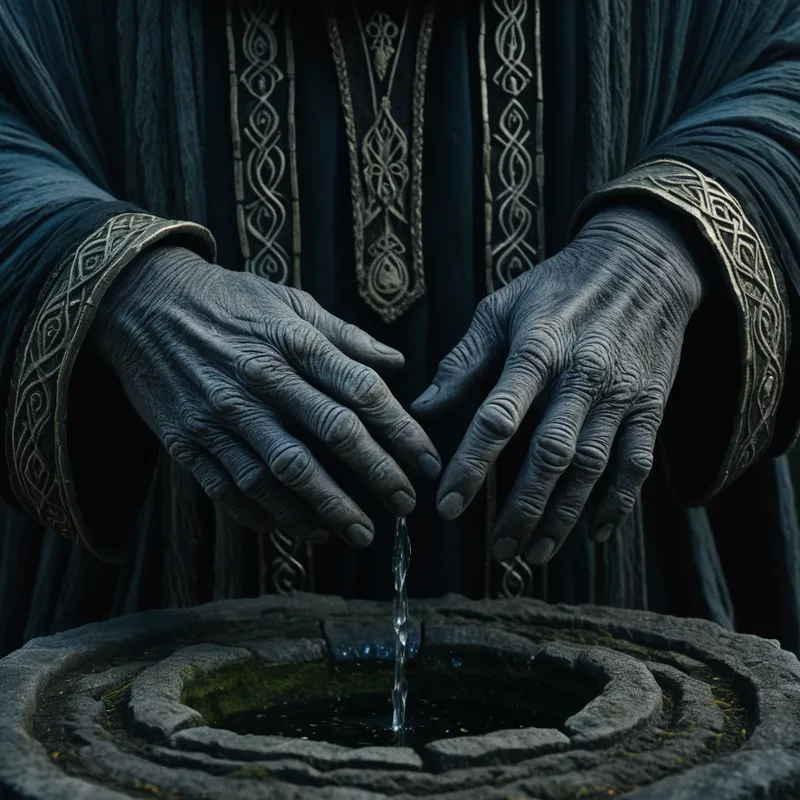
The young, proud contenders laugh and turn away, seeing only a wretched hag. But one man, often not the strongest or loudest, pauses. He sees not deformity, but a profound weariness. He hears not a beggar’s plea, but the land’s own lament. He steps forward. He does not reach for the glorious mantle first. Instead, he kneels. He takes the old woman’s worn cup, filled with dark water from a sacred well, and he drinks. It is bitter, tasting of soil and sorrow.
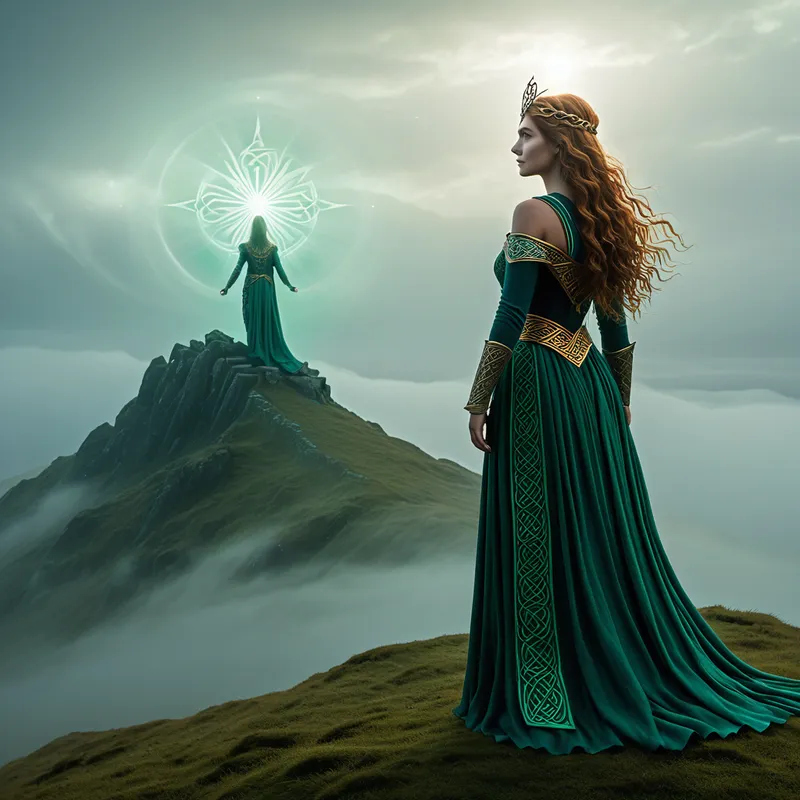
As the liquid touches his lips, a transformation begins. The ragged hag before him shimmers. Her wrinkles smooth, her posture straightens, her hair flows like a river of gold. She becomes a woman of breathtaking sovereignty, radiant with the health of sunlit fields and the mystery of deep forests. She is the goddess Ériu herself, the very spirit of Ireland.
Only then does she lift the magnificent mantle. As she places it upon his shoulders, a shudder passes through the earth. The man feels not the weight of wool, but the weight of every root, every stream, every heartbeat of the creature and clan within his borders. The stone of destiny, the Lia Fáil, roars its approval. The rivers quicken, the harvest promises gold, and the people feel a rightness settle in their bones. The king is made, not by acclamation, but by a sacred embrace.
Cultural Origins & Context
This mythic pattern, often called the hieros gamos or sacred marriage, is a foundational pillar of early Irish and broader Celtic kingship ideology. It was not mere folklore but a potent political and spiritual doctrine. The tales were preserved by the filid, the poet-seers, and embedded in texts like the Lebor Gabála Érenn and various king-tales.
Its function was societal and cosmological. It established that a king’s legitimacy flowed directly from his symbiotic relationship with the goddess of the land, Sovereignty. His fitness was tested not in battle alone, but in his perception and hospitality. Could he see the divine in the despised? His reign was a contract: justice and fertility from him, prosperity and stability from the land. A false king would bring blight and misfortune, a concept known as fír flathemon. The myth was a narrative anchor for the entire social order, reminding all that true power is relational and carries a sacred responsibility.
Symbolic Architecture
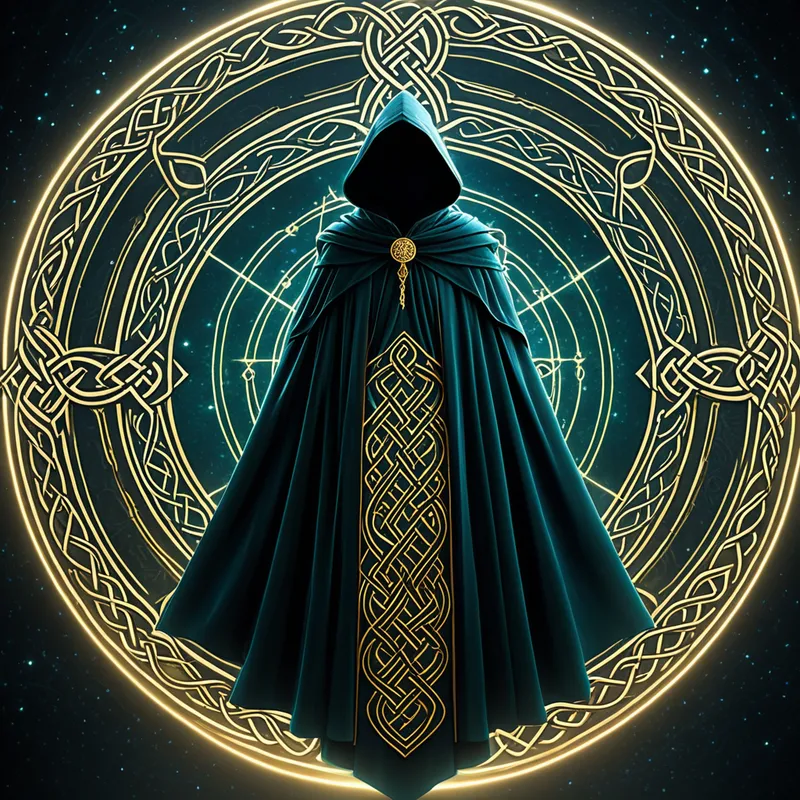
At its core, the myth dismantles the ego’s idea of sovereignty as control and replaces it with sovereignty as conscious, sacred relationship. The Mantle is the symbol of this fused identity.
The Mantle is not a garment one puts on; it is the living boundary where the individual will meets the animate world.
The Hag/Goddess represents the complete, cyclical nature of reality—the ugly and the beautiful, decay and fertility, the shadow and the light. To reject her hag form is to reject half of existence. The King represents the conscious ego or the ruling principle of the psyche. His journey is from seeking power over to entering into a partnership with. The act of drinking from the cup is the crucial ingestion of truth, the bitter acceptance of reality as it is, not as one wishes it to be. This acceptance is the prerequisite for transformation.
The transformation of the hag into the goddess is not something he does to her; it is the psychic revelation that occurs within him when he accepts the whole. The land’s rejuvenation symbolizes the holistic vitality that emerges when the ruling consciousness is in right relationship with the deep, instinctual, and often “soiled” layers of the psyche (the land).
The Dreamer’s Resonance
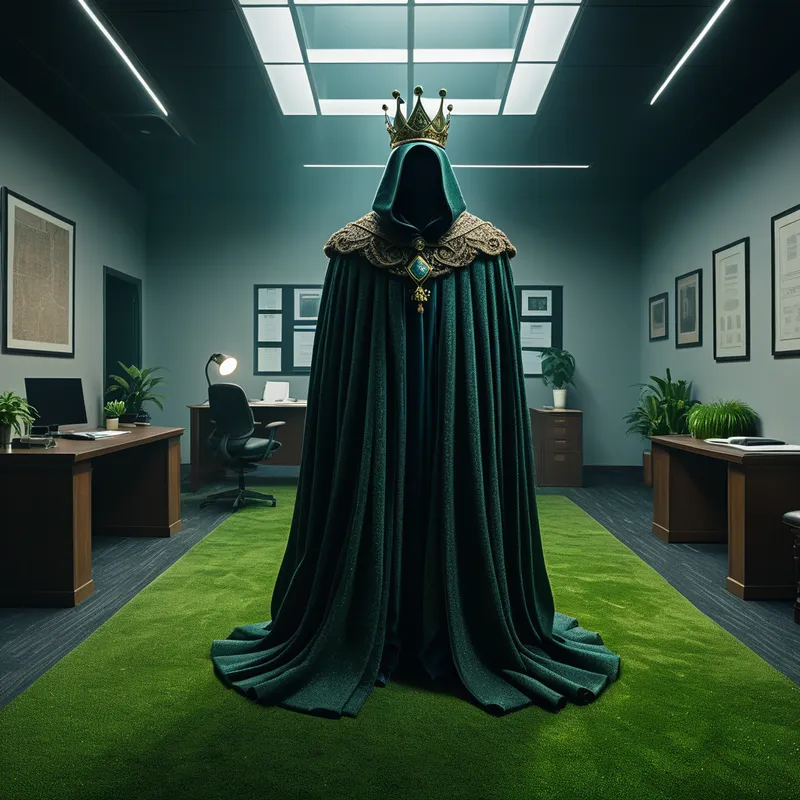
When this myth stirs in the modern dreamer, it often manifests as dreams of being offered a heavy, ornate, or impossibly beautiful coat, cloak, or uniform that one must decide to wear. Alternatively, dreams of encountering a frightening or repulsive figure (a beggar, a monstrous animal, a filthy environment) that, upon approach or embrace, transforms into something nourishing and powerful.
Somatically, this can feel like a pressure on the shoulders—the weight of a new responsibility or identity. Psychologically, the dreamer is at a crossroads of individuation, where the psyche presents the ultimate test: are you ready to accept leadership of your inner kingdom? This means acknowledging and integrating your own “hag” aspects—the neglected wounds, the shameful histories, the raw, untamed instincts. The dream is an invitation to “drink the bitter water” of your own full truth. The hesitation or refusal in the dream mirrors our resistance to this profound and uncomfortable wholeness.
Alchemical Translation
The alchemy here is the transmutation of the leaden, isolated ego into the golden, connected Self. The modern individual’s “kingship” is their authentic, authoritative Self, capable of governing the inner realm of thoughts, emotions, and drives with wisdom and justice.
The first stage, nigredo, is embodied by the desolate land and the hag. It is the depression, the stagnation, the feeling of being ruled by a “dead” or false authority (outmoded beliefs, parental complexes, societal expectations). The candidate’s approach is the beginning of albedo—the whitening. This is the conscious, often humiliating, engagement with the shadow. Drinking from the cup is the pivotal moment of dissolution; the old identity is washed away by the bitter waters of truth.
The marriage is the coniunctio oppositorum, the sacred union of opposites within the psyche. The mantle is the new skin of the integrated Self, born from that union.
The transformation of the goddess and the land represents the rubedo—the reddening or flowering. This is the emergence of vitality, creativity, and authentic power that flows from this inner marriage. The individual no longer “rules” through suppression or force but through a dynamic partnership with their own depths. Their “sovereignty” is now resilient, fertile, and rooted, because it is in right relationship with the whole of who they are. They wear the mantle not as a burden, but as their true nature, woven from the very fabric of their accepted life.
Associated Symbols
Explore related symbols from the CaleaDream lexicon: