The Lighthouse of Alexandria Myth Meaning & Symbolism
A colossal beacon, born of human ambition and divine fire, guides sailors but warns of the perilous pride that builds towers to touch the heavens.
The Tale of The Lighthouse of Alexandria
Hear now, of a tower not of Babel, but of salvation. On the edge of the known world, where the [thalassa](/myths/thalassa “Myth from Greek culture.”/) meets the shifting sands of Egypt, there lay an island named Pharos. Its shores were treacherous, a graveyard of timber and hope, where [the sea](/myths/the-sea “Myth from Greek culture.”/) god [Poseidon](/myths/poseidon “Myth from Greek culture.”/) would unleash his tempests to dash proud ships against the hidden teeth of the rock.
The vision was born in the mind of a king, Ptolemy I Soter, but it was given form by the hands of a man, [the architect](/myths/the-architect “Myth from Various culture.”/) Sostratus of Cnidus. “Let us build a giant,” Sostratus declared, “not to challenge Olympus, but to defy the chaos of the deep. A giant whose eye is a star fallen to earth, to guide [the wanderer](/myths/the-wanderer “Myth from Taoist culture.”/) home.”
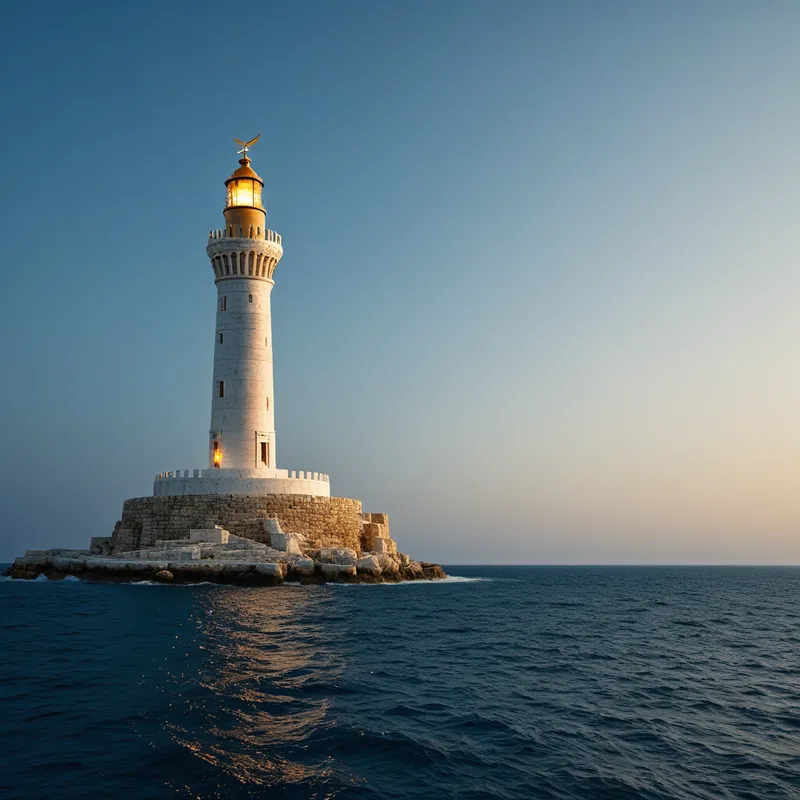
For years, the island groaned under the weight of ambition. Mountains of white marble from Paros were shaped. A square base, sturdy as [the earth](/myths/the-earth “Myth from Hindu culture.”/), rose from the living rock. Upon it, an octagonal tower climbed, and upon that, a cylindrical pillar soared, until it seemed to scratch the belly of [the sky](/myths/the-sky “Myth from Persian culture.”/). At its summit, they built a chamber of glass and polished bronze, and within it, they placed the heart of the giant: a furnace of eternal flame.
But what fuel could feed such a heart? Driftwood and oil would sputter and die. The priests made offerings, but the sea winds laughed. Then, it is said, a vision came. Perhaps it was [Hephaestus](/myths/hephaestus “Myth from Global/Universal culture.”/), the limping smith of the gods, who took pity on the cleverness of mortals. Or perhaps it was the cunning of Athena, who loves a well-made [thing](/myths/thing “Myth from Norse culture.”/). A method was discovered—a great mirror of polished metal, curved to capture and hurl the fire’s essence across [the void](/myths/the-void “Myth from Buddhist culture.”/). By day, it turned the sun itself into a blazing signal. By night, it gathered the furnace’s breath into a focused beam, a finger of light that parted the darkness for thirty miles.
When the first flame was lit, the night itself recoiled. Sailors, lost and despairing, saw the steady, unwavering eye upon [the horizon](/myths/the-horizon “Myth from Various culture.”/) and wept with relief. It was not the fickle light of a star, but a promise kept by mortal hands. The harbor of Alexandria became a nexus of [the world](/myths/the-world “Myth from Tarot culture.”/), and the Lighthouse stood as its silent, vigilant sentinel.
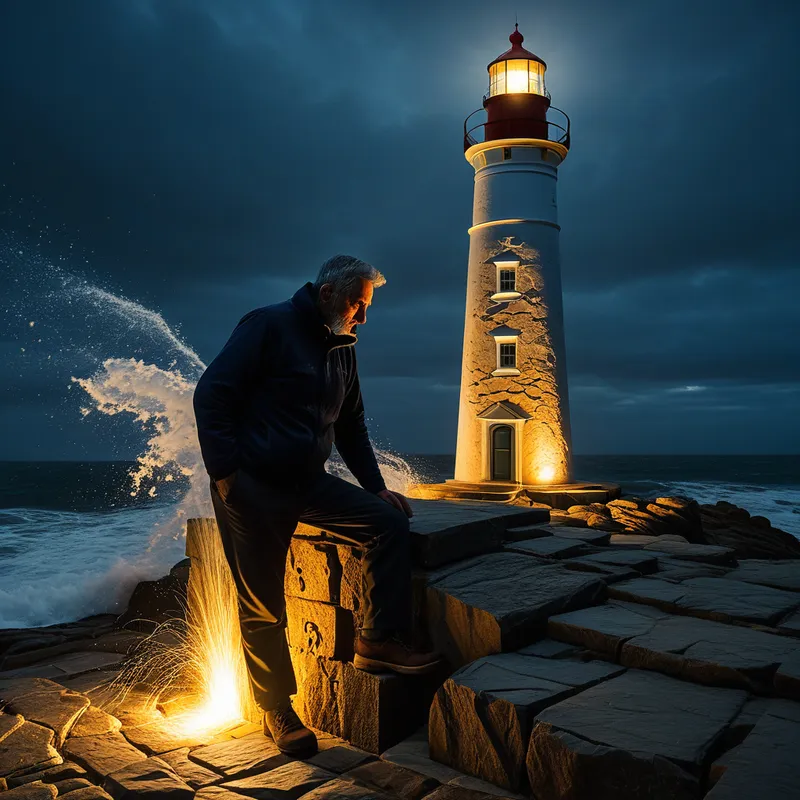
Yet, Sostratus, in his pride, desired that his name, not the king’s, should endure. He carved his dedication deep into [the foundation stone](/myths/the-foundation-stone “Myth from Mesopotamian culture.”/), then covered it with plaster inscribed with the king’s praise. He knew the plaster would crumble with the years, revealing the truer, older name beneath. “Let time be my witness,” he whispered to the stone. “Let the sea and [the wind](/myths/the-wind “Myth from Various culture.”/) know the mason.”
Cultural Origins & Context
The Lighthouse of Alexandria, or the [Pharos of Alexandria](/myths/pharos-of-alexandria “Myth from Greek culture.”/), stands uniquely among the Seven Wonders. It was not a temple to a god, nor a tomb for a king, but a profoundly utilitarian masterpiece—a civic monument to human reason, safety, and connection. Built in the 3rd century BCE under the Ptolemaic Dynasty, it symbolized the zenith of Hellenistic engineering and the cosmopolitan ambition of Alexandria, a city designed to be the brain of the world.
Its story was passed down not through a single, sacred epic, but through the practical chronicles of geographers like Strabo and the awed accounts of travelers. It functioned as a myth of the possible. In a culture whose older myths explained the world through the caprices of deities, the Pharos presented a new narrative: the world could be mastered, navigated, and illuminated by [metis](/myths/metis “Myth from Greek culture.”/) and arete. It was a secular beacon, yet it attained a legendary, almost divine status through its service to humanity. It told the people of the Mediterranean that knowledge—of geometry, of optics, of architecture—could build a kind of immortality and provide a guidance more reliable than the omens of priests.
Symbolic Architecture
The [Lighthouse](/symbols/lighthouse “Symbol: The lighthouse serves as a beacon of hope and guidance amidst the storms of life.”/) is a supreme [symbol](/symbols/symbol “Symbol: A symbol can represent an idea, concept, or belief, serving as a powerful tool for communication and understanding.”/) of the Ego functioning at its highest potential. It represents the constructed, disciplined self that rises from the chaotic waters of the unconscious (the sea) to provide orientation and safe [passage](/symbols/passage “Symbol: A passage symbolizes transition, movement from one phase of life to another, or a journey towards personal growth.”/).
The true lighthouse is not the stone that withstands the storm, but the conscious point of reference that allows the soul to navigate the storm without being destroyed by it.
Its tripartite [structure](/symbols/structure “Symbol: Structure in dreams often symbolizes stability, organization, and the framework of one’s life, reflecting how one perceives their environment and personal life.”/)—square, [octagon](/symbols/octagon “Symbol: The Octagon symbolizes transition and transformation, often reflecting the duality of endings and new beginnings in a person’s journey.”/), [cylinder](/symbols/cylinder “Symbol: The cylinder symbolizes continuity, balance, and the flow of life, often representing both practicality and potential energy.”/)—mirrors an alchemical and psychological [ascent](/symbols/ascent “Symbol: Symbolizes upward movement, progress, spiritual elevation, or striving toward higher goals, often representing personal growth or transcendence.”/): from the solid, [material](/symbols/material “Symbol: Material signifies the tangible aspects of life, often representing physical resources, desires, and the physical world’s influence on our existence.”/) [foundation](/symbols/foundation “Symbol: A foundation symbolizes the underlying support systems, values, and beliefs that shape one’s life, serving as the bedrock for growth and development.”/) of the physical world and the [body](/symbols/body “Symbol: The body in dreams often symbolizes the dreamer’s self-identity, personal health, and the relationship they have with their physical existence.”/) (square), through the transitional, multifaceted stage of the [psyche](/myths/psyche “Myth from Greek culture.”/) and [emotion](/symbols/emotion “Symbol: Emotion symbolizes our inner feelings and responses to experiences, often guiding our actions and choices.”/) ([octagon](/symbols/octagon “Symbol: The Octagon symbolizes transition and transformation, often reflecting the duality of endings and new beginnings in a person’s journey.”/)), to the unified, spiritual aspiration of the guiding principle ([cylinder](/symbols/cylinder “Symbol: The cylinder symbolizes continuity, balance, and the flow of life, often representing both practicality and potential energy.”/) and flame). The fire at its [summit](/symbols/summit “Symbol: The highest point of a mountain, representing achievement, perspective, and the culmination of effort.”/) is the symbol of [consciousness](/symbols/consciousness “Symbol: Consciousness represents the state of awareness and perception, encompassing thoughts, feelings, and experiences.”/) itself—the scintilla or divine spark that seeks to illuminate the unknown. The great mirror represents the reflective [capacity](/symbols/capacity “Symbol: A measure of one’s potential, limits, or ability to contain, process, or achieve something, often reflecting self-assessment or external demands.”/) of the mind, the [ability](/symbols/ability “Symbol: In dreams, ‘ability’ often denotes a recognition of skills or potential that one possesses, whether acknowledged or suppressed.”/) to take raw experience (the flame) and focus it into directed [awareness](/symbols/awareness “Symbol: Conscious perception of self, surroundings, or internal states. Often signifies awakening, insight, or heightened sensitivity.”/) (the [beam](/symbols/beam “Symbol: A structural support element in architecture, symbolizing stability, connection, and the framework that holds things together.”/)).
Yet, the myth carries the essential Greek warning of hubris. Sostratus’s act of hidden [inscription](/symbols/inscription “Symbol: A permanent mark, carving, or writing on a surface, often carrying messages, records, or artistic expression meant to endure.”/) is the [shadow](/symbols/shadow “Symbol: The ‘shadow’ embodies the unconscious, repressed aspects of the self and often represents fears or hidden emotions.”/) of the Lighthouse. It is [the ego](/myths/the-ego “Myth from Jungian culture.”/)’s desire not just to serve, but to claim immortality for its individual [identity](/symbols/identity “Symbol: Identity represents the sense of self, encompassing personal beliefs, cultural background, and social roles.”/), to outlast even the kings it serves. The Lighthouse guides, but the [story](/symbols/story “Symbol: The symbol of ‘Story’ represents the narrative woven through our lives, embodying experiences, lessons, and emotions that shape our identities.”/) of its foundation whispers that the builder’s pride is woven into its very stones, awaiting [erosion](/symbols/erosion “Symbol: Erosion in dreams represents gradual decay, loss of structure, or the wearing away of foundations over time through persistent forces.”/) by time.
The Dreamer’s Resonance
To dream of a lighthouse is to dream of a psychic crossroads. The dreamer is often in a state of transition, feeling “at sea”—lost in emotional turmoil, ethical uncertainty, or a fog of indecision. The lighthouse in the dream appears as a symbol of [the Self](/myths/the-self “Myth from Jungian culture.”/), the central archetype of wholeness, offering orientation.
If the lighthouse beam is steady and reaches the dreamer, it suggests an emerging clarity, an insight from the conscious mind (the beacon) that can safely guide them through their inner turmoil. The safe harbor represents a state of psychic integration that is attainable.
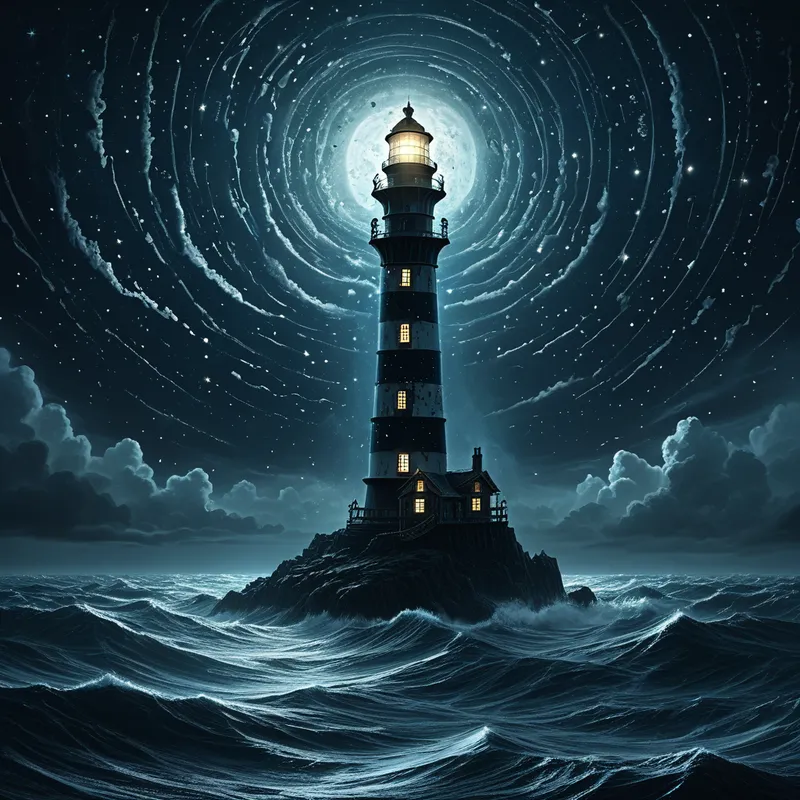
However, dreams may also present [the shadow](/myths/the-shadow “Myth from Jungian culture.”/) of the myth. A lighthouse with a shattered mirror, a guttering flame, or one whose beam scans wildly but never rests upon the dreamer’s vessel indicates a crisis of guidance. The ego’s usual [reference](/myths/reference “Myth from Global/Universal culture.”/) points are failing. The dreamer may be confronting the “Sostratus complex”—a prideful identification with one’s own achievements or role (the builder) that has obscured the true, foundational Self. The storm-tossed sea in these dreams is the unleashed unconscious, demanding acknowledgment and respect.
Alchemical Translation
The journey of the Lighthouse myth models the alchemical opus, [the great work](/myths/the-great-work “Myth from Alchemical culture.”/) of individuation. The base material is the chaotic, dangerous sea of the unexamined life—the massa confusa. The goal is the [lapis philosophorum](/myths/lapis-philosophorum “Myth from Alchemical culture.”/), the philosopher’s stone, represented here by the perfected, guiding light.
[The first stage](/myths/the-first-stage “Myth from Alchemical culture.”/), [nigredo](/myths/nigredo “Myth from Alchemical culture.”/) (blackening), is the recognition of the darkness: the shipwrecks, the lost sailors, the existential threat of the unconscious. This despair motivates the work. The albedo (whitening) is the planning and construction—the application of discipline, knowledge, and skill (the white marble) to build a structure for consciousness. The citrinitas (yellowing) is the kindling of the flame, the initial ignition of sustained awareness.
The ultimate alchemy is not in creating the light, but in becoming the mirror that faithfully reflects it outward, transforming personal illumination into a guide for the entire soul-nation.
The final stage, [rubedo](/myths/rubedo “Myth from Alchemical culture.”/) (reddening), is the eternal, focused beam—the fully realized Self that integrates the shadow (Sostratus’s pride) by acknowledging it in the foundation, yet subordinates it to the greater function of service. For the modern individual, this translates to building a stable, principled identity ([the tower](/myths/the-tower “Myth from Tarot culture.”/)) capable of sustaining a core of values and awareness (the flame). One must then learn to focus that awareness ([the mirror](/myths/the-mirror “Myth from Various culture.”/)) through reflection and introspection, not for self-aggrandizement, but to navigate one’s own depths and, in doing so, potentially offer a point of reference for others. The myth teaches that our highest construction is not a monument to our own name, but a beacon whose sole purpose is to whisper across the dark: Steady. This way home.
Associated Symbols
Explore related symbols from the CaleaDream lexicon: