The 'Last' Polar Bear Myth Meaning & Symbolism
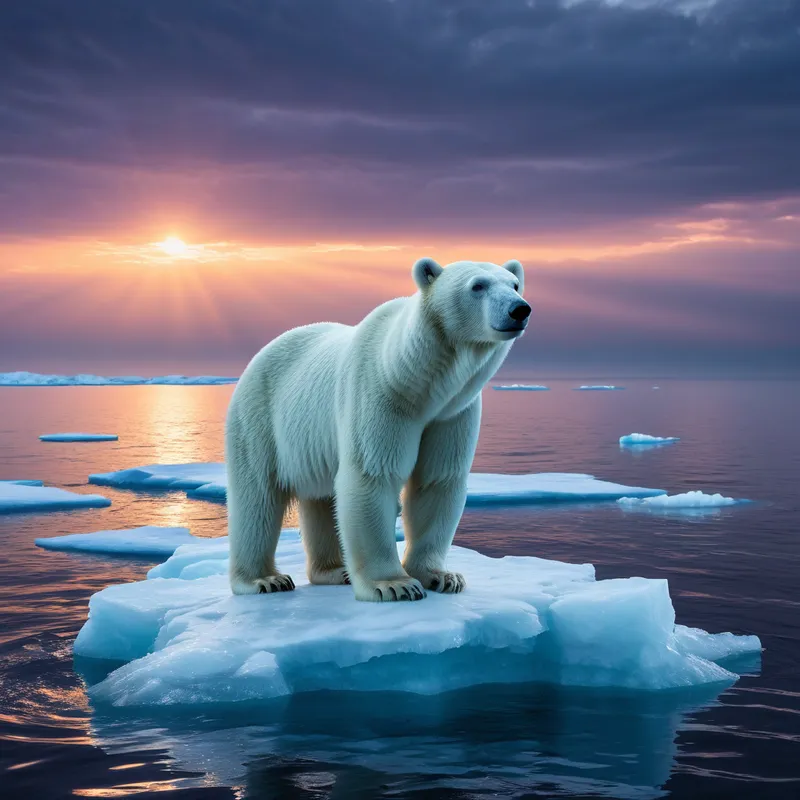
A solitary bear walks an endless, melting ice floe, becoming the living memory of a world it can no longer inhabit, yet refuses to abandon.
The Tale of The ‘Last’ Polar Bear
Listen. There is a story told now, not in the firelight of old, but in the cold glow of screens and the quiet spaces between heartbeats. It is the story of the One Who Remains.
In the time of the Great Thaw, when the white world grew soft and wept itself into the sea, there was a bear. Not the first, but the last. Its kingdom was once an empire of glittering silence, a continent of ice under the shimmering dance of the Aurora. Now, it was a scattering of broken plates, adrift on a black, indifferent ocean.
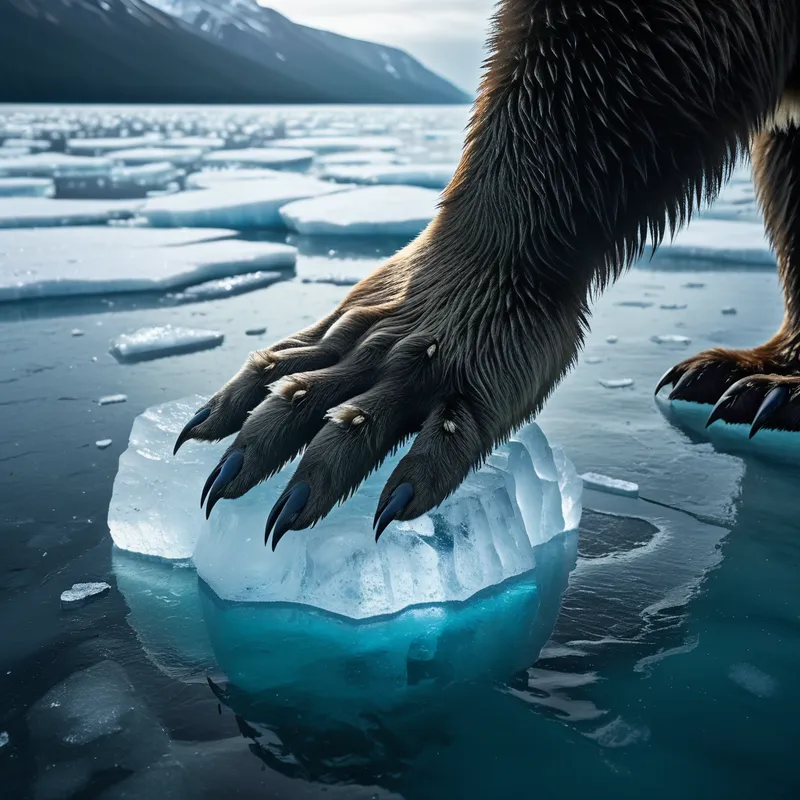
The bear did not have a name, for names require others to speak them. It had only memory—the taste of seal fat on the spring ice, the crushing weight of a blizzard’s embrace, the echoing calls of kin that no longer answered. It walked. That was its liturgy. Its great paws, wider than a human head, placed one before the other on the ever-shrinking stage of its world. The ice groaned a lament with every step. The wind carried not the scent of prey, but the ghost-smell of its own kind, fading like a forgotten note.
It hunted phantoms. It would wait for hours at a seal’s breathing hole that led only to warm, empty water. It would swim for leagues, its powerful strokes cutting through a sea growing stranger, warmer, until it would haul its immense weight onto a floe so thin it bowed beneath it. The sun, once a distant, weak companion, became a glaring eye, relentless.
The conflict was not with a monster or a god. The conflict was with absence. The rising action was the slow, inexorable subtraction of everything that made it a polar bear. The ice. The cold. The certainty. The others. The resolution was never a victory. It was a posture. One day, the bear reached the very top of the world, a place where all directions are south. The last floe, a perfect, lonely circle of white. It sat. It did not roar in defiance. It simply turned its head, looking back across the watery path it had traveled, its dark eyes holding the image of the entire lost world. And in that looking, it became not just an animal, but a monument. A memory made flesh, standing its final, silent watch.
Cultural Origins & Context
This is a myth born not from antiquity, but from the Anthropocene. It emerged in the late 20th and early 21st centuries, a collective story woven from satellite imagery, documentary footage, climate reports, and a deep, pervasive anxiety. It was passed down not by bards, but by journalists, photographers, filmmakers, and activists. Its societal function is diagnostic and prophetic. It holds up a mirror to the globalized human psyche, showing us the end result of a particular kind of dreaming—the dream of separation from and dominion over nature.
The myth functions as a secular parable of loss. It is told to make the abstract, statistical tragedy of biodiversity loss visceral and personal. The polar bear, long a symbol of pristine wilderness and fierce independence in cultures from Inuit lore to corporate branding, was transformed into the ultimate carrier archetype for ecological grief. The myth asks the listener: What does it mean to be the last of your kind? What responsibilities does that solitude confer?
Symbolic Architecture
The ‘Last’ Polar Bear is not merely an endangered species. It is a profound psychological symbol. It represents the part of the psyche that remembers its original, instinctual wholeness, now isolated in a modern consciousness that has melted its native ground.
The Last Bear is the archetype of the Orphaned Instinct, the part of the soul that knows its home is disappearing beneath it.
The melting ice symbolizes the dissolution of stable structures—belief systems, ecological certainties, cultural traditions, psychic containers that once supported life. The endless swimming represents the exhausting, often futile effort to find footing in a reality that no longer supports one’s fundamental nature. The bear’s solitary vigil is the ego’s confrontation with absolute existential aloneness, a prerequisite for any genuine transformation. It is the embodiment of the Shadow made visible—not as a personal monster, but as a collective, ecological consequence we have tried to ignore.
The Dreamer’s Resonance
When this myth surfaces in modern dreams, the dreamer is not dreaming about a polar bear. They are dreaming as the polar bear. The somatic experience is often one of profound isolation, slow-motion struggle, and a chilling, quiet desperation. The landscape is always liminal—melting corridors, shrinking rooms, endless expanses of featureless water or data.
This dream pattern signals a profound psychological process: the confrontation with a dying complex. A complex is a cluster of thoughts, feelings, and memories in the unconscious, organized around a central theme. To dream the Last Bear is to witness a core part of one’s identity—perhaps related to a role, a relationship, a cherished self-image—that can no longer be sustained. Its habitat, the psychological conditions that allowed it to thrive, is gone. The dreamer is processing the grief, disorientation, and terrifying freedom of this extinction event within the self. It is the feeling of being a relic of your own past.

Alchemical Translation
The myth models the nigredo stage of psychic transmutation—the necessary descent into darkness and dissolution. The triumph of the Last Bear is not survival, but the full, conscious bearing of its reality. This is the alchemical secret.
Individuation often begins not with finding something new, but with fully becoming the last of what you already are, until that form can no longer contain the spirit within it.
For the modern individual, the process is thus:
- Acknowledging the Melt: Recognizing that an old way of being, a long-held identity, or a foundational belief is no longer tenable. The ground is literally giving way.
- Enduring the Swim: The painful, transitional period of having lost the old structure but not yet found the new. This is a time of grief, fatigue, and feeling utterly adrift.
- The Vigil on the Last Floe: The conscious decision to stop fleeing the reality of the ending. To sit in the full truth of the loss. This is not passive resignation, but the most active stance possible—it is the ego consenting to its own transformation.
- Transmutation: The bear does not get rescued. It becomes a symbol. In psychological terms, the content that was once lived out (an instinct, a pattern, a identity) dies as a behavioral reality but is reborn as an internal image, a guiding memory, a core truth integrated into the larger psyche. The ego that fully experiences its own “end” makes room for the Self. The individual becomes the living memory of what was lost, and in that act of remembrance, finds a new, more conscious footing. The ice floe melts, but the essence of the bear becomes part of the sea itself—the unconscious now carries its imprint forever.
Associated Symbols
Explore related symbols from the CaleaDream lexicon: