The Knocking at the Door Myth Meaning & Symbolism
A divine voice stands at the threshold of the human heart, knocking, waiting for the door to be opened from within.
The Tale of The Knocking at the Door
Listen. In the deep of the night, when the world’s chatter has died to a whisper and the soul is left alone with its own echoes, there comes a sound. It is not the wind worrying the latch. It is not the branch tapping the pane. It is a knock. Deliberate. Patient. Insistent.
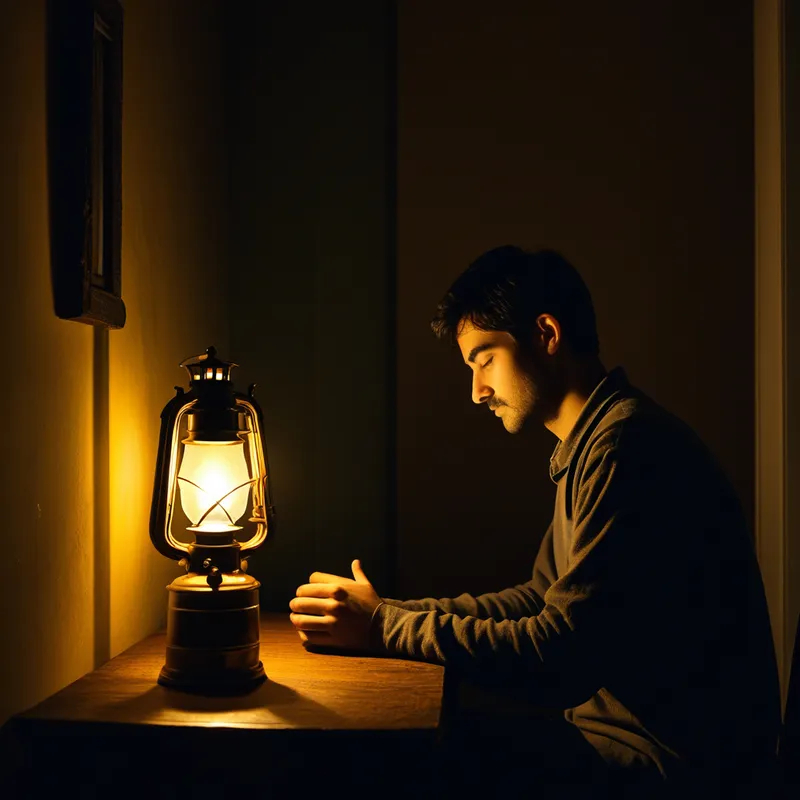
It begins in the silence that follows the feast, when the wine has been drunk and the songs have faded. A figure, wearied by the day’s labor and the heart’s burdens, sits in the dimness of their own chamber. The fire is embers; the lamp is low. Here, in this citadel of self, they hear it. Knock. Knock. Knock.
The sound does not thunder. It does not demand. It is a presence, a pressure against the outer shell of a life. It is the sound of waiting. It is the sound of an offer poised on the very brink of being withdrawn. The figure stirs, a flutter of fear and longing in the chest. Who ventures out in such an hour? What messenger comes when the gates are shut and the world is sleeping?
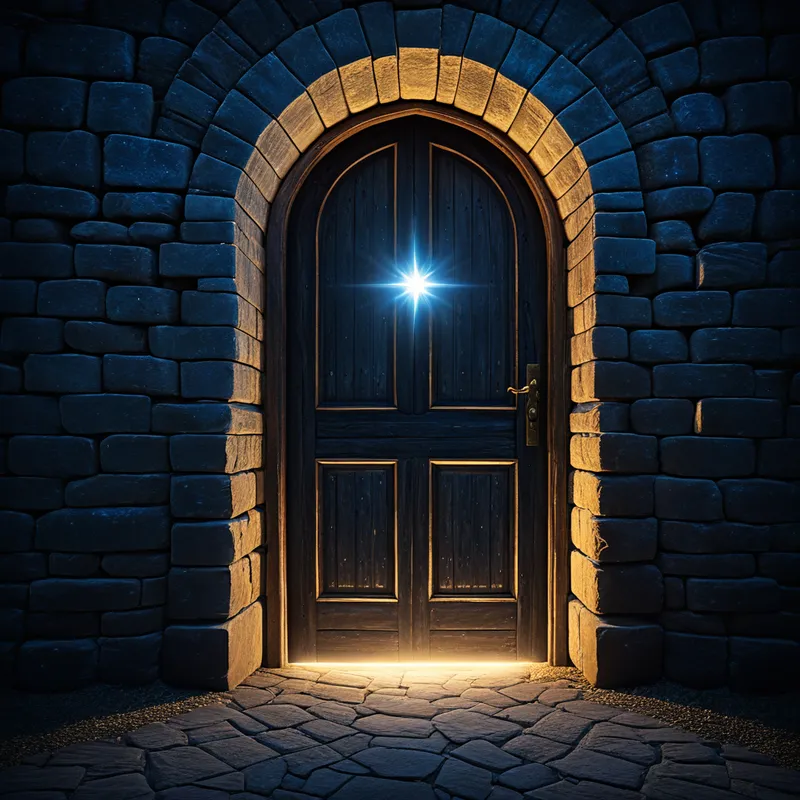
They rise, the stone floor cold beneath their feet. They approach the door—a barrier of oak and iron, of habit and history. The knocking ceases. A silence, more profound than before, fills the space. It is a silence that listens. From beyond the wood, a voice comes. It is not carried on the air, but seems to form within the very substance of the door, within the marrow of the bones of the one who listens.
“Behold,” the voice says, gentle as a breath, solid as a mountain. “I stand at the door and knock.”
The heart within the room clenches. This is no stranger. This is the voice that called the stars by name, that whispered in the garden’s dawn, that wept over a city’s blindness. It is the voice of the Lord, the Lamb, the one who walks among the lampstands. And he is… outside. He stands at the threshold of this single, solitary heart.
“If anyone hears my voice and opens the door,” the voice continues, a promise woven into the conditional, “I will come in to them. I will share a meal with them, and they with me.”
There it hangs—the entirety of eternity in a single, suspended moment. The lock is on the inside. The hand that can turn it belongs only to the dweller within. The divine guest will not splinter the timber. He will not command the hinges. He knocks. He speaks. He waits. The story ends not with a glorious entry, but with an open-ended invitation. The resolution lies in the silent, trembling hand of the listener, reaching in the dark toward the bolt.
Cultural Origins & Context
This potent vignette is found in the final book of the Christian New Testament, the Apocalypse of John, a text composed in a time of profound crisis and persecution. It is not a folk tale passed down through generations, but a visionary’s letter to seven struggling communities. The author, exiled on the isle of Patmos, channels a series of overwhelming symbolic revelations meant to fortify the faithful.
The “knocking at the door” is embedded in a message to the church in Laodicea, a community criticized for being “lukewarm”—neither hot with fervor nor cold with honest rejection, but tepid and self-satisfied. In this context, the knock is a corrective, a crisis, and an astonishing gesture of intimacy. It subverts expected power dynamics. The culture was steeped in imagery of God as an unapproachable emperor or a wrathful judge. Here, the Risen One takes the posture of a traveler, a petitioner, a friend seeking fellowship. It was a radical democratization of the divine encounter: not for prophets on mountaintops, but for any person in any room who had ears to hear.
Symbolic Architecture
The myth’s power lies in its stark, almost unbearable symbolism of agency and intimacy. Every element is a psychic landmark.
The Door is the boundary of the self—the persona, the defenses, the conscious ego’s fortress. It represents the final barrier of free will, the sanctum of individual sovereignty that even the divine respects.
The Knock is the call of the Self to the ego. It is the symptom of divine discontent, the psychic tension, the dream that disturbs, the synchronicity that puzzles. It is not coercion, but an awakening signal.
The Voice is the recognizable tone of one’s own deepest truth, the “still, small voice” that cuts through internal noise. It names itself, establishing relationship: “It is I.” This moves the encounter from anonymous spiritual force to personal address.
The most profound power is not the power to enter, but the power to refrain from forcing entry. The divine knocks, honoring the lock on the inside of the soul.
The Meal is the symbol of ultimate communion, of shared substance and time. In ancient Near Eastern culture, to share a table was to share a life, to make a covenant. It represents the integration of the conscious personality with the transpersonal Self—a nourishing, sustaining wholeness.

The Dreamer’s Resonance
When this pattern manifests in modern dreams, the dreamer is at a psychic threshold. The dream-knock is often auditory, a sound that penetrates the dreamscape with peculiar clarity. The dreamer may find themselves in a familiar yet strangely isolated house, often at night, hearing a knock that fills them with both dread and acute longing.
Somatically, this can correlate with a feeling of constriction in the chest (the heart as a chamber) or a literal jump or startle awake. Psychologically, it signals that the unconscious is pressing for recognition. The ego has become a “lukewarm” administrator of a life, managing surfaces but out of touch with its own depths. The knock is the pressure of repressed vitality, unlived life, or a calling that has been politely ignored. The anxiety in the dream is the friction of a paradigm preparing to shift—the safe, self-contained identity feels threatened by the vastness of what calls to it.
Alchemical Translation
The alchemy here is one of invitation, not conquest. The modern individuation process often begins with a sense of something “other” knocking—a depression, an inexplicable passion, a recurring failure, a haunting image. We mistake it for an enemy at the gate. The myth instructs us to listen for the voice within the knock.
The first operation is Awareness (Hearing): To distinguish the meaningful knock from the random noise of existence. This requires turning down the inner commentary and attending to the persistent, recurring signals from the psyche.
The second is Discernment (Recognizing the Voice): Moving from “something is happening to me” to “Someone is addressing me.” This is the shift from being a victim of circumstance to being a participant in a dialogue with the Self.
The third and crucial operation is Volition (Opening the Door): This is the act of conscious surrender, the willing dissolution of the ego’s total autonomy. It is not annihilation, but invitation. We open the door to our own depths, allowing the nourishing, often unsettling, power of the Self to enter the conscious dwelling.
The shared meal is the alchemical conjunctio, the sacred marriage. It is the ego no longer dining alone on its own prejudices, but being fed by the wisdom of the whole psyche.
The triumph is not a heroic battle won, but a hospitality extended. The god comes in, not as a conqueror, but as a guest who transforms the household simply by his presence. The room is no longer a prison of isolation but a site of communion. The myth models the ultimate psychic truth: our wholeness awaits us, but it knocks patiently on the door of our own willingness.
Associated Symbols
Explore related symbols from the CaleaDream lexicon: