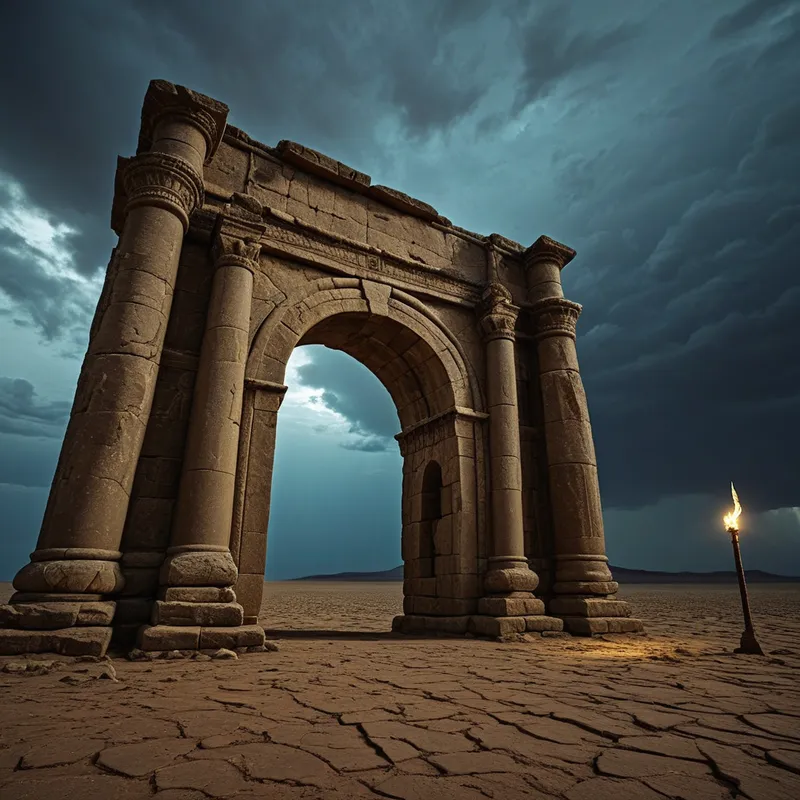
The House of Atreus - the arch Myth Meaning & Symbolism
A cursed lineage's relentless cycle of bloodshed and vengeance, where the weight of ancestral sin bends the soul until it finds the arch of redemption.
The Tale of The House of Atreus - the arch
Hear now the tale of the House of Atreus, not as a list of kings and crimes, but as a single, suffocating breath held across generations. It begins not with a man, but with an appetite. Tantalus, in his pride, sought to test the omniscience of the gods themselves. He served them a feast of his own son, Pelops, boiled in a cauldron. The air in the divine hall grew cold, the nectar turned to ash on the tongue. Only Demeter, lost in her own grief, consumed a piece of the shoulder. The curse was cast then, not by a thunderbolt, but by the horrified silence that followed, a silence that would echo in the bloodline forever.
From this abomination, a partial resurrection: the boy Pelops was restored, his ivory shoulder a permanent scar of the crime. He grew, he loved, he desired Hippodamia. To win her, he conspired with her father’s charioteer, Myrtilus, to sabotage the king’s chariot. Victory was his, but betrayal followed victory. Rather than pay the promised reward, Pelops hurled Myrtilus into the sea. As the charioteer drowned, he screamed a curse upon the house of Pelops, weaving his vengeance into the existing curse of Tantalus. The threads of fate were now a noose.
The poison flowered in the next generation. Atreus and Thyestes fought like scorpions in a jar for the throne of Mycenae. Atreus, claiming a sign from the gods—a golden-fleeced ram in his flocks—seized power. But Thyestes had seduced Atreus’s wife and stolen the golden ram. In a fury that chilled the sun, Atreus enacted a vengeance that would become legend’s benchmark for horror. He pretended reconciliation, invited Thyestes to a feast, and served him a rich stew. When the meal was done, Atreus revealed the platter bearing the hands and feet of Thyestes’ own sons. The sun, it is said, reeled backward in the sky, refusing to witness such a deed.
The curse, now a living thing, hungered for more. Aegisthus, born of an incestuous union sparked by that horrific feast, was its sharpened tool. Agamemnon, heir to this tainted legacy, would bear its greatest weight. To gain favorable winds to sail to Troy, he was commanded to sacrifice his own daughter, Iphigenia. On the altar at Aulis, he chose his glory over his blood. The knife fell. The winds rose. And his wife, Clytemnestra, let a cold hatred crystallize in her heart for ten long years.
His triumphant return from Troy was not a homecoming, but a walk into the net. In his bath, entangled in a rich robe, the great king Agamemnon was struck down by Clytemnestra and her lover, Aegisthus. The cycle seemed complete, the curse sated. But from this ultimate betrayal rose the avengers: Orestes and his sister Electra. Duty-bound, Orestes murdered his mother Clytemnestra. And then, he ran. Not from men, but from the Furies, ghastly hags of conscience who dripped poison in his eyes and shrieked in his sleeping ears.
His flight was the turning of the wheel. He ran not in a circle, but on a desperate, seeking path. He was pursued to the very navel of the world, to the temple of Apollo at Delphi, and finally to Athens, to be judged by the goddess Athena herself. In that first court of justice, the old law of blood-feud met the new law of reasoned judgment. The Furies, the embodiments of primal curse, were persuaded to become the Eumenides, guardians of civic order. The endless, downward spiral of vengeance was arrested. The line of blood, which had run only toward death, found at last an arch—a structure that bears weight by transforming downward pressure into a span that allows passage from one state to another. The curse was not broken, but transformed. The house did not fall; it found, in its last surviving heir, a form that could bear the weight of its history.
Cultural Origins & Context
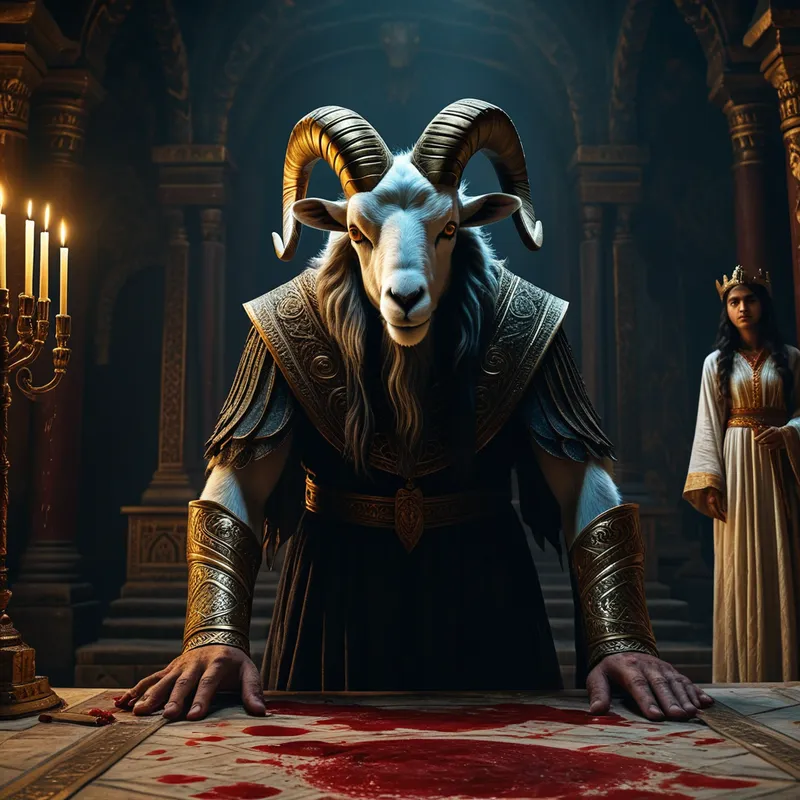
This foundational myth comes to us from the rich tapestry of ancient Greek oral tradition, crystallized later by the tragic poets of 5th century BCE Athens—Aeschylus, Sophocles, and Euripides. It was not mere entertainment; it was a societal ritual performed during the City Dionysia, where the entire polis would gather to witness the darkest potentials of human nature played out under the gaze of the gods.
The function of the myth was multifaceted. For a culture deeply concerned with hubris, miasma (pollution from bloodshed), and the unbreakable bonds of familial duty, the House of Atreus served as the ultimate cautionary tale. It explored the terrifying idea that sin could be inherited, that the crimes of a grandfather could dictate the fate of a grandson. It asked the central, agonizing question of a society moving from tribal blood-law to civic justice: how does a community stop the cycle of vengeance? The myth provided a narrative arena to wrestle with the transition from a pre-legal world of personal retribution to a legal world of trial by jury, a transition embodied in Orestes’ trial in Athens.
Symbolic Architecture
Psychologically, the House of Atreus represents the ancestral shadow—the unconscious, inherited burden of trauma, compulsion, and unlived life that passes through a family line. Each generation is not free; they are actors stepping onto a stage where the script of their destruction seems pre-written. The “arch” is the critical symbol often overlooked. An arch is a structure that withstands crushing weight by channeling force down its sides and creating a stable, open space beneath. It is not an escape from weight, but a genius transformation of it.
The curse is the weight. The arch is the consciousness that learns to bear it, not by collapsing, but by shaping the descent into a form that allows passage.
The characters embody fragmented psychic forces. Agamemnon is the ruling consciousness (the ego) sacrificing its own humanity (Iphigenia) for collective ambition (the Trojan War). Clytemnestra is the betrayed and vengeful anima, who turns murderous when her sacred values are violated. Orestes is the nascent Self, forced to enact the horrific, necessary crime of confronting the personal mother (the unconscious identification with the family complex) to be free of the paternal curse. His flight from the Furies is the psyche’s torment by guilt and neurosis after a necessary but traumatic act of differentiation.
The Dreamer’s Resonance
When this myth stirs in modern dreams, it rarely appears as ancient Greeks. Instead, one dreams of being trapped in a family home where the walls whisper old arguments, or of being forced, against one’s will, to re-enact a parent’s worst mistake. It manifests as somatic experiences of a “weight on the chest”—the literal pressure of ancestral expectation. It is the dream of a recurring, inescapable argument, or of a heirloom object (a ring, a weapon, a book) that feels charged with a malevolent history.
The psychological process is one of confronting the family complex: the internalized set of rules, traumas, and destinies that feel like one’s own, but are in fact inherited. The dreamer going through this is at the crisis point where loyalty to the family pattern (the curse) is causing acute suffering. The Furies in the modern psyche are anxiety disorders, obsessive thoughts, and profound guilt that arise when one considers breaking the familial mold. The dream state rehearses the terror and the necessity of becoming the one who stops the cycle, who, like Orestes, must face internal torment to change the pattern.

Alchemical Translation
The alchemical journey of the House of Atreus is the opus contra naturam—the work against nature. Here, “nature” is the blind, compulsive repetition of the curse. The transmutation occurs in three stages: Nigredo, Albedo, and Rubedo.
The Nigredo, the blackening, is the entire bloody history from Tantalus to Agamemnon’s murder. It is the recognition of the base, leaden material of one’s inheritance: the shame, the violence, the betrayal. This stage is necessary; one must fully confront the blackness of the shadow to begin work.
The Albedo, the whitening, is the flight of Orestes. It is not purity, but distillation and washing. He is pursued, fragmented, and haunted. This is the stage of analysis, of suffering the consequences of one’s initial break from the pattern, of being scoured by the Furies of conscience and fear. It is a lonely, lunar phase of seeking a new authority (Apollo’s wisdom, Athena’s judgment) outside the familial system.
The arch is built in the Rubedo—the reddening, the final stage. Here, the suffering and the seeking are not eliminated; they are integrated. The weight of the curse (the downward force) is channeled into the pillars of conscious understanding and acceptance. The open span beneath the arch is the liberated space for the individual to live their own life, no longer crushed by the past, but forever shaped by it. The Furies become the Eumenides; the destructive energy of the complex is transformed into a protective, discerning force. The gold produced is not a life free of history, but a consciousness strong enough to bear its history without being doomed by it. The individual becomes the arch where the lineage’s curse finally finds a form that allows passage into the future.
Associated Symbols
Explore related symbols from the CaleaDream lexicon: