
The Holy Guardian Angel Myth Meaning & Symbolism
A myth of a divine, personal protector assigned at birth, guiding the soul through life's trials toward its sacred destiny.
The Tale of The Holy Guardian Angel
Before the first cry, before the first breath is drawn into the lungs of clay, a covenant is made in the silence beyond the stars. In the courts of the Most High, where light is a substance and thought is a song, a soul is chosen. It is a soul like yours, a spark newly kindled from the eternal flame.
And to this soul, a companion is given. Not of flesh, not of earth, but woven from the very breath of the divine. This is your Holy Guardian Angel. Its form is not one form, but a symphony of potential forms—wings of whispered prayers, eyes that hold the patience of mountains, a presence that is both a fortress and a gentle hand. It is appointed as your keeper, your witness, your most faithful friend. Its sole, sacred duty is you.
It stands with you at the threshold of life, this angel, as you are ushered into the world of tears and laughter. It sees your first stumbling steps, hears your secret childhood fears whispered into a pillow. It walks beside you on sun-dappled paths and stands vigil in the howling dark. When you are lost in the trackless desert of your own despair, it does not carry you out. Instead, it places a stone for your foot, reveals a single drop of dew on a leaf you had not seen. It speaks, not in thunder, but in the sudden, unbidden memory of a forgotten kindness, in the inexplicable peace that descends in the heart of chaos, in the dream that arrives like a solved riddle.
The great conflict is not with dragons or armies, but with the deafness of the human heart. You, in your mortal hurry, in your certainty of solitude, often forget its voice. You mistake its nudges for coincidence, its warnings for anxiety, its comfort for mere resilience. You build walls of noise and distraction, and you feel alone behind them. The angel does not storm the walls. It waits. It sings a song of your true name on a frequency just beyond hearing.
And then comes the moment of turning. Perhaps in the exhaustion that follows a great failure, or in the silent awe of a newborn’s gaze, or in the hollow aftermath of a victory that tastes of ash. The noise falls away. In that sacred silence, you finally listen. You feel, rather than see, the immense and tender presence that has never left. You remember the covenant. You are not, and have never been, alone. The guide was always there. The journey was always toward the recognition of the guide within the very fabric of your being. The resolution is not an end, but a beginning—the start of a conscious dialogue, a partnership between the mortal and the divine, walking the earthly road together toward a home remembered in the soul.

Cultural Origins & Context
The concept of the Holy Guardian Angel is a tapestry woven from threads of ancient Judaism, early Christianity, and later mystical thought. Its roots are deep in the Hebrew Bible, where angels are messengers (Mal’akh) of God, intervening in human affairs. The idea of a personal angel finds expression in verses such as Psalm 91:11: “For he will command his angels concerning you to guard you in all your ways.”
This seed blossomed in the intertestamental period and in rabbinic Judaism. The Talmud states, “Every single person is accompanied by an angel” (Taanit 11a). In Jewish mystical tradition, or Kabbalah, the concept became central. Here, the angel is not just a protector but a celestial twin, a higher self that embodies one’s ultimate spiritual potential and destiny. It was passed down not as a single, canonical myth, but as an esoteric teaching within mystical schools, a secret comfort and a profound challenge to the initiate.
Early Christian writers like Origen and Basil embraced the idea, seeing it as a logical extension of God’s providential care. The saying of Jesus in Matthew 18:10, “See that you do not despise one of these little ones. For I tell you that their angels in heaven always see the face of my Father in heaven,” was a cornerstone for the doctrine. Its societal function was multifaceted: it offered profound comfort in a perilous world, provided a framework for understanding intuition and providence, and presented a lofty ideal for the soul to commune with and ultimately unite with.
Symbolic Architecture
At its core, the myth of the Holy Guardian Angel is a profound map of the psyche. The Angel symbolizes the Self, the totality of who we are meant to be—our latent wisdom, our uncorrupted purpose, our connection to the transpersonal. The human soul in the tale represents the conscious ego, the “I” that navigates the waking world, often feeling separate, fragile, and lost.
The Holy Guardian Angel is the psyche’s own completed blueprint, whispering instructions to the builder who has forgotten the plan.
The journey of forgetting and remembering the Angel is the universal human drama of alienation and homecoming. The “deafness” is the ego’s inflation, its belief that it is the sole author of its life. The dark forest, the desert, the walls of distraction—these are all symbols of the ego’s entrapment in the complex, the neurosis, the persona. The Angel’s silent, persistent presence is the pull of the Self, the guiding function of the unconscious that seeks wholeness. The moment of turning and listening is the critical act of ego submission, where the conscious mind aligns itself with a greater, intelligent pattern within.
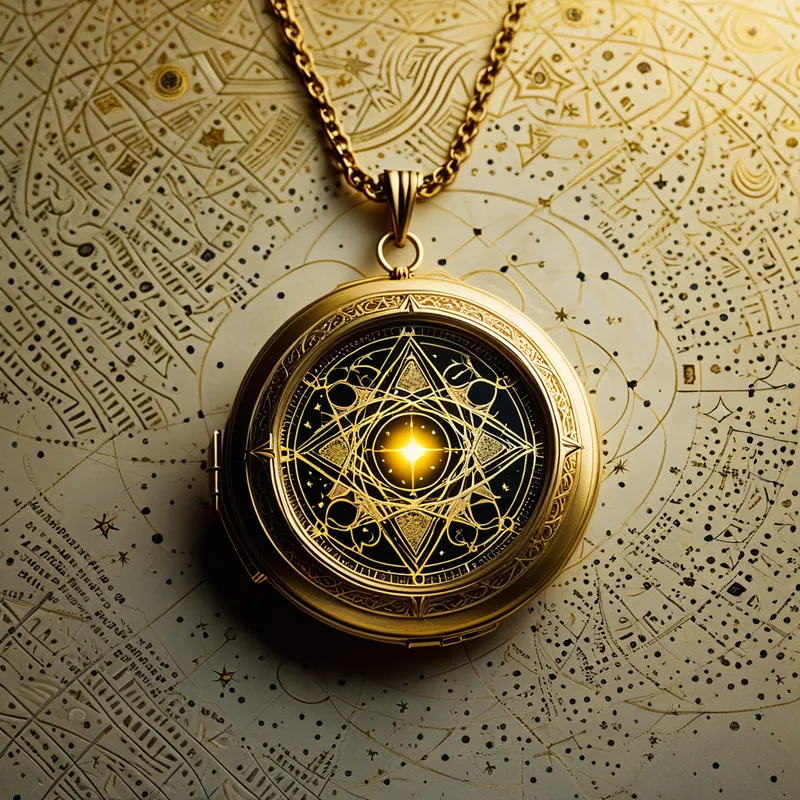
The Dreamer’s Resonance
When this myth stirs in the modern unconscious, it often manifests in dreams of benevolent, guiding figures. This is not necessarily a literal angel with wings. It may appear as a wise stranger who gives a crucial key, a radiant animal that leads the way out of a maze, a beloved grandparent offering silent, knowing comfort, or even a familiar voice on a disconnected phone giving perfect advice.
The somatic experience upon waking from such a dream is key: a deep, cellular sense of relief, a release of a long-held tension in the chest or shoulders, a feeling of being “held” or “seen” that lingers into the day. Psychologically, this dream pattern emerges during periods of profound transition, moral dilemma, or existential loneliness. It signals that the dreamer’s psyche is activating its own innate guidance system. The process is one of re-attunement. The ego is being invited, or sometimes compelled by crisis, to relinquish its illusion of solitary control and to listen for the intelligence of the deeper Self. It is the beginning of trust in something beyond the conscious mind’s limited repertoire.

Alchemical Translation
The alchemical work modeled by this myth is the calcination of the ego and the sublimation of the soul. The initial state is separatio—the felt separation between the ego and the Self (the Angel). The long journey of “forgetting” is a necessary, if painful, stage of nigredo, the blackening, where the ego must experience its own limits and despair.
The turning point, the act of listening, is the albedo, the whitening. It is the cleansing revelation that one is not alone in the work. The conscious dialogue that follows is the sacred marriage, the hieros gamos, between the mortal and the divine aspects of the psyche.
Individuation is not about becoming the Angel, but becoming fully human in its conscious, humble, and awe-struck service.
For the modern individual, the myth translates to a practice of inner attention. It is the alchemy of turning synchronicity from coincidence into guidance, of interpreting persistent intuitions as communications, and of viewing life’s obstructions not as random punishments but as precisely arranged lessons by a loving, if severe, intelligence within. The ultimate transmutation is the realization that the seeker, the path, and the guide are not three, but one. The Holy Guardian Angel is the destination revealed to be, and to have always been, the very ground upon which we walk.
Associated Symbols
Explore related symbols from the CaleaDream lexicon: