The Greenstone Pounamu Legend Myth Meaning & Symbolism
A taniwha's obsessive love captures a woman, transforming her into sacred pounamu greenstone, a story of eternal essence born from profound loss.
The Tale of The Greenstone Pounamu Legend
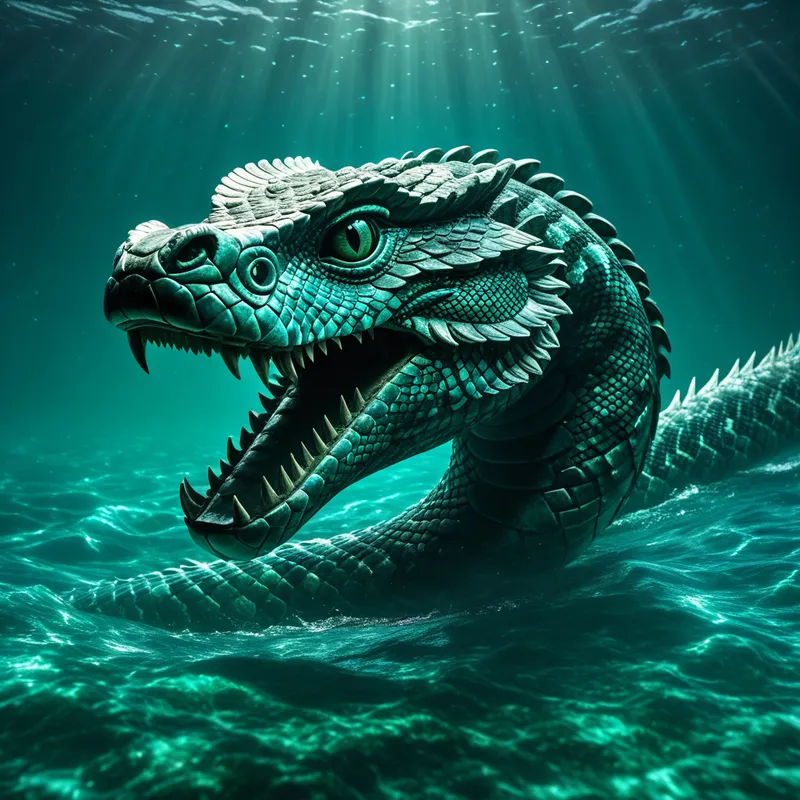
Listen. The story is not just in the words, but in the cold, deep water and the warm, living stone. It begins in the restless heart of the sea, with a guardian of the depths named Poutini. He was a [taniwha](/myths/taniwha “Myth from Maori culture.”/), a spirit of immense power, whose domain was the hidden currents and the cold, dark places where light fears to go. But his heart was not cold. It burned with a solitary, possessive fire.
On the sun-drenched shores of Te Ika-a-Māui, there lived a woman named Waitaiki. Her beauty was not merely of face and form; it was the beauty of belonging. She was of the people, rooted in the warmth of the hearth, the laughter of children, the solid earth beneath her feet. She was loved by her husband, Tama-āhua, and her presence was a blessing to her tribe.
From the shadowed depths, Poutini saw her. In her warmth, he saw the antithesis of his own eternal, watery solitude. His longing became an obsession, a tidal pull he could not resist. One day, as Waitaiki walked alone by the water’s edge, the sea itself seemed to reach for her. A great wave, not of chaos, but of terrible purpose, rose and swept her from the land. Poutini had taken her.
He carried her south, a captive in his liquid realm. Tama-āhua, heart shattered, gathered his warriors. Their waka cut through the waves, a pursuit fueled by love and fury. They chased the shimmering, elusive form of the taniwha from coast to coast. Poutini, feeling the relentless pursuit, knew he could not keep Waitaiki in her mortal form. The world of men would always seek her. A desperate, tragic resolution formed in his spirit.
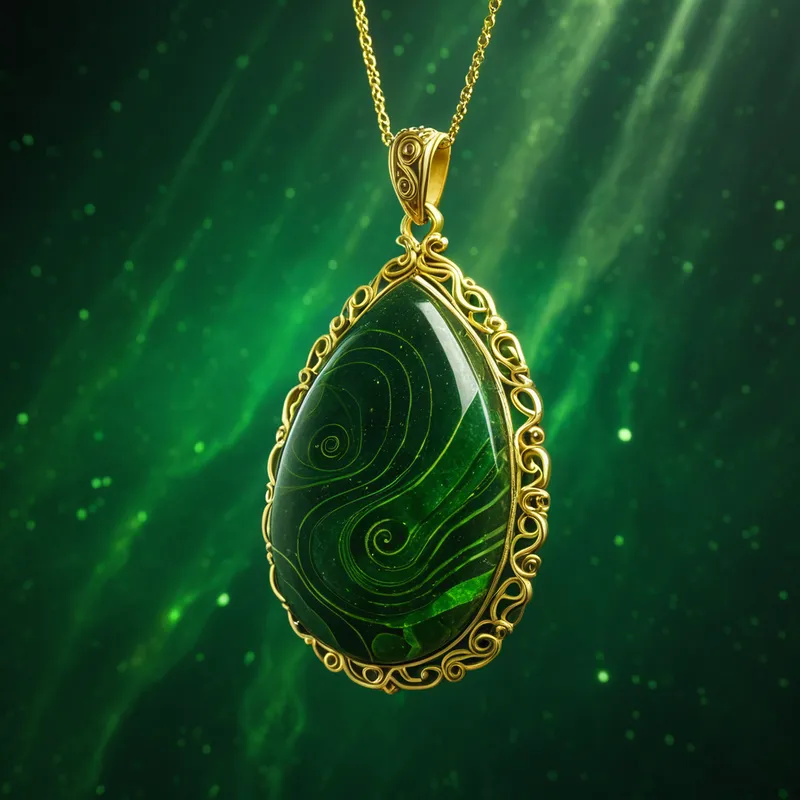
He brought her to the cold, clear waters of the Arahura River. Here, in this sacred place, he performed the ultimate act of possession. He could not have her life as it was, so he would transform it. With a breath of his ancient power, he changed her. Her warm flesh, her beating heart, her luminous spirit—he transmuted it all. Waitaiki did not die. She became something eternal. Her body, her very essence, solidified into the most precious of stones: pounamu, greenstone.
Poutini left her there, in the riverbed, and fled to the sea, forever bound to her in sorrow. When Tama-āhua and his people arrived, they found not their wife and kin, but the stone. They wept, their tears washing the first green treasures. In their grief, they understood. Waitaiki was not lost. She had become the land itself, a gift of strength, beauty, and permanence for all generations. The chase was over. The transformation was complete.

Cultural Origins & Context
This pounamu origin narrative, with regional variations, belongs primarily to the Ngāi Tahu people and other iwi of Te Waipounamu (the South Island). It is a waiata, a whakapapa of the stone itself, explaining its spiritual provenance and its physical location. Passed down orally through generations, the story was not mere entertainment; it was a legal and spiritual charter. It established the deep, ancestral connection between the people and the pounamu resource, governing its stewardship, its carving into taonga, and its use in trade and diplomacy.
The myth functioned as a cosmological map, tying human emotion (love, jealousy, grief) to geographical features (the Arahura River) and a sacred material. It taught that the most valued things are born from profound narratives of loss and transformation, and that true possession is not about holding, but about understanding and honoring essence.
Symbolic Architecture
At its core, this is a myth of impossible love and alchemical [fixation](/symbols/fixation “Symbol: An obsessive focus on a single idea, object, or person, often representing a spiritual blockage or an unresolved archetypal pattern.”/). Poutini represents the archetypal force of obsessive desire—a love that cannot integrate with the ordinary world and so must transform its object entirely. He is the [spirit](/symbols/spirit “Symbol: Spirit symbolizes the essence of life, vitality, and the spiritual journey of the individual.”/) of the deep unconscious, cold, powerful, and utterly single-minded. Waitaiki symbolizes the conscious, embodied self, warm, connected, and [human](/symbols/human “Symbol: The symbol of a human represents individuality, complexity of emotions, and social relationships.”/).
The tragedy is not the capture, but the realization that love, in its most absolute form, demands a death of the familiar to birth the eternal.
The transformation into pounamu is the central [symbol](/symbols/symbol “Symbol: A symbol can represent an idea, concept, or belief, serving as a powerful tool for communication and understanding.”/). It is not destruction, but [transmutation](/symbols/transmutation “Symbol: A profound, alchemical process of fundamental change where one substance or state transforms into another, often representing spiritual evolution or personal metamorphosis.”/). The warm, soft, mortal [body](/symbols/body “Symbol: The body in dreams often symbolizes the dreamer’s self-identity, personal health, and the relationship they have with their physical existence.”/) becomes cold, hard, and immortal [stone](/symbols/stone “Symbol: In dreams, a stone often symbolizes strength, stability, and permanence, but it may also represent emotional burdens or obstacles that need to be acknowledged and processed.”/). This speaks to the process whereby intense emotional experience—especially love and [grief](/symbols/grief “Symbol: A profound emotional response to loss, often manifesting as deep sorrow, yearning, and a sense of emptiness.”/)—crystallizes within the psyche, forming a core of unshakeable [identity](/symbols/identity “Symbol: Identity represents the sense of self, encompassing personal beliefs, cultural background, and social roles.”/), a “touchstone” of the [soul](/symbols/soul “Symbol: The soul represents the essence of a person, encompassing their spirit, identity, and connection to the universe.”/). Pounamu, therefore, is solidified spirit, [grief](/symbols/grief “Symbol: A profound emotional response to loss, often manifesting as deep sorrow, yearning, and a sense of emptiness.”/) made beautiful, [memory](/symbols/memory “Symbol: Memory symbolizes the past, lessons learned, and the narratives we construct about our identities.”/) rendered permanent.
The Dreamer’s Resonance
When this myth pattern stirs in the modern dreamer, it often signals a profound encounter with the possessive aspects of the unconscious. To dream of being pursued or captured by a serpentine water force may reflect a feeling of being overwhelmed by a deep, obsessive emotion (longing, grief, a creative idea) that feels alien yet powerfully compelling. The dreamer may feel their familiar “shoreline” identity is being eroded.
Conversely, dreaming of finding or holding greenstone can symbolize the somatic recognition of this inner crystallization process. It is the psyche’s way of announcing, “A part of you has now become permanent. A core truth has been forged from a great loss or passion.” The stone in the dream is heavy, cool, and precious—a tangible anchor born from intangible struggle.
Alchemical Translation
The journey from Waitaiki the woman to Waitaiki the pounamu is a perfect map of psychic individuation. It begins with the conscious self (Waitaiki on the beach) being seized by a powerful, autonomous complex from the unconscious (Poutini). This “capture” is often experienced as a life crisis, a depression, or an all-consuming passion that pulls one away from ordinary life.
The frantic chase (Tama-āhua’s pursuit) represents the ego’s initial, desperate attempt to reclaim the old identity, to force the complex back into familiar shapes. This fails. The alchemical work happens at the river—the liminal space between land and sea, conscious and unconscious. Here, the solve et coagula occurs: the dissolution of the old form and its coagulation into a new, higher one.
The greenstone is the lapis philosophorum of this myth. It is the prized outcome of the ordeal, the symbol of the Self.
For the modern individual, this translates to the process whereby a devastating loss, a consuming love, or a profound betrayal does not merely scar us, but fundamentally re-orders our substance. We are, metaphorically, turned to stone—not in becoming cold and unfeeling, but in developing an unassailable core of wisdom, resilience, and authentic essence. The goal is not to escape Poutini’s grip, but to undergo his transformation and emerge as the taonga—the treasured, enduring self.
Associated Symbols
Explore related symbols from the CaleaDream lexicon:
- Stone — The ultimate symbol of the myth, representing the eternal, solidified essence born from transformation; the hardened, precious core of the self forged in the waters of emotion.
- Water — Represents the realm of the unconscious, deep emotion, and the transformative power that carries the self from one state of being to another, as Poutini carries Waitaiki.
- Serpent — Embodies the taniwha Poutini; a symbol of primal instinct, possessive love, guardianship of hidden treasures, and the transformative power of the deep psyche.
- Journey — The relentless chase from north to south mirrors the soul’s forced migration, a passage from one state of consciousness to another that cannot be reversed.
- Transformation — The central action of the myth; the alchemical process where mortal life and love are irrevocably changed into an immortal, symbolic substance.
- Love — The driving force of the narrative, depicted here in its shadow aspect as possessive, obsessive, and ultimately transformative rather than nurturing.
- Grief — The emotional catalyst for discovery; Tama-āhua’s tears wash the first greenstone, showing how profound sorrow is integral to recognizing and cleansing newfound value.
- Heart — Waitaiki’s captured warmth becomes the metaphorical heart of the stone; pounamu is often worn over the heart, symbolizing love made permanent and resilient.
- River — The liminal space, the Arahura, where transformation occurs; it is the threshold between states, the flowing boundary where dissolution and re-formation happen.
- Spirit — Poutini as a water spirit, and Waitaiki’s human spirit transmuted into stone; speaks to the non-material essence that persists through and guides radical change.
- Essence — What is extracted and preserved through the ordeal; the true, indestructible nature of Waitaiki that remains when all else is changed.
- Green — The color of life, of the forest, and of the stone itself; it symbolizes the preservation of vital essence within a hardened, eternal form.