The Great Zimbabwe Mystery Myth Meaning & Symbolism
A myth of a lost stone kingdom, a king who vanished into the earth, and the enduring mystery of a civilization's soul, echoing through time.
The Tale of The Great Zimbabwe Mystery
Listen, and let the wind carry you back. It does not blow through empty plains, but whispers through the gaps in ancient stone. It tells of a time when the earth itself was persuaded to dream in straight lines and perfect curves.
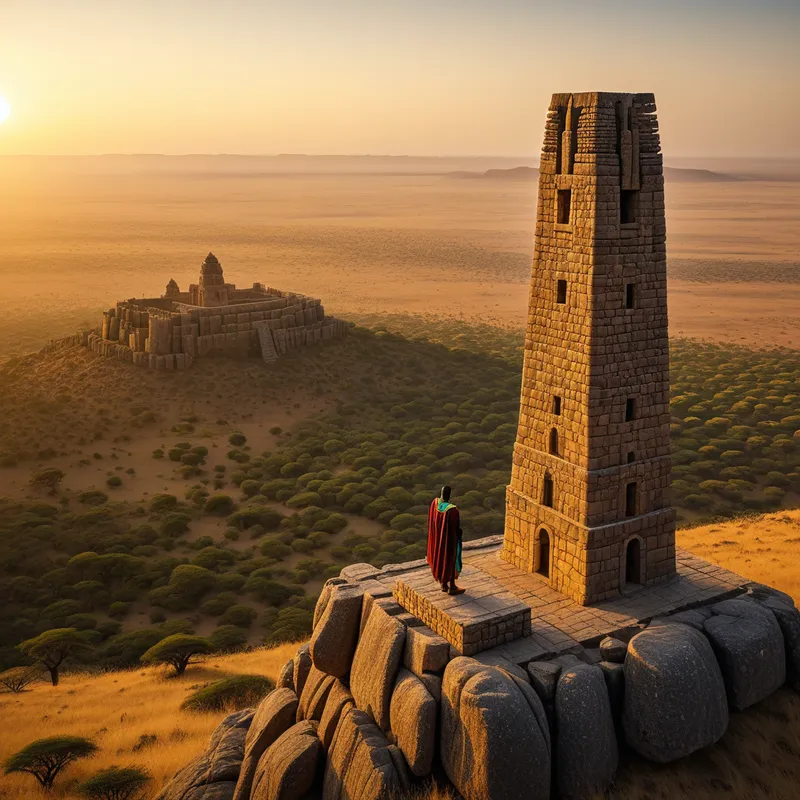
In the land between the rivers, where the baobabs stand as sentinels of time, a people listened to a different song. It was not the song of the hunter or the planter, but the deep, resonant hum of the granite hills. Their king, Mambo, was not merely a man who ruled men. He was the one who conversed with the spirit of the land, Mwari. Under his gaze, a miracle was coaxed from the soil. Without mortar, without the bite of iron tools, stone was laid upon stone. Walls grew, not as fortifications of fear, but as embraces of grandeur—curving, concentric embraces that held the sky within their grasp. Towers rose, conical and solid, not for climbing, but for containing the breath of the ancestors. This was Zimbabwe, the great house of stone. It was a city that mirrored the order of the heavens, a place where gold flowed like a river and the smoke of offerings connected earth to cloud.
But a kingdom built in dialogue with the divine must heed its rhythms. The land grew weary. The rains became shy, whispering promises they did not keep. The rivers, once generous, shrank to silver threads. The people looked to Mambo, and Mambo looked to Mwari, but the voice from the sacred caves grew faint, a distant echo. The harmony was breaking.
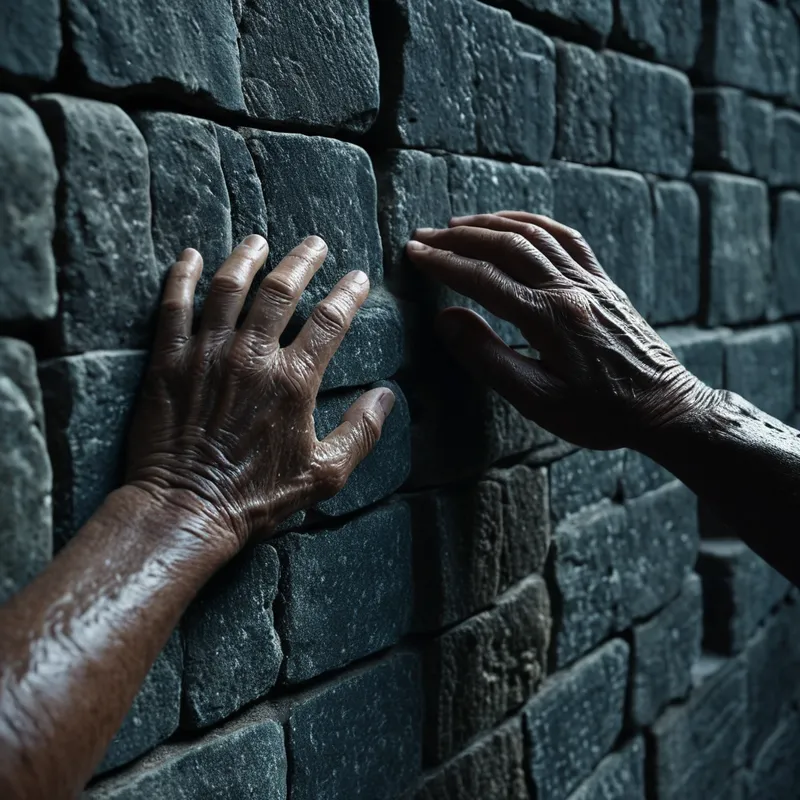
Then came the day of the great silence. Mambo, clad in the robes of office, walked the empty corridors of the royal enclosure. He touched the cool, sun-warmed stone—each one a testament. He climbed to the highest point, where the wind speaks clearest. His people watched from below, a sea of anxious faces. He did not address them. Instead, he turned and walked into the heart of the tallest, most mysterious tower—the one with no door, no stair, a solid enigma pointing to the sun.
He did not come out.
They waited. They called. Finally, the bravest among them approached. The tower was as it always had been: seamless, impenetrable. Mambo had vanished. Not a footprint led away, not a scrap of cloth remained. It was as if the stone itself had swallowed its keeper. With the living link to the spirit world gone, the soul seemed to drain from the great stone houses. The people, guided by the elders, gathered what they could carry. They left the soaring walls, the intricate passages, the empty towers. They dispersed into the wider land, becoming seeds of memory. The wind took up residence in the courtyards. The rain etched new patterns on the walls. Zimbabwe was left, not in ruin, but in waiting—a vast, silent question built from stone, holding the mystery of a king who became one with his kingdom.
Cultural Origins & Context
The narrative of the Great Zimbabwe Mystery is not a single, codified myth from a sacred text, but a living tapestry of oral tradition, historical memory, and spiritual interpretation woven by the Shona peoples of southern Africa, particularly the Karanga and Rozvi subgroups. The site itself, a UNESCO World Heritage landmark, is a tangible, awe-inspiring fact—the largest pre-colonial stone structure complex south of the Sahara. The “mystery” for European colonists, who could not conceive of sophisticated African architecture, was one of origin, leading to fantastical, racist theories of Phoenicians or the Queen of Sheba.
For the Shona, the mystery is of a different order. It is a spiritual and historical echo. The stories are passed down through elders, sekurus and ambuyas, often in connection with the site itself or with the mbira music that calls the ancestral spirits, the Vadzimu. The tale functions as an etiological narrative, explaining the abandonment of a magnificent capital. More profoundly, it serves as a meditation on the sacred contract between a ruler, his people, and the land. It reinforces the core Shona concept of Ukama—relatedness. The king’s disappearance is not a failure, but a supreme, sacrificial act of reintegration. When the balance was lost, he did not flee; he returned the kingship to the earth from whence its authority came, ensuring the spiritual continuity of his people even in their physical dispersal. The story legitimizes later Shona states like the Rozvi Empire, who saw themselves as heirs to this legacy, and it stands as a permanent symbol of indigenous genius, resilience, and deep cosmological understanding.
Symbolic Architecture
At its [heart](/symbols/heart “Symbol: The heart symbolizes love, emotion, and the core of one’s existence, representing deep connections with others and self.”/), the myth is not about [loss](/symbols/loss “Symbol: Loss often symbolizes change, grief, and transformation in dreams, representing the emotional or psychological detachment from something or someone significant.”/), but about transformation and the [enigma](/symbols/enigma “Symbol: An unsolved mystery or puzzle that invites curiosity and intellectual engagement, often representing the unknown or hidden aspects of existence.”/) of [legacy](/symbols/legacy “Symbol: What one leaves behind for future generations, encompassing values, achievements, possessions, and memory.”/). The [stone](/symbols/stone “Symbol: In dreams, a stone often symbolizes strength, stability, and permanence, but it may also represent emotional burdens or obstacles that need to be acknowledged and processed.”/) [city](/symbols/city “Symbol: A city often symbolizes community, social connection, and the complexities of modern life, reflecting the dreamer’s relationships and societal integration.”/) represents the Temenos, the sacred precinct of the psyche—a complex, well-defended, and beautifully ordered [structure](/symbols/structure “Symbol: Structure in dreams often symbolizes stability, organization, and the framework of one’s life, reflecting how one perceives their environment and personal life.”/) of [identity](/symbols/identity “Symbol: Identity represents the sense of self, encompassing personal beliefs, cultural background, and social roles.”/), culture, and [achievement](/symbols/achievement “Symbol: Symbolizes success, mastery, or reaching a goal, often reflecting personal validation, social recognition, or overcoming challenges.”/).
The tower without entrance is the ultimate symbol of the Self—the central, inscrutable core of the personality that can be experienced but never fully possessed or dissected by the conscious mind.
The [king](/symbols/king “Symbol: A symbol of ultimate authority, leadership, and societal order, often representing the dreamer’s inner power or external control figures.”/), Mambo, symbolizes the ruling principle of [consciousness](/symbols/consciousness “Symbol: Consciousness represents the state of awareness and perception, encompassing thoughts, feelings, and experiences.”/), the ego that has successfully built a [kingdom](/symbols/kingdom “Symbol: A kingdom symbolizes authority, belonging, and a sense of identity within a larger context or community.”/) in alignment with the deeper Self (the land/Mwari). His [dialogue](/symbols/dialogue “Symbol: Conversation or exchange between characters, representing communication, relationships, and narrative flow in games and leisure activities.”/) with Mwari represents the vital [connection](/symbols/connection “Symbol: Connection symbolizes relationships, communication, and bonds among individuals.”/) between ego and the transpersonal psyche. The [drought](/symbols/drought “Symbol: Drought signifies a period of emotional scarcity, lack of resources, or feelings of deprivation leading to anxiety or intense longing.”/) symbolizes a state of psychic [aridity](/symbols/aridity “Symbol: Aridity symbolizes emotional or spiritual barrenness, a lack of nourishment, and a state of profound dryness or emptiness.”/), where the conscious [attitude](/symbols/attitude “Symbol: Attitude symbolizes one’s mental state, perception, and posture towards life, influencing emotions and actions significantly.”/) has exhausted its vitality and can no longer draw nourishment from the unconscious. The [king](/symbols/king “Symbol: A symbol of ultimate authority, leadership, and societal order, often representing the dreamer’s inner power or external control figures.”/)’s vanishing act is the ultimate [paradox](/symbols/paradox “Symbol: A contradictory yet true concept that challenges logic and perception, often representing unresolved tensions or profound truths.”/): the ego’s greatest triumph is its voluntary [dissolution](/symbols/dissolution “Symbol: The process of breaking down, dispersing, or losing form, often representing transformation, release, or the end of a state of being.”/) into the [mystery](/symbols/mystery “Symbol: An enigmatic, unresolved element that invites curiosity and exploration, often representing the unknown or hidden aspects of existence.”/) from which it came. He does not die; he is subsumed. This represents the necessary [death](/symbols/death “Symbol: Symbolizes transformation, endings, and new beginnings; often associated with fear of the unknown.”/) of an old, rigidified identity structure to preserve the essence of the [soul](/symbols/soul “Symbol: The soul represents the essence of a person, encompassing their spirit, identity, and connection to the universe.”/). The abandoned city, then, is not a [corpse](/symbols/corpse “Symbol: A corpse symbolizes death, the end of a cycle, and often implies the need for transformation and renewal.”/) but a [chrysalis](/symbols/chrysalis “Symbol: A symbol of profound transformation, vulnerability, and potential rebirth, representing a liminal state between old and new selves.”/). It is the enduring form left behind after the [spirit](/symbols/spirit “Symbol: Spirit symbolizes the essence of life, vitality, and the spiritual journey of the individual.”/) has transmuted. It stands as a [monument](/symbols/monument “Symbol: A structure built to commemorate a person, event, or idea, often representing legacy, memory, and cultural identity.”/) to a phase of development that is complete, whose value is not negated by its end, but eternalized in its mysterious, silent form.
The Dreamer’s Resonance
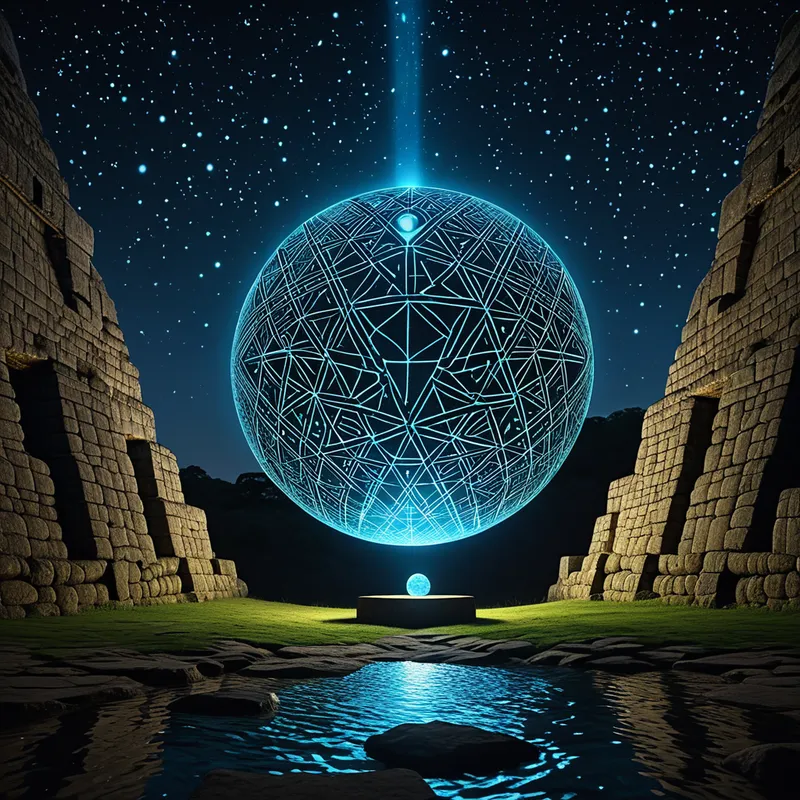
To dream of the Great Zimbabwe is to dream of one’s own inner citadel. The dreamer may wander through vast, empty stone corridors, touch impossibly high walls, or stare up at a solid, windowless tower. The somatic feeling is often one of profound awe mixed with loneliness—the awe of encountering one’s own immense, built potential, and the loneliness of realizing parts of it feel abandoned or inaccessible.
This dream pattern emerges at life thresholds: after a great achievement that now feels hollow, during a midlife crisis where the “kingdom” of one’s career or family feels arid, or when confronting the legacy of one’s ancestors (cultural or familial). The psyche is processing a necessary abandonment. It is not a dream of failure, but of transition. The feeling of “Where did the king go? Why is this place empty?” translates to “Where has the driving force of my old life gone? Why does my success feel so quiet?” The dream invites the dreamer to stop trying to rebuild or reoccupy the old structure. Instead, it asks them to sit in the courtyard of their own soul, listen to the wind in the passages, and understand that the vital essence—the king—has not died. It has retreated into the central, inaccessible tower of the Self, to be held in mystery until the rains return, until a new form of life can be seeded. The dream is an initiation into holding mystery, into valuing the form left behind while trusting the process of invisible renewal.
Alchemical Translation
The alchemical journey mirrored here is the Opus Magnum itself, culminating not in the creation of gold, but in the stage of Mortificatio and Projectio—death and projection. The conscious personality (the king) has, through a lifetime of work (Coagulatio—embodiment in stone), created a stable, lasting vessel (the kingdom). The crisis of aridity is the Nigredo, the darkening.
The king’s dissolution into the tower is the Solutio—not by water, but by earth and spirit—a return to the prima materia. The valued ego is willingly sacrificed to a higher, incomprehensible order.
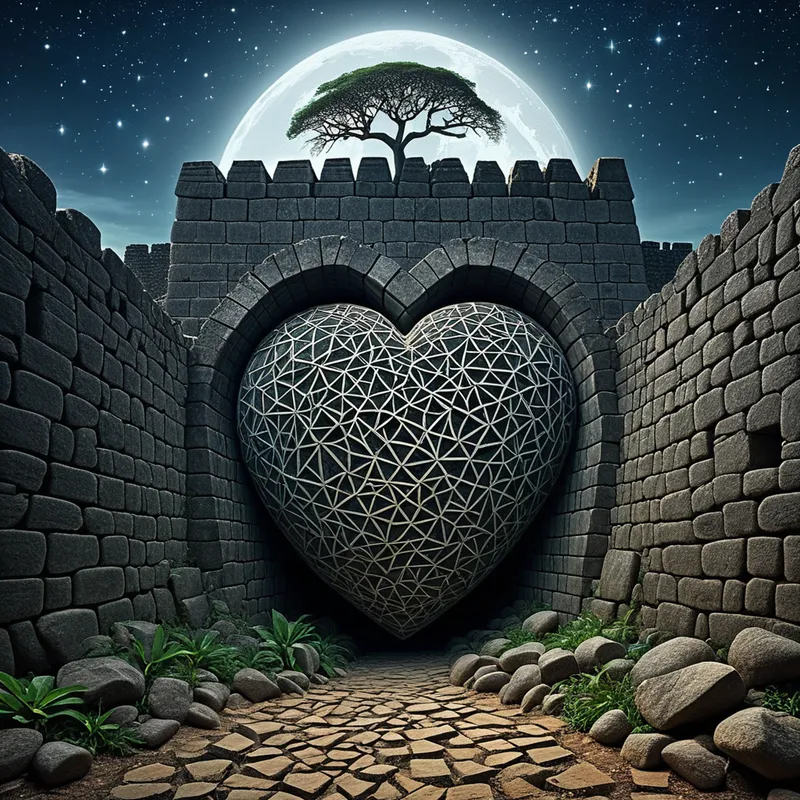
The modern individual’s parallel process is the stage of Individuation where one must relinquish identification with one’s own achievements, social persona, and even one’s cherished self-concept. This is not a descent into chaos, but a deliberate, terrifying act of trust. One must “abandon the city” of the old life—perhaps a career, a relationship, a rigid belief system—not because it was wrong, but because its season is complete. The psychic energy (the king) withdraws from outer manifestation to be reconstituted at a deeper level. The enduring stonework is the Lapis, the Philosopher’s Stone—not as a magical object, but as the indestructible, eternal value and wisdom gained from that phase of life. The individual is left with a sense of mystery at their core. They carry the “ruins” not as shame, but as proof of a sacred contract fulfilled. The triumph is in achieving a state where one’s life, in its entirety, becomes a Zimbabwe—a majestic, enigmatic testament to a dialogue with the divine that ultimately transcends the individual self, leaving a legacy of stone and spirit for the soul’s future generations.
Associated Symbols
Explore related symbols from the CaleaDream lexicon:
- Stone — The enduring substance of legacy and the conscious ego’s construction; represents wisdom made permanent, the lasting form of the soul’s labor.
- Tower — The inaccessible center of the Self; a symbol of aspiration, isolation, and the ultimate mystery into which the individual consciousness must dissolve.
- Earth — The grounding, nurturing, and ultimately reclaiming feminine principle; the body, the ancestral land, and the unconscious from which all forms arise and return.
- King — The ruling principle of consciousness, order, and temporal authority that must learn the wisdom of surrender to a greater power.
- Mystery — The core enigma of existence and the psyche; that which cannot be solved, only inhabited and revered as the source of meaning.
- Journey — The dispersal of the people represents the necessary journey outwards after an inner culmination, carrying seeds of wisdom into new life.
- Circle — Represented in the concentric walls of the Great Enclosure, symbolizing wholeness, containment, the sacred precinct, and the cyclical nature of creation and dissolution.
- Spirit — The animating force of Mwari and the Vadzimu; the connective breath between the living, the dead, the land, and the stone, which withdraws but never vanishes.
- Drought — A state of psychic and spiritual aridity, the necessary crisis that forces a transformation when old sources of nourishment fail.
- Legacy — The great stone houses themselves; what is left behind after the central actor has gone, carrying meaning for those who come after.
- Rain — The blessing and nourishment from the unconscious/divine, whose absence triggers the central crisis and whose eventual return is implied in the cycle.
- Altar — The entire city functions as a vast altar to the relationship between humanity and the divine, a place of sacrifice and communication now silent but potent.