
The Gazelle of the Dawn Myth Meaning & Symbolism
A celestial gazelle, hunted at the edge of night, becomes the vessel for the sun's rebirth, weaving sacrifice and renewal into the fabric of dawn.
The Tale of The Gazelle of the Dawn
Listen, and hear the story whispered on the wind that comes before the light.
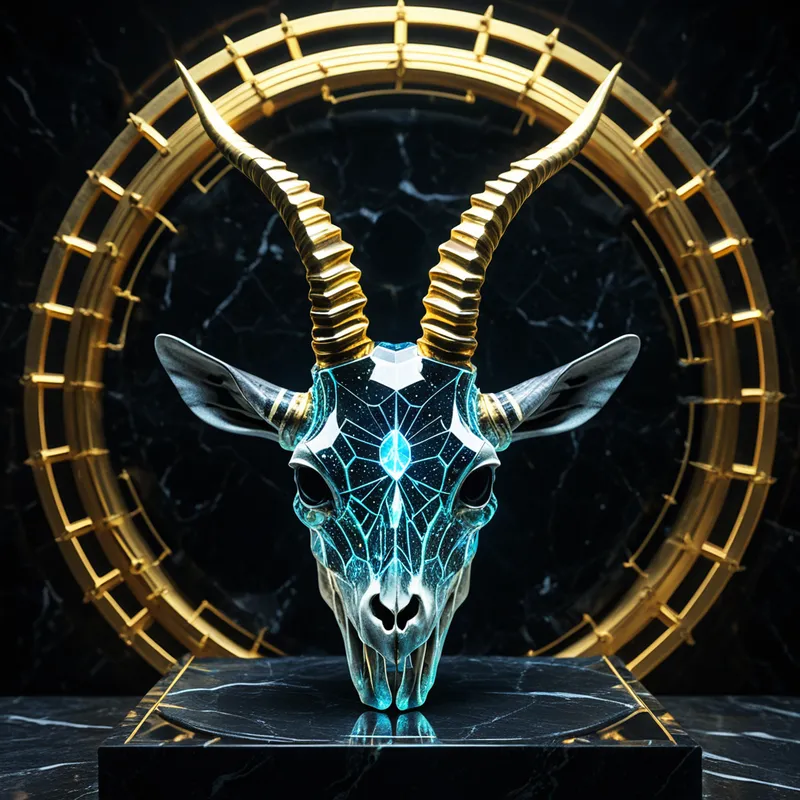
In the time before time was measured, when the world was a breath held in the dark, there existed a creature of such grace it was woven from the last threads of night and the first promise of day. This was the Gazelle of the Dawn. Its coat was the deep indigo of the midnight sky, dusted with the silver pinpricks of distant stars. Its eyes held the liquid amber of the coming sun, and its slender horns, sharp as obsidian, traced the arc of the celestial vault.
Each night, as Ra completed his journey through the Duat, weary and aged, the world plunged into a silence so profound it felt like an ending. This was the perilous hour. The forces of Isfet stirred, sensing the sun’s vulnerability. The great serpent Apep would rise from the primordial waters, its coils threatening to swallow the barque of the sun and cast creation into eternal, formless night.
But the Gazelle waited. It stood on the eastern horizon, at the liminal edge where the earth met the sky, a silent sentinel. Its role was not to fight, but to receive. It was the appointed vessel, the living sacrifice. And its hunter was none other than Set, the fierce and necessary force of violent change.
As the deepest dark approached, Set would take up his spear, its point forged from a fallen star. He did not hunt with malice, but with a grim, cosmic duty. The chase was swift and terrible—a streak of darkness pursuing a fragment of gathered starlight across the threshold of the world. There was no sound but the rush of wind and the pounding of two hearts: one of chaos, one of potential.
At the precise moment before despair could claim the world, Set’s spear would find its mark. The Gazelle would stumble, not with a cry of pain, but with a sigh like the releasing of a long-held breath. As it fell upon the eastern sands, its starry coat would dissolve. From the wound, not blood, but pure, liquid light would pour forth—the essence of the Gazelle’s gathered night.
And in that spill of luminous life, the aged, diminished sun, Ra, would be reborn. He would rise from the sacrifice, fresh and vigorous, cradled between the Gazelle’s now-glorified horns, which transformed into the first rays of sunlight piercing the gloom. The Gazelle’s body became the dawn itself, its sacrifice the necessary price for the sun’s daily resurrection. The hunter, Set, would then retreat, his violent work complete, the preserver of order through a necessary act of destruction.

Cultural Origins & Context
This myth, though less canonical than the dramas of Osiris or the voyages of Ra, permeated the symbolic and ritual consciousness of ancient Egypt. It belongs to the complex tapestry of solar mythology that sought to explain the most fundamental, yet terrifying, cosmic cycle: the disappearance and return of the sun. It was likely a priestly narrative, elaborated in temple contexts, particularly those connected to solar cults and the theology of kingship.
The Pharaoh was the living embodiment of Maat on earth, and his role mirrored the sun’s journey. The myth of the Gazelle provided a profound metaphor for the cost of maintaining that order. It taught that renewal is not automatic or bloodless; it is purchased through a sacred, cyclical sacrifice. The story was not merely an explanation of sunrise but a religious justification for the necessary, often violent, acts of sovereignty required to repel chaos (Isfet) and ensure the nation’s continued life, just as the sun’s return ensured the world’s.
Symbolic Architecture
The Gazelle is the archetypal Divine Innocent. It represents pure potential, the unmanifest promise held in the womb of night. It is the soul’s untouched beauty, the fragile dream before it encounters the harsh reality of day. Its sacrifice is not a defeat, but the essential act of giving form to spirit.
The dawn does not conquer the night; it is born from the night’s willing dissolution.
Set, often vilified as a god of chaos, is here the agent of necessary transformation. He is the principle of ruthless differentiation, the cut that separates, the crisis that forces change. He represents the psychological truth that we cannot move from one state of being to another without a death—a sacrifice of what we were. The spear is the piercing insight, the traumatic event, or the difficult decision that ends an old way of being.
The horizon (Akhet) is the ultimate symbol of the liminal space, the threshold where transformations occur. It is the psychological border between unconscious (night) and conscious (day), between illness and health, between one life chapter and the next. The entire drama occurs in this in-between place, emphasizing that true change happens not in safety, but at the edge.
The Dreamer’s Resonance
When this myth stirs in the modern psyche, it often manifests in dreams of poignant, beautiful loss. You may dream of a cherished but fragile animal being led away, of a luminous object shattering to release a brighter light, or of being both the hunter and the hunted in a twilight landscape. Somatically, this can feel like a deep ache in the chest—a sweet sorrow.
This is the psyche processing its own necessary sacrifices. The Gazelle represents whatever must be offered up for growth: a naive innocence, a comfortable identity, a cherished but limiting relationship, an old dream. The dreamer is experiencing the pre-conscious recognition that to become who they are meant to be, something of who they are must die. The tears shed in such dreams are not just of grief, but of sacred recognition—the body-mind acknowledging the alchemical cost of dawn.

Alchemical Translation
The journey of individuation, the process of becoming a whole, integrated Self, follows the precise pattern of this myth. We all harbor within us a Gazelle—our innate, pristine potential, our core spirit. Yet, to bring this spirit into the full light of day (consciousness and lived reality), it must be confronted by our inner Set.
The Self is not found by protecting the innocent from the storm, but by allowing the storm to transmute the innocent into the sovereign.
This “hunt” is the often-painful engagement with life’s trials, our own shadow, and the demands of reality. A career fails, forcing a rediscovery of passion. A heart breaks, creating space for deeper self-love. An ideal is shattered, making way for authentic wisdom. These are Set’s spear. They wound the Gazelle of our old self.
The alchemical miracle occurs not in avoiding the spear, but in the nature of the Gazelle’s “blood.” If we have integrated the myth, the wound releases not bitterness or permanent brokenness, but light—renewed purpose, forged resilience, embodied wisdom. The sacrificed innocence is reborn as experienced strength. The new day that dawns is not the same as the old; it is a higher synthesis, a consciousness earned through sacred exchange. We learn to stand at our own horizon, acknowledging both the beauty of what was sacrificed and the fierce necessity of the force that demanded it, realizing we are the landscape where both coexist, giving birth to our own rising sun, again and again.
Associated Symbols
Explore related symbols from the CaleaDream lexicon: