The Four Sages Who Entered Paradise Myth Meaning & Symbolism
Four great rabbis ascend to the divine orchard of Paradise. One dies, one goes mad, one becomes a heretic, and only one emerges in peace.
The Tale of The Four Sages Who Entered Paradise
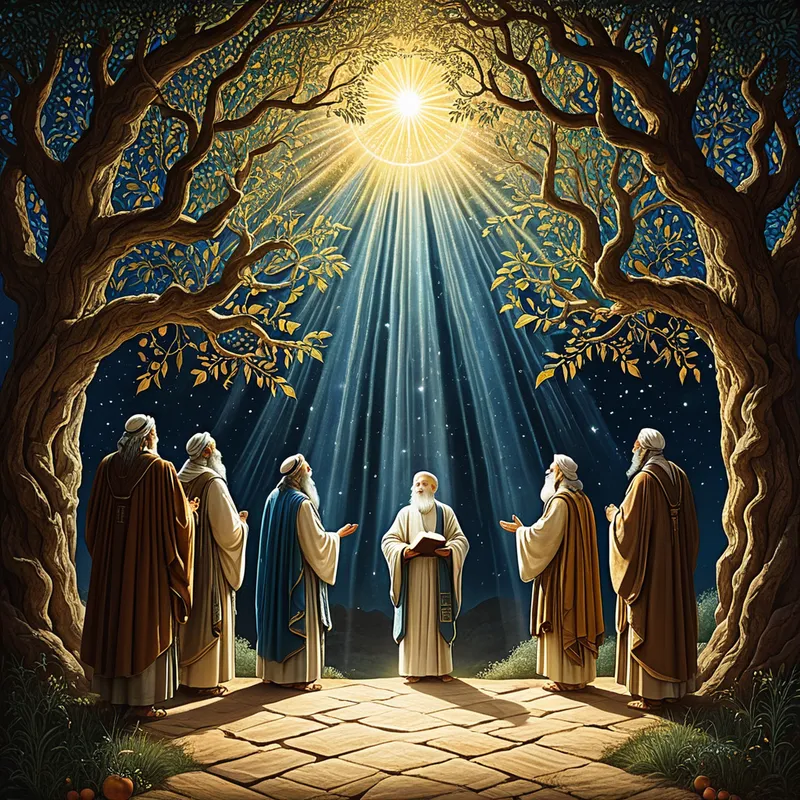
Listen, and hear a tale not of earth, but of the realm above the firmament, a story whispered in the study halls by candlelight, carried on the desert wind. It begins with four men, pillars of wisdom: Rabbi Akiva, Ben Azzai, Ben Zoma, and Elisha ben Abuyah.
Their world was the text, the law, the woven word of God. But their souls thirsted for the source of the weave. They sought not to read about the Merkabah, but to behold it. Not to discuss Paradise, but to walk within it. And so, with purified hearts and secret names upon their lips, they undertook the ultimate ascent.
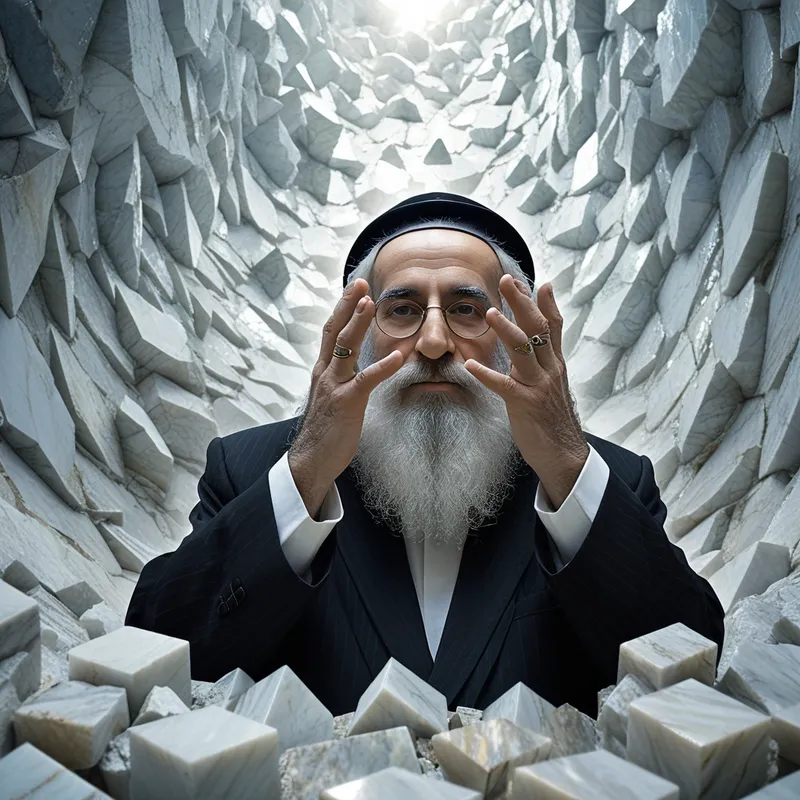
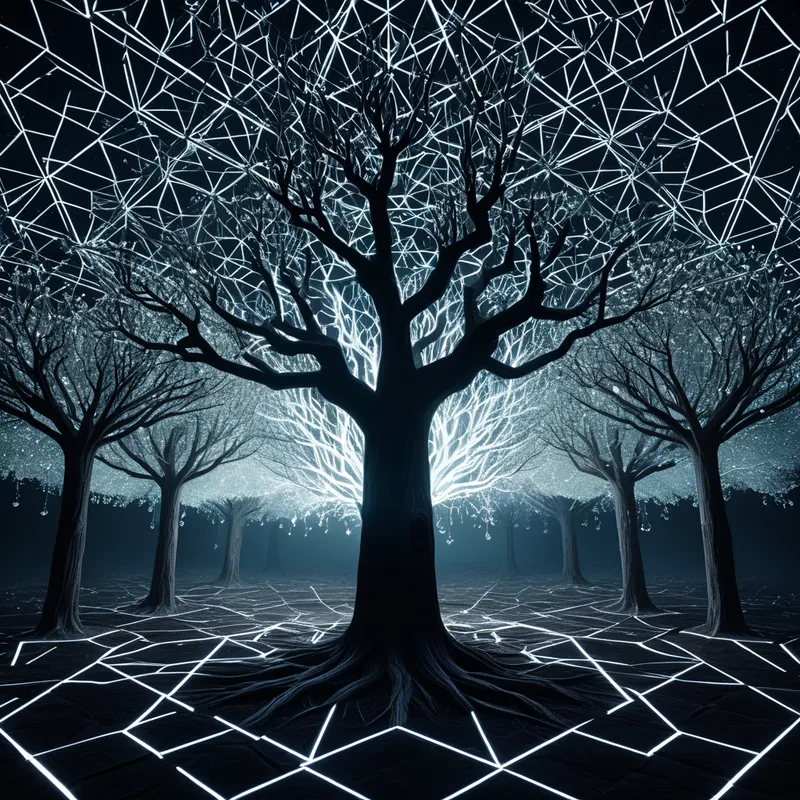
They entered the Pardes. It was not a garden of earthly delights, but the orchard of God’s own mind. The air was not air, but a substance of pure meaning. The trees were living pillars of emerald and sapphire fire, their fruits not apples, but spheres of singing light. Beneath their feet, the marble of the heavens cracked with each step, revealing the terrifying wheels within wheels, the eyes within eyes of the celestial chariot. The glory was not beautiful; it was unbearable, a pressure on the very substance of the soul.
And then, the vision took its toll.
Ben Azzai gazed upon the Shekhinah, the indwelling presence, and his soul, unable to contain the ecstatic union, fled his body. He saw and died, becoming one with the divine light. A holy death, they said, for he “looked and was stricken.”
Ben Zoma looked upon the weaving of creation, the threads of chaos and order, and his mind, like a vessel too small for an ocean, shattered. He saw and went mad, his brilliance reduced to fragments, wandering the earthly lanes with a lost and broken gaze.
Elisha ben Abuyah looked, and what he saw—or failed to see—broke his faith. He saw the mechanics of heaven, perhaps, or a paradox that his rational mind could not reconcile with the God of justice. He saw and became a heretic, cutting the tender plants, severing himself from the root of his people, becoming Acher.
Only Rabbi Akiva entered in peace and departed in peace. He ascended through the shattered marble, witnessed the same unbearable glory, and descended, his feet firm upon the earth, his wisdom deepened, not destroyed. He alone carried the fire without being consumed.
Cultural Origins & Context
This cryptic narrative is found in the Talmud (Hagigah 14b), a text of law and lore. It is not a folk tale for the masses, but a guarded report from the frontier of human experience, belonging to the early tradition of Merkabah and Kabbalah. The sages involved are historical figures from the 1st and 2nd centuries CE, a period of immense turmoil following the destruction of the Second Temple.
The story functioned as both a warning and an invitation. It was told in hushed tones to delineate the boundaries of permissible mystical pursuit. It warned that the secrets of creation and the divine throne are not intellectual puzzles but living, dangerous forces that can annihilate the unprepared. Simultaneously, by naming those who attempted it—and especially by celebrating Akiva’s success—it preserved the possibility of the journey, codifying it into the tradition’s most daring spiritual ambition.
Symbolic Architecture
The myth is a perfect map of the psyche’s encounter with the numinous, the wholly other. The Pardes is not a [location](/symbols/location “Symbol: The symbol of ‘Location’ signifies a sense of place, context, and the environment in which experiences unfold.”/), but a state of [consciousness](/symbols/consciousness “Symbol: Consciousness represents the state of awareness and perception, encompassing thoughts, feelings, and experiences.”/)—the direct experience of the unconscious in its raw, archetypal power.
The journey to the source is also a shattering at the source. To meet the gods is to risk being unmade by them.
The four sages represent four possible outcomes of this encounter. Ben Azzai is the mystic who dissolves in union, the ego [death](/symbols/death “Symbol: Symbolizes transformation, endings, and new beginnings; often associated with fear of the unknown.”/) that is literal. Ben Zoma is the intellect that breaks under the [weight](/symbols/weight “Symbol: Weight symbolizes burdens, responsibilities, and emotional loads one carries in life.”/) of [paradox](/symbols/paradox “Symbol: A contradictory yet true concept that challenges logic and perception, often representing unresolved tensions or profound truths.”/) and [infinity](/symbols/infinity “Symbol: A mathematical and philosophical symbol representing endlessness, eternity, and limitless potential.”/). Elisha is the [identity](/symbols/identity “Symbol: Identity represents the sense of self, encompassing personal beliefs, cultural background, and social roles.”/) that, faced with a [reality](/symbols/reality “Symbol: Reality signifies the state of existence and perception, often reflecting one’s understanding of truth and life experiences.”/) contradicting its core beliefs, rebels and becomes its own opposite. Akiva is the integrated Self, the consciousness that can contain the opposites, witness the totality, and return to embody it in the world of form.
The Dreamer’s Resonance
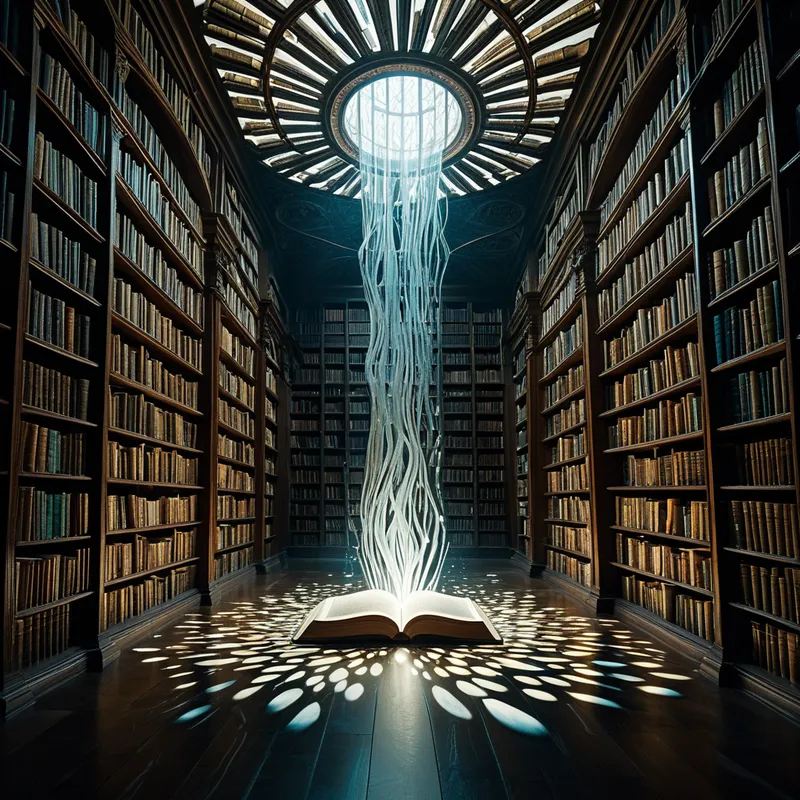
When this myth stirs in modern dreams, it rarely appears as ancient rabbis. It manifests as dreams of overwhelming, non-ordinary spaces: finding a hidden room of impossible geometry in one’s house, ascending a staircase that leads into the void of space, or being in a library where the information is alive and assaults the senses.
The somatic experience is key: a feeling of awe that tips into dread, of knowledge that feels like a physical weight or a burning light. This is the psyche signaling a confrontation with core material from the deep unconscious—perhaps a traumatic memory, a spiritual awakening, or a brilliant creative insight that feels too large to integrate. The dreamer is at their own Pardes. The question is not if they will be transformed, but how: Will the experience annihilate, fragment, alienate, or fortify them?
Alchemical Translation
The myth models the alchemical opus, the work of individuation. The base material (the four sages) enters the vas (the Pardes) to be subjected to the fire of direct experience (calcinatio).
Ben Azzai’s death is the solutio—total dissolution in the waters of the unconscious. Ben Zoma’s madness is the separatio gone awry, where components of the mind are split but never reconstituted. Elisha’s heresy is the nigredo, the blackening, where one’s guiding principles are burned away, leaving only the scorched earth of cynicism or rebellion.
The goal is not to avoid the fire, but to find the vessel that can withstand it. Akiva is that vessel—the lapis philosophorum, the philosopher’s stone. His “ascent and descent in peace” is the successful coniunctio oppositorum (union of opposites). He holds the tension between the human and the divine, order and chaos, knowing and not-knowing. He returns not with a simple answer, but with a transformed capacity to hold the question.
For the modern individual, the Pardes is any profound encounter that demands a re-formation of the self: psychoanalysis, a spiritual crisis, deep love, or crushing grief. The myth teaches that such journeys are perilous and will change you irrevocably. Survival and integration require the stability Akiva possessed: a rootedness in tradition (or a coherent inner framework), humility before the mystery, and the courage to look without needing to possess or fully comprehend.
Associated Symbols
Explore related symbols from the CaleaDream lexicon:
- Tree — The central image of the Pardes, representing the structured, living knowledge of the divine and the psyche, whose fruit can nourish or overwhelm.
- Vision — The dangerous objective of the ascent, representing direct, unmediated encounter with archetypal reality, which is the core transformative—and potentially destructive—event.
- Fire — The purifying and consuming element of divine revelation, symbolizing the ecstatic light of the Merkabah that illuminates, burns, or forges the soul.
- Door — The threshold to the Pardes, representing the liminal point of no return between ordinary consciousness and the mystical or deep unconscious state.
- Madness — The fate of Ben Zoma, symbolizing the fragmentation of the ego and rational mind when faced with the incomprehensible logic of the unconscious.
- Death — The fate of Ben Azzai, representing the ultimate dissolution of the ego-self in mystical union, a transcendence through annihilation.
- Shadow — Embodied by Elisha ben Abuyah/Acher, representing the rejected, heretical, or alienated aspect of the self that emerges from a traumatic encounter with the light.
- Sage — The archetype pursued and ultimately embodied by Akiva, representing integrated wisdom that can contain profound experience without being destroyed by it.
- Journey — The core narrative structure of the ascent and descent, mapping the universal human passage from seeking, to encounter, to integration or ruin.
- Light — The overwhelming substance of the divine realm, symbolizing ultimate truth and knowledge, which can illuminate, blind, or scorch depending on the vessel that receives it.
- Fourth — A resonant pattern, as only the fourth sage emerges whole, echoing the alchemical and psychological necessity of completing a quaternity to achieve wholeness and stability.
- Paradise — The ultimate goal and the perilous realm itself, representing the longed-for state of primal unity and knowledge, which is paradoxically both the source of wholeness and the scene of its shattering.