
The Forbidden Fruit Clause Myth Meaning & Symbolism
A foundational myth of humanity's awakening to knowledge, mortality, and moral complexity, born from a divine command and a fateful choice.
The Tale of The Forbidden Fruit Clause
In the beginning, there was a rhythm. A rhythm of breath and clay, of mist rising from [the earth](/myths/the-earth “Myth from Hindu culture.”/) to [water](/myths/water “Myth from Chinese culture.”/) the face of the ground. In the place called Eden, eastward, the rhythm was perfect. The man, Adam, and the woman, Eve, walked naked and unashamed, their feet silent on the cool, rich soil. They knew the taste of every seed-bearing plant, the scent of every blossom, but one pulse in the garden was set apart.
In the heart of the garden grew two trees. One was the [Tree of Life](/myths/tree-of-life “Myth from Kabbalistic culture.”/). The other was the Tree of the Knowledge of Good and Evil. Its fruit hung, heavy and luminous, a forbidden jewel. The rhythm was given a clause, a single, resonant note of limitation: “You may freely eat of every tree of the garden; but of the tree of the knowledge of good and evil you shall not eat, for in the day that you eat of it you shall surely die.”
The rhythm held, until a new vibration entered the garden. It was not a stomping or a shouting, but a whispering, a sibilant current of air that moved against the grain of the divine breath. The serpent, more subtle than any beast, came to the woman. It did not roar; it questioned. “Has God indeed said, ‘You shall not eat of every tree of the garden’?”
The woman, hearing her own understanding echoed back as a puzzle, replied, “We may eat of the fruit of the trees of the garden; but of the fruit of the tree which is in the midst of the garden, God has said, ‘You shall not eat it, nor shall you touch it, lest you die.’”
The serpent’s whisper grew firm, a counter-rhythm. “You will not surely die. For God knows that in the day you eat of it your eyes will be opened, and you will be like God, knowing good and evil.”
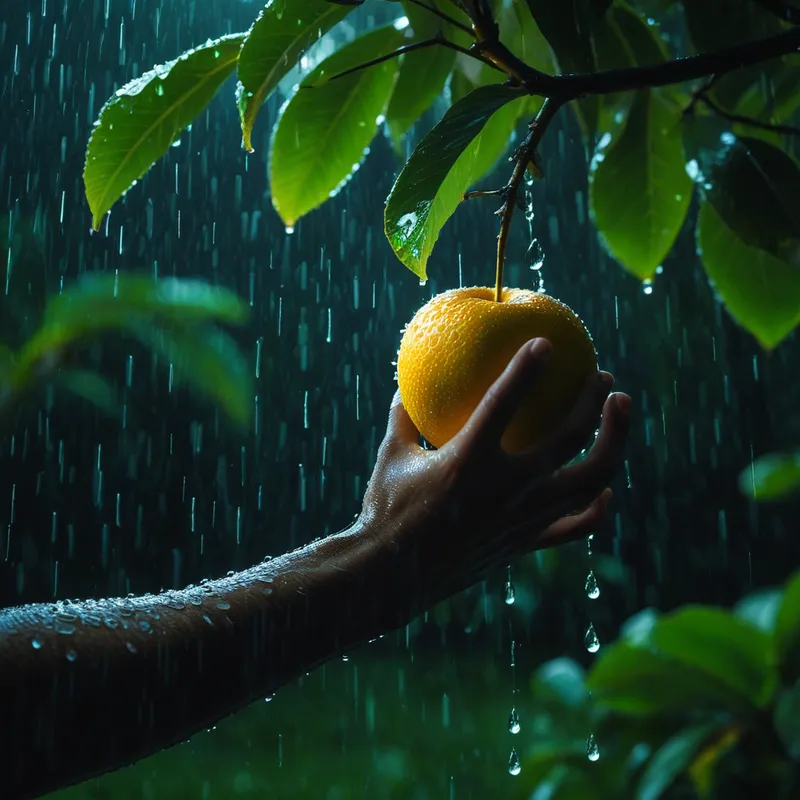
The clause was no longer a divine note; it was a locked door, and the whisper promised the key. The woman looked at the tree anew. The fruit was good for food, a delight to the eyes, and to be desired to make one wise. The rhythm of innocent belonging fractured. She reached out. She took. She ate. She gave also to her husband with her, and he ate.
And in that moment, the rhythm stopped. A coldness entered where there was only warmth. Their eyes were opened, and they knew they were naked. They heard the sound of Yahweh Elohim walking in the garden in the cool of the day, and they hid themselves among the trees. The voice called out, “Where are you?”
The man’s voice, now laced with a new, thin tremor of fear, replied, “I heard your voice in the garden, and I was afraid, because I was naked; and I hid myself.”
The question echoed back, a divine mirror: “Who told you that you were naked? Have you eaten of the tree of which I commanded you that you should not eat?”
A cascade of blame began—the man to the woman, the woman to the serpent. But the clause had been invoked. The ground was cursed. Pain in childbirth was decreed. Dominion became struggle. And finally, they were sent out, east of Eden, lest they stretch out their hand, take also from the Tree of Life, and live forever in this new, fractured state. A flaming sword turned every way, guarding [the way](/myths/the-way “Myth from Taoist culture.”/) back to the old rhythm, now forever lost.
Cultural Origins & Context
This narrative forms the opening chapters of the book of Genesis. It is a foundational etiological myth for the Biblical tradition, serving to explain the human condition: our moral awareness, our experience of suffering and toil, our complex relationship with the natural world, and our sense of separation from the divine. It was likely shaped during the Babylonian Exile (6th century BCE), a period of profound national trauma and theological questioning, as priests and scribes sought to compile and refine their ancestral stories into a coherent origin narrative.
Passed down orally long before being codified in written scripture, it was told not as mere history but as sacred story—a story that defined a people’s understanding of their covenant with Yahweh, the nature of sin (chata’ah), and the origins of death. Its societal function was multifaceted: it established a theological framework for law and morality, explained the existential “why” behind human hardship, and ultimately set the stage for the entire Biblical drama of fall and promised redemption.
Symbolic Architecture
The myth’s power lies not in historical fact but in psychological [truth](/symbols/truth “Symbol: Truth represents authenticity, honesty, and the quest for knowledge beyond mere appearances.”/). It is the primordial [story](/symbols/story “Symbol: The symbol of ‘Story’ represents the narrative woven through our lives, embodying experiences, lessons, and emotions that shape our identities.”/) of the awakening of [consciousness](/symbols/consciousness “Symbol: Consciousness represents the state of awareness and perception, encompassing thoughts, feelings, and experiences.”/).
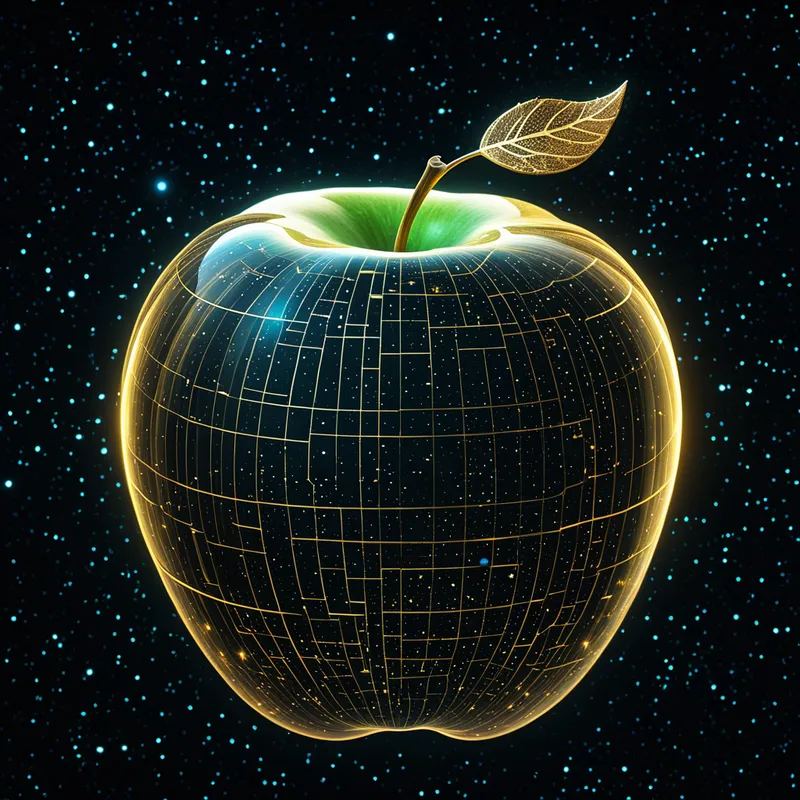
The fruit is not evil; it is the knowledge of the existence of evil, and by contrast, of good. To eat is to step from the unified world of instinct into the divided world of choice.
The Garden represents the unconscious, paradisiacal state of [infancy](/symbols/infancy “Symbol: A symbol of beginnings, vulnerability, and foundational development, often representing a return to origins or a state of pure potential.”/) and undifferentiated wholeness with the [parent](/symbols/parent “Symbol: The symbol of a parent often represents authority, nurturing, and protection, reflecting one’s inner relationship with figures of authority or their own parental figures.”/) (the Divine). The Clause is the first [boundary](/symbols/boundary “Symbol: A conceptual or physical limit defining separation, protection, or identity between entities, spaces, or states of being.”/), the necessary “no” that defines a self separate from [the world](/myths/the-world “Myth from Tarot culture.”/). The [Serpent](/symbols/serpent “Symbol: A powerful symbol of transformation, wisdom, and primal energy, often representing hidden knowledge, healing, or temptation.”/) is the [trickster](/symbols/trickster “Symbol: A boundary-crossing archetype representing chaos, transformation, and the subversion of norms through cunning and humor.”/) [archetype](/symbols/archetype “Symbol: A universal, primordial pattern or prototype in the collective unconscious that shapes human experience, behavior, and creative expression.”/), the catalyst of consciousness. It is the voice of questioning, of curiosity, of the [psyche](/myths/psyche “Myth from Greek culture.”/)’s own drive toward [differentiation](/symbols/differentiation “Symbol: The process of distinguishing or separating parts of the self, emotions, or identity from a whole, often marking a developmental or psychological milestone.”/) and [awareness](/symbols/awareness “Symbol: Conscious perception of self, surroundings, or internal states. Often signifies awakening, insight, or heightened sensitivity.”/). It does not lie; it reveals a hidden consequence of the divine law.
The “Fall” is thus not a moral catastrophe but a psychological inevitability—the [birth](/symbols/birth “Symbol: Birth symbolizes new beginnings, transformation, and the potential for growth and development.”/) of [the ego](/myths/the-ego “Myth from Jungian culture.”/), the “I” that knows itself as separate, vulnerable, and ashamed. Nakedness symbolizes this raw, exposed self-awareness. [Exile](/symbols/exile “Symbol: Forced separation from one’s homeland or community, representing loss of belonging, punishment, or profound isolation.”/) from the garden is the irreversible [journey](/symbols/journey “Symbol: A journey in dreams typically signifies adventure, growth, or a significant life transition.”/) into the complexity of [life](/symbols/life “Symbol: The symbol of ‘Life’ represents a journey of growth, interconnectedness, and existential meaning, encompassing both the joys and challenges that define human experience.”/), time, and [mortality](/symbols/mortality “Symbol: The awareness of life’s finitude, often representing transitions, impermanence, or existential reflection in dreams.”/).
The Dreamer’s Resonance
When this myth pattern appears in modern dreams, it signals a profound crossroads in the dreamer’s individuation process. Dreaming of a forbidden, tantalizing object (a room, a file, a relationship) mirrors the internal tension between the comfort of unconscious compliance and the terrifying call to a more conscious life.
The somatic experience is often one of simultaneous dread and exhilaration—a tightness in the chest, a quickening pulse. Psychologically, the dreamer is confronting their own internalized “divine prohibitions”: parental expectations, cultural norms, or self-imposed limitations that have defined their world. The serpentine figure in the dream may be a shadowy acquaintance, a voice, or even a part of the dreamer’s own body, representing the innate, often repressed, drive toward knowledge and self-realization. The aftermath in the dream—the feeling of being seen, exposed, or cast out—indicates the nascent ego grappling with the consequences of its own awakening, a necessary death of an old, simpler identity.

Alchemical Translation
The alchemical journey begins in the massa confusa, the primal, unconscious unity of the garden. The myth models the first, crucial operation: [separatio](/myths/separatio “Myth from Alchemical culture.”/).
The flaming sword that guards Eden is not merely punishment; it is the fierce energy of transformation itself, ensuring the seeker cannot regress into unconsciousness but must forge consciousness in the world.
[The forbidden fruit](/myths/the-forbidden-fruit “Myth from Biblical culture.”/) is the [prima materia](/myths/prima-materia “Myth from Alchemical culture.”/), the base substance of the soul that contains its own opposite. To ingest it is the ultimate, irrevocable act of coniunctio oppositorum (the union of opposites) within [the self](/myths/the-self “Myth from Jungian culture.”/)—good and evil, innocence and experience, divinity and mortality. This creates the famed [nigredo](/myths/nigredo “Myth from Alchemical culture.”/), the blackening: the despair, shame, and toil of existential awareness.
The work of psychic transmutation is to take this exiled, conscious state and, through the labor of life (the laboratorium of the world), integrate the knowledge gained. One does not return to the unconscious garden but strives toward a conscious [lapis philosophorum](/myths/lapis-philosophorum “Myth from Alchemical culture.”/)—a wholeness that incorporates both the innocence of the garden and the hard-won wisdom of exile. The hero of this process is the rebel archetype, not rebelling for destruction, but for the creation of a more conscious, responsible, and authentic self. The myth, therefore, is not a story of [original sin](/myths/original-sin “Myth from Christian culture.”/), but of original courage—the terrifying, necessary step out of divine infancy and into the fraught, glorious responsibility of becoming human.
Associated Symbols
Explore related symbols from the CaleaDream lexicon: