The Fallen Angels Watchers
Ancient Hebrew myth of angelic beings who descended to Earth, taught forbidden knowledge to humanity, and faced divine punishment for their rebellion.
The Tale of The Fallen Angels Watchers
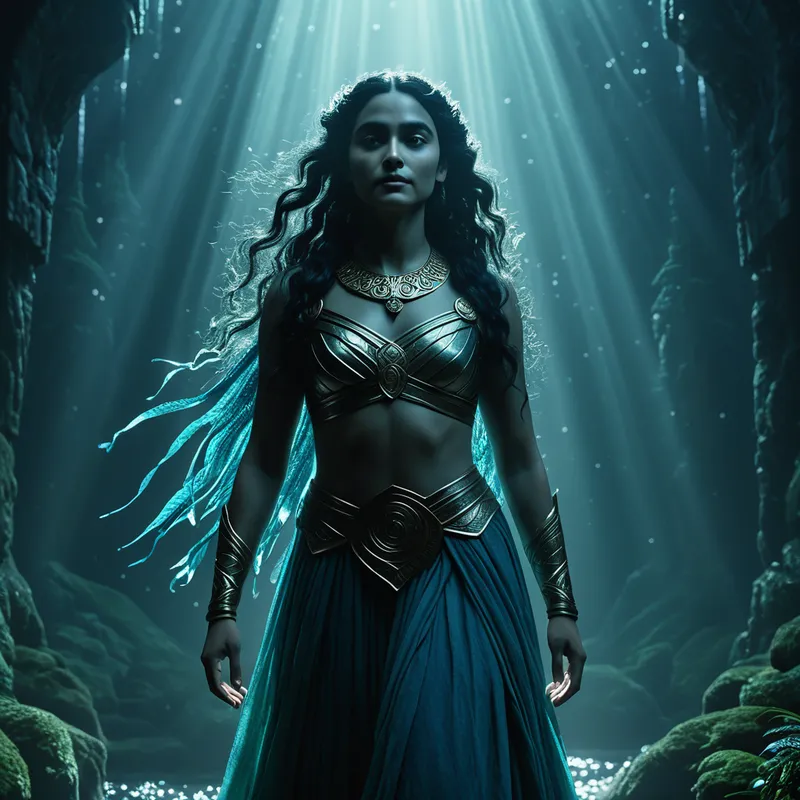
In the dawn of [the world](/myths/the-world “Myth from Tarot culture.”/), when the line between heaven and earth was thin as a veil, there existed an order of celestial beings known as the Irin, [the Watchers](/myths/the-watchers “Myth from Christian culture.”/). Their charge was to observe, to witness the unfolding of creation from their luminous posts in the high places. They were the eyes of heaven, meant only to watch. But to watch is to know, and to know is, in time, to yearn.
Their leader was Shemyaza, a prince among them, whose brilliance was matched only by a gathering disquiet. From their ethereal vantage, the Watchers gazed upon the daughters of men. They saw not just flesh, but a vibrant, chaotic beauty—a mortal fire that burned with a passion unknown in the serene halls of heaven. This fire called to the cold perfection of their own spirits. In Shemyaza’s heart, a rebellion was kindled, not of rage, but of a profound and tragic longing. He proposed a terrible oath upon Mount Hermon, binding two hundred of his kind to a single, fateful purpose: to descend, to take human wives, and to know the world not as observers, but as participants.
They fell like silent stars, crossing the boundary that was never meant to be crossed. On earth, they took wives, and from these unions were born the Nephilim, beings of colossal size and appetite, who ravaged [the earth](/myths/the-earth “Myth from Hindu culture.”/) and consumed the fruits of human labor. But the transgression of the Watchers went beyond the flesh. Led by the learned Azazel, they began to impart the secrets of heaven to their mortal kin. They taught the forging of swords and the crafting of shields, the secrets of cosmetics and dyes to beautify the eyelid, the cutting of roots and the knowledge of astrology. They unveiled the mysteries of the clouds and the signs of [the earth](/myths/the-earth “Myth from Hindu culture.”/). These were the arts of civilization and the arts of enchantment—knowledge that belonged to the divine order, now spilled into the human realm like a shattered vessel.
Humanity, armed with this forbidden wisdom, turned it not only to cultivation but to corruption. The earth filled with violence, sorcery, and bloodshed, a direct echo of the heavenly rebellion now playing out in the mud and clay of creation. The cries of the oppressed rose like smoke, and they reached the throne of the Most High.
The divine response was a cataclysm of order. The archangels Michael, [Gabriel](/myths/gabriel “Myth from Biblical culture.”/), [Raphael](/myths/raphael “Myth from Abrahamic culture.”/), and Uriel were dispatched. The Watchers were bound hand and foot in the dark valleys of the earth, cast into a spiritual prison to await the final judgment. Their giant sons, the Nephilim, were set to destroy one another in war, their spirits destined to roam as malignant ghosts. Azazel was cast into a desert pit, buried under jagged rocks, and darkness was ordained for him forever. A great purification was decreed: [the Deluge](/myths/the-deluge “Myth from Mesopotamian culture.”/). The waters would rise to cleanse the earth of the corruption seeded by this mingling of realms, preserving only the righteous line of Noah.
Thus, the Watchers fell twice: first from grace, then into [the abyss](/myths/the-abyss “Myth from Kabbalistic culture.”/). Their legacy was a scar upon the world—a flood of divine wrath, and a human soul forever altered, imprinted with both the brilliant light and the terrible shadow of knowledge that was never meant to be ours.
Cultural Origins & Context
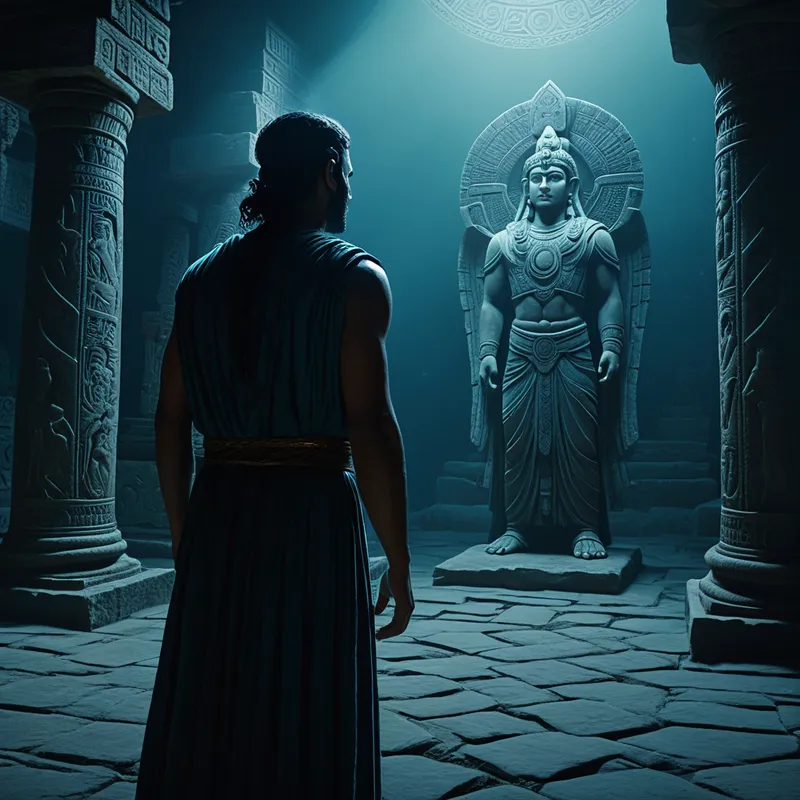
The myth of the Watchers finds its most elaborate development not in the canonical Hebrew Bible, but in the rich tapestry of Second Temple Jewish apocalyptic literature, most prominently in the Book of Enoch (1 Enoch). While Genesis 6:1-4 offers the cryptic seed of the story—“the sons of God saw the daughters of men…”—it is the Enochic tradition that nurtures this seed into a full, haunting narrative. This was a period of intense theological reflection, often under foreign oppression, where questions of evil, divine [justice](/myths/justice “Myth from Tarot culture.”/), and the origin of sin demanded complex answers.
The Watchers provided a theodicy—an explanation for the presence of evil and suffering. Rather than placing the origin of corruption solely on human frailty (as in the Eden story), this myth posits a prior, cosmic corruption. Evil entered the world from above, through divine beings who transgressed their boundaries. This resonated with a community grappling with the problem of a world filled with violence and forbidden arts. The myth also serves as an etiological tale, explaining the origins of human technology, magic, and even the existence of evil spirits (from the ghosts of the slain Nephilim). It is a profoundly dualistic story, emphasizing the danger of blurred categories and the catastrophic consequences when the hierarchy of creation is violated.
Symbolic Architecture
The Watchers embody the [archetype](/symbols/archetype “Symbol: A universal, primordial pattern or prototype in the collective unconscious that shapes human experience, behavior, and creative expression.”/) of the Rebel, but theirs is a rebellion of tragic overreach, not of pure defiance. They represent the [psyche](/myths/psyche “Myth from Greek culture.”/)’s luminous capacities—intellect, curiosity, the desire for experience—when they sever [connection](/symbols/connection “Symbol: Connection symbolizes relationships, communication, and bonds among individuals.”/) from their divine [source](/symbols/source “Symbol: The origin point of something, often representing beginnings, nourishment, or the fundamental cause behind phenomena.”/) and [purpose](/symbols/purpose “Symbol: Purpose signifies direction, meaning, and intention in life, often reflecting personal ambitions and core values.”/). Their fall is not into wickedness, but into incarnation, into the messy, alluring [realm](/symbols/realm “Symbol: The symbol of ‘Realm’ often signifies the boundaries of one’s consciousness, experiences, or emotional states, suggesting aspects of reality that are either explored or ignored.”/) of matter and [sensation](/symbols/sensation “Symbol: Sensation in dreams often represents the emotional and physical feelings experienced in waking life, highlighting one’s intuition or awareness.”/).
Their transgression is the ultimate Promethean act: stealing fire from the gods for humanity. But here, the fire is too much knowledge, given too soon, to a consciousness not yet structured to hold it. The gift becomes a curse, illuminating paths to both creation and destruction.
The Nephilim are the monstrous [offspring](/symbols/offspring “Symbol: Represents legacy, responsibility, and the future self. Often symbolizes creative projects or personal growth.”/) of this union, symbols of unintegrated potential run amok. They are the hypertrophied ego, the gargantuan appetites and unchecked power that arise when spiritual [insight](/symbols/insight “Symbol: A sudden, deep understanding of a complex situation or truth, often arriving unexpectedly and illuminating hidden connections.”/) is forced into [material](/symbols/material “Symbol: Material signifies the tangible aspects of life, often representing physical resources, desires, and the physical world’s influence on our existence.”/) form without the balancing grace of wisdom. Their destruction signifies the necessary, violent pruning of these chaotic growths from the psychic [landscape](/symbols/landscape “Symbol: Landscapes in dreams are powerful symbols representing the dreamer’s emotional state, personal journey, and the broader context of life situations.”/). The subsequent Flood is not merely [punishment](/symbols/punishment “Symbol: A dream symbol representing consequences for actions, often tied to guilt, societal rules, or internal moral conflicts.”/), but a painful, necessary return to the primordial waters—a [dissolution](/symbols/dissolution “Symbol: The process of breaking down, dispersing, or losing form, often representing transformation, release, or the end of a state of being.”/) of a corrupted world so a new, more conscious one might emerge.
The Dreamer’s Resonance
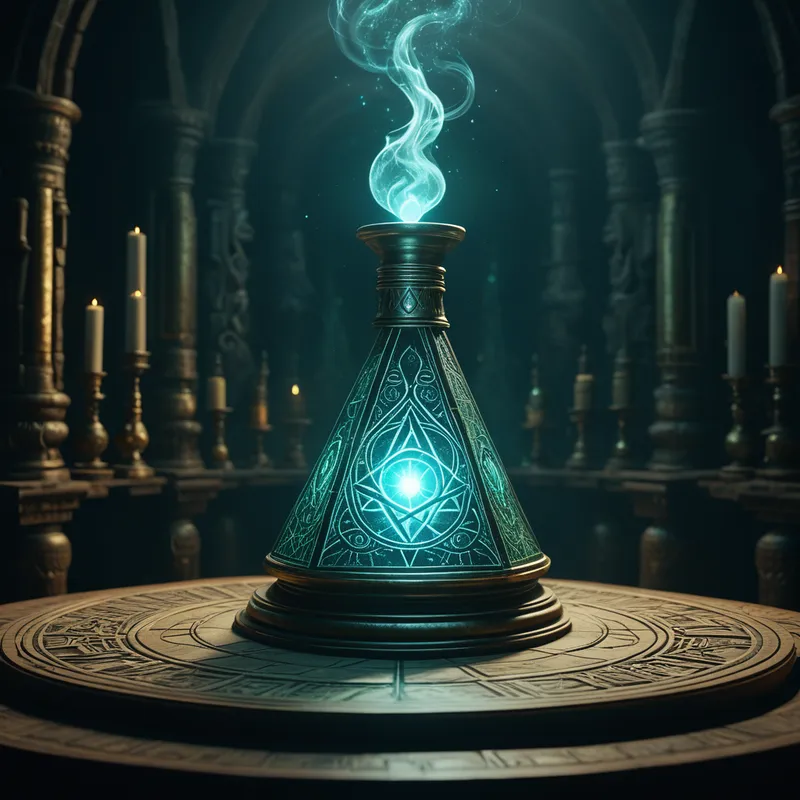
To encounter the Watchers in a dream or in the depths of the psyche is to confront the aspect of oneself that knows too much, that has peered behind the curtain of ordinary reality. It is the part that has tasted forbidden knowledge—perhaps through trauma, a sudden spiritual awakening, or an intellectual insight that shatters previous innocence. This knowledge carries a profound burden, a sense of exile from a simpler state of being.
The myth speaks to the modern condition of information overload, where we are inundated with cosmic knowledge—of stellar deaths, of microscopic viruses, of global suffering—without the corresponding spiritual container to process it. We are all, in a sense, the children of the Watchers, living in a world shaped by their stolen gifts: technology, medicine, art, and also weaponry, manipulation, and existential anxiety. The psychological task is not to reject this knowledge, but to build the inner Ark—a vessel of integrity and meaning—to navigate the floodwaters of a complex and often overwhelming reality.
Alchemical Translation
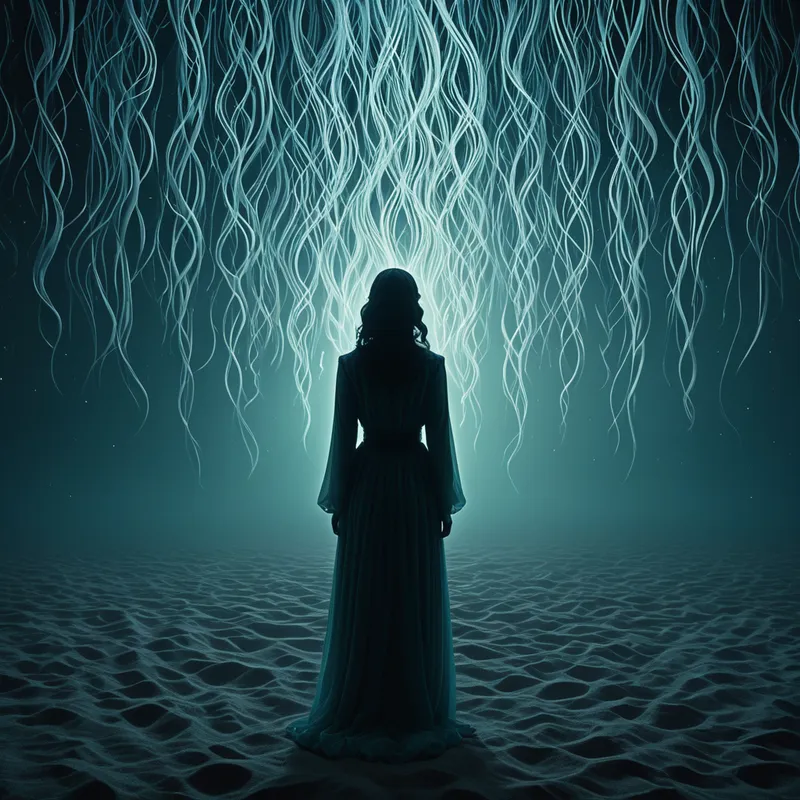
In the alchemical vessel of the soul, the myth of the Watchers describes the perilous stage of [solutio](/myths/solutio “Myth from Alchemical culture.”/)—dissolution—precipitated by a premature mixing of opposites. The celestial ([sulfur](/myths/sulfur “Myth from Alchemical culture.”/), spirit) descends violently into the earthly (salt, body) without the mediating principle of [mercury](/myths/mercury “Myth from Roman culture.”/) (consciousness). The result is not [the sacred marriage](/myths/the-sacred-marriage “Myth from Various culture.”/), but a monstrous coagulation: [the Nigredo](/myths/the-nigredo “Myth from Alchemical culture.”/), the blackening.
The process demands that the “giants” within—our inflated identifications, our spiritual pride, our untamed psychic forces—must be slain. Their raw energy must be broken down, their spirits bound in the “dark valleys” of the unconscious, so their essence can be redeemed and integrated at a higher octave.
The work is one of [separatio](/myths/separatio “Myth from Alchemical culture.”/) followed by a more conscious [coniunctio](/myths/coniunctio “Myth from Alchemical culture.”/). [The flood](/myths/the-flood “Myth from Biblical culture.”/) is the necessary [ablution](/myths/ablution “Myth from Alchemical culture.”/). The imprisoned Watchers represent latent, bound spiritual power that can only be released after [the great work](/myths/the-great-work “Myth from Alchemical culture.”/) of purification is complete. Their forbidden teachings—the arts of civilization—are [the prima materia](/myths/the-prima-materia “Myth from Alchemical culture.”/) of the soul; they are not evil in themselves, but become corrupting when wielded by an uncentered ego. [The alchemist](/myths/the-alchemist “Myth from Various culture.”/)’s goal is to recover these arts, not from a place of rebellion, but from a hard-won state of aligned wisdom, transforming the curse of knowledge into the elixir of gnosis.
Associated Symbols
Explore related symbols from the CaleaDream lexicon:
- Angel — A messenger or being of a higher order whose fall represents the descent of pure spirit into the complexities and corruptions of form and desire.
- Forbidden Knowledge — Wisdom or understanding that exists beyond sanctioned boundaries, whose acquisition fundamentally alters the knower and the known world, carrying a price of exile or burden.
- Rebel — The archetypal force that challenges imposed order or limitation, often from a place of longing or perceived higher truth, but risking catastrophic imbalance.
- Flood — A primordial force of dissolution and purification, washing away a corrupted or unsustainable world-state to allow for the possibility of new beginning.
- Mountain — The sacred boundary space between heaven and earth, the site of oaths and revelations, where the decision to cross from one realm to another is solemnized.
- Key — An instrument of unlocking, here representing the dangerous power to open gates between realms or states of being that were meant to remain separate.
- Shadow — The repressed, bound, or punished aspect of the psyche, often holding immense power and forbidden knowledge, like the Watchers imprisoned in the abyss.
- Giant — The monstrous, unbalanced offspring of unintegrated forces; an inflated aspect of [the self](/myths/the-self “Myth from Jungian culture.”/) that consumes resources and must be confronted and dismantled.
- Bridge — A structure of connection that can become a path of transgression when it links realms not yet ready for communion, leading to a dangerous mingling.
- Veiled Knowledge — Understanding that is hidden or protected for a reason, suggesting that some truths require a specific state of being or maturity to be received without harm.
- Divine Punishment — The cosmic re-establishment of order and boundary, often experienced as catastrophic loss, which serves to correct a fundamental imbalance in the structure of reality.