The Fall of Troy Myth Meaning & Symbolism
A city's doom, born of divine vanity and mortal desire, sealed by a wooden horse. The ultimate myth of deception, fate, and the ashes from which we rebuild.
The Tale of The Fall of Troy
Hear now of the fall of a city that was sung into being by the gods themselves, a city of high walls and higher pride. For ten long years, the bronze-clad host of Agamemnon had beaten against the shores of Troy, and for ten years, the spears of Hector had held them back. The sand was stained with the blood of heroes, and the air was thick with the grief of Nemesis. The war, sparked by a stolen queen and a golden apple of discord, had become a grinding wheel of fate, crushing all who were caught in its turn.
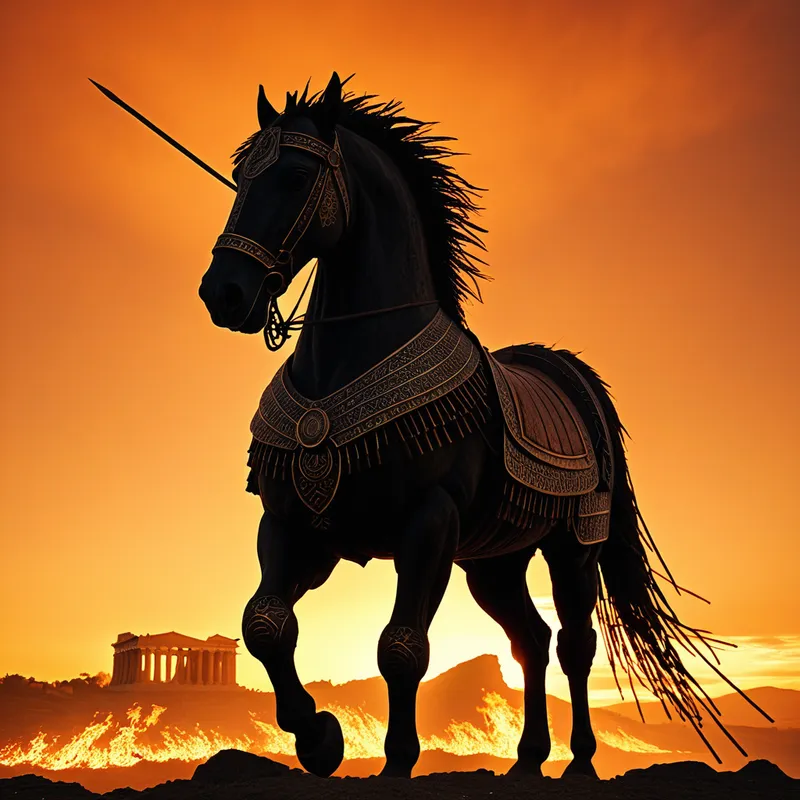
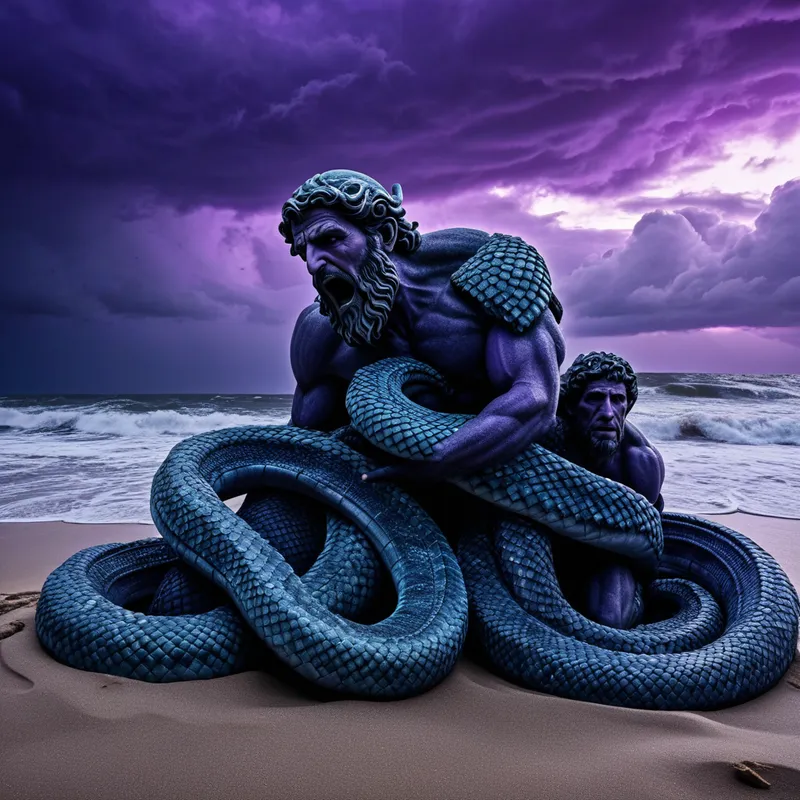
Then came the silence. One morning, the Trojans awoke to a strange stillness. The Greek camp on the shore was empty, its ships vanished into the mist. All that remained on the plain before the Scaean Gates was a monstrous figure, a beast of wood and cunning. A horse, colossal and silent, crafted with an artistry that spoke of Athena’s own hand. Some, like the priest Laocoön, cried out in terrible warning, his voice a prophecy of doom. But the gods sent serpents from the sea to silence him, a grim sign that sealed the city’s ears with wax of fear and hope.
Drunk on the nectar of supposed victory, the people of Troy tore down a section of their own impregnable walls. They dragged the hollow idol inside, its wooden flanks scraping the sacred stones. They garlanded it with flowers, believing they brought a trophy of Athena into their midst. Night fell, and the city celebrated its deliverance with wine and song, the exhaustion of a decade melting away in the firelight.
But in the belly of the beast, there was no hay, only the cold glint of bronze and the held breath of men. When the moon was high and the revels had sunk into stupor, a hatch sighed open. Odysseus emerged first, his face a mask of grim purpose. Then came the rest, shadows given flesh, slipping into the sleeping streets. The signal fire was lit, calling the hidden fleet back from Tenedos. The gates were thrown open from within.
Then, the fire. It began in the palaces and spread like a fever dream. The night, once filled with song, was now a cacophony of screams, the clash of swords, and the crackle of consuming flame. King Priam was slain at his own altar. Cassandra was dragged from the shrine of Hestia. Aeneas fled through the smoke, his father on his shoulders, the ghosts of his city at his heels. By dawn, Troy was not a city, but a pyre. The high towers were pillars of black smoke against a blood-red sky. The fall was complete. Not by force of arms alone, but by the guile that hides in the gift, and the hubris that accepts it.
Cultural Origins & Context
This was not merely a story, but the foundational epic of the Greek world, crystallized in Homer’s Iliad and Odyssey, and later elaborated in the Epic Cycle. For the ancient Greeks, the Fall of Troy was their defining historical-mythical event, a distant, semi-divine war that established the heroic age. It was performed by bards (rhapsodes) at festivals and in the halls of kings, a master narrative that explored the core values of kleos (glory), nostos (homecoming), and the inexorable will of the moirai.
Societally, it functioned as a cautionary tale about the limits of human achievement and the dangers of divine meddling. It explained the origins of historical rivalries with peoples in Asia Minor and served as a poetic exploration of the costs of war, the fragility of civilization, and the cyclical nature of destruction and renewal. The myth was a cultural mirror, reflecting anxieties about deception, the reliability of signs, and the terrifying speed with which fortune’s wheel could turn.
Symbolic Architecture
The Fall of Troy is not a story of a battle, but of a psyche undone from within. The famed walls represent the conscious ego—fortified, proud, and seemingly impregnable. For a decade, it withstands the direct assaults of life’s tribulations (the Greek army). The true danger, however, never comes from the outside front.
The ultimate deception is not the enemy’s lie, but the ego’s willingness to believe the story that flatters it most.
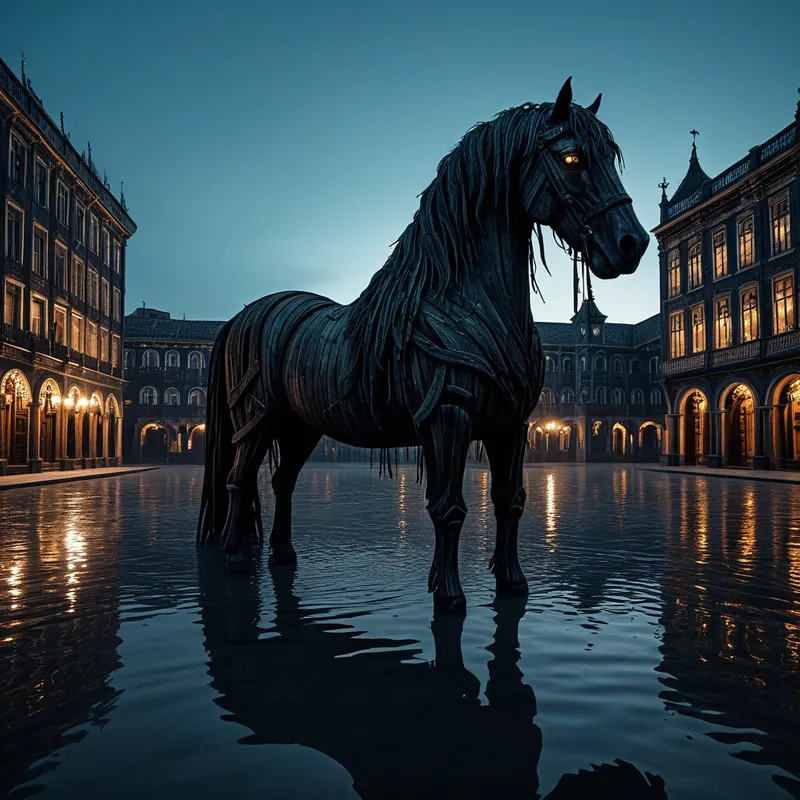
The Trojan Horse is the ultimate symbol of the shadow—the unintegrated, unconscious content that the conscious self refuses to acknowledge. It is presented as a gift (a trophy, an end to strife), something the ego desires to incorporate to feel complete or victorious. It is crafted with divine artistry (the unconscious is numinous and compelling), yet it is hollow, containing the very forces that will dismantle the self. The Trojans must tear down their own walls to bring it in, a perfect metaphor for the ego lowering its defenses to welcome a complex that will ultimately destroy its current structure.
The fire that consumes Troy is not merely destruction; it is the inevitable conflagration when repressed shadow material is finally unleashed inside the sanctum of the self. It is a painful, necessary annihilation of an old, rigid identity that was built on a foundation of pride (hubris) and a fatal misreading of reality.

The Dreamer’s Resonance
When this myth stirs in the modern dreamer, it often signals a profound psychological process where a long-held defensive structure is about to be breached. Dreaming of impregnable walls or gates being opened from within speaks to a fear—and a necessity—of vulnerability. A dream of a deceptive gift, a beautiful but hollow object, or something large and ominous being welcomed into a safe space points directly to the integration of a shadow complex.
The somatic experience can be one of deep anxiety, a feeling of being betrayed by one’s own judgment, or a chilling realization that has been ignored. It is the dream equivalent of Laocoön’s warning scream, felt in the gut but rationalized away. The process culminates in dreams of internal collapse or purifying fire—not as nightmares of mere destruction, but as terrifying initiations. The dreamer is Trojans celebrating and Greeks in the horse, both the defender and the infiltrator, experiencing the crisis of a self that can no longer remain as it is.
Alchemical Translation
The alchemical journey mirrored in Troy’s fall is nigredo—the blackening, the putrefaction, the necessary death of the old king (the ruling conscious attitude). The proud, golden city (the aurum of the ego) must be reduced to ashes (caput mortuum).
Individuation often requires a Trojan Horse: the acceptance of a seemingly destructive insight that, in truth, carries the seeds of liberation.
The modern individual undergoes this when a deeply held self-image, relationship, or career—a personal “Troy”—collapses not from an external blow, but from an internal recognition. It is the “gift” of a failed project that reveals a true calling, the “horse” of a painful truth about oneself that, once admitted, dismantles a life of pretense. The key is that the Greeks (the new, emerging consciousness) do not emerge until after the horse is inside and the city is asleep. The transformative force must be accepted into the heart of the psyche before it can act.
The fire, while devastating, is an alchemical fire. From the ashes of Troy, new lineages are founded (Aeneas founding Rome). From the rubble of the old self, a more authentic consciousness, tempered by the experience of its own fall, can begin the long nostos—the journey home to a more integrated, less fortified, and more humble existence. The fall is not an end, but the brutal, sacred precondition for a beginning that could not have been imagined from behind the high, proud walls.
Associated Symbols
Explore related symbols from the CaleaDream lexicon: