The Erinyes Myth Meaning & Symbolism
The Erinyes are primordial goddesses of vengeance who pursue those who violate blood kinship, embodying the psyche's relentless demand for moral order.
The Tale of The Erinyes
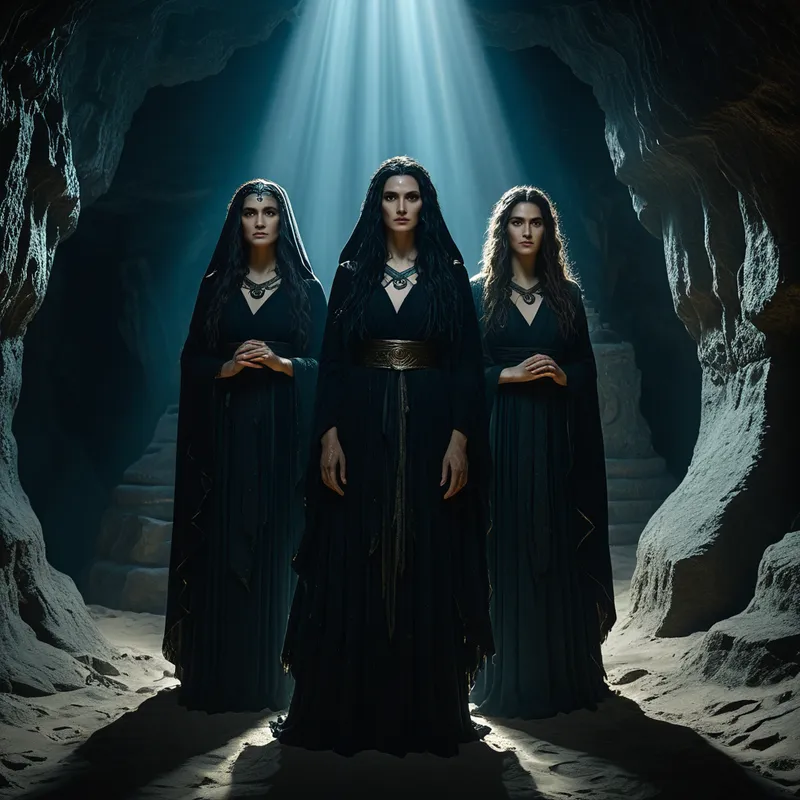
Hear now a tale not of Olympus’s bright heights, but of [the world](/myths/the-world “Myth from Tarot culture.”/)’s dark, foundational depths. Before the reign of Zeus, before the ordering of sun and sea, there was a crime so profound it stained the very fabric of being. When the Titan [Ouranos](/myths/ouranos “Myth from Global/Universal culture.”/) was cast down by his son [Kronos](/myths/kronos “Myth from Greek culture.”/), his blood, rich and divine, fell upon the ancient Earth, Gaia. From that spilled blood, mingled with the soil of primal outrage, they were born.
They are the Erinyes. You may know them as [the Furies](/myths/the-furies “Myth from Greek culture.”/). They did not spring from laughter or love, but from a wound in the cosmic order itself. They are as old as memory, older than mercy.
Their domain is not the sunlit agora, but the shadowed places: [the crossroads](/myths/the-crossroads “Myth from Celtic culture.”/) at midnight, the mouth of forgotten caves, the space beneath a cursed man’s bed. They are three, yet one in purpose: Alecto, Megaera, and Tisiphone. Their hair is a nest of living vipers, their eyes weep tears of hot blood, and their breath is the chill of the grave. They carry brazen whips and torches that burn with a cold, smokeless flame.
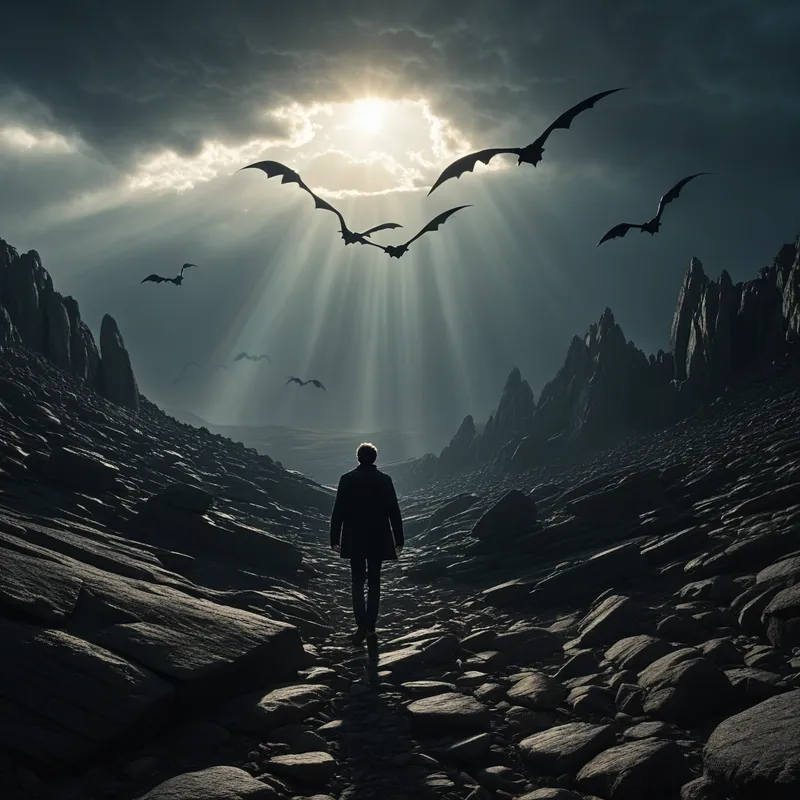
Their story is one of relentless pursuit. It finds its most terrible echo in the House of Agamemnon. When Queen Clytemnestra slew her husband upon his return from Troy, the stain of kin-blood cried out. But the debt was not yet paid. Her son, [Orestes](/myths/orestes “Myth from Greek culture.”/), driven by the command of the god Apollo, then raised his hand against his own mother. The moment her life fled, the air in the palace grew thick and heavy. A sound like the beating of vast, leathern wings filled the silence. [Orestes](/myths/orestes “Myth from Greek culture.”/) saw them then—shapes darker than shadow, smelling of rust and damp earth. The Erinyes had come. Not for Clytemnestra, but for him.
From that day, he knew no rest. They were his constant companions. In the glare of [the desert](/myths/the-desert “Myth from Biblical culture.”/) sun, he saw their writhing hair in the heat haze. In the babbling of a stream, he heard their whispered accusations: “Matricide. You have spilled the blood of the one who bore you.” Sleep was a forgotten country. When he closed his eyes, they were there, standing at the foot of his bed, their bloody gaze stripping his soul bare. He ran across the world, a man haunted by the very principle of [justice](/myths/justice “Myth from Tarot culture.”/), pursued by the conscience of the cosmos made flesh.
His flight ended in Athens, at the sacred court of the Areopagus. Here, under the gaze of the city’s patron, Athena, a trial was held. The Erinyes stood as prosecutors, their voices the rasp of stone on stone, demanding Orestes’s life for the ancient law of blood. Apollo stood for the defense, arguing for the new law of the father, of civic order. The votes were cast, and they were equal. With a casting vote of clemency, Athena tipped the balance, sparing Orestes.
But the ancient ones did not simply vanish. They roared their fury, threatening to blight the land that denied them their due. Then Athena, with wise and persuasive words, offered them a new home, a new honor. No longer would they be dreaded hunters in the wilds, but revered as the Eumenides, the “Well-Disposed Ones.” Guardians seated in a deep cleft beneath [the Areopagus](/myths/the-areopagus “Myth from Greek culture.”/), they would receive libations and prayers, their terrible power channeled into the protection of the city’s moral and familial order. Their wrath was not dismissed, but integrated. The primal scream of blood was given a seat at the heart of civilization.
Cultural Origins & Context
The myth of the Erinyes is not a single poet’s invention, but a collective psychic emanation from the deepest strata of Greek consciousness. They appear in the oldest layers of Greek literature, in the works of [Homer](/myths/homer “Myth from Greek culture.”/) and most powerfully in Aeschylus’s trilogy, the Oresteia. Their origin story—born from the blood of a violated father—places them among the most ancient deities, the chthonic (earth) powers who existed before the Olympian [pantheon](/myths/pantheon “Myth from Roman culture.”/) imposed its more human-like order.
They were not worshipped in bright temples with joyous festivals. Their cult was somber and fearful. Offerings to them were meilichios (soothing), often libations of [water](/myths/water “Myth from Chinese culture.”/), honey, and milk poured directly into [the earth](/myths/the-earth “Myth from Hindu culture.”/) or into pits, a practice meant to appease rather than celebrate. They represented the un-written, pre-political law of the clan: the absolute, non-negotiable sanctity of the family bond, especially between parent and child. In a society where the stability of the oikos (household) was the foundation of all social order, their function was terrifyingly clear. They were the embodied consequence, the psychic pollution that automatically followed the spilling of kin-blood, ensuring that no such crime could ever be truly hidden or forgotten. They were the culture’s way of externalizing and containing the ultimate taboo.
Symbolic Architecture
The Erinyes are not mere monsters of [punishment](/symbols/punishment “Symbol: A dream symbol representing consequences for actions, often tied to guilt, societal rules, or internal moral conflicts.”/). They are the symbolic [architecture](/symbols/architecture “Symbol: Architecture in dreams often signifies structure, stability, and the framing of personal identity or life’s journey.”/) of the [psyche](/myths/psyche “Myth from Greek culture.”/)’s own moral imperative. They represent the autonomous, unconscious conscience.
They are the voice of the blood, the psychic echo of a violated bond that refuses to be silenced by rationalization or time.
Psychologically, they personify the Self-Regulating Function of the Psyche. When a fundamental moral law—especially one rooted in deep relational bonds—is broken, the psyche itself generates a pursuing force. This force, experienced as [guilt](/symbols/guilt “Symbol: A painful emotional state arising from a perceived violation of moral or social standards, often tied to actions or inactions.”/), [anxiety](/symbols/anxiety “Symbol: Anxiety in dreams reflects internal conflicts, fears of the unknown, or stress from waking life, often demonstrating the subconscious mind’s struggle for peace.”/), [obsession](/symbols/obsession “Symbol: An overwhelming fixation on a person, idea, or object that consumes mental energy and disrupts balance.”/), or a haunting sense of [dread](/symbols/dread “Symbol: A profound, anticipatory fear of impending doom or catastrophe, often without a clear external threat. It manifests as a heavy, paralyzing emotional state.”/), is the Erinyes at work. Their torches illuminate what we wish to keep in darkness; their whips are the lash of self-recrimination.
Their transformation into the Eumenides is the myth’s most profound symbolic act. It does not depict the eradication of conscience, but its [sublimation](/symbols/sublimation “Symbol: Transforming base impulses into creative or socially acceptable outlets, often seen in artistic expression.”/). The raw, destructive [energy](/symbols/energy “Symbol: Energy symbolizes vitality, motivation, and the drive that fuels actions and ambitions.”/) of festering guilt and unresolved [trauma](/symbols/trauma “Symbol: A deeply distressing or disturbing experience that overwhelms the psyche, often manifesting in dreams as unresolved emotional wounds or psychological injury.”/) is not defeated; it is invited in, heard, and given a constructive [role](/symbols/role “Symbol: The concept of ‘role’ in dreams often reflects one’s identity or how individuals perceive their place within various social structures.”/). The wild, chthonic [fury](/symbols/fury “Symbol: An intense, overwhelming rage that consumes the dreamer, often representing suppressed anger or a primal emotional eruption.”/) is transformed into a civic, protective wisdom. This symbolizes the [movement](/symbols/movement “Symbol: Movement symbolizes change, progress, and the dynamics of personal growth, reflecting an individual’s desire or need to transform their circumstances.”/) from being possessed by a complex (like obsessive guilt) to having a [relationship](/symbols/relationship “Symbol: A representation of connections we have with others in our lives, often reflecting our emotional state.”/) with it, where its [energy](/symbols/energy “Symbol: Energy symbolizes vitality, motivation, and the drive that fuels actions and ambitions.”/) can be acknowledged and redirected.

The Dreamer’s Resonance
When the pattern of the Erinyes stirs in the modern dreamer, it signals a profound encounter with the psychic shadow related to guilt, betrayal, or a broken covenant. This is not about minor social faux pas, but deep, often unacknowledged violations of one’s own inner moral code or of a sacred trust.
To dream of being pursued by faceless, relentless figures, of hearing accusatory whispers with no clear source, or of a stain that cannot be washed away, is to feel the wings of the Erinyes beating at the periphery of consciousness. The somatic experience is one of constriction—a tightness in the chest, a knot in the stomach, a literal feeling of being “haunted.” The psychological process is one of inescapable confrontation. The dream-ego, like Orestes, can no longer outrun the consequence. The unconscious is demanding an audience. It is forcing a trial where the crime, long buried, must finally be seen and judged.
Alchemical Translation
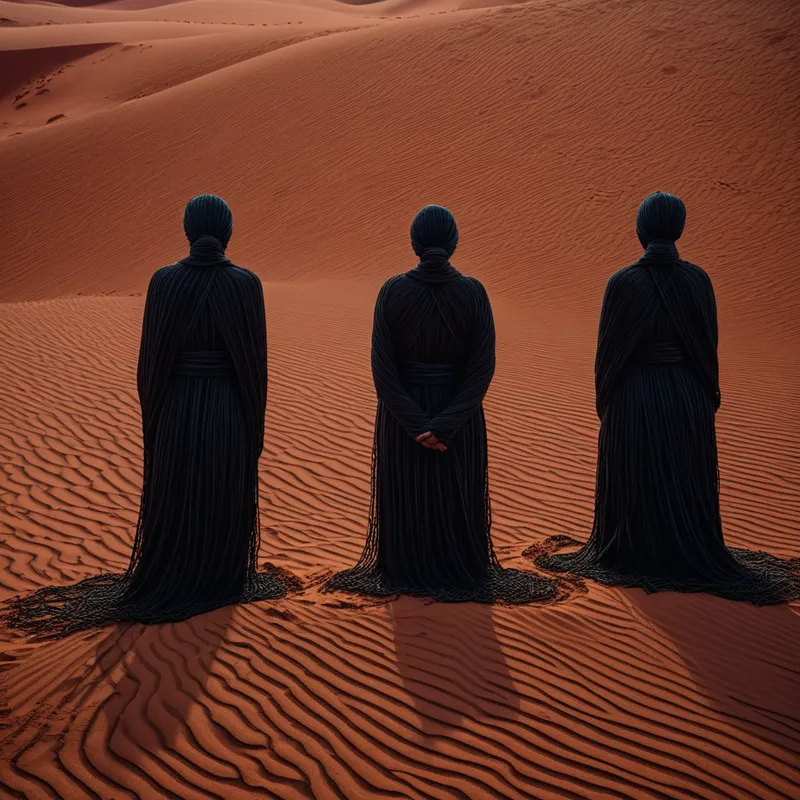
The alchemical journey modeled by this myth is the transmutation of Poison into Medicine, of persecutory guilt into foundational integrity. The Oresteia is a perfect map of this psychic opus.
First, the [Nigredo](/myths/nigredo “Myth from Alchemical culture.”/): The blackening. The commission of the act (or the full conscious admission of it) plunges the soul into darkness. Orestes is stained. This is the necessary, painful descent into the truth of one’s actions.
Second, the Albedo: The whitening, the purification through trial. Orestes’s flight and the trial at the Areopagus represent the conscious, arduous work of bringing the conflict into the light of awareness. Both sides of the psyche—the ancient, instinctual demand for retribution (the Erinyes) and the newer, ordering, rationalizing principle (Apollo/Athena)—must have their say. This is the internal dialogue of therapy, journaling, or deep reflection.
The climax of the work is not the victory of one side over the other, but the creation of a sacred space where the opposing forces can be held in tension.
Finally, the [Rubedo](/myths/rubedo “Myth from Alchemical culture.”/): The reddening, the creation of the sacred stone. This is the transformation of the Erinyes into the Eumenides. The raw, red heat of shame and rage is not extinguished but cooled into a permanent, structured force within the personality. The individual who undergoes this process does not become “guilt-free.” Instead, they develop a conscious, respectful relationship with their own capacity for moral outrage. Their past transgressions or traumas, fully integrated, become a source of deep empathy and a fierce, protective wisdom regarding boundaries and justice. The pursued becomes the grounded guardian. The curse becomes a cornerstone. This is the achievement of a profound level of inner order, where even the darkest parts of [the self](/myths/the-self “Myth from Jungian culture.”/) are granted a dignified place in the totality of the psyche.
Associated Symbols
Explore related symbols from the CaleaDream lexicon: