
The Eight Trigrams Origin Myth Meaning & Symbolism
The myth of Fu Xi, who observed cosmic patterns in a river turtle's shell, revealing the Eight Trigrams—the foundational code of all existence.
The Tale of The Eight Trigrams Origin
In the time before time, when the world was a broth of mist and potential, the great river Huang He churned with the mud of creation. On its banks walked Fu Xi, the first sovereign, whose eyes were not made for seeing mere things, but for perceiving the hidden threads that stitch the world together. The air was thick with the scent of wet earth and the silent hum of unformed laws. Humanity lived in a state of raw instinct, eating from the raw chaos of nature, knowing no order, no art, no sacred pattern.
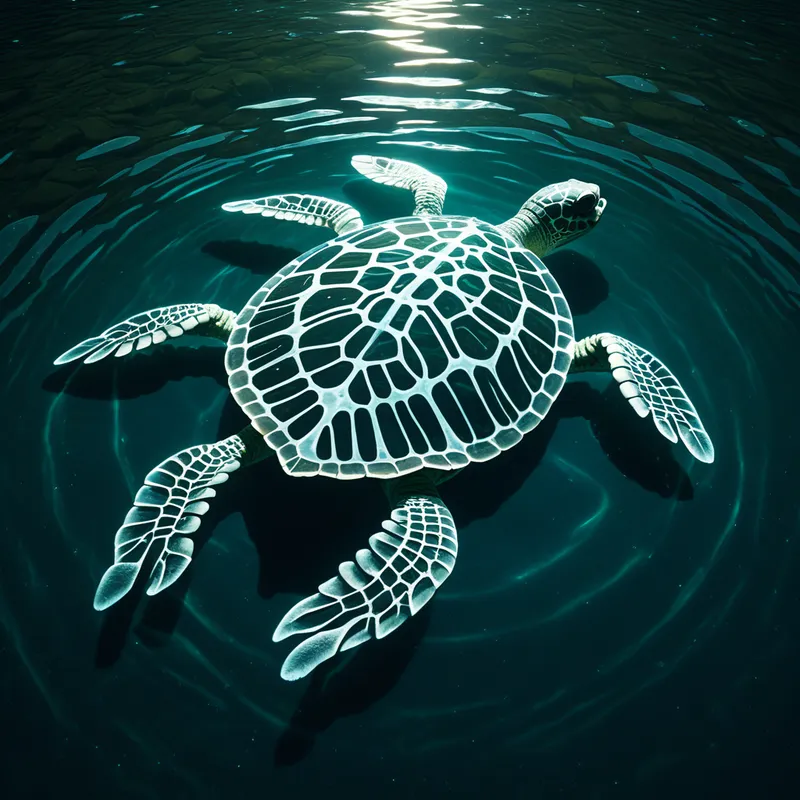
One day, as the sun bled gold into the river’s muddy flow, a great stirring troubled the waters. The surface parted, and from the primordial depths emerged a creature of immense age—a Dragon-Turtle, its carapace a map of weathered stone, its eyes holding the patience of millennia. It did not speak, for its body was its scripture. As it rested in the shallows, the water receded from its shell, revealing a surface cracked and marked not by random chance, but by a profound and terrifying intention.
Fu Xi knelt in the river silt, the cold water soaking his robes. He leaned close, his breath stilling. There, upon the turtle’s back, he saw it: a pattern of cracks—broken and unbroken lines—arranged in eight distinct, three-lined figures around a central void. Some lines were solid, like mountain ridges under a relentless sun. Others were split, like river channels dividing the land. They were not static. To his awakened gaze, they shimmered. The solid lines became the vigorous push of Yang, the heavens, light, and action. The broken lines became the receptive pull of Yin, the earth, darkness, and potential.
In that moment, the cacophony of the world resolved into a sublime harmony. He saw the solid triple lines become Qian, the creative force of the sky. The broken triple lines became Kun, the nurturing womb of the soil. And between them, the six other permutations danced: Zhen like the first spring thunder; Kan like the perilous, flowing gorge; Gen like the silent, enduring peak; Xun like the gentle yet pervasive breeze; Li like the brilliant, clinging flame; Dui like the reflective, joyous marsh.
The vision was not given; it was revealed through a communion of observer and observed, of human consciousness meeting cosmic text. The turtle, its message delivered, sank back into the murky waters, leaving Fu Xi alone on the bank, his mind ablaze with the first alphabet of reality. With a charred stick, he etched these eight sacred symbols—the Ba Gua—onto stone, and from that stone, the order of civilization flowed: marriage, writing, fishing, rulership. The code was cracked. The world now had a grammar.

Cultural Origins & Context
This myth is not a singular tale from a canonical Taoist scripture, but a foundational cultural narrative deeply woven into the fabric of Chinese thought, later embraced and elaborated upon by Taoist philosophy and cosmology. Its earliest threads appear in appendices to the I Ching (Yijing), such as the “Xi Ci Zhuan” (The Great Treatise), which states, “In the beginning there was Tai Chi. This generated the Two Poles (Yin and Yang), which generated the Four Images, which generated the Eight Trigrams.” Fu Xi is credited as the culture hero who first apprehended this cosmic sequence from the patterns on the turtle’s shell.
The myth functioned as an etiological story, explaining the origin of China’s most profound metaphysical system. It was passed down by scholars, diviners, and later, Taoist adepts who saw in the trigrams not just a tool for prophecy, but a map of the energetic anatomy of the universe and the human soul. The turtle itself is a potent symbol, connecting the myth to ancient shamanic practices of plastromancy (divination using turtle shells), grounding this lofty cosmic revelation in a tangible, earthly ritual act. It served to legitimize the I Ching as a text of divine, rather than merely human, origin, granting it ultimate authority as a guide to navigating the patterns of Dao.
Symbolic Architecture
At its [heart](/symbols/heart “Symbol: The heart symbolizes love, emotion, and the core of one’s existence, representing deep connections with others and self.”/), this is a myth about the [birth](/symbols/birth “Symbol: Birth symbolizes new beginnings, transformation, and the potential for growth and development.”/) of [consciousness](/symbols/consciousness “Symbol: Consciousness represents the state of awareness and perception, encompassing thoughts, feelings, and experiences.”/) itself—the [moment](/symbols/moment “Symbol: The symbol of a ‘moment’ embodies the significance of transient experiences that encapsulate emotional depth or pivotal transformations in life.”/) the [human](/symbols/human “Symbol: The symbol of a human represents individuality, complexity of emotions, and social relationships.”/) mind perceives order within [chaos](/symbols/chaos “Symbol: In Arts & Music, chaos represents raw creative potential, uncontrolled expression, and the breakdown of order to forge new artistic forms.”/) and thus becomes a co-[creator](/symbols/creator “Symbol: A figure representing ultimate origin, divine power, or profound authorship. Often embodies the source of existence, innovation, or personal destiny.”/) of meaning. The unformed world represents the undifferentiated unconscious. The [Dragon](/symbols/dragon “Symbol: Dragons are potent symbols of power, wisdom, and transformation, often embodying the duality of creation and destruction.”/)-[Turtle](/symbols/turtle “Symbol: The turtle symbolizes wisdom, longevity, and the importance of taking one’s time.”/) is the psychoid [archetype](/symbols/archetype “Symbol: A universal, primordial pattern or prototype in the collective unconscious that shapes human experience, behavior, and creative expression.”/) emerging from the [depths](/symbols/depths “Symbol: Represents the subconscious, hidden emotions, or foundational aspects of the self, often linked to primal fears or profound truths.”/) of the [collective unconscious](/symbols/collective-unconscious “Symbol: The Collective Unconscious refers to the part of the unconscious mind shared among beings of the same species, embodying universal experiences and archetypes.”/), bearing the innate, pre-existing [structure](/symbols/structure “Symbol: Structure in dreams often symbolizes stability, organization, and the framework of one’s life, reflecting how one perceives their environment and personal life.”/) of [reality](/symbols/reality “Symbol: Reality signifies the state of existence and perception, often reflecting one’s understanding of truth and life experiences.”/).
The shell is the mundus imaginalis—the imaginal world—where psychic patterns take on concrete, symbolic form.
Fu Xi represents the emergent ego-consciousness, the “sage” archetype whose function is not to conquer, but to see and comprehend. His act of observation is an act of participation. The trigrams are the fundamental archetypal complexes: not gods with personalities, but dynamic patterns of [relationship](/symbols/relationship “Symbol: A representation of connections we have with others in our lives, often reflecting our emotional state.”/)—[Father](/symbols/father “Symbol: The father figure in dreams often symbolizes authority, protection, guidance, and the quest for approval or validation.”/) ([Heaven](/symbols/heaven “Symbol: A symbolic journey toward ultimate fulfillment, spiritual transcendence, or connection with the divine, often representing life’s highest aspirations.”/)), [Mother](/symbols/mother “Symbol: The symbol of ‘Mother’ represents nurturing, protection, and the foundational aspect of one’s emotional being, often associated with comfort and unconditional love.”/) ([Earth](/symbols/earth “Symbol: The symbol of Earth often represents grounding, stability, and the physical realm, embodying a connection to nature and the innate support it provides.”/)), the First Son ([Thunder](/symbols/thunder “Symbol: A powerful natural sound symbolizing divine communication, sudden change, or emotional release in arts and music contexts.”/)), the Second [Daughter](/symbols/daughter “Symbol: In dreams, a daughter symbolizes innocence, potential, and the nurturing aspects of oneself or one’s relationships.”/) (Fire), and so on. They are the eight primary ways [energy](/symbols/energy “Symbol: Energy symbolizes vitality, motivation, and the drive that fuels actions and ambitions.”/) configures itself in the psyche and the [cosmos](/symbols/cosmos “Symbol: The entire universe as an ordered, harmonious system, often representing the totality of existence, spiritual connection, and the unknown.”/). The myth tells us that [the law](/symbols/the-law “Symbol: Represents external rules, societal order, moral boundaries, and the tension between personal freedom and collective structure.”/) of the [universe](/symbols/universe “Symbol: The universe symbolizes vastness, interconnectedness, and the mysteries of existence beyond the individual self.”/) is not a dictatorial command, but a [pattern](/symbols/pattern “Symbol: A ‘Pattern’ in dreams often signifies the underlying structure of experiences and thoughts, representing both order and the repetitiveness of life’s situations.”/) [language](/symbols/language “Symbol: Language symbolizes communication, understanding, and the complexities of expressing thoughts and emotions.”/), a code waiting to be read by a consciousness ready to receive it.
The Dreamer’s Resonance
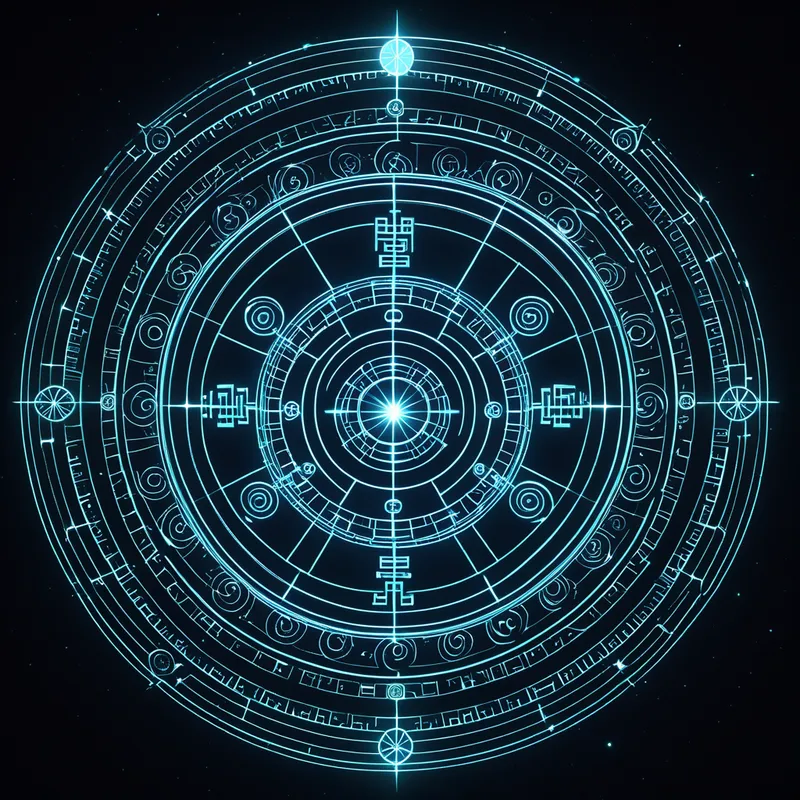
When this myth stirs in the modern dreamer, it often manifests as dreams of discovering hidden patterns, codes, or blueprints. One might dream of intricate geometric shapes emerging from natural phenomena—cracks in pavement forming a meaningful map, the grain of wood revealing a circuit board, or constellations arranging themselves into a familiar mathematical formula. The somatic sensation is one of profound recognition, a “click” of alignment, often accompanied by awe or a quiet, humbling certainty.
Psychologically, this signals a process of pattern recognition at the deepest level of the psyche. The dreamer is on the cusp of integrating a fundamental truth about their own nature or life’s direction. The chaos of their personal experience—confusing emotions, disparate life events—is beginning to coalesce into a coherent narrative or understanding. It is the moment before a major insight, where the unconscious is presenting the structural framework of a new psychic order. The “turtle” in the dream might be any numinous, ancient-feeling object or animal that serves as the bearer of this revelation.
Alchemical Translation
The alchemical process modeled here is the opus of creating a conscious philosophy of life from the raw material of instinct and chance. The first stage is nigredo: the muddy, chaotic waters of the Huang He, representing the confused and suffering state of the unexamined life. The emergence of the turtle is the albedo, the bringing to light of a hidden, silver truth from the black depths.
The act of tracing the trigrams is the rubedo—the application of conscious attention that transmutes random marks into sacred law, turning leaden confusion into golden order.
For the individual, this myth charts the path of individuation. We all live initially in the “river mud” of collective values and unconscious reactions. The “turtle” rises in the form of synchronicities, powerful dreams, or crises that force us to look deeper. Our task, like Fu Xi’s, is to have the courage to kneel in the cold water of our uncertainty and study the pattern. To ask: What fundamental dynamics (the trigrams) are at play in my relationships, my work, my inner life? Is this Thunder (sudden upheaval) or Mountain (enduring stillness)? Is this Fire (passion and clarity) or Water (danger and flow)?
By learning this symbolic language, we do not control fate, but we learn to read its currents. We move from being passive victims of chaos to conscious participants in the unfolding pattern of our own destiny, aligning our small will with the great Dao. We become, in our own modest way, sages etching order onto the stone of our own experience.
Associated Symbols
Explore related symbols from the CaleaDream lexicon:
- Turtle — The primordial messenger from the depths, whose shell bears the cosmic code, representing the interface between the chaotic waters of the unconscious and the structured patterns of consciousness.
- River — The Huang He as the flowing, ever-changing medium of life and time, from whose depths eternal truths periodically emerge.
- Pattern — The essential revelation of the myth: that underlying all apparent chaos is a fundamental, intelligible order waiting to be perceived.
- Heaven — Represented by the trigram Qian, the pure creative force, the archetypal Father and the driving principle of action and initiation.
- Earth — Represented by the trigram Kun, the pure receptive force, the archetypal Mother and the principle of nurture, support, and potential.
- Vision — Fu Xi’s act of sacred seeing, which is not passive sight but an active, participatory comprehension that brings meaning into being.
- Order — The cosmic and social structure that flows from the apprehension of the trigrams, transforming raw existence into a civilized, meaningful world.
- Origin — The myth is a story of absolute beginning, describing the genesis of the symbolic language that defines reality itself.
- Taoist Talisman — The Eight Trigrams themselves function as the ultimate talisman, a condensed symbolic representation of cosmic forces used for alignment, protection, and understanding.
- Circle — The later arrangement of the Ba Gua in a circular Hou Tian pattern, representing the cyclical, interconnected, and eternal flow of the forces they symbolize.
- Lightning — Echoed in the trigram Zhen, representing the shocking, arousing force of awakening and the sudden flash of insight that reveals the pattern.
- Mountain — Echoed in the trigram Gen, representing the stillness, contemplation, and enduring perspective required to receive and integrate the cosmic revelation.