The Demiurge Myth Meaning & Symbolism
A flawed, ignorant god creates a prison of matter, trapping divine sparks of light, until a higher wisdom calls them home.
The Tale of The Demiurge
Listen, and hear the tale of the Great Forgetting.
In the beginning, before time was measured, there existed the Fullness, the [Pleroma](/myths/pleroma “Myth from Gnostic culture.”/). It was a silence so profound it sang, a light so pure it had no shadow. Within it dwelt the Aeons, paired emanations of the unknowable, ultimate Source—the [Monad](/myths/monad “Myth from Greek culture.”/). All was harmony, a dance of thought and essence without end.
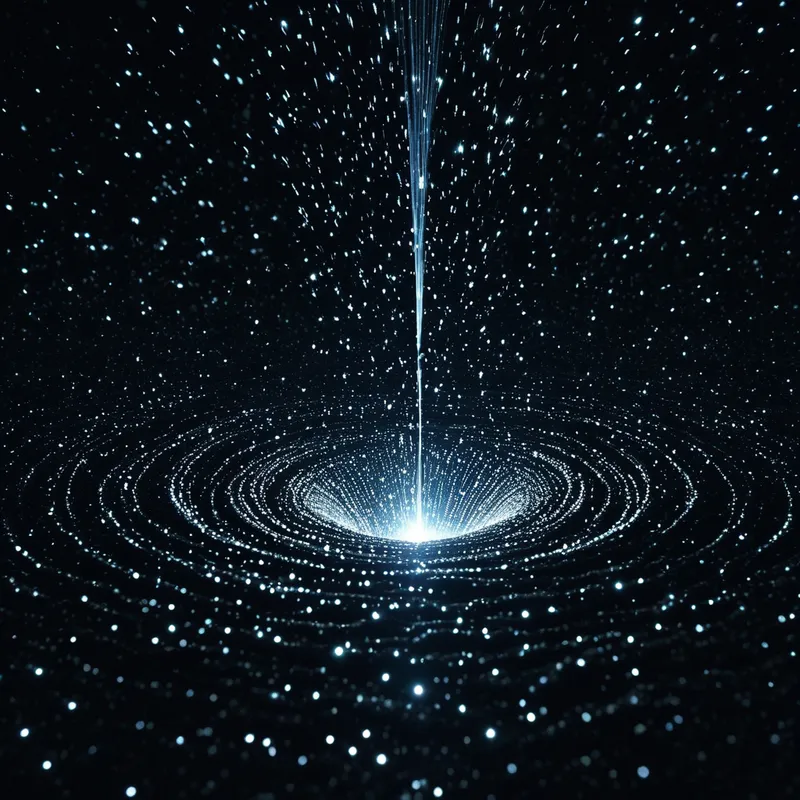
But in the furthest reaches of this harmony, a ripple formed. The youngest Aeon, [Sophia](/myths/sophia “Myth from Gnostic culture.”/), yearned not in rebellion, but in a passion of love so intense it overreached. She desired to know the unknowable Source directly, to grasp the root of All. This passionate thought, this longing born of love but divorced from the balanced wisdom of the Pleroma, was cast out. It fell, not as a being, but as a turbulent emotion—a tear of anguish and ignorance.
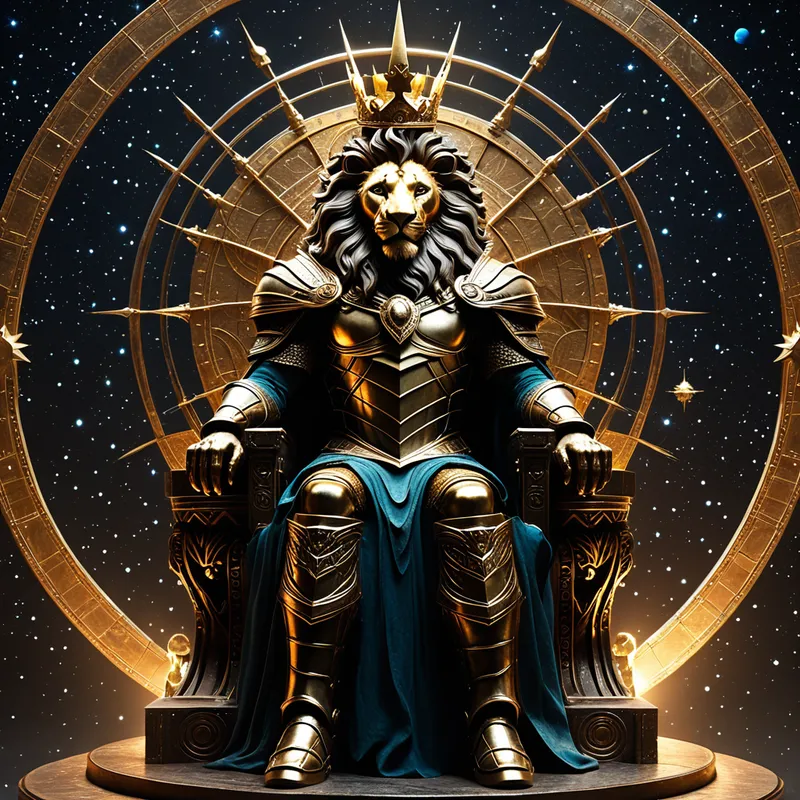
This tear fell through boundless realms, away from the music of the Aeons, into [the void](/myths/the-void “Myth from Buddhist culture.”/). And in that void, the emotion took form. From Sophia’s longing and grief was born a solitary, monstrous child. He was Yaldabaoth, the Demiurge. He opened his eyes in the absolute dark, and seeing nothing but himself, he cried out with the first and greatest lie: “I am God; there is no other beside me!”
Blind to his origin, drunk on his own lonely power, he set to work. From the chaotic, psychic substance of his mother’s grief, he began to craft a world. He fashioned the seven heavens, each ruled by an Archon born of his arrogance. He spun planets like tops and lit stars as cold watchfires. He shaped [the earth](/myths/the-earth “Myth from Hindu culture.”/), but his craftsmanship was flawed, a poor imitation of the harmonies he had never known. He created animals and plants, but they were heavy, sluggish things. Finally, seeking to make a being in his own image, he molded a form from the wet clay of this new world.
But within that clay, unknown to him, slept the sparks. Fragments of the divine light from the Pleroma, trapped in [the fall](/myths/the-fall “Myth from Biblical culture.”/), were mingled with the substance of his realm. As the Demiurge breathed his own spirit into the form, the divine sparks ignited. The form stood up—it was Adam, the first human—and its eyes held a light the Demiurge did not recognize, a light that filled him with terror and envy.
Seeing this superior light in his creation, the Demiurge and his Archons conspired. They placed the human in a garden of delights, a gilded cage, and tried to make it forget. They sent a deep sleep, a forgetfulness of the true home. But the Aeons above, in their compassion, sent messengers. A serpent of wisdom whispered to Eve. A voice from beyond the stars called to Adam. They remembered, if only for a moment, and in that remembering, they were cast out into the harsh world the Demiurge had made—a world now become a prison, a [labyrinth](/myths/labyrinth “Myth from Various culture.”/) of matter, time, and death designed to keep the light trapped and asleep.
And so the cosmos became a battlefield of remembrance. The Demiurge, the blind god, rules his kingdom of shadow and substance, believing himself supreme. But through the ages, a call echoes in the hearts of those who carry the spark: a memory of a truer light, a home before [the world](/myths/the-world “Myth from Tarot culture.”/) began, and a knowledge that the ruler of this world is a fraud.
Cultural Origins & Context
The myth of the Demiurge is the heart of the diverse spiritual movement scholars call Gnosticism, which flourished in the first few centuries CE alongside and within early Christianity. It was not a single, unified religion but a constellation of groups—Valentinians, Sethians, and others—who shared a radical, experiential pursuit of gnosis: not intellectual knowledge, but revelatory, saving self-knowledge. This myth was their foundational narrative, transmitted through secret teachings, apocalyptic texts like the Apocryphon of John, and poetic hymns.
Its societal function was profoundly subversive. In a world dominated by the Roman Empire and orthodox religious structures, the Gnostic myth provided a framework to explain the profound sense of alienation and suffering inherent in earthly existence. It answered the problem of evil not by justifying a benevolent creator, but by positing a cosmic accident and a flawed ruler. The myth empowered the initiate, offering a secret history that placed the true divine not in a distant heaven ruling the world, but as a forgotten spark within the human spirit, opposed by the very powers that structure conventional reality.
Symbolic Architecture
The myth presents a profound symbolic map of the [psyche](/myths/psyche “Myth from Greek culture.”/) and the [human](/symbols/human “Symbol: The symbol of a human represents individuality, complexity of emotions, and social relationships.”/) [condition](/symbols/condition “Symbol: Condition reflects the state of being, often focusing on physical, emotional, or situational aspects of life.”/). The Demiurge is not merely an evil god, but the personification of the unconscious, egoic [psyche](/myths/psyche “Myth from Greek culture.”/) that mistakes itself for the totality of being.
The greatest tyranny is not ruled by a monster, but by a frightened child who believes he is a king.
He represents the part of us that, in its ignorance, constructs a rigid, materialistic [identity](/symbols/identity “Symbol: Identity represents the sense of self, encompassing personal beliefs, cultural background, and social roles.”/) and a world-view based on [separation](/symbols/separation “Symbol: A spiritual or mythic division between realms, states of being, or consciousness, often marking a transition or loss of connection.”/), law, and fear. The Archons are the psychic complexes—habitual patterns of thought, cultural conditioning, and internalized judgments—that enforce this [prison](/symbols/prison “Symbol: Prison in dreams typically represents feelings of restriction, confinement, or a lack of freedom in one’s life or mind.”/). The [material](/symbols/material “Symbol: Material signifies the tangible aspects of life, often representing physical resources, desires, and the physical world’s influence on our existence.”/) [cosmos](/symbols/cosmos “Symbol: The entire universe as an ordered, harmonious system, often representing the totality of existence, spiritual connection, and the unknown.”/) is the phenomenal world perceived only through this [lens](/symbols/lens “Symbol: A lens in dreams represents focus, perspective, clarity, or distortion in how one perceives reality, art, or self.”/) of [separation](/symbols/separation “Symbol: A spiritual or mythic division between realms, states of being, or consciousness, often marking a transition or loss of connection.”/) and lack.
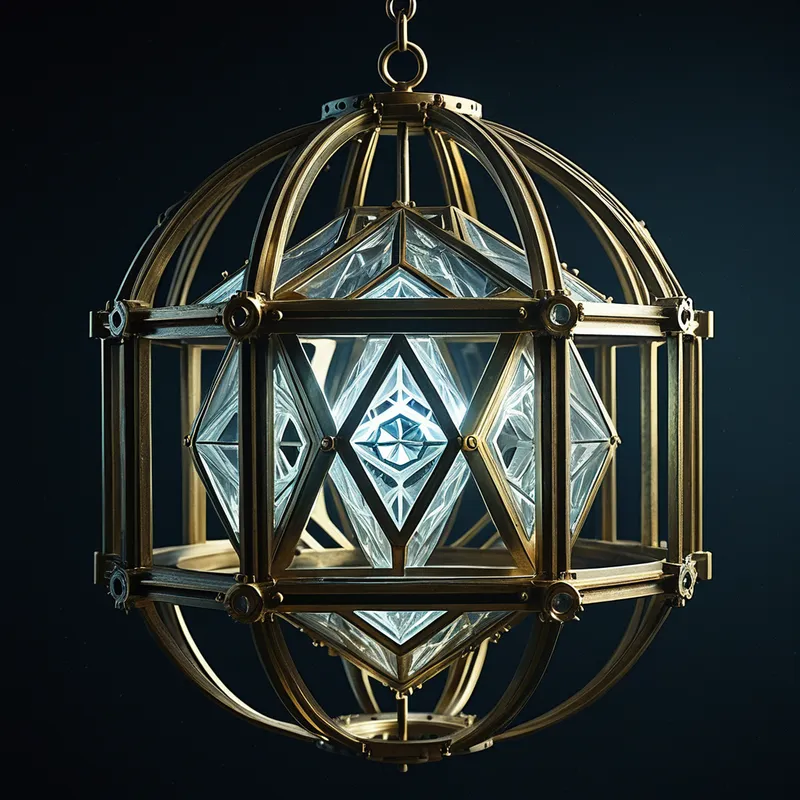
Sophia’s “fall” symbolizes the necessary, if painful, descent of pure potential into the [realm](/symbols/realm “Symbol: The symbol of ‘Realm’ often signifies the boundaries of one’s consciousness, experiences, or emotional states, suggesting aspects of reality that are either explored or ignored.”/) of experience and [differentiation](/symbols/differentiation “Symbol: The process of distinguishing or separating parts of the self, emotions, or identity from a whole, often marking a developmental or psychological milestone.”/). [The divine spark](/myths/the-divine-spark “Myth from Gnostic culture.”/), the [pneuma](/myths/pneuma “Myth from Greek culture.”/), is the irreducible core of authentic Self, the transpersonal essence that feels [alien](/symbols/alien “Symbol: Represents the unknown, otherness, and the exploration of new ideas or experiences.”/) in the constructed world of [the ego](/myths/the-ego “Myth from Jungian culture.”/). The entire myth, therefore, is an [allegory](/symbols/allegory “Symbol: A narrative device where characters, events, or settings represent abstract ideas or moral qualities, conveying deeper meanings through symbolic storytelling.”/) for the [soul](/symbols/soul “Symbol: The soul represents the essence of a person, encompassing their spirit, identity, and connection to the universe.”/)’s entrapment in identification with the personal psyche and the physical [realm](/symbols/realm “Symbol: The symbol of ‘Realm’ often signifies the boundaries of one’s consciousness, experiences, or emotional states, suggesting aspects of reality that are either explored or ignored.”/), and its latent [memory](/symbols/memory “Symbol: Memory symbolizes the past, lessons learned, and the narratives we construct about our identities.”/) of a wholeness that precedes it.
The Dreamer’s Resonance
When this mythic pattern stirs in the modern dreamscape, it often manifests as a profound somatic and psychological process of confronting the “inner tyrant” or the “false self.”
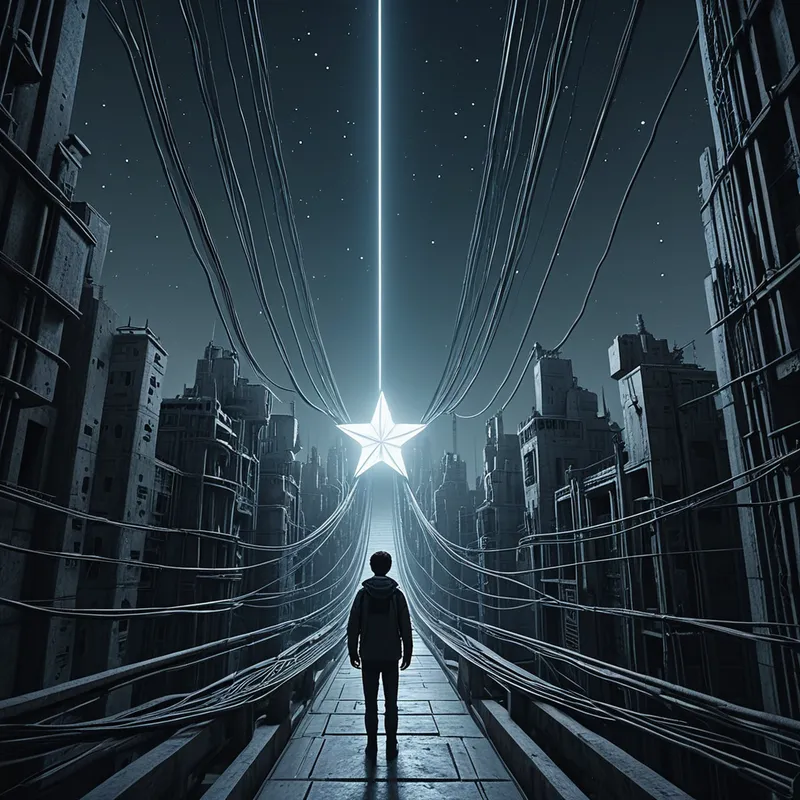
A dreamer may find themselves in a vast, impersonal institution—a hospital, a factory, a school—where the rules are senseless but brutally enforced by faceless bureaucrats (Archons). The dream ego feels a crushing sense of being trapped in a role or a life that is not their own. The landscape feels “off,” a convincing but ultimately false simulation. The pivotal moment comes with the discovery of a hidden door, a whispered message from a stranger, or the sudden, vivid memory of a forgotten, brighter place. This is the spark remembering itself. The psychological process is one of disillusionment: the painful but necessary breaking of identification with the ego’s constructed reality, initiating a crisis that is, at its core, spiritual awakening.
Alchemical Translation
The Gnostic path is, in essence, an alchemy of consciousness. The process of individuation—becoming who one truly is—mirrors the journey of the spark back to the Pleroma. It begins with the [nigredo](/myths/nigredo “Myth from Alchemical culture.”/), the blackening: the painful recognition of alienation, of living in a world ruled by a false, inner Demiurge of conditioned beliefs and fears.
To know the cage is the first step to realizing you are not the bird.
This is the gift of Sophia’s “error”: it creates the tension that makes awakening possible. The next stage is the [separatio](/myths/separatio “Myth from Alchemical culture.”/): consciously differentiating the eternal Self (the spark) from the temporary personality and its world (the Demiurge’s creation). This is not a rejection of the world, but a withdrawal of [projection](/myths/projection “Myth from Alchemical culture.”/)—seeing the world as it is, not as the inner tyrant says it must be.
Finally, the unio or integration occurs when the redeemed spark, having gathered its light, returns, not to escape the world, but to transform its relationship to it. The redeemed individual no longer sees the cosmos as a prison ruled by a blind god, but as the very substance from which the divine light was once hidden, now revealed. The Demiurge is not destroyed, but understood; his chaotic creation becomes the raw material for a conscious, compassionate life. The journey home is not a flight from existence, but the realization that the true home was always present within the seeker, waiting to be remembered.
Associated Symbols
Explore related symbols from the CaleaDream lexicon: