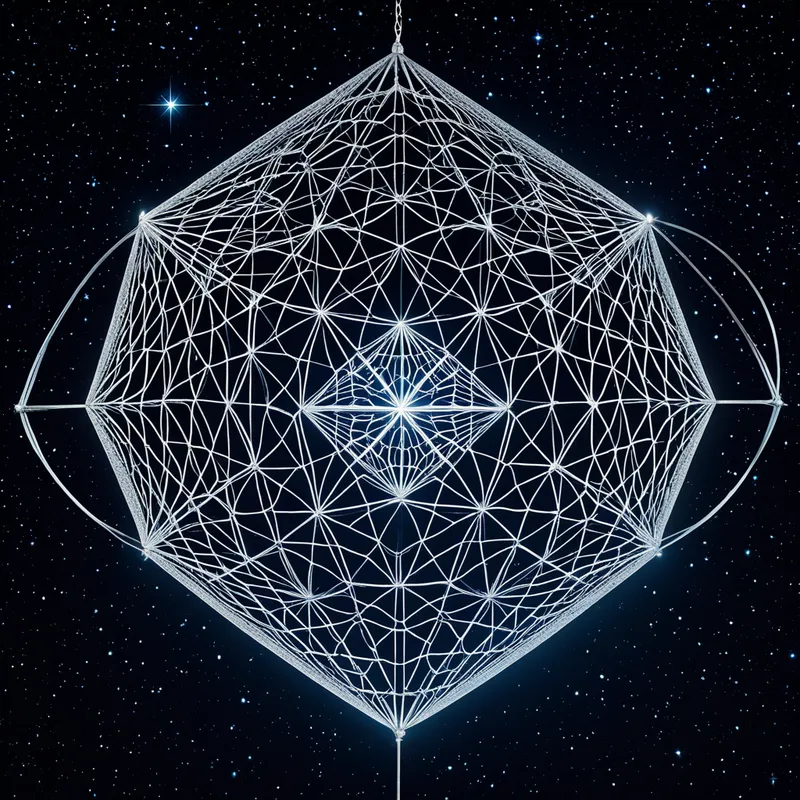
The Cosmic Web / Net of Indra Myth Meaning & Symbolism
A cosmic net of infinite jewels, each reflecting all others, symbolizing the profound interdependence and holographic nature of reality and the psyche.
The Tale of The Cosmic Web / Net of Indra
In the fathomless vaults of the celestial realm, where time is a river that has forgotten its source, there stands the palace of Indra. Its spires pierce the clouds of being, and its foundations are laid upon the bedrock of cosmic order. But it is not the palace itself that steals the breath of sages and silences the arguments of philosophers. It is what hangs in the infinite space before its gates.
Behold the Net.
It is not a net of hemp or silk, but a living tapestry of light and relationship, woven from the threads of causality and compassion. It stretches in all directions, further than the eye of the eagle or the mind of the seer can follow—east, west, above, below, into the past and the future, without beginning, without end. And at every single intersection of this boundless web, at every node where one thread crosses another, there is suspended a perfect, flawless jewel.
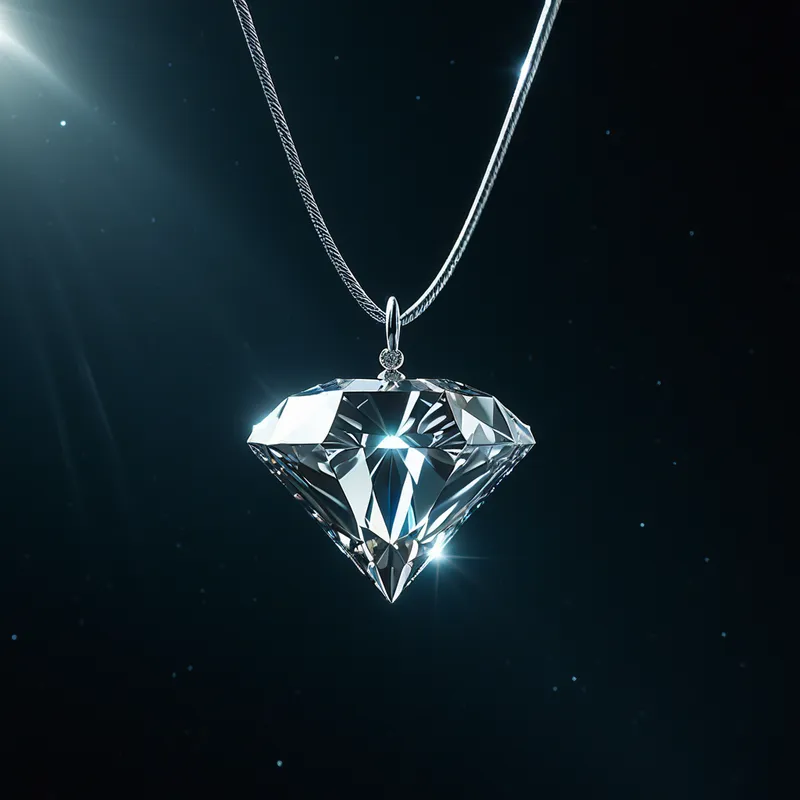
Each jewel is a sphere of purest crystal, polished by the winds of eternity. They are not merely hung; they are placed, with such exquisite precision that each one rests in the exact center of its own world. And here is the mystery that unravels all lesser truths: every single jewel reflects every other jewel.
Look into one. You will not see your own face staring back. Instead, you will see, mirrored in its flawless surface, the image of every other jewel in the infinite net. And within each of those reflected jewels, you will see, again, the reflections of all the others. An endless recursion of light and image, a hall of mirrors where every mirror contains the whole. The brilliant, multifaceted reflection of the second jewel is contained within the first, and the image of the first is contained within the second. So it is for the third, the ten-thousandth, the ten-millionth.
There is no hiding here. The speck of dust on the farthest jewel is witnessed in the heart of the nearest. The radiant glow of the central gem is shared by the one dangling at the very edge of perception. If one jewel is lifted, the entire net shudders. If one is dimmed, a ripple of shadow passes through the cosmos. If one shines with newfound clarity, the whole web brightens in sympathetic joy.
This is the palace’s only guardian, its only doctrine, its only truth. The Net of Indra hangs in silent, majestic testimony, not to separation and hierarchy, but to a unity so profound that it can only express itself through infinite, interdependent diversity. It is the cosmos dreaming of itself, each dream a jewel containing all other dreams.
Cultural Origins & Context
The image of the Net of Indra is not the property of a single story or epic, but a profound philosophical metaphor that emerged within the Mahayana Buddhist tradition, particularly in the Huayan (or Avatamsaka) school in China, around the 6th to 7th centuries CE. It is found in the sprawling, visionary text known as the Avatamsaka Sutra (Flower Garland Sutra).
This was not a myth told around a fire to explain the seasons, but a tool used by monks and philosophers to dismantle the illusion of a separate, independent self. It was transmitted from teacher to student in monastic halls, a visual and conceptual aid to illustrate the doctrine of pratityasamutpada (dependent origination) and the Huayan principle of shishi wu’ai (the unimpeded interpenetration of all phenomena). Its function was societal in the deepest sense: to cultivate a worldview of radical empathy, responsibility, and non-separation, foundational for the Bodhisattva’s vow to liberate all beings.
Symbolic Architecture
The Net is the ultimate symbol of a holographic, interconnected universe. Each jewel represents an individual entity—a person, a moment, a thought, a galaxy. Its perfection signifies the inherent Buddha-nature or complete suchness of each thing. The reflections are not mere copies; they are the actual presence of the whole within the part.
The universe is not a collection of objects, but a communion of subjects. To see oneself is to see the world, and to touch the world is to touch oneself.
The structure dismantles dualities: subject and object, cause and effect, one and many, sacred and profane. The web itself symbolizes the fabric of reality—the laws of karma, physics, and relationship that provide the structure within which this divine play occurs. Indra, as the net’s owner, represents the ordering principle of consciousness itself, the “divine mind” in which this vision becomes apparent. There is no central jewel, no prime mover; authority is diffused throughout the entire system, a radical democracy of being.
Psychologically, the myth annihilates the ego’s fortress. The ego insists it is a solitary, self-contained jewel. The Net reveals this to be the primary illusion. Our psyche is not a closed system but an open node in a vast network. Every thought, memory, and complex is reflected in and influenced by the “jewels” of our relationships, culture, and ancestry.
The Dreamer’s Resonance
When this pattern emerges in modern dreams, it rarely appears as a literal net of jewels. Instead, the dreamer experiences its quality.
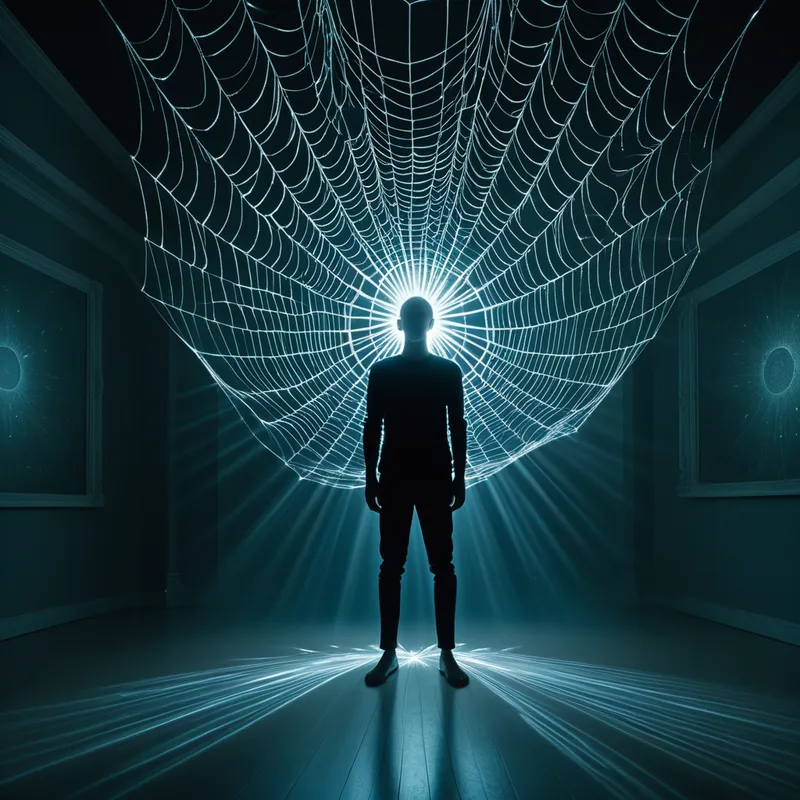
One might dream of a room where every mirror reflects not the room itself, but a different, equally complete scene. Or of a vast library where each book contains the text of all the others. One might dream of a neural network made of light, or of seeing the entire history of a city reflected in a single drop of rain. The somatic feeling is often one of awe mixed with vertigo—the dizzying collapse of familiar boundaries.
This dream signals a psychological process of integration and contextualization. The dreamer’s psyche is attempting to move beyond a fragmented, compartmentalized self-concept. It is processing the profound truth that one’s trauma is not isolated, one’s joy is not private, and one’s identity is woven from countless threads of influence. The dream is an encounter with the unus mundus—the one world of the unconscious, where all opposites are united. It can feel overwhelming, as it demands a death of the old, separate self, but it is ultimately healing, offering a visceral sense of belonging to a meaningful, interconnected whole.
Alchemical Translation
The alchemical work modeled by the Net is the transmutation of perception itself—the opus of seeing the world anew. The base metal is the leaden, solitary ego, convinced of its separation and its unique, burdensome identity. The goal is not to destroy the individual jewel, but to polish it to such clarity that it consciously realizes its nature as a reflector of the whole.
The first stage (nigredo) is the confrontation with the shadow of interconnection: the terrifying responsibility that comes with realizing one’s actions and states of being ripple outward infinitely. This is the “dark night” of the net.
The second stage (albedo) is the cleansing, the polishing. This is the practice of mindfulness, therapy, and honest relationship—rubbing away the tarnish of projection, blame, and narcissism to see what is actually reflected in oneself from others, and what of oneself is cast onto the world.
The great work is not to become a jewel, but to become a perfect mirror. In perfect reflection, one finds not emptiness, but the plenitude of all things.
The final stage (rubedo) is the glorious realization: the red gold of the fulfilled self is a self that knows itself as both utterly unique and fundamentally not-other. The individuated psyche is the jewel that joyfully, consciously contains the multitudes. It takes its place in the net, no longer straining to be at the center or fighting to be free of the threads, but understanding that its freedom, its weight, and its brilliance are gifts of its infinite connections. The struggle triumphs not in escape, but in a homecoming to the entire web of existence, where to care for oneself is to care for the cosmos, and to understand one soul is to glimpse the architecture of the divine.
Associated Symbols
Explore related symbols from the CaleaDream lexicon: