The Collective Unconscious Myth Meaning & Symbolism
The myth of a primordial, psychic ocean, the ancestral wellspring of all human experience, from which archetypes emerge into personal consciousness.
The Tale of The Collective Unconscious
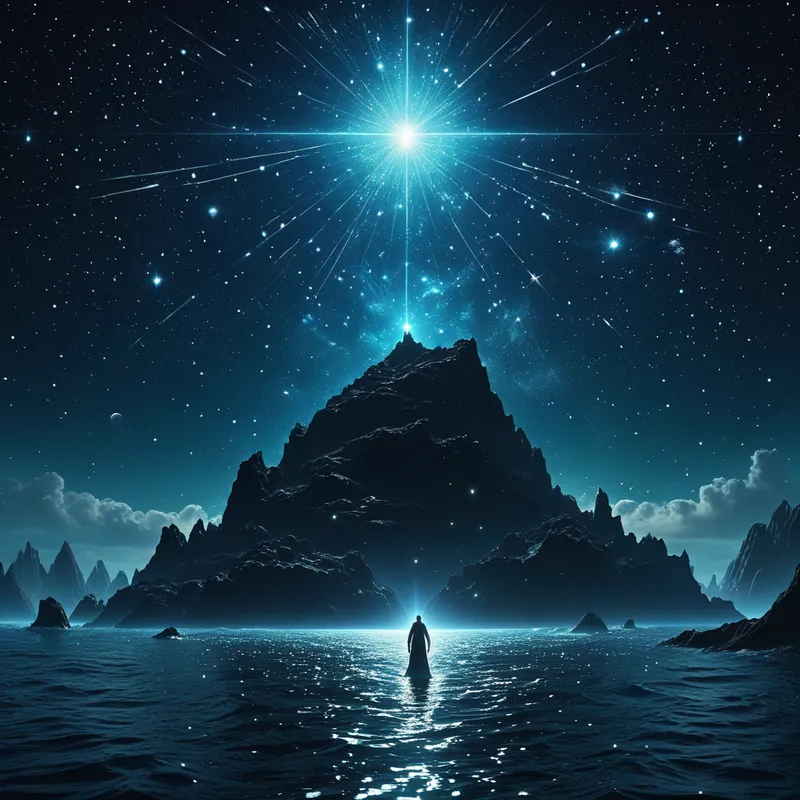
Listen. Before the first word was spoken, before the first fire was lit, there existed not emptiness, but a profound and teeming fullness. It was not a place of earth or sky, but a realm of potential, a boundless, silent ocean. This was no water of the world, but a sea of psychic substance, dark and luminous, deep beyond all measure. It was the Collective Unconscious.
Within its fathomless depths, shapes stirred. Not creatures of flesh, but forms of meaning—the Archetypes. The Great Mother, vast and nurturing. The Wise Old Man, knowing and stern. The Hero, poised for a journey not yet conceived. The Shadow, dark and coiled. They were not yet images, but gravitational pulls, magnetic fields of experience waiting to be born.
Then, from the surface of this eternal sea, a new kind of bubble began to form: the spark of individual consciousness. Each spark, a fragile, flickering island of “I,” believed itself alone, adrift on a private sea of its own making. It knew its own shores—its memories, its daily thoughts—and called this the entirety of its world. It feared the deep, dark waters beyond its narrow beach, sensing movement in the abyss.
But the sea is never separate from the island. In dreams, the waters would rise. The island-dweller would sleep, and the boundary between personal shore and ancestral ocean would grow thin. Then, the Archetypes would ascend. They would take on the costumes of the dreamer’s life—a towering parent, a mysterious stranger, a terrifying beast—but their essence was ancient, their power drawn from the deep. They brought gifts and terrors, wisdom and chaos, messages from the foundation of time itself.
The great conflict was not a battle, but a refusal. The conscious island, fearing dissolution, would build walls against the sea. It would call the deep waters “madness” or “nonsense.” It would try to pave over its own shoreline. Yet, the sea persisted. In moments of crisis, love, creation, or despair, the waves would crash through. A man would feel a hero’s courage not his own. A woman would tap into a well of compassion deeper than her personal history. An artist would channel forms that felt eerily familiar to all who saw them.
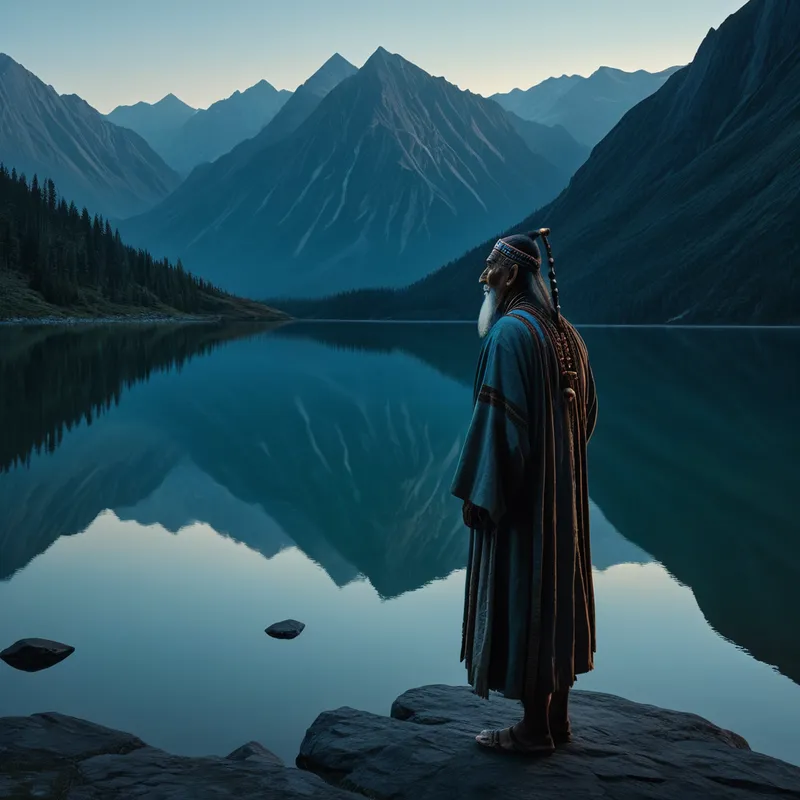
The resolution is not an end, but a sacred alignment. The myth tells of those rare souls who, instead of fearing the deep, learn to listen. They sit on their shore at dusk, not as sovereigns of a lonely rock, but as attentive children of the ocean. They learn the language of its tides—the symbolic language of dream and myth. They recognize the Archetypes not as invaders, but as ancestral guides, the very architects of the island itself. In doing so, they do not drown. They become something more: a conscious peninsula of the vast, living continent below. The personal spark does not go out; it is fed by the eternal fire in the deep. The island remains, but now knows it is part of the great, dreaming land.
Cultural Origins & Context
This “myth” originates not in the campfires of a prehistoric tribe, but in the consulting rooms and scholarly studies of the 20th century. Its bard was Carl Gustav Jung. He did not invent it as fiction, but articulated it as a psychological reality deduced from a lifetime of clinical work, cross-cultural study of symbolism, and deep introspection.
Jung passed down this narrative through a new kind of oral tradition: his voluminous writings (The Archetypes and the Collective Unconscious, Man and His Symbols), lectures, and the personal dialogues of analysis. The societal function of this myth within “Jungian culture”—a culture of therapists, artists, and seekers—was revolutionary. It served as a counter-narrative to the then-dominant story of the mind as a purely personal, mechanistic product of individual experience and instinct. It restored a dimension of depth, meaning, and shared human heritage to psychology. Its function was to heal the modern sense of psychic isolation, reconnecting the individual to the transpersonal and the timeless.
Symbolic Architecture
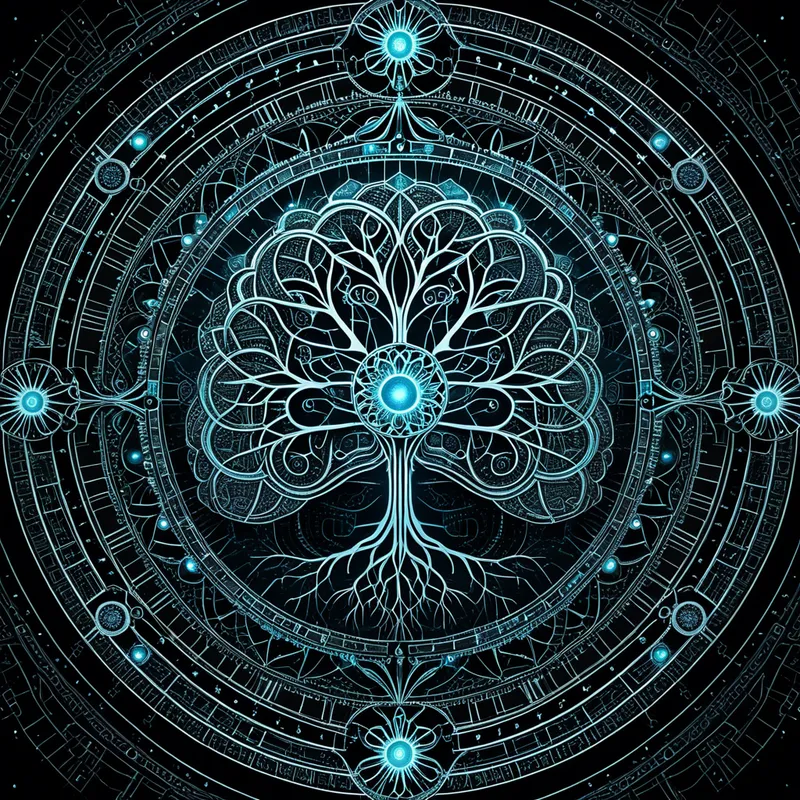
The myth’s symbols form a complete map of the human psyche. The Personal Island is the Ego, the conscious self with its identity and daily awareness. The Vast Ocean is the Collective Unconscious itself, the psychic inheritance of humankind.
The Collective Unconscious is not a personal acquisition; it is the ancient, shared bedrock upon which the thin soil of personal consciousness rests.
The Archetypes rising from the deep are the innate, universal psychic structures. They are not inherited ideas, but inherited possibilities for forming ideas and experiences. The Shoreline represents the threshold between conscious and unconscious, a liminal space of immense creative and transformative potential. The act of Building Walls symbolizes Repression and one-sided conscious development, while Listening at Dusk represents active imagination, dream work, and the humble engagement with the unconscious.
The Dreamer’s Resonance
When this mythic pattern activates in modern dreams, the dreamer is experiencing a direct encounter with the transpersonal. It is a somatic and psychological process of intrusion and invitation.
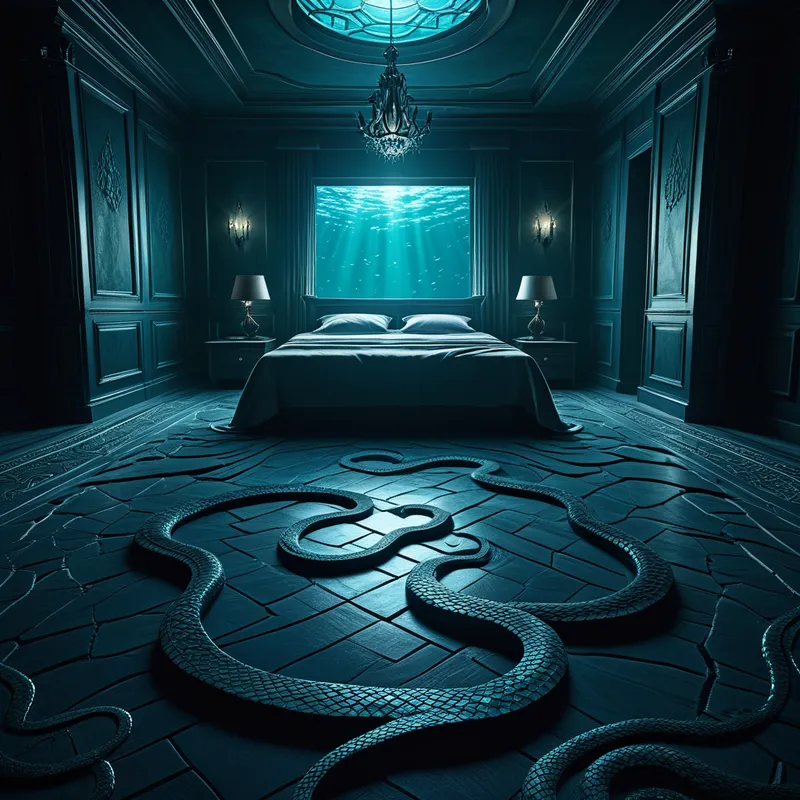
You may dream of discovering a hidden room in your house, a basement flooding with dark water, or a cave leading deep underground. These are dreams of the psyche’s own architecture revealing its deeper foundations. Dreaming of meeting a figure of immense authority, terrifying power, or divine beauty—a king, a witch, a goddess—signals an archetype constellating in your life. The somatic feeling is often one of awe, dread, or profound significance that lingers upon waking. Such dreams indicate that a pattern deeper than your personal history is at play, perhaps calling you to integrate a new level of power, wisdom, or shadow.
A dream from the Collective Unconscious does not feel like a replay of your day; it feels like a message from a distant, yet intimately familiar, homeland of the soul.
Alchemical Translation
The myth models the entire process of Individuation. The initial state is the ego-island, identified solely with its conscious territory (the lead of ordinary existence). The conflict—the sea’s intrusion—is the nigredo, the darkening, where unconscious contents disrupt the comfortable status quo, bringing chaos and doubt.
The rising action of learning to listen is the albedo, the whitening, a purification through engaging with symbols, making the unconscious conscious. Recognizing the archetypes is the acquisition of the lapis philosophorum, the philosopher’s stone—not a literal object, but the symbolic understanding that redeems the raw material of the psyche.
The resolution—the conscious peninsula—is the rubedo, the reddening, the achievement of the Self. Here, the ego is not dissolved but relativized, becoming the faithful steward of the vast Self that encompasses both conscious and unconscious. The individual is transmuted. One no longer lives from the isolated island, but through it, from the depth of the ocean. The personal life becomes a unique, conscious expression of the impersonal, eternal patterns, achieving the alchemical gold: a life of meaning, connected not just to its own story, but to the great myth of being human.
Associated Symbols
Explore related symbols from the CaleaDream lexicon: