The Chakras Myth Meaning & Symbolism
A journey of awakening serpent-fire through seven luminous wheels, from primal earth to divine union, mapping the soul's ascent to liberation.
The Tale of The Chakras
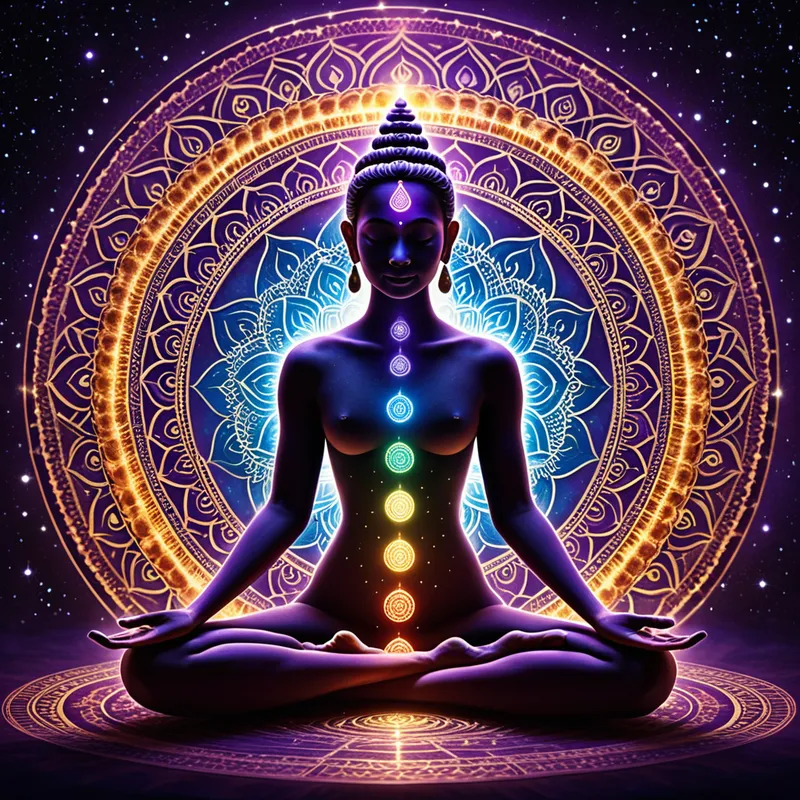
Listen. In the deep silence before the first word, there was a body. Not the body of flesh and bone you know, but a body of shadow and light, a riverbed for a sleeping star. At its base, in the dark, moist earth of the pelvis, a great serpent lay coiled. She was [Kundalini](/myths/kundalini “Myth from Hindu culture.”/), [the world](/myths/the-world “Myth from Tarot culture.”/)’s whisper, the potential of all fire and flight, wrapped in three and a half coils of primordial slumber.
Above her, along the central channel—the [Sushumna](/myths/sushumna “Myth from Yogic culture.”/)—stood silent gateways. Seven wheels of light, spun from the stuff of dreams, were still. The first, at the root, was the color of blood and clay, a four-petaled [lotus](/myths/lotus “Myth from Hindu culture.”/) turned downward, holding the dense, slow song of survival. Above it, in the secret place of generation, a lotus the hue of monsoon clouds churned with the passions of creation and dissolution. In the solar furnace of the navel, a ten-petaled wheel blazed with the yellow-gold of will and conquest.
But the journey was arrested. The serpent slept, and the wheels were sepulchers of latent power. The heart’s emerald-green lotus, with its twelve petals, waited for a breath of compassion to stir it. The throat’s sixteen-petaled lotus, the color of a clear autumn sky, was silent, its truth unspoken. Between the eyes, the command seat of the mind, a two-petaled lotus of indigo and silver held the power of inner sight, shuttered tight.
And at [the crown](/myths/the-crown “Myth from Various culture.”/), a thousand-petaled lotus of amethyst and purest white light hung inverted, a chalice waiting to be filled from below, its connection to the infinite Brahman a mere promise.
The conflict was this stillness, this divine paralysis. The human form was a temple with its deity asleep in the cellar, its spires dark. The rising action was not a battle, but a preparation—a fierce and gentle cultivation of posture, breath, and one-pointed mind. The yogi, the seeker, became the myth’s hero, sitting in the sacred cave of their own body, stilling the winds of distraction.
Then, through grace and fierce [tapas](/myths/tapas “Myth from Hindu culture.”/), a spark was struck. A sacred syllable, a focused intention, a surrender of [the ego](/myths/the-ego “Myth from Jungian culture.”/)’s clamor, became the key. The serpent stirred. With a sound like the tearing of silk veils, she uncoiled. She began her ascent, not as destruction, but as a river of liquid lightning, piercing each sealed wheel as she rose.
Where she passed, the lotuses trembled, then bloomed. The root grounded into stability, the sacral flowed with creative grace, the solar plexus radiated authentic power. The heart burst open in unconditional love, the throat sang its unique truth, [the third eye](/myths/the-third-eye “Myth from Hindu culture.”/) saw the unity behind illusion. Her journey was the resolution—a rising tide of consciousness that culminated as she reached the crown. There, she met her lord, the pure consciousness of Atman, and in their union, the thousand-petaled lotus righted itself and blazed. The drop merged with the ocean. The sleeping star awoke and became the sun. The story ends, and begins, in that silent, luminous hum.
Cultural Origins & Context
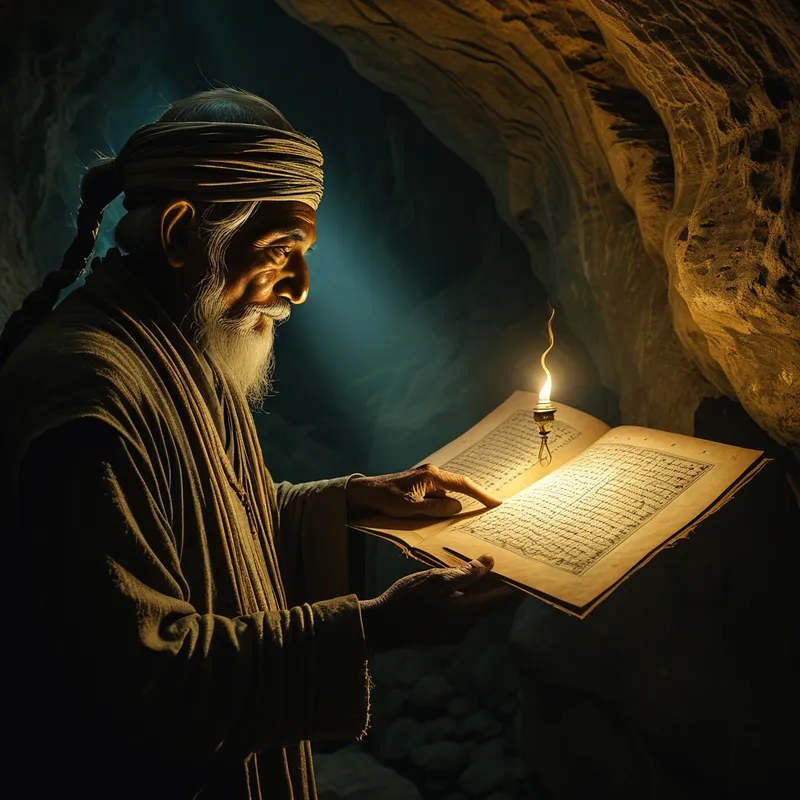
This is not a single myth with characters and plot, but a living, experiential map—a yantra of [the self](/myths/the-self “Myth from Jungian culture.”/)—that coalesced over millennia within the esoteric traditions of India. Its earliest seeds are found in the ancient Vedas, but its full flowering occurred in the medieval texts known as the Upanishads and, most systematically, in the later Tantras and manuals of Raja Yoga.
It was knowledge passed from guru to disciple, whispered in the forest hermitage or the royal court, encoded in poetry and precise anatomical metaphor. Its societal function was transcendent yet practical: it provided a technology for liberation ([moksha](/myths/moksha “Myth from Hindu culture.”/)). While caste and duty structured the outer life, [the chakra system](/myths/the-chakra-system “Myth from Hindu culture.”/) offered an inner, universal path accessible to any prepared seeker, mapping the transformation of raw, earthly consciousness into refined, divine awareness.
Symbolic Architecture
The [mythos](/symbols/mythos “Symbol: The collective body of myths, legends, and archetypal narratives that shape cultural identity and spiritual understanding across civilizations.”/) of the chakras is a profound symbolic [architecture](/symbols/architecture “Symbol: Architecture in dreams often signifies structure, stability, and the framing of personal identity or life’s journey.”/) of the [psyche](/myths/psyche “Myth from Greek culture.”/)’s evolution. It is a vertical [axis](/symbols/axis “Symbol: A central line or principle around which things revolve, representing stability, orientation, and the fundamental structure of reality or consciousness.”/) of transformation, where each wheel represents a stage of [consciousness](/symbols/consciousness “Symbol: Consciousness represents the state of awareness and perception, encompassing thoughts, feelings, and experiences.”/), a [cluster](/symbols/cluster “Symbol: A dense grouping of similar elements, representing complexity, patterns, or interconnectedness within a larger system.”/) of psychic complexes, and an element of [reality](/symbols/reality “Symbol: Reality signifies the state of existence and perception, often reflecting one’s understanding of truth and life experiences.”/).
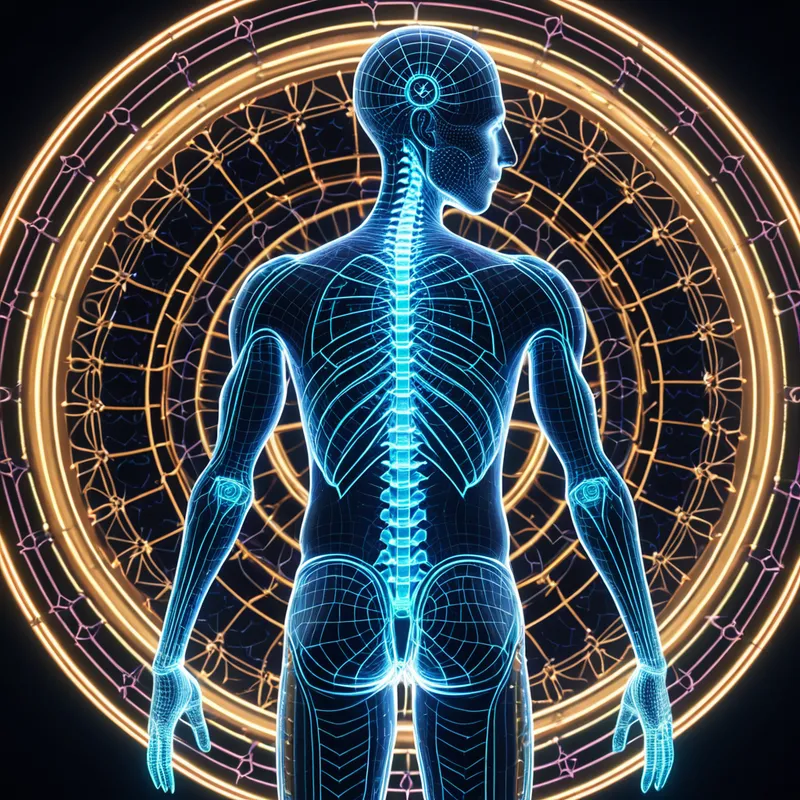
The spine is the world axis, and each chakra is a world. To ascend is not to abandon the lower worlds, but to integrate and transmute their essence.
The sleeping [Kundalini](/symbols/kundalini “Symbol: A dormant spiritual energy coiled at the base of the spine, representing untapped potential and awakening consciousness through ascension.”/) represents our untapped potential, our dormant wholeness, often buried under layers of personal and collective [trauma](/symbols/trauma “Symbol: A deeply distressing or disturbing experience that overwhelms the psyche, often manifesting in dreams as unresolved emotional wounds or psychological injury.”/) (samskaras). The lower chakras (Root, Sacral, Solar Plexus) symbolize the foundational psyche: matters of [security](/symbols/security “Symbol: Security denotes safety, stability, and protection in one’s personal and emotional life.”/), desire, and personal power. The [heart](/symbols/heart “Symbol: The heart symbolizes love, emotion, and the core of one’s existence, representing deep connections with others and self.”/) is the pivotal [transformer](/symbols/transformer “Symbol: A symbol of profound change, adaptability, and the ability to shift between different states, forms, or functions.”/), where instinct becomes [intuition](/symbols/intuition “Symbol: The immediate, non-rational understanding of truth or insight, often described as a ‘gut feeling’ or inner knowing that bypasses conscious reasoning.”/), and “mine” begins to sense “thine.” The upper chakras ([Throat](/symbols/throat “Symbol: Represents communication, expression, and the transmission of thoughts.”/), [Third Eye](/myths/third-eye “Myth from Hindu culture.”/), [Crown](/symbols/crown “Symbol: A crown symbolizes authority, power, and achievement, often representing an individual’s aspirations, leadership, or societal role.”/)) represent the realms of [expression](/symbols/expression “Symbol: Expression represents the act of conveying thoughts, emotions, and individuality, emphasizing personal communication and creativity.”/), [insight](/symbols/insight “Symbol: A sudden, deep understanding of a complex situation or truth, often arriving unexpectedly and illuminating hidden connections.”/), and unity.
The [serpent](/symbols/serpent “Symbol: A powerful symbol of transformation, wisdom, and primal energy, often representing hidden knowledge, healing, or temptation.”/)’s [ascent](/symbols/ascent “Symbol: Symbolizes upward movement, progress, spiritual elevation, or striving toward higher goals, often representing personal growth or transcendence.”/) is the process of bringing unconscious contents into consciousness. Piercing a [chakra](/symbols/chakra “Symbol: In Hindu and yogic traditions, chakras are energy centers along the spine that govern physical, emotional, and spiritual well-being.”/) is the [integration](/symbols/integration “Symbol: The process of unifying disparate parts of the self or experience into a cohesive whole, often representing psychological wholeness or resolution of internal conflict.”/) of that psychic [layer](/symbols/layer “Symbol: Layers often symbolize complexity, depth, and protection in dreams, representing the various aspects of the self or situations.”/)—facing its fears, fulfilling its healthy functions, and releasing its attachments to move upward.
The Dreamer’s Resonance
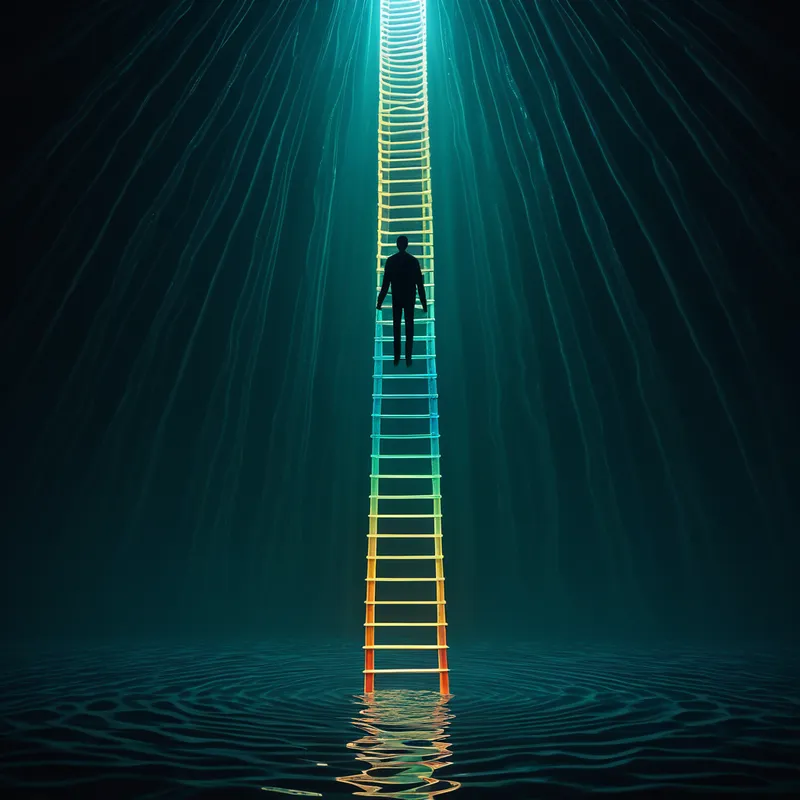
When this myth stirs in the modern dreamer, it speaks of a psychic awakening or pressure for integration. Dreams of climbing ladders, elevators, or winding staircases may mirror the ascent. Dreams of serpents, especially if they are not threatening but fascinating or luminous, can directly reflect Kundalini activity.
A dream of a blocked throat or an inability to speak may signal a Throat Chakra conflict. Vivid, swirling colors or sensations of energy moving up the back in a dream are somatic echoes of the subtle body’s activity. A dream of a blinding light at the top of the head or a feeling of the skull opening can point to Crown Chakra awakening. These dreams often occur during life transitions, therapy, or deep creative work, indicating the psyche is actively reorganizing its foundational energies.
Alchemical Translation
For the modern individual, the chakra myth is a master guide for the alchemical process of individuation—becoming the unique, integrated Self. It models psychic transmutation not as a rejection of our humanity, but as a sacred distillation.
The work begins not in the heavens, but in the mud of the Root. To seek spiritual flight without earthly grounding is to build on sand.
The “alchemical fire” is the awakened Kundalini. The “[prima materia](/myths/prima-materia “Myth from Alchemical culture.”/)” is our raw, unconscious life force, often stuck in repetitive patterns (lower chakra imbalances). The process involves a [solve et coagula](/myths/solve-et-coagula “Myth from Alchemical culture.”/): dissolving the rigid identifications of each stage (e.g., “I am my fears,” “I am my desires,” “I am my achievements”) and reconstituting them as conscious, functional parts of a greater whole.
The heart chakra is the alchemical conjunctio, [the sacred marriage](/myths/the-sacred-marriage “Myth from Various culture.”/) where the lower, personal self (the serpent) meets the higher, transpersonal Self (the lord at the crown). This integration births the “philosopher’s stone” of the realized individual: a person who is fully grounded, creatively alive, empowered, compassionate, authentic, insightful, and connected to a sense of transcendent meaning. The journey is the ultimate exploration—not of external lands, but of the infinite interior cosmos that each human being embodies.
Associated Symbols
Explore related symbols from the CaleaDream lexicon: