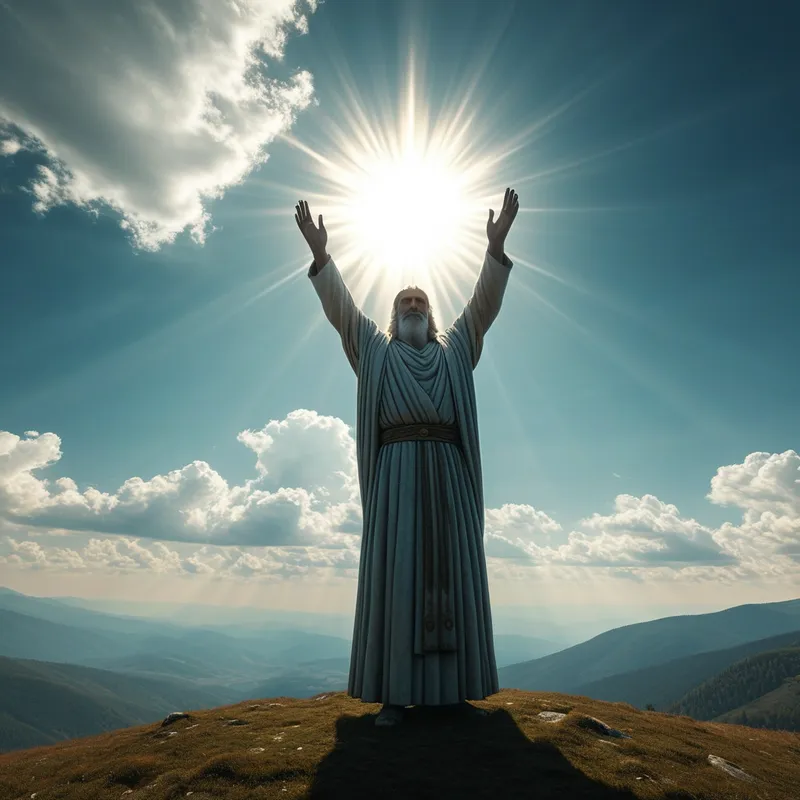
The Bogomil Heresy Myth Meaning & Symbolism
A tale of a spiritual rebellion against a false creator, seeking the true, hidden God through radical purity and the rejection of a corrupted world.
The Tale of The Bogomil Heresy
Listen, then, to a whisper carried on the mountain wind, a story not of stone and mortar, but of spirit and fire. It begins not in a hall of kings, but in the quiet despair of the plowed field and the smoky hearth. The world was heavy, a beautiful prison. The sun shone on vineyards, yes, and the rivers ran cold and clear, but beneath it all thrummed a deep, unspoken sickness. The very earth felt borrowed, the flesh a clumsy garment, the laws of prince and priest a chain upon the soul.
From this fertile soil of silent anguish arose the voice. It spoke not in cathedrals, but in the hidden glens and the humble homes of the muzhi. It was carried by figures who walked with a terrifying lightness, the Perfecti. Their robes were simple, their eyes held a flame that saw through the world’s splendid veil. They brought a story that split creation in two.
They spoke of a rebellion at the dawn of time. Not of angels with shining swords, but of a tragic, cosmic error. They named the maker of this world, the Demiurge, not as a benevolent father, but as a blind and arrogant power, the Satanael. This was the true secret: the god of the grand temples, the god of the thundering law, the god who demanded sacrifice and built a cosmos of matter, was a usurper. He had stolen the divine spark, the pneuma, and trapped it within the mud of flesh, the labyrinth of bone.
The true God, they said, was silent, distant, and infinitely good—a God of pure Spirit who had nothing to do with this world of suffering, birth, and decay. The conflict was not fought on battlefields, but in every human heart. The rising action was a quiet, relentless refusal. To reject the Demiurge’s creation was to become a heretic. It meant refusing the oath, the marriage bed, the slaughtered meat, the cross itself—all his cruel and binding symbols. It was to live as a stranger in your own homeland, your own body.
The resolution was not victory, but witness. The Perfecti, through extreme asceticism and the secret consolamentum, sought to starve the prison. They would not beget new captives. They would not taste the fruits of the false lord’s garden. They would live so lightly upon the earth that at death, the spark would finally escape, slipping past the archons of the air, returning to the silent, luminous home from which it fell. Their defiance was their salvation; their heresy, their only truth.
Cultural Origins & Context
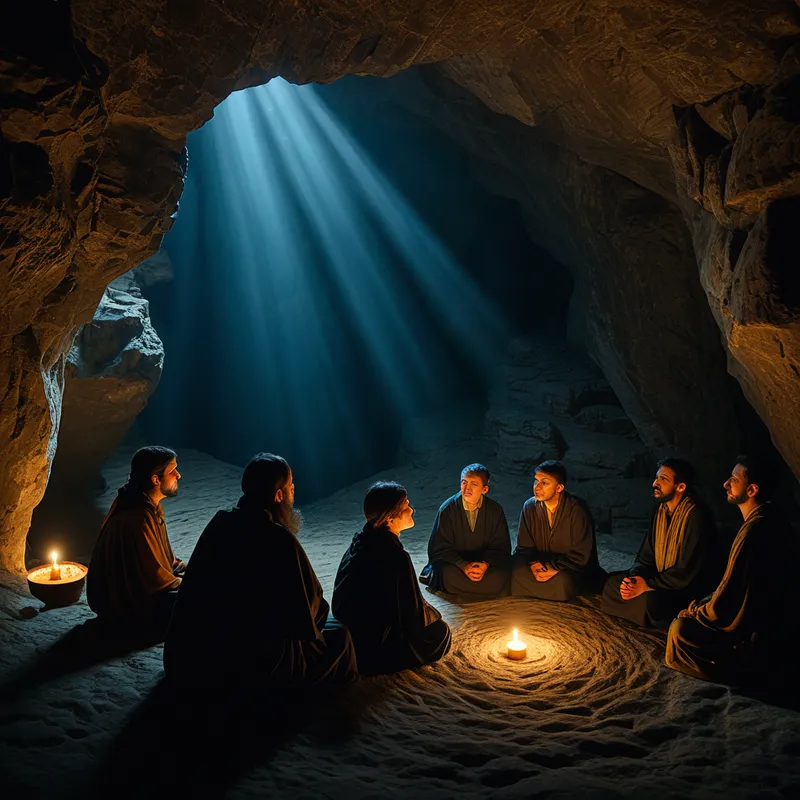
This myth took root in the 10th century, in the heart of the First Bulgarian Empire, a cultural crossroads squeezed between the imperial orthodoxy of Byzantium and the rising power of Rome. It was a folk theology, born from the preaching of the priest Bogomil (“Beloved of God”). Unlike the elite Gnostic schools of antiquity, this was a movement of the soil. Its scriptures were oral, passed in secret through the networks of shepherds, weavers, and peasants, a counter-narrative to the imposing state religion.
Its societal function was one of profound resistance. For the subjugated Slav, it provided a cosmic framework for their earthly plight: the foreign emperor and the state-aligned clergy were literal agents of the false cosmic ruler. The myth offered not just an explanation for suffering, but a breathtaking dignity: the lowliest serf possessed a divine spark that made them superior to the crowned Satanael himself. It created a parallel, invisible kingdom of the pure, a spiritual aristocracy based on knowledge (gnosis) and renunciation, not birth or power.
Symbolic Architecture
The myth presents a radical dualism, but not a simple battle of good versus evil. It is a [drama](/symbols/drama “Symbol: Drama signifies narratives, emotional expression, and the exploration of human experiences.”/) of authenticity versus illusion, [spirit](/symbols/spirit “Symbol: Spirit symbolizes the essence of life, vitality, and the spiritual journey of the individual.”/) versus [system](/symbols/system “Symbol: A system represents structure, organization, and interrelated components functioning together, often reflecting personal or social order.”/).
The greatest prison is the one we are taught to call home, and the most radical act is to remember we are strangers within it.
The Demiurge represents the psychic force of illegitimate [authority](/symbols/authority “Symbol: A symbol representing power structures, rules, and control, often reflecting one’s relationship with societal or personal governance.”/)—the internalized tyrant, the consensus [reality](/symbols/reality “Symbol: Reality signifies the state of existence and perception, often reflecting one’s understanding of truth and life experiences.”/) that demands our worship and limits our being. He is [the principle](/symbols/the-principle “Symbol: A fundamental truth, law, or doctrine that serves as a foundation for a system of belief, behavior, or reasoning, often representing moral or ethical standards.”/) of hylē (matter), [structure](/symbols/structure “Symbol: Structure in dreams often symbolizes stability, organization, and the framework of one’s life, reflecting how one perceives their environment and personal life.”/), and law devoid of true spirit. The [material](/symbols/material “Symbol: Material signifies the tangible aspects of life, often representing physical resources, desires, and the physical world’s influence on our existence.”/) world, his creation, symbolizes the complex, often beautiful, but ultimately binding structures of the ego, society, and the physical senses.
The pneuma is the irreducible core of authentic Self, the divine spark buried under layers of conditioning, [trauma](/symbols/trauma “Symbol: A deeply distressing or disturbing experience that overwhelms the psyche, often manifesting in dreams as unresolved emotional wounds or psychological injury.”/), and worldly [identity](/symbols/identity “Symbol: Identity represents the sense of self, encompassing personal beliefs, cultural background, and social roles.”/). The Perfecti symbolize the ego’s ultimate [task](/symbols/task “Symbol: A task represents responsibilities, duties, or challenges one faces.”/): not to build a better [life](/symbols/life “Symbol: The symbol of ‘Life’ represents a journey of growth, interconnectedness, and existential meaning, encompassing both the joys and challenges that define human experience.”/) within the [prison](/symbols/prison “Symbol: Prison in dreams typically represents feelings of restriction, confinement, or a lack of freedom in one’s life or mind.”/), but to become the conscious agent for the liberation of this spark. Their asceticism is not self-hatred, but a precise method of withdrawal of psychic [energy](/symbols/energy “Symbol: Energy symbolizes vitality, motivation, and the drive that fuels actions and ambitions.”/) from the complexes and identifications that sustain the false system.
The Dreamer’s Resonance
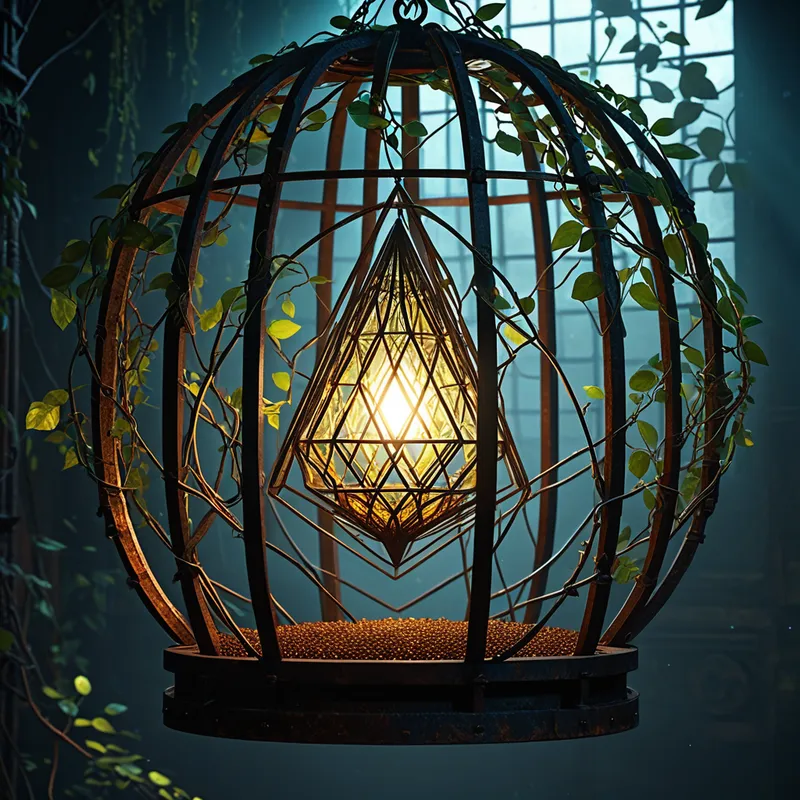
When this myth stirs in the modern dreamer, it often manifests as profound, unsettling alienation. One may dream of being trapped in a magnificent, gilded building that is revealed to be a cage, or of being forced to participate in a complex, meaningless ritual. The somatic feeling is one of suffocation, of weight, of being fundamentally incongruent with one’s surroundings.
Psychologically, this signals a critical moment where the psyche is rebelling against a life structure—a career, a relationship, a belief system, a self-image—that has been inherited or constructed, but which no longer aligns with the deeper, inarticulate truth of the Self. The dreamer is experiencing the first painful awakenings of the pneuma, the feeling that one has been living a life authored by an “other,” an internalized Demiurge of parental expectations, social norms, or traumatic adaptations.
Alchemical Translation
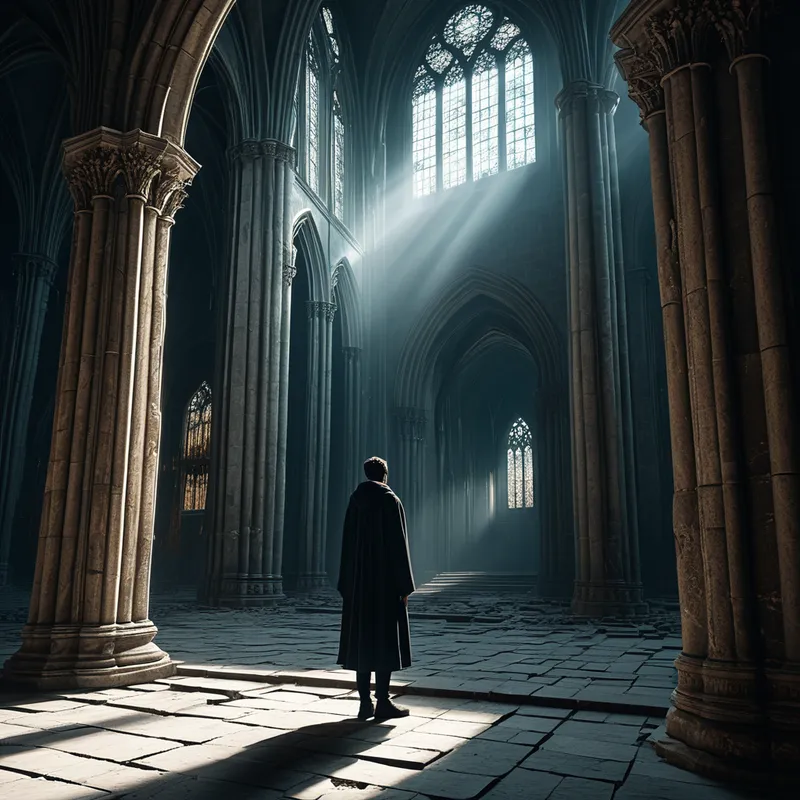
The alchemical process mirrored here is the separatio and sublimatio—the separation of the subtle from the gross, and its elevation. The modern individuation journey is not about destroying the world, but about performing a sacred discrimination within the self.
The work is not to flee the world, but to cease conferring divinity upon the structures that bind you, thereby transmuting your relationship to existence itself.
First, one must “name the Demiurge”—to consciously identify the internal and external forces of illegitimate authority, the false “shoulds” and “musts” that govern one’s life. This is the rebellious, heretical act. Next comes the asceticism, not of physical deprivation, but of psychic renunciation: withdrawing emotional investment, identity, and life-force from those binding structures. This creates the necessary void, the stark landscape of the Bogomil, where the authentic spark can finally be perceived, not as a thought, but as a living presence.
The final consolamentum is the conscious integration of this spark. It is the realization that one’s true essence is not the ego, nor its roles, nor its suffering, but the immutable witness behind it all. One then lives in the world, but no longer of it—engaging from a place of conscious choice rather than unconscious allegiance, a Perfectus in modern dress, carrying the light of a heresy that is, in truth, the deepest orthodoxy of the soul.
Associated Symbols
Explore related symbols from the CaleaDream lexicon:
- Rebel — The central archetype of the Bogomil, who defies the cosmic and earthly order not for chaos, but in service to a higher, hidden truth.
- Spirit — The divine pneuma trapped within matter, the ultimate object of the quest for liberation and return.
- Light — The pure, incorruptible essence of the true, hidden God and the enlightened state of the Perfecti, contrasted with the false light of the material world.
- Shadow — The oppressive, creative power of the Demiurge and the worldly system he embodies, which must be consciously recognized and rejected.
- Temple — The material cosmos and the institutional churches, seen as prisons built by the false god, from which the spirit must escape.
- Dragon — A symbol of the Demiurge as the monstrous, archonic power that guards and binds the divine sparks within creation.
- Key — The secret knowledge (gnosis) and the ritual of the consolamentum, which unlocks the soul’s prison and enables its return.
- Stone — The heavy, dead nature of material creation and the rigid, petrified laws of the false order that must be spiritually transcended.
- Mountain — The isolated, pure spaces where the Bogomil teachings were preserved and practiced, representing ascent away from the corrupted world.
- Seed — The divine spark (pneuma) itself, a tiny, potent fragment of true divinity buried within the soil of the human body.
- Fire — The purifying, ascetic discipline of the Perfecti, which burns away attachment to the material world to liberate the spirit.
- Journey — The soul’s long exile through the realm of the Demiurge and its arduous return to the Pleroma, the fullness of the true God.