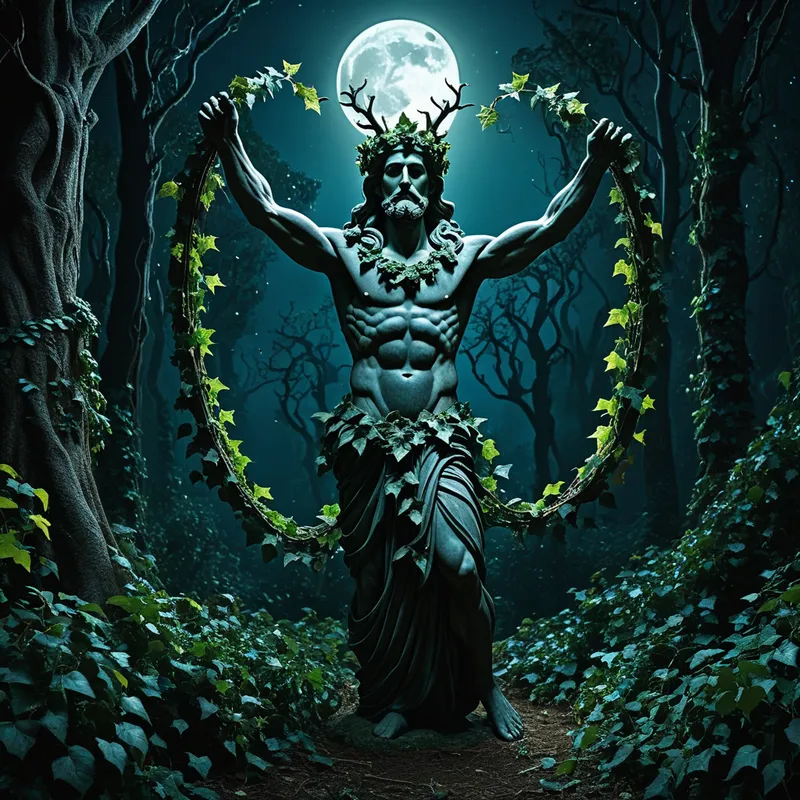
The Bacchae Myth Meaning & Symbolism
A king's rational tyranny is shattered by the ecstatic, divine madness of Dionysus, revealing the terrible cost of repressing the wild soul.
The Tale of The Bacchae
Hear now the tale of the god who came home, and the king who would not see.
Thebes slept, but its sleep was uneasy. A rumor moved through the streets like a warm, intoxicating wind—a new god was abroad. Not from the high, clear Olympus, but from the earth itself, from the pulse of the vine and the drumbeat of the heart. His name was Dionysus, son of Zeus and the mortal Semele. He had returned to the city of his mother, to claim his worship and to punish those who denied his divinity: his own aunts, and their son, the young King Pentheus.
Pentheus ruled with a spine of iron and a mind of cold stone. Order was his law; the wild, his enemy. When he heard of women—his mother Agave among them—abandoning their looms and their homes for the mountains, dancing in ecstatic frenzy for this so-called god, his fury was a cold fire. “Madness,” he declared. “A sickness to be purged with chains.”
Dionysus arrived not in thunder, but in gentle, deceptive guise—a beautiful, long-haired stranger, allowing himself to be captured. He stood bound before Pentheus, a smile playing on his lips as the king raged against the chaos infecting his city. The god spoke of joy, of release, of the divine freedom found beyond the city walls. Pentheus heard only defiance. He would be a spy, a voyeur upon these secret rites, to expose their depravity and restore his brittle order.
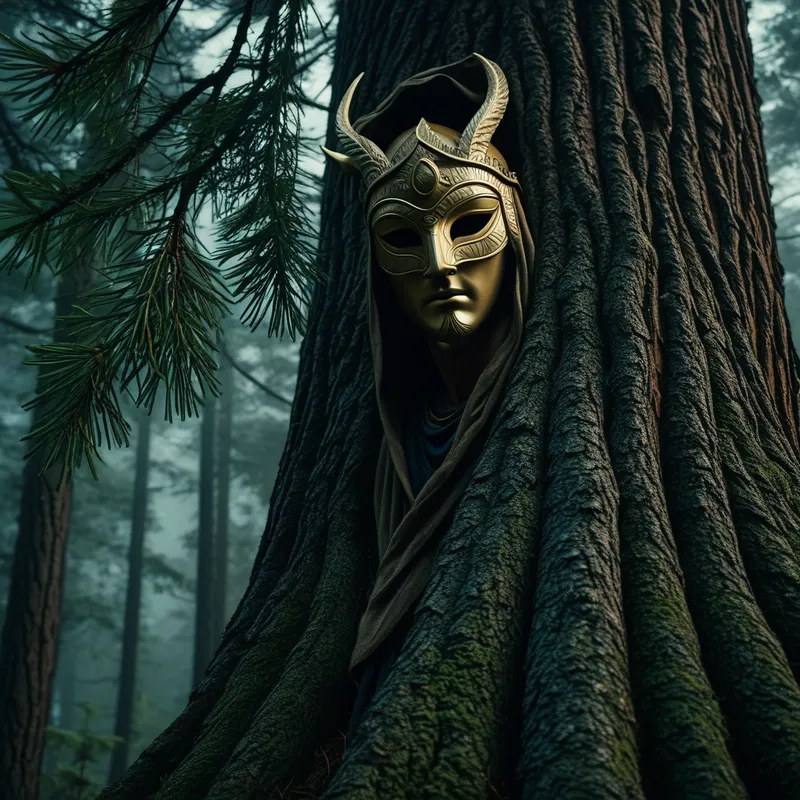
Under the god’s subtle, irresistible persuasion, the king was transformed. The rigid monarch was dressed in the fawn-skins and flowing locks of a maenad. Laughter, divine and cruel, echoed as Pentheus, now trembling with a confused excitement, was led to the sacred mountain of Cithaeron. Dionysus guided him to a tall pine tree, hoisting him into its branches to witness the mysteries.
But the maenads were not merely women at play. Filled with the mania of their god, their senses were supernaturally acute. A flash of movement in the tree. A spy! A beast sent to profane their holy dance! With a collective roar that was neither human nor animal, they descended. Led by Agave, possessed and mighty with divine strength, they tore the pine tree from the earth.
Pentheus cried out, begging his mother to recognize her son. But Agave saw only a mountain lion, a prey to be sacrificed to the god. The frenzy reached its horrific climax. There was no ceremony, only raw, tearing force. And Agave, triumphant, bloodied, carried the head of her prize back to Thebes, exulting in her hunt, until the god’s influence slowly ebbed, and the world of walls and names crashed back in. The ecstasy curdled into a grief beyond sound, as a mother held the severed head of her child, and the walls of Thebes echoed with a lament that was the god’s final, terrible hymn.
Cultural Origins & Context
This myth reaches us primarily through The Bacchae, a tragedy by the Athenian playwright Euripides, written near the end of his life in the late 5th century BCE. It was performed in the sacred, civic space of the Theatre of Dionysus—a profound meta-commentary, as audiences watched a play about the power of Dionysus performed in the god’s own honor during a city festival.
The myth and the play served as a deep cultural interrogation. Greek society was built on the polarity of polis and chora, reason (logos) and instinct (pathos). The cult of Dionysus, with its origins in older, ecstatic nature religions, represented a sanctioned, periodic rupture of this order. It was a pressure valve for the repressed elements of the psyche and society, particularly for women, whose lives were highly circumscribed. The myth of Pentheus functions as a dire warning: there is a nature that cannot be permanently walled out. To deny the god entirely is not to defeat him, but to ensure he arrives not as liberator, but as destroyer.
Symbolic Architecture
At its core, the myth is a stark map of a psychic civil war. Pentheus is not merely a political ruler; he is the tyrannical ego, the hyper-masculine, rational consciousness that seeks to order all of reality according to its own narrow logic. He represents the principle of repression, which mistakes control for strength and labels anything fluid, emotional, or instinctual as a threat to be eliminated.
The god one denies is the god who will dismantle one’s reality.
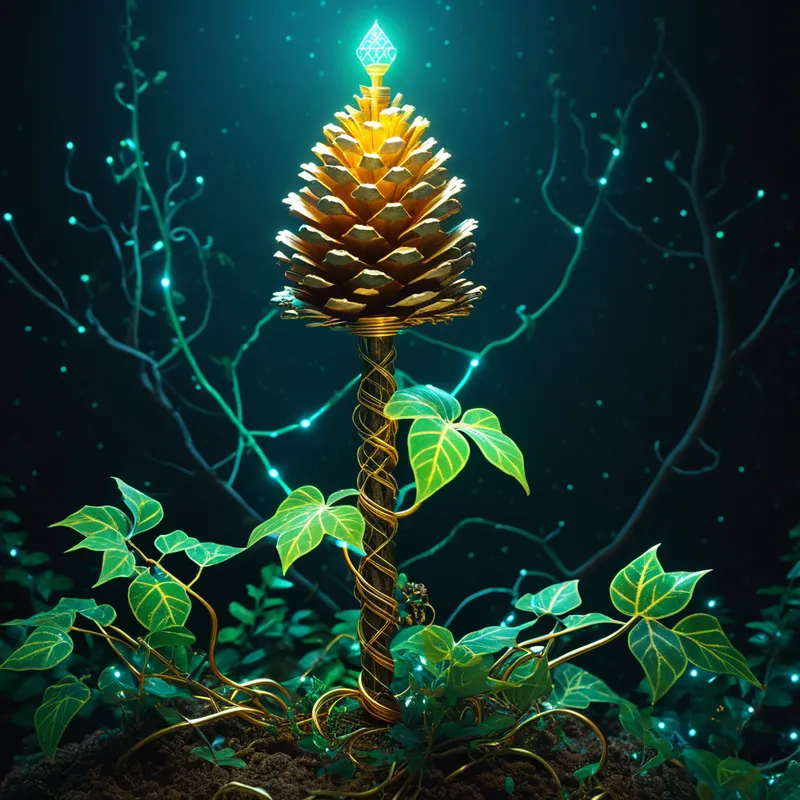
Dionysus is the archetypal force of the undifferentiated, all-encompassing life force—the libido in its rawest form. He is not “evil,” but amoral and absolute. He is ecstasy (ek-stasis, “standing outside oneself”), creativity, communal bonding, and the dissolution of boundaries, but also madness, violence, and the utter annihilation of the individual ego that refuses to yield. The thyrsus is his perfect symbol: a weapon that can drip with honey or unleash fury.
The mountain and the maenads represent the repressed unconscious itself, which, when pent up and denied conscious recognition, gathers force until it erupts with autonomous, archetypal power. Agave’s act is the ultimate symbol of the repressed content turning and devouring the very structure of the conscious personality that rejected it.
The Dreamer’s Resonance
When this myth stirs in the modern dreamer, it signals a critical juncture in the relationship between the conscious attitude and the instinctual self. Dreams of being rigidly controlled in a situation that is dissolving into chaos, of trying to maintain a professional facade while one’s environment sprouts wild vines, or of witnessing a calm, smiling figure who inspires both fascination and deep terror, all echo the Pentheus-Dionysus dynamic.
Somatically, this may manifest as chronic tension, a feeling of being “walled in,” or sudden, inexplicable bursts of emotion that feel alien and overwhelming. Psychologically, the dreamer is likely experiencing what Jung called an abaissement du niveau mental—a lowering of the mental threshold where the unconscious forces begin to flood in. The ego is being confronted with its own one-sidedness. The dream is not a prophecy of literal dismemberment, but a stark illustration of the psychic violence that occurs when the ego refuses to acknowledge a power greater than its own rationale.

Alchemical Translation
The alchemical process mirrored here is the nigredo, the necessary blackening and dissolution. For individuation to proceed, the old, tyrannical ego-structure—the Pentheus complex of absolute control—must be broken down. This is not a gentle process. The conscious mind experiences it as a crisis, a madness, a loss of all it held as solid and true.
The pine tree of Pentheus is the crucified ego, a necessary sacrifice for any true transformation.
The alchemical goal is not to let the unconscious run rampant, but to achieve a coniunctio oppositorum—a sacred marriage. This requires the death of the old king. The modern individual’s task is to learn what Pentheus could not: to consciously admit the Dionysian. This means creating sacred space—through art, ritual, dance, or depth work—for the ecstatic, the irrational, the emotional, and the bodily, not as a chaotic enemy, but as a vital, divine aspect of the whole self. One must not spy on the mystery from a detached, voyeuristic distance, but risk being immersed in it. The thyrsus must be taken up consciously, transforming the raw, devouring libido into a creative, life-affirming force. Only then can Agave’s devastating grief become the fertile ground from which a more integrated consciousness, one that respects both the city and the wild mountain, can slowly, painfully, grow.
Associated Symbols
Explore related symbols from the CaleaDream lexicon: