The Avenue of the Dead Myth Meaning & Symbolism
A myth of creation where the gods sacrifice themselves to birth the Fifth Sun, establishing the sacred path of the dead and the order of the cosmos.
The Tale of The Avenue of the Dead
Listen. Before [the world](/myths/the-world “Myth from Tarot culture.”/) you know, there was only the great, yawning void of the cosmos, and the gods were restless. Four suns had been born and had died, each era ending in cataclysm—jaguars, hurricanes, fire, and flood. The gods gathered in the sacred darkness of Teotihuacan, the place where time itself is made. A question hung in the air, heavier than stone: Who would bear the burden of [the Fifth Sun](/myths/the-fifth-sun “Myth from Aztec culture.”/)? Who would throw themselves into the sacred, consuming fire to set a new age in motion?
Two stood forward. Tecuciztecatl, adorned in glittering jewels and quetzal feathers, proud as a mountain. And Nanahuatzin, who was poor, covered in sores, his body a testament to humility. A great pyre was built, a mountain of logs that reached for the starless sky. For four days, the gods fasted and made offerings. Tecuciztecatl offered rich treasures—coral, gold, and precious feathers. Nanahuatzin offered his own scabs, the green reeds he slept on, and the blood from his penitent wounds.
The moment arrived. The fire roared, a beast of light and heat. Tecuciztecatl approached, his pride turning to ash before the flames. He recoiled, four times he tried, four times he failed, fear freezing his gilded heart. Then Nanahuatzin, without hesitation, closed his eyes, gathered his courage, and ran. He leapt into the very heart of the blaze. His body crackled, his spirit ignited, and he was consumed utterly. Shamed by this act of ultimate courage, Tecuciztecatl finally followed, throwing himself into the fire behind him.
The gods waited in the black silence. Then, from the east, a glow. Nanahuatzin rose, transformed, blazing as the Fifth Sun—[Tonatiuh](/myths/tonatiuh “Myth from Aztec culture.”/)—his light harsh and true. But the sun hung motionless in [the sky](/myths/the-sky “Myth from Persian culture.”/). It would not move. The eagle would not fly. The gods understood. The sun demanded payment, sustenance. It demanded life.
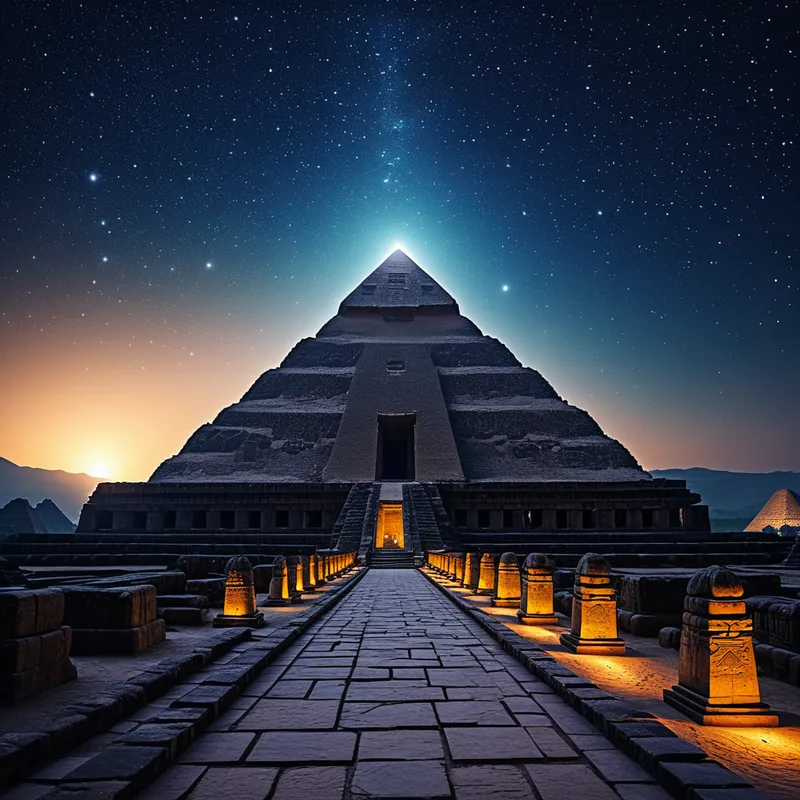
And so began the final, terrible sacrifice. One by one, the gods themselves offered their own hearts. [Quetzalcoatl](/myths/quetzalcoatl “Myth from Aztec culture.”/) took a blade of obsidian, sharper than regret, and cut out the still-beating hearts of the divine assembly. Their life-force, their teotl, was given to the sun. With this sacred fuel, Tonatiuh began his first journey across the sky, and time began its measured tread. The gods did not vanish. Their bodies fell where they stood, and where they fell, great mountains rose—the Pyramid of the Sun, the Pyramid of [the Moon](/myths/the-moon “Myth from Tarot culture.”/). The path between them, lined with the platforms and temples that were their fallen forms, became the sacred road. This was the Avenue of the Dead, the path walked by the gods in their moment of creation, now the eternal road for all human souls to follow into the darkness and, perhaps, beyond.
Cultural Origins & Context
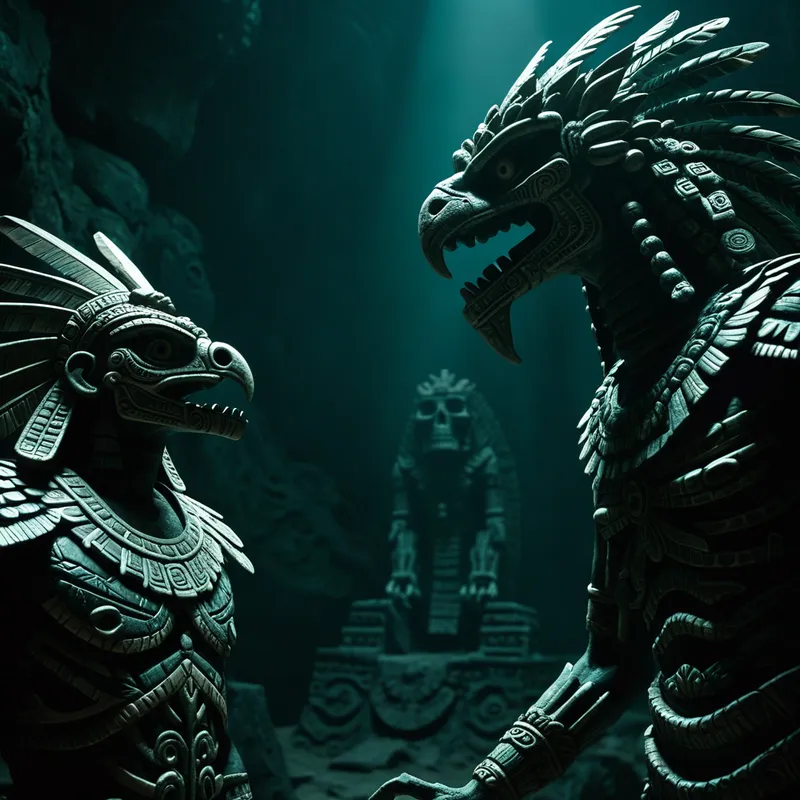
This foundational narrative is central to the Nahua worldview, most famously recorded in the 16th-century Florentine Codex, compiled by Bernardino de Sahagún. While the physical Avenue of the Dead is the grand thoroughfare of the ancient city of Teotihuacan (circa 100-600 CE), whose builders remain enigmatic, the myth was adopted and elaborated by the later Aztec (Mexica) civilization. For them, Teotihuacan was not just a ruined city; it was Tollan, the mythic place of origin where the current cosmic order was established.
The myth was not mere story but sacred history, recited by priests and elders. Its societal function was profound: it explained the fundamental fragility and cyclical nature of existence, justified the necessity of ritual human sacrifice (seen as a microcosmic replay of the gods’ own sacrifice to keep the sun moving), and mapped the cosmology of life, death, and potential rebirth. It answered the most pressing questions: Why must we die? Why does the sun rise? The answer was written in the very landscape, in the stones of the avenue and [the pyramids](/myths/the-pyramids “Myth from Egyptian culture.”/) that every citizen could see, a constant reminder of the divine price paid for the world.
Symbolic Architecture
At its core, the myth encodes a brutal yet elegant cosmic equation: order is born from sacrifice, and [life](/symbols/life “Symbol: The symbol of ‘Life’ represents a journey of growth, interconnectedness, and existential meaning, encompassing both the joys and challenges that define human experience.”/) is sustained by [death](/symbols/death “Symbol: Symbolizes transformation, endings, and new beginnings; often associated with fear of the unknown.”/). The Avenue is not a [metaphor](/symbols/metaphor “Symbol: A figure of speech where one thing represents another, often revealing hidden connections and deeper truths through symbolic comparison.”/) for [death](/symbols/death “Symbol: Symbolizes transformation, endings, and new beginnings; often associated with fear of the unknown.”/) as an end, but as a process—a necessary [passage](/symbols/passage “Symbol: A passage symbolizes transition, movement from one phase of life to another, or a journey towards personal growth.”/).
The path to illumination is paved with the surrendered self. The ego must be immolated for consciousness to dawn.
The two volunteer gods represent a fundamental psychic duality. Tecuciztecatl is the inflated ego, all [appearance](/symbols/appearance “Symbol: Appearance in dreams relates to self-image, perception, and how you present yourself to the world.”/) and pride, which ultimately fails to act. Nanahuatzin is the humble, wounded, yet authentic self—the part of us that is flawed, suffering, and therefore capable of true transformation. His leap is the ultimate act of submission to a process greater than oneself. His pustules are not signs of weakness but of potent, contained [energy](/symbols/energy “Symbol: Energy symbolizes vitality, motivation, and the drive that fuels actions and ambitions.”/) awaiting release through fire.
The sun’s refusal to move symbolizes a critical [truth](/symbols/truth “Symbol: Truth represents authenticity, honesty, and the quest for knowledge beyond mere appearances.”/): energy ([consciousness](/symbols/consciousness “Symbol: Consciousness represents the state of awareness and perception, encompassing thoughts, feelings, and experiences.”/), life) without a sustaining [structure](/symbols/structure “Symbol: Structure in dreams often symbolizes stability, organization, and the framework of one’s life, reflecting how one perceives their environment and personal life.”/) ([ritual](/symbols/ritual “Symbol: Rituals signify structured, meaningful actions carried out regularly, reflecting cultural beliefs and emotional needs.”/), order, sacrifice) is [static](/symbols/static “Symbol: Static represents interference, disruption, and the breakdown of clear communication or signal, often evoking feelings of frustration and disconnection.”/) and useless. The subsequent sacrifice of the gods translates this into a psychological principle: to animate a new level of being, old structures, identifications, and energies must be consciously offered up. The Avenue itself becomes the [symbol](/symbols/symbol “Symbol: A symbol can represent an idea, concept, or belief, serving as a powerful tool for communication and understanding.”/) of this structured [journey](/symbols/journey “Symbol: A journey in dreams typically signifies adventure, growth, or a significant life transition.”/)—the disciplined [path](/symbols/path “Symbol: The ‘path’ symbolizes a journey, choices, and the direction one’s life is taking, often representing individual growth and exploration.”/) (Neltiliztli) one must walk, guided by the fallen “gods” or archetypal principles, toward an [integration](/symbols/integration “Symbol: The process of unifying disparate parts of the self or experience into a cohesive whole, often representing psychological wholeness or resolution of internal conflict.”/) with the cosmic order.
The Dreamer’s Resonance
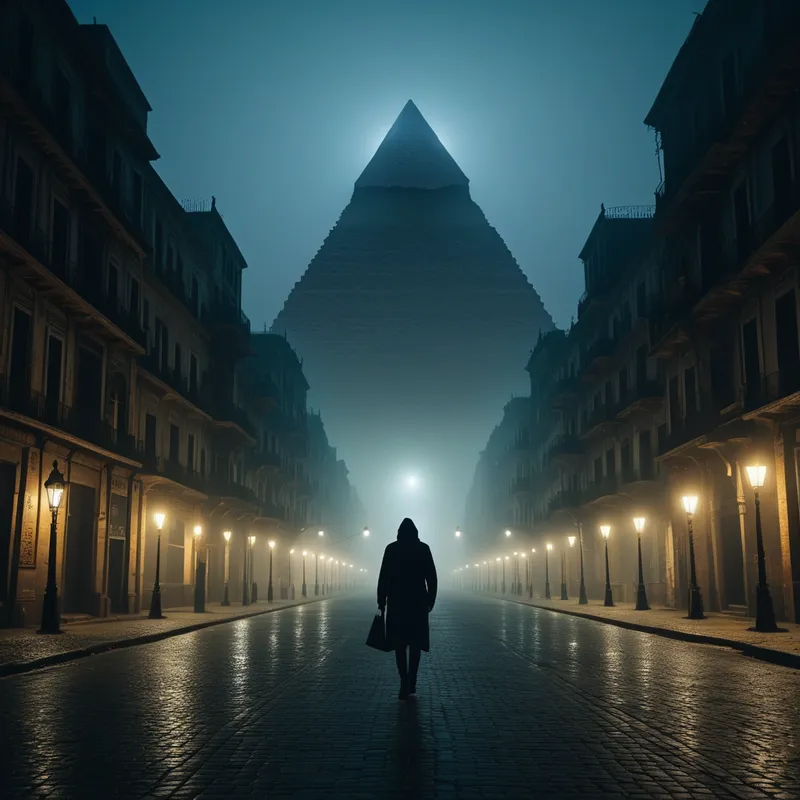
When this myth stirs in the modern unconscious, it often manifests in dreams of long, imposing roads or corridors. One may dream of walking a never-ending highway at dusk, of a hallway in a familiar building that suddenly stretches into impossible, monumental length, or of a path lined with silent, watching figures or tombstones.
Somatically, this can correlate with feelings of profound obligation, of carrying a weight for which one did not volunteer. Psychologically, it signals a confrontation with the “cosmic debt”—the feeling that to achieve a new state (a career, a relationship, a stage of maturity), something of one’s current self must be irrevocably given up. It is the dream of [the threshold](/myths/the-threshold “Myth from Folklore culture.”/). The anxiety is not of death, but of the required sacrifice. Are you Tecuciztecatl, frozen before the fire of change? Or can you access the Nanahuatzin within, who understands that transformation demands the offering of your most cherished self-image into the flames?
Alchemical Translation
The individuation process modeled here is one of solarization. The goal is not to avoid the sacrificial fire but to become the one who consciously chooses it, to transmute the base lead of a suffering, isolated ego into the gold of a purposeful, connected Self.
The first alchemical stage is mortificatio—the death of the old. This is Nanahuatzin’s leap. In our lives, this is the voluntary end of an outgrown identity: leaving a secure job to pursue a calling, ending a relationship that no longer serves growth, surrendering a long-held grievance. It feels like annihilation.
The sun does not negotiate. It demands total commitment. So too does the call to wholeness.
The second stage is sustentatio—the sustenance. This is the ongoing sacrifice of the gods. After the initial leap, we must continually “feed the sun.” This is the daily discipline, the small sacrifices of comfort, time, and lazy thinking that keep the new consciousness in motion. It is the practice that follows the epiphany.
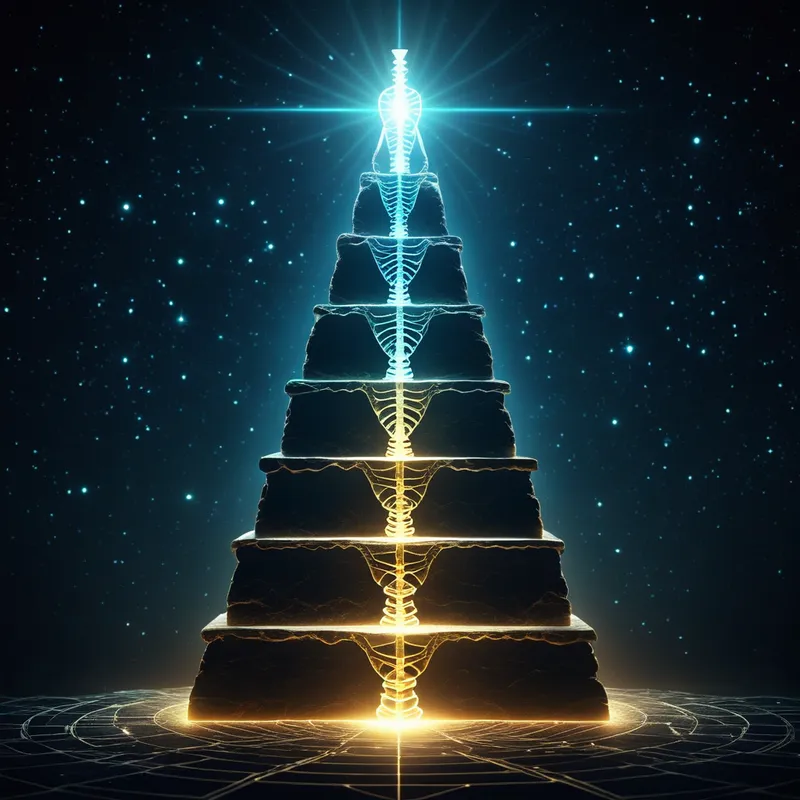
Finally, the Avenue itself represents the opus—[the great work](/myths/the-great-work “Myth from Alchemical culture.”/). It is the structured path of integration that appears after the central sacrifice. The fallen gods become internal guides—the Pyramid of the Moon (the unconscious, the feminine, intuition) and the Pyramid of the Sun (the conscious, the masculine, action)—and the path between them is the individuated life, walked with the awareness that every step is on sacred ground made by your own surrendered parts. You walk the Avenue not as a corpse, but as a living soul navigating the beautiful, terrible order of a self-created cosmos.
Associated Symbols
Explore related symbols from the CaleaDream lexicon: