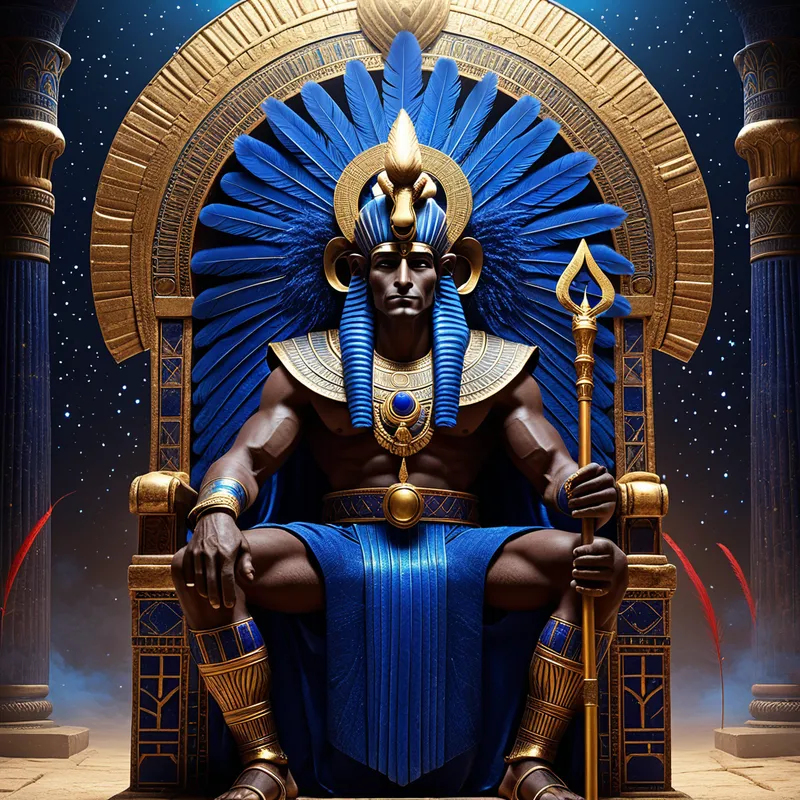
The Atef Crown of Osiris Myth Meaning & Symbolism
The story of the murdered god Osiris, his resurrection, and the crown that symbolizes his hard-won sovereignty over the realms of death and life.
The Tale of The Atef Crown of Osiris
Hear now a tale from the time when gods walked the black soil of Kemet. It begins not in the blaze of Ra’s sun-boat, but in the cool, deep shadows of envy.
In the hall of Geb and Nut, the lord Osiris ruled. His skin was the green of sprouting barley, his voice the murmur of the Nile’s inundation. He brought order, Ma’at, to the land, teaching humanity the arts of civilization. But his brother, Set, whose heart was a tempest of red sand, watched from the arid wastes. In Set’s eyes, Osiris’s benevolence was a weakness, his kingship a prize to be shattered.
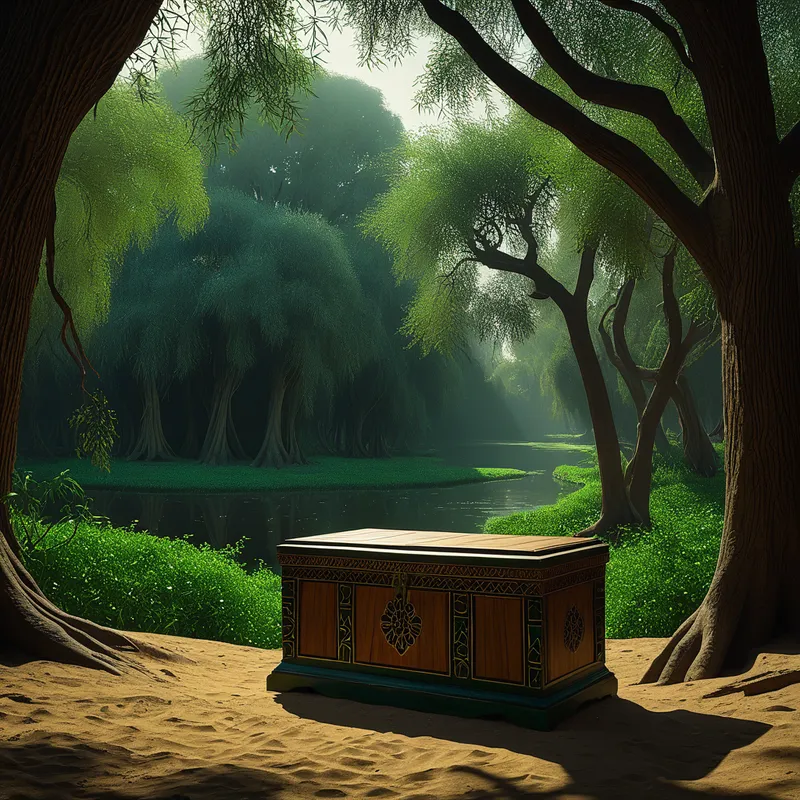
The conflict coiled like a serpent. At a great feast, Set presented a chest of fragrant cedar, inlaid with ebony and ivory. “It shall belong,” he declared, a smile like a crack in dry earth, “to whom it fits perfectly.” One by one, the guests tried and failed. When Osiris, trusting, lay within the ornate box, Set’s conspirators sprang. The lid slammed shut. They sealed it with molten lead, a tomb for a living god, and cast it into the Nile’s rushing, indifferent embrace.
The chest sailed to the distant shores of Byblos, lodging within a tamarisk tree that grew around it, encasing the divine body. The tree was cut, made a pillar in a king’s hall. There, the essence of Osiris slept, a secret in scented wood.
But his sister-wife, Isis, her wings the beat of a desperate heart, searched. She found the pillar, retrieved the chest, and brought her lord’s body to a hidden marsh. There, with her potent magic, she conceived their son, Horus. Yet Set, hunting by moonlight, found them. In a rage that split the night, he dismembered Osiris, scattering fourteen pieces across the length of the Two Lands.
Isis’s grief became a new kind of search. With her sister Nephthys, she traversed delta and desert, gathering each sacred fragment. Where a piece was found, a temple rose. But one piece was lost, consumed by the Nile’s oxyrhynchus fish. So, with spells woven from love and sorrow, Isis and Anubis fashioned the first mummy, reconstituting the god, binding him with linen spells.
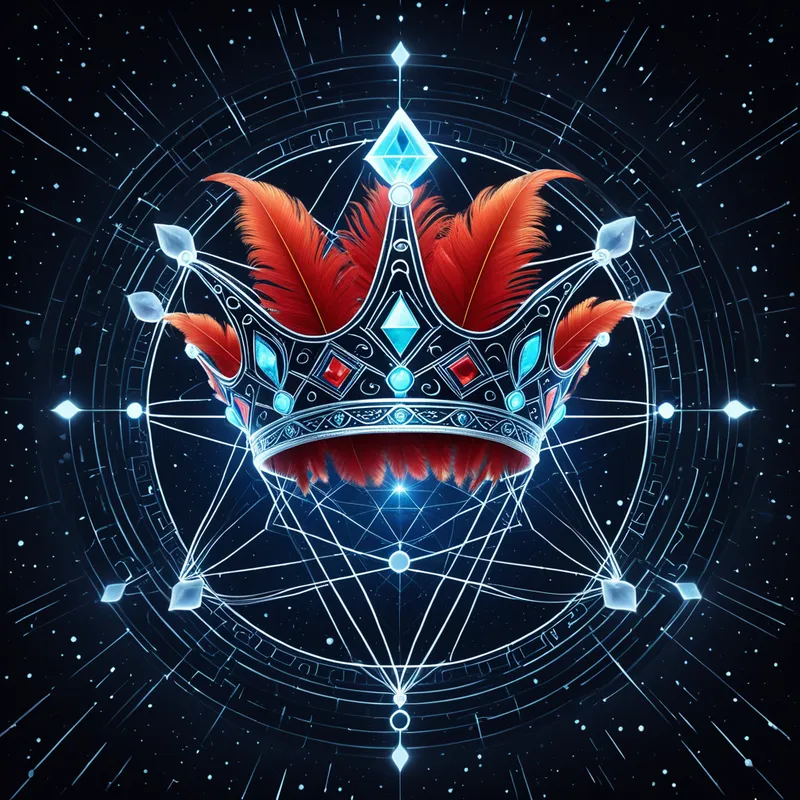
Yet this was not an end, but a profound transformation. Osiris did not return to his sunny throne. He descended to rule the Duat, the mysterious land of the night sun. And for this new, eternal kingship, the divine craftsman Thoth fashioned a crown. It was not the simple white crown of Upper Egypt, but the Atef crown: the white crown at its core, now flanked by two majestic red ostrich plumes and the curling horns of the ram-god Khnum. Upon his brow, it sat not as ornament, but as testament. He was the Green One who had known the blackness of the chest and the scattering; the Judge who had integrated dissolution into a higher order. He became the Lord of the Perfect Black, the sovereign of the deep self, crowned in the stillness after the storm.
Cultural Origins & Context
This myth was not a single, canonical text but a living narrative woven from the fabric of Egyptian religious thought for over three millennia. Its most complete surviving versions are found in the writings of the Greek historian Plutarch, in his work De Iside et Osiride, though the core elements are depicted far earlier in Pyramid Texts, Coffin Texts, and the Book of the Dead. It was the foundational national myth, recited in temple rituals and enacted in annual festivals like the Khoiak mysteries, where effigies of Osiris were sown with grain—“the gardens of Osiris”—to sprout, symbolizing his resurrection.
The myth functioned on multiple societal levels. For the pharaoh, it legitimized kingship through the lineage of Horus, the avenging son. For every individual, it provided the archetypal map for the soul’s journey after death, with Osiris as the promise that fragmentation and decay were not the final word. The myth was the ultimate reassurance: order (Ma’at) could and would be re-established from chaos (Isfet), but only through a harrowing process of loss, search, and sacred reassembly.
Symbolic Architecture
The myth’s power lies in its profound symbolism of psychic integration. Osiris represents the conscious ego or ruling principle that is inevitably betrayed and dismembered by the chaotic, envious forces of the unconscious (Set). The chest is the coffin of a outgrown identity, the necessary containment that precedes transformation.
The Atef crown is not a reward for victory, but the emblem of a sovereignty forged in the underworld. It is the psyche’s hard-won authority over its own depths.
The dismemberment is not merely destruction, but a radical decentralization of the self. Isis represents the animating, connective power of love and memory that seeks wholeness. The final, missing phallus, consumed by the Nile creature, signifies an irreversible loss—a part of the old self that cannot be reclaimed, necessitating a new, magical synthesis (the mummy). Osiris’s resurrection is not a return to his old life, but an ascent to a different plane of existence: he becomes lord of the Duat, the inner world. The Atef crown symbolizes this integrated state. The white crown (clarity, upper consciousness) is now balanced by the red feathers (the passion and chaos of lower nature) and the ram’s horns (the creative, generative power of the deep unconscious). He rules by having included his own death.
The Dreamer’s Resonance
When this myth stirs in modern dreams, it often signals a profound process of psychic dismemberment and reconstitution. The dreamer may experience scenes of being trapped, boxed in, or physically pulled apart. There may be dreams of searching through labyrinthine landscapes for lost objects or body parts, accompanied by a deep, somatic sense of urgency and grief.
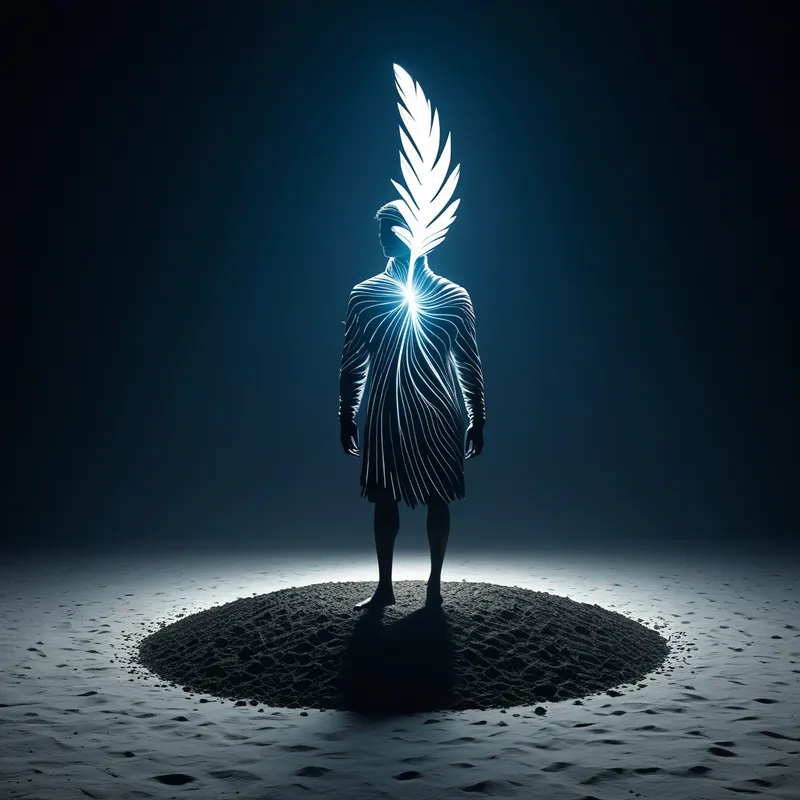
Psychologically, this is the ego’s experience of a necessary deconstruction. A long-held identity, career, relationship, or belief system (the “Osiris-kingdom”) has been betrayed or shattered by unconscious forces (Setian envy, rage, or circumstance). The dreamer is in the “marsh phase,” feeling fragmented, lost, and mourned over by some inner, nurturing instinct (Isis). The process is somatic—a feeling of being scattered, of literal pieces of one’s life or history feeling disconnected. The dreamwork is the slow, painful gathering. The eventual appearance of a crown, a throne in a dark place, or a sense of solemn, quiet authority in a dream marks the beginning of integration—the crafting of the inner Atef crown.
Alchemical Translation
The alchemical journey mirrored in this myth is the nigredo leading to the albedo. The murder in the chest is the nigredo, the descent into the black, putrefying matter of the soul. The dismemberment is the separatio, the analysis of the complex into its constituent parts. Isis’s search is the ablutio, the loving attention that cleanses each trauma, each memory, each complex.
Individuation is not about becoming whole by adding missing parts, but by consciously recognizing and ruling over the fragments of one’s own experience, both light and dark.
The embalming by Anubis is the albedo, the whitening, where the scattered self is preserved and sanctified into a new, eternal form—the integrated personality. The final stage is not a return to the worldly throne, but the assumption of the crown in the Duat. For the modern individual, this translates to achieving a form of inner sovereignty. One no longer identifies solely with the social persona (the king of the living) but develops a conscious relationship with the unconscious, becoming the wise ruler of one’s own interior world. The Atef crown is worn when we can hold our contradictions—our creative vitality and our destructive impulses, our clarity and our passions—without being dismembered by them. We become, like Osiris, the judge and king of our own soul, presiding over the rich, dark fertility of the self that has known death and sprouted anew.
Associated Symbols
Explore related symbols from the CaleaDream lexicon: