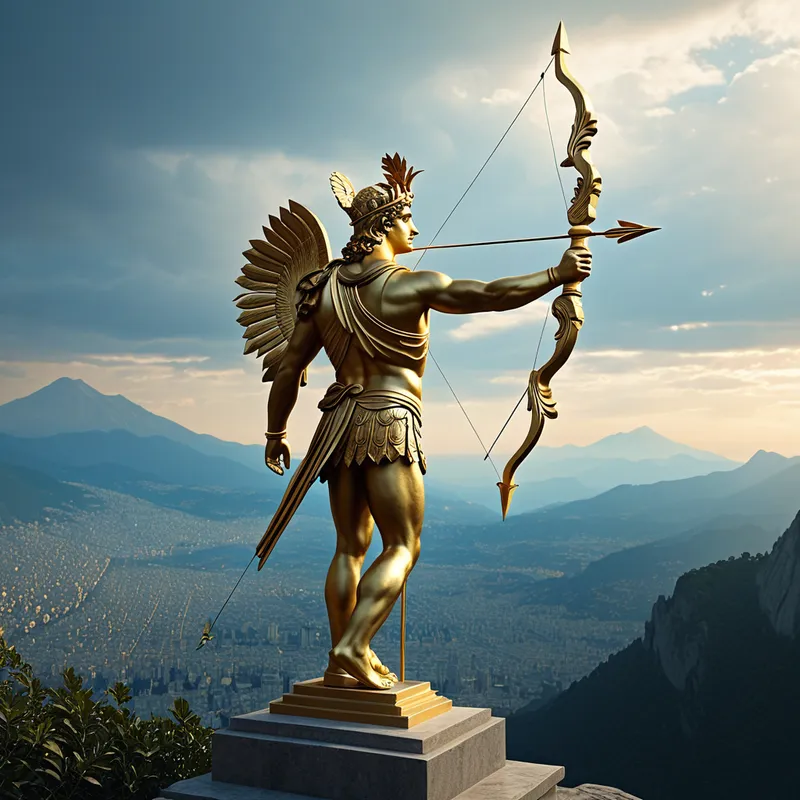
The Arrow of Apollo Myth Meaning & Symbolism
A tale of a god's wrath, a hero's desperate prayer, and the sacred arrow that brings both plague and purification to a city.
The Tale of The Arrow of Apollo
Hear now the tale that begins not with a hero’s shout, but with a god’s silent fury. The air on Mount Olympus was cold and clear, a clarity that could cut like a blade. Apollo, the Far-Shooter, stood at the precipice of the world. His gaze, usually a beacon of reason and order, was a storm. In his hand, the bow of silver and gold hummed with a terrible potential. His sister, Artemis, had been wronged. Her priestess had been defiled within the sacred grove, and the city of Thebes, ruled by the arrogant King Cadmus, had offered no recompense, no cleansing smoke of atonement.
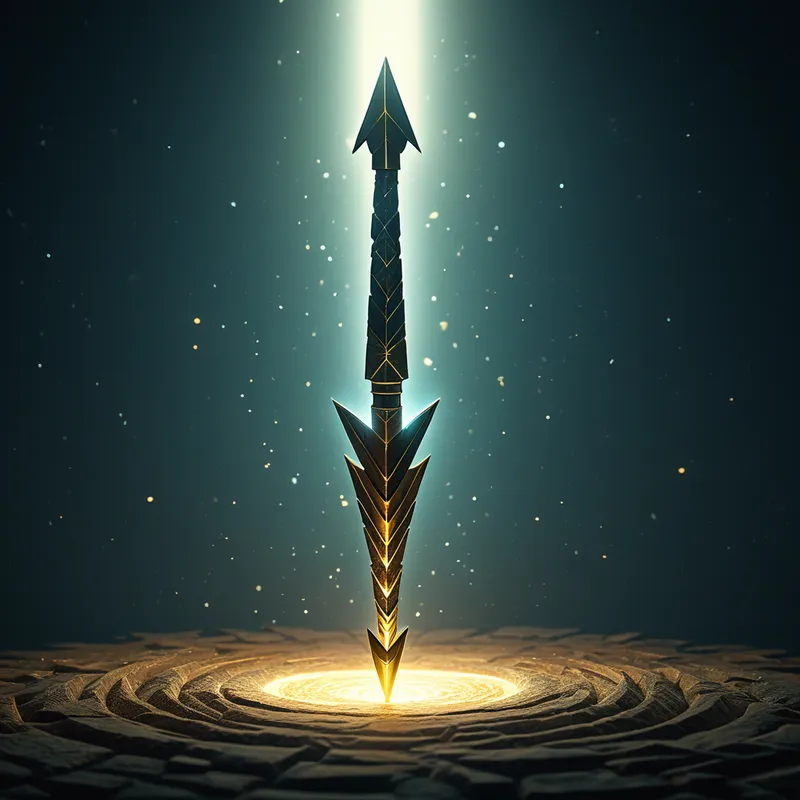
Apollo did not roar. He simply reached into his quiver, a vessel that held not just arrows, but fates. His fingers closed around a shaft unlike the others. This one was dark, its point forged not for a clean kill, but for a creeping doom. It was the Arrow of Plague.
He drew the bowstring. The sound was the parting of the world’s breath. He let fly.
The arrow did not whistle; it sighed. It crossed the vast distance between divine will and mortal clay not as a line of light, but as a spreading stain. It fell upon Thebes not with an impact, but an infiltration. First, the dogs in the streets grew silent, then stiff. Then the cattle in the fields lowed once and fell. Then the plague found the people. It was a fire in the lungs, a rot in the veins, a fog in the mind. The city became a chorus of coughs and wails. The temples filled with the dying. The sun, Apollo’s own symbol, beat down on the misery, a cruel spectator.
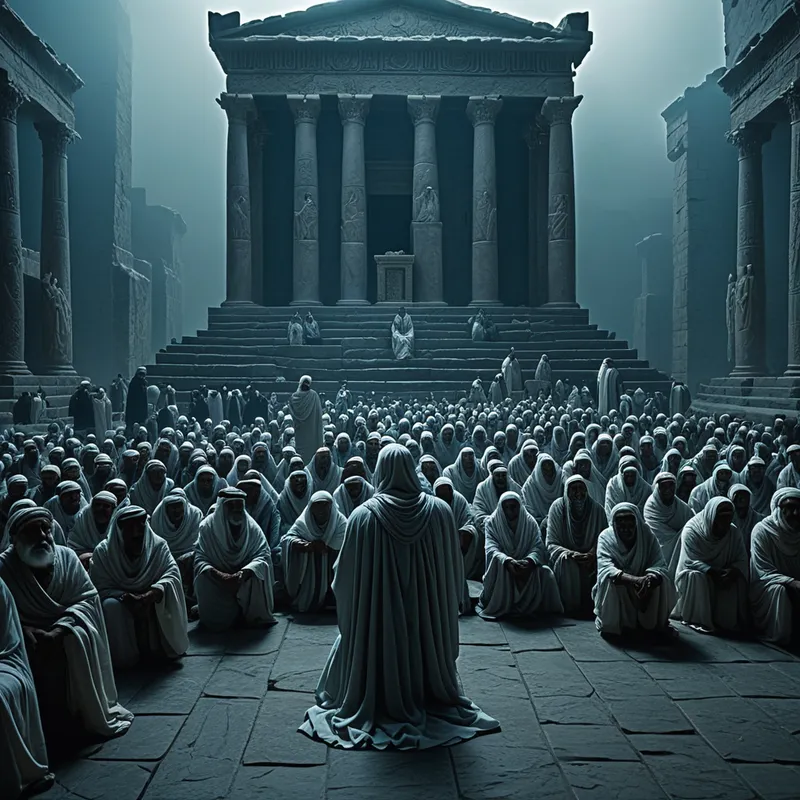
King Cadmus was powerless. The seers were mute. The air itself was poison. In final, desperate humility, the elders of Thebes gathered what strength remained. They clothed themselves in sackcloth, sprinkled ashes upon their heads, and processed to the altar of Apollo the Healer, the very god who had smitten them. They offered no proud sacrifices of fattened bulls, only their own broken spirits. Their prayer was not a petition, but a surrender.
And from the silence of their utter defeat, an answer came. Not a voice, but a knowing. The plague had a source: the unavenged insult to the sacred. The miasma had a cure: the establishment of a new sacred law. The arrow that brought the sickness also pointed the way. Cadmus, guided by this terrible clarity, instituted rites of purification. He honored Artemis. He restored the boundaries between the profane and the holy.
As the first rites were completed, a wind rose from the sea—clean, sharp, and smelling of salt and pine. It swept through the streets of Thebes. The fever broke. The coughing stilled. Where the dark arrow had fallen, a strange, medicinal herb was said to sprout. The Arrow of Apollo had completed its arc: from the god’s hand, through the shadow of death, to the revelation of a painful, necessary order.
Cultural Origins & Context
This narrative is woven into the opening of Sophocles’ monumental tragedy, Oedipus Rex. It is the foundational calamity that sets the stage for Oedipus’s own doomed investigation. As such, it was not a standalone fireside tale, but the ominous prelude to a complex civic and religious drama performed during the City Dionysia. The audience, citizens of Athens, would have understood this plague as more than a plot device. It was a divine mechanism, a manifestation of miasma—ritual pollution caused by a transgression against the gods or natural law.
The myth functioned as a societal anchor. In a world without germ theory, inexplicable suffering was framed as a rupture in the relationship between the community and the cosmic order. The story taught that collective suffering demanded collective introspection, not just medical intervention. It reinforced the authority of oracles and the necessity of maintaining eusebeia (piety, proper ritual observance). The teller was, ultimately, the polis itself, through its playwrights and priests, instructing its people on the fragile, contractual nature of their safety: it depended on upholding sacred laws.
Symbolic Architecture
The Arrow of Apollo is the ultimate symbol of paradoxical unity. It embodies the terrifying duality of the cosmic principle: the god of healing and light is also the god of plague and sudden death. The arrow is the connecting vector between these opposites.
The wound and the cure are delivered by the same hand; the poison and the antidote grow from the same root.
Psychologically, the arrow represents a catalyzing moment of profound disruption from a source of perceived order or authority (the Apollo principle). It is the devastating insight, the diagnosis we fear, the repressed truth that finally erupts into our tidy lives with feverish intensity. The city of Thebes symbolizes the complex, interconnected psyche of an individual or community. The plague is the symptom of a neglected, festering shadow—the unaddressed wrong, the dishonored aspect of the self (represented by the violated Artemis, goddess of the wild and instinctual). The plague continues until the conscious mind (Cadmus and the elders) stops trying to merely manage the symptoms and instead submits to the painful process of finding the source.
The Dreamer’s Resonance
When this mythic pattern stirs in the modern dreamscape, it often manifests not as a literal arrow, but as an invasive, systemic disturbance. One might dream of a beloved home filling with a noxious, invisible gas; of a computer virus corrupting every file on a desktop; of a single, ominous crack appearing in the foundation of a house, from which a black vine begins to spread.
Somatically, the dreamer may be processing a reality where their body or life has become the “city of Thebes”—a system under a mysterious siege. The psychological process is one of inescapable confrontation. The dream signals that a state of denial or surface-level coping has reached its limit. The “plague” is the unconscious forcing its contents into awareness through debilitating means—anxiety, illness, a cascade of “bad luck,” or deep existential unease. The dream is the first stage of the arrow’s flight: the impact of the truth. The feeling upon waking is often one of dread, coupled with a gnawing sense that the cause is internal, yet obscured.

Alchemical Translation
The alchemical journey modeled here is the nigredo, the blackening, essential for any true individuation. Apollo’s arrow initiates this nigredo. It is the divine, archetypal force that descends to shatter a stagnant, albeit functional, conscious attitude. The ego’s kingdom (Thebes) is built upon a hidden fault—a repressed trauma, a unlived life, a spiritual hypocrisy.
The transformation occurs not in the shooting of the arrow, but in the city’s response. The proud king must become the supplicant. The conscious mind must kneel before the very power that afflicts it. This is the alchemical humiliatio. The prayer at the altar is the beginning of a dialogue with the Self (the god). The revelation of the cause—the insult to Artemis—is the illuminatio, the moment the blackness reveals its secret.
The arrow’s path traces the journey from poisoned certainty to healed complexity. One must be shattered by the light to become whole.
The new rites established are the opus, the new, more authentic structure of the personality that honors both the light of consciousness (Apollo) and the wild, instinctual truth of the soul (Artemis). The healing wind is the integrated breath of a psyche that has passed through its own sacred fever and emerged, not unscathed, but wiser. The individual learns that their wholeness depends on acknowledging and honoring the very forces that, when ignored, have the power to destroy them. The Arrow of Apollo, therefore, is not a punishment, but a fiercely loving, if severe, summons to become complete.
Associated Symbols
Explore related symbols from the CaleaDream lexicon: