The Ancestral Chest Myth Meaning & Symbolism
A hero inherits a locked chest containing the world's sorrows and joys, forbidden to open. Their choice defines their soul and the fate of their people.
The Tale of The Ancestral Chest
Listen. The fire is low, and the night is deep. This is not a story for the bright sun. This is a tale for the time when the wind speaks through the cracks in the wall, and the shadows hold their breath.
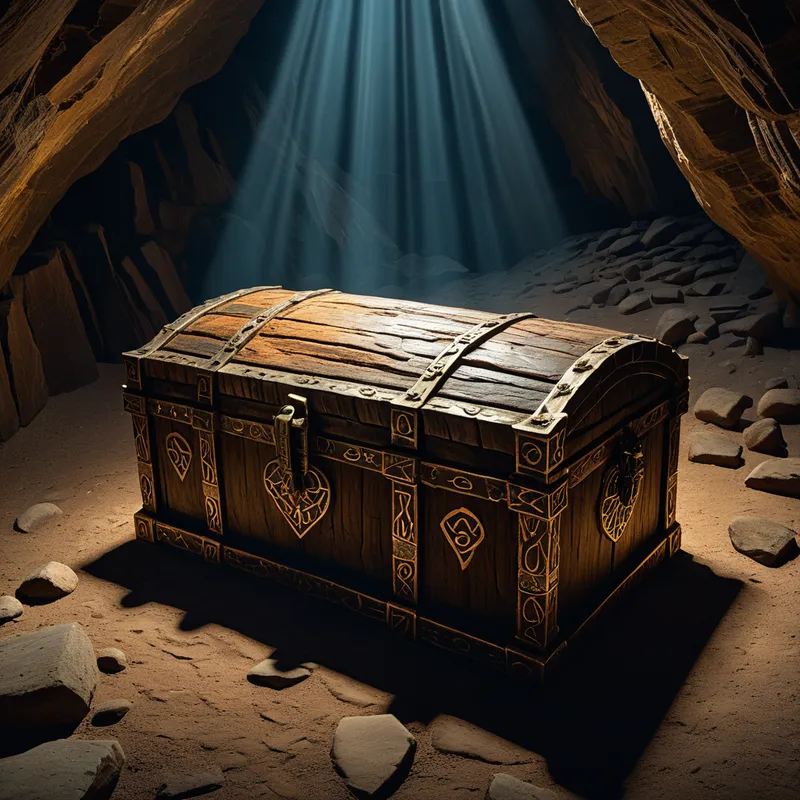
In the time before memory, when the world was still whispering its first secrets, the people of the valley lived in the long shadow of the mountain. They were a people of the soil and the stream, their lives a cycle of seed and harvest, birth and ash. And in the heart of their greatest longhouse, behind the seat of the eldest, stood The Ancestral Chest. It was not large, but it was heavy—a thing of dark, oiled wood and tarnished iron bands, with a lock that had no key anyone had ever seen. It was passed down, from elder to chosen successor, with only one law, spoken in a voice that brooked no question: “You are its guardian. You must never seek to open it.”
For generations, this was the way. The Chest was a presence, a weight in the corner of the communal eye. Some said it held the first ember of the world’s fire. Others whispered it contained the bottled screams of all the wrongs ever done. Most did not speak of it at all. It simply was—the unasked question at the center of their lives.
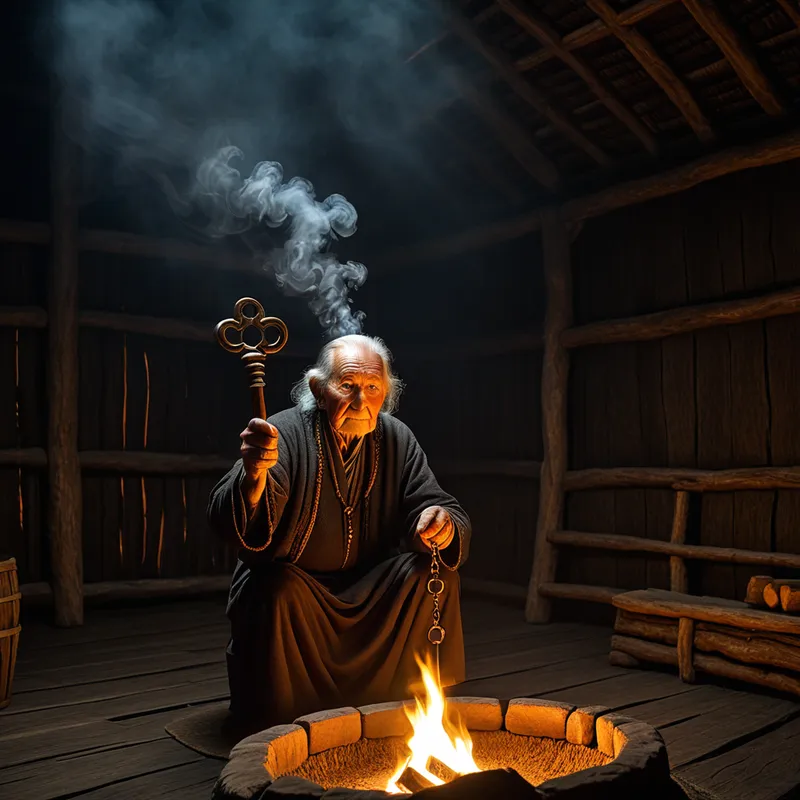
Then came The One Who Inherits. They were not the strongest, nor the wisest by the elders’ measure, but they carried a quiet depth, a sensitivity to the unsaid. When the old keeper lay dying, their gnarled hand did not pass a scepter or a crown. It pressed a simple, unadorned wooden key into the inheritor’s palm. The final breath was a sigh: “It is yours. The choice is now yours also.”
The weight of the key was less than a feather, yet it bore down like a millstone. The inheritor took their place before the Chest. Days turned to weeks. They felt its silent pull, a hum in their bones that resonated with every joy and sorrow of the village. The laughter of children at play seemed to echo from within its wood. The silent tears of the bereaved seemed to pool at its base. The Chest was no longer just an object; it was a living, breathing secret, and it was theirs.
The conflict was not with a monster or a rival, but with the very fabric of their soul. To obey was to live in the shadow of a mystery, to be a guardian of a door they could never pass. To disobey was to break the oldest covenant, to risk unleashing something unimaginable upon their peaceful world. The tension grew, a silent scream held behind their teeth, until one night, under a moon that looked like a silver coin, the hum became a song—a terrible, beautiful, irresistible song of everything that ever was and could be.
With hands that did not feel like their own, they fitted the wooden key into the unseen lock. It turned with a sound like a mountain sighing. The iron bands fell away not with a clang, but with a whisper of rust. The lid did not fly open; it dissolved into motes of ancient dust.
And inside… was not fire, nor treasure, nor monsters.
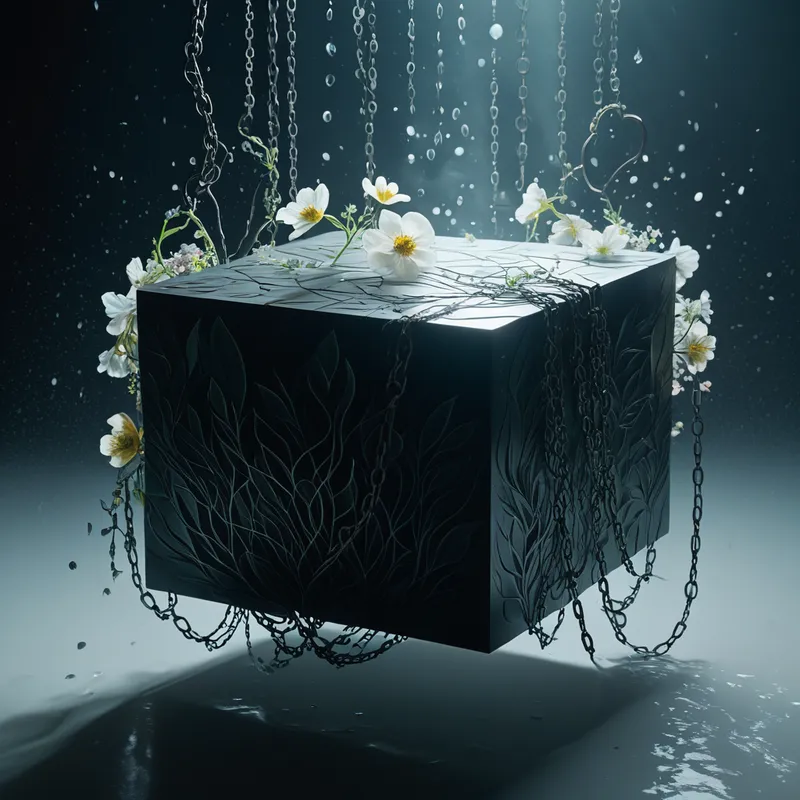
Inside was a vast, starless night. And within that night swirled the essence of all things: the first drop of rain, the last breath of the fallen, the unspoken love, the buried rage, the hope that sings in the dark, the despair that gnaws at the root. It was the unedited soul of the world, the raw material of existence, both glorious and terrifying. It did not flood out to destroy the village. It simply was, and in seeing it, the inheritor was unmade and remade. They did not become a king or a god. They simply understood. And when the dawn came, the Chest was gone. Only the inheritor remained, sitting quietly, their eyes holding the calm, deep light of one who has seen the foundation of things.
Cultural Origins & Context
The myth of the Ancestral Chest is a foundational narrative found in fragments across numerous oral traditions, from the forest-dwelling clans of the northern reaches to the river-valley communities of the southern plains. Scholars term it a “Various” myth not because it belongs to one culture, but because its core structure appears as a versatile psychic template, adapted to local deities, landscapes, and social structures. It was never a tale for public festival; it was a story for initiation, told by a shaman-priest or a lineage elder to an individual or small group on the cusp of taking on profound responsibility—becoming a healer, a chief, or a spiritual guide.
Its societal function was paradoxical. It served as both a warning and an invitation. On one level, it reinforced the necessity of societal boundaries and the wisdom of tradition (“never open it”). On a deeper, esoteric level, it prepared the listener for the inevitable inner crisis of leadership and consciousness: the moment when one must confront the forbidden, inherited complexities of one’s own soul and history to serve authentically. The Chest was the culture’s symbolic container for its own repressed shadow—its collective pains, taboos, and ecstasies. The myth taught that this shadow is not to be ignored, nor is it to be unleashed recklessly; it is to be inherited with conscious, trembling respect.
Symbolic Architecture
Psychologically, the Ancestral Chest is the ultimate symbol of the personal and collective unconscious. It is not merely a box of memories, but the sealed repository of all that has been deemed too powerful, too painful, or too chaotic to be integrated into daily conscious life.
The Chest is the weight of the unlived life, the symphony of the unsung song, and the archive of the forgotten wound. It is what we are given, not what we choose.
The wooden key represents the moment of existential choice—the crisis or calling that grants access to the depths. It is often described as “simple,” highlighting that the tool for confronting the profound is not intellectual complexity, but a basic, terrifying act of will and acceptance. The One Who Inherits is the archetypal ego, tasked with managing daily reality, who suddenly finds themselves the reluctant custodian of a power far greater than themselves. Their journey is not one of conquest, but of surrender to a deeper truth.
The contents—the swirling “essence of all things”—symbolize the prima materia of the psyche, the undifferentiated totality of the Self. The revelation is that our deepest inheritance is not a specific trauma or blessing, but the raw, ambivalent potential of existence itself. The Chest’s disappearance at the end signifies that once the unconscious is consciously beheld, it can no longer remain a separate, external “thing.” It becomes integrated. The inheritor does not possess the mystery; they embody it.
The Dreamer’s Resonance
When this myth pattern activates in the modern dreamscape, it signals a profound threshold in the dreamer’s psychological development. To dream of a locked chest, a sealed room, or a hidden family heirloom one is commanded to guard but not explore, is to dream of the “inheritance complex.”
The somatic experience is often one of palpable tension—a heavy pressure in the chest or gut, a feeling of being watched by the object itself. The dreamer might find the key easily or struggle desperately to locate it. The critical moment is not the finding of the key, but the decision to use it. This dream arrives when the psyche is ready to confront a core, often transgenerational, inheritance: a family pattern of silence, a repressed creative gift, a buried trauma, or a spiritual calling that defies conventional life.
The process is one of moving from being a passive guardian of one’s history (often experienced as anxiety, obligation, or a vague sense of burden) to becoming an active, conscious inheritor. The dream is the psyche’s ritual space to practice that terrifying, necessary act of opening.
Alchemical Translation
The myth of the Ancestral Chest is a perfect allegory for the alchemical process of individuation. The entire narrative maps onto the journey from unconscious identification with societal and familial norms to a conscious, responsible relationship with the totality of the Self.
The initial state is nigredo, the blackening. The inheritor sits in the dark with the sealed Chest, feeling the weight of the unknown, experiencing the depression and confusion of a life governed by an unexamined rule. The turning of the key is the mortificatio—the death of the old identity as the obedient guardian. It is a willing descent into chaos.
The opening of the Chest is not an act of rebellion for its own sake, but the ultimate obedience to a deeper, inner law that supersedes the outer one.
The vision of the swirling essence is the albedo, the whitening. It is the confrontation with the pure, paradoxical nature of reality—sorrow intertwined with joy, destruction with creation. This is not a logical understanding, but a visceral, mystical experience of the coincidentia oppositorum, the coincidence of opposites. Finally, the integration—where the Chest vanishes and the inheritor remains, calm and knowing—represents the rubedo, the reddening. The psychic energy that was locked away in the unconscious object is now liberated and embodied. The individual is no longer separate from their inheritance; they have metabolized it. They do not rule over the mysteries; they speak from within them, their authority born not of power, but of wholeness. The myth teaches that our greatest burden, when faced with conscious courage, becomes the source of our most authentic being.
Associated Symbols
Explore related symbols from the CaleaDream lexicon: