
The Akashic Records Myth Meaning & Symbolism
The story of the cosmic library where every thought, deed, and potential is eternally inscribed, awaiting the seeker who dares to read their own soul's book.
The Tale of The Akashic Records
Before time was counted, before the first star had a name, there existed the Great Silence. It was not an empty silence, but a pregnant one, a stillness so profound it hummed with all that could ever be. From this silence, the First Vibration arose—a single, pure note that was both a question and an answer. And as this vibration echoed through the unborn cosmos, it did not fade. Instead, it left a trace, a shimmering scar upon the fabric of the Akasha.
This trace was the first memory. The first record.
Thus was born the Akashic Records, not as a place built by hands, but as a living dimension woven from the echo of existence itself. It is said that at its heart sits the Chroniker, a being whose form is the turning of pages and whose eyes are twin pools of condensed starlight. The Chroniker does not write with pen or brush, but with attention. Where its gaze rests, a story crystallizes from the shimmering Akasha. Every sigh of a nebula, every courageous thought in a mortal heart, every falling leaf and rising empire—each becomes a glyph of living light, bound into volumes that line corridors which have no end.
The myth tells of a seeker, a soul who grew weary of knowing only fragments of itself. This one journeyed inward, past the noise of the world, past the palace of personality, into the silent crypt of the heart. There, they found not an end, but a doorway—a portal that was a mirror, and a mirror that was a portal. Stepping through, they did not walk, but remembered their way down the Silver Causeway, a path that is the spine of time.
The Hall of Records awaited, vast and breathing. The air thrummed with the collective whisper of ten billion stories. The seeker stood before the Chroniker, whose silent question hung in the luminous air: Which book do you seek? To ask for another’s record was a path of shadows, leading to halls of distorted echoes. The only true path, the myth insists, was to whisper one’s own secret name—the name the soul calls itself when no one is listening.
And so, the seeker spoke. From the endless shelves, a single book detached itself, not flying, but unfolding its journey to their waiting hands. Its cover was their own face, aged and young simultaneously. To open it was not to read, but to relive—every joy a burst of warmth, every cruelty a cold sting, every crossroads a branching tree of light showing paths taken and paths forsaken. The final pages were not written; they were a mist of potential, awaiting the next choice, the next vibration to be added to the eternal song.
The seeker closed the book, which dissolved back into light, now a part of them. They returned not as one who had found answers, but as one who had finally learned the true weight and wonder of the questions. They carried the library within, and in their eyes, for a fleeting moment, shone the twin pools of condensed starlight.

Cultural Origins & Context
The concept of the Akashic Records transcends a single culture, making it a quintessential “Global/Universal” myth. Its most articulated philosophical roots lie in the Dharmic traditions, particularly within Yoga and Advaita Vedanta, where the Akasha is the first of the five elemental matrices of creation. It was through the late 19th and early 20th-century movements of Theosophy and New Thought that the idea was translated into the metaphor of a cosmic library, blending Eastern cosmology with a Western hunger for systematic spiritual knowledge.
It functioned not as a dogma, but as a guiding narrative for mystics, seers, and later, depth psychologists. It was passed down not around campfires, but in esoteric schools and through metaphysical texts, serving a profound societal function: it democratized destiny. It proposed that the ultimate story of creation and the self was not locked in a heavenly throne room but archived in a library to which every soul, in its deepest essence, possessed a borrower’s card. It transformed fate from a decree into a text—one that could be contemplated, understood, and perhaps, with great effort, edited.
Symbolic Architecture
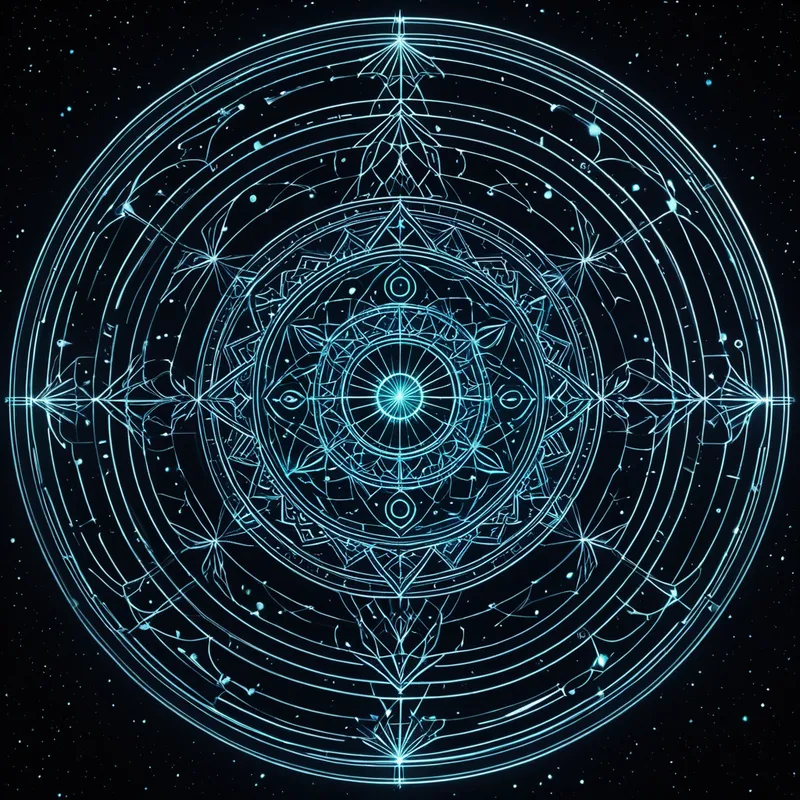
Psychologically, the myth of the Records is a master symbol for the totality of the psyche—the Self. The infinite library is the collective unconscious, the vast, pre-existing field of archetypal patterns and ancestral memories. The individual book of the seeker is the process of individuation, the lifelong project of becoming who one inherently is.
The Akashic Records do not merely record history; they are the loom on which the present moment is woven from the threads of all possible pasts.
The Chroniker represents the transcendent function of consciousness—the inner observer that can witness the narrative of the ego without complete identification. The Silver Causeway is the spine of awareness, the disciplined attention required to journey from superficial identity to core self. The unwritten pages are the crucial symbol of free will and potential; the past may be set in luminous ink, but the future remains an act of creative authorship.
The Dreamer’s Resonance
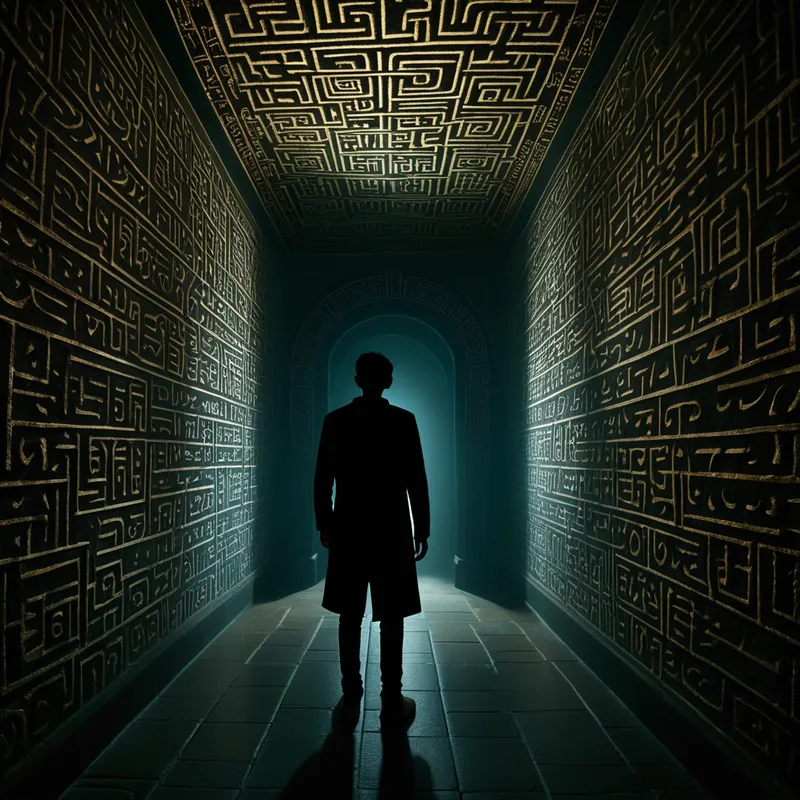
When this myth pattern erupts in modern dreams, it signals a profound psychological process: the ego’s confrontation with its own vast, hidden context. Dreaming of endless archives, hallways of doors, or a book containing one’s own life often accompanies a life review—a divorce, career shift, spiritual awakening, or midlife passage.
Somatically, this may feel like a pressure in the crown of the head or a deep, resonant humming in the body, as if the cellular memory is being activated. Psychologically, it is the process of re-membering: pulling the fragmented parts of the self-story into a coherent whole. The dreamer isn’t just recalling events; they are re-integrating disowned joys, shames, traumas, and potentials. The terror in the dream is the terror of true self-knowledge. The awe is the recognition of one’s own existence as a unique, necessary volume in the cosmic story.
Alchemical Translation
The myth models the alchemical Magnum Opus for the modern individual. The seeker’s journey is the path of nigredo, albedo, and rubedo applied to consciousness itself.
First (Nigredo): One must feel the “weariness of fragments,” the black despair of a life lived on the surface. This drives the inward turn, the descent into the personal unconscious (the crypt of the heart).
Second (Albedo): The journey down the Silver Causeway is the purification of intention. Confronting the Chroniker and asking for one’s own book is the ultimate act of ego humility—surrendering the desire to know others’ secrets to embrace the terrifying project of knowing oneself. Reading the book is the whitening illumination, seeing one’s shadow and light with equal clarity.
The triumph of the myth is not in changing the past, but in changing one’s relationship to it. To witness one’s record is to transmute leaden regret into golden responsibility.
Finally (Rubedo): The return. The book dissolves because its contents have been assimilated. The seeker embodies the record; they become their own story, fully owned and integrated. The glimpse of the Chroniker’s eyes in their own signifies the birth of the inner sage—the part of the self that can hold the whole story with compassion and without flinching. The unwritten pages are no longer a source of anxiety, but of creative agency. The individual has performed the alchemy of turning fate (the written record) into destiny (the conscious authorship of the pages to come).
Associated Symbols
Explore related symbols from the CaleaDream lexicon: