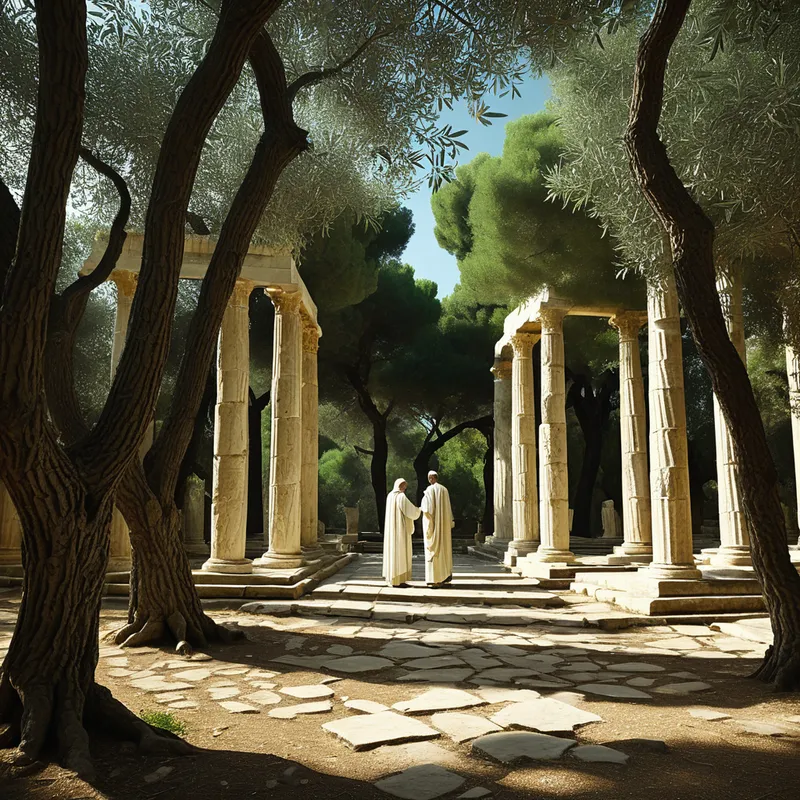
The Academy of Plato in ancien Myth Meaning & Symbolism
A mythic vision of a sacred grove where the soul, guided by a philosopher-king, seeks the eternal Forms beyond the shadow-play of the material world.
The Tale of The Academy of Plato in ancien
Hear now, not of gods clashing on Olympus, nor of heroes sailing to distant shores, but of a quieter, more profound genesis. It began in a grove. Not just any grove, but a sacred precinct on the outskirts of Athens, dedicated to the hero Akademos. The air here was different—thick with the scent of olive and cypress, and humming with a silence that was not empty, but pregnant with unspoken thought.
Into this hallowed shade walked a man whose soul bore the scars of a city’s folly. He was Plato, and he carried within him the dying echo of his teacher’s voice, a voice that had asked “What is justice?” and was answered with a cup of hemlock. The grove received his grief and his questioning. Here, he would not build a temple of stone, but a sanctuary for the mind. He planted not seeds of grain, but seeds of dialectic. He drew not a wall, but a circle in the dust, and spoke of a line divided, of a cave where men mistook shadows for substance.
They came to him, the seekers. Young men with fire in their eyes and older souls wearied by the sophistry of the agora. They gathered under the dappled light, their white himations like patches of pure form against the earthy green. The conflict was not with monsters, but with the monstrous within: the easy opinion, the seductive illusion, the stubborn belief that the world of the senses was all there is. The rising action was the slow, painful turning of the soul. It was the moment a student, wrestling with the nature of The Forms, suddenly saw not just a beautiful statue, but Beauty itself shining through it. It was the heated debate under the stars, where words became tools to chip away at ignorance.
The resolution was never final, never a trophy won. It was a state of perpetual seeking. It was the quiet triumph in a student’s eyes when they realized the answer was less important than the rigor of the question. The Academy became a living entity, a psychic space where the human spirit practiced its ascent from the dark of the cave to the blinding sun of the The Good. It was a story without an end, a dialogue forever unfolding in the sacred grove of the mind.
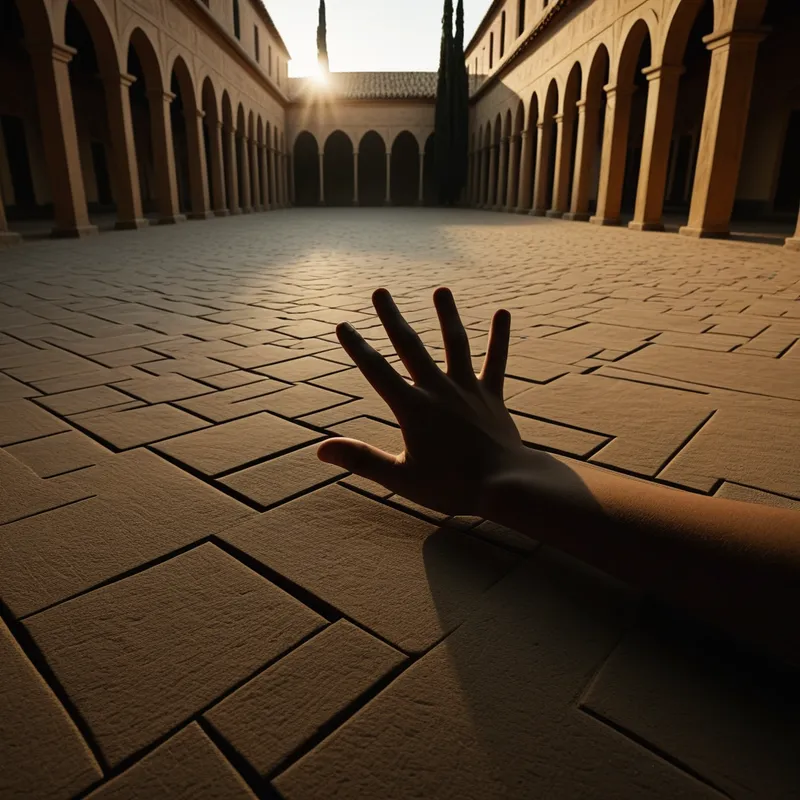
Cultural Origins & Context
This is not a myth born of oral epic, but of philosophical and historical reality crystallizing into archetype. The historical Academy, founded by Plato circa 387 BCE, was a physical institution that lasted for nearly nine centuries. Yet, almost immediately, it began to transcend its bricks and mortar. It was passed down not by bards, but by philosophers, historians, and the countless students who carried its spirit across the Hellenistic world and into Rome.
Its societal function was dual. On one level, it was a practical school for statesmen and thinkers, aiming to create philosopher-kings to guide the polis. On a deeper, cultural level, it became the universal symbol for the dedicated, communal pursuit of wisdom for its own sake. It represented a radical alternative to the political fray of the Athenian assembly and the commercial rhetoric of the sophists. It was a “global” myth in the sense that it articulated a yearning intrinsic to the human condition—the desire for a space set apart from utility and strife, where truth is the only currency and dialogue the only weapon. It functioned as the psychic anchor for the intellectual tradition of the West, a promised land for the mind.
Symbolic Architecture
The Academy is not merely a school; it is a profound map of the psyche’s ideal structure. The sacred grove itself symbolizes the persona—a natural, ordered boundary that separates the inner sanctum of reflection from the chaotic outer world of appearances (the agora).
The grove is the threshold where the noise of the world falls away, and the soul can hear its own first questions.
Plato represents the archetypal Senex or Wise Old Man, but crucially, one who guides not by giving answers, but by midwifing questions (the Socratic method). The students embody the ego in its necessary state of humble apprenticeship, willingly entering a state of aporia to be rebuilt.
The core conflict—the ascent from the Cave—is the central drama of consciousness. The shadows on the cave wall represent the personal and collective shadow and the archetypes perceived only indirectly. The painful journey upward is the integration of these unconscious contents into the light of conscious understanding. The blinding sun of the Good is the Self, the ultimate, transcendent totality of the psyche, which can only be apprehended indirectly once the mind has been rigorously prepared.

The Dreamer’s Resonance
To dream of the Academy is to dream of a deep, structural shift in one’s psychological foundations. It often manifests during periods of intellectual crisis, moral confusion, or after a profound disillusionment with the “shadows” of one’s life—be it a hollow career, superficial relationships, or unexamined beliefs.
Somatically, the dreamer may feel a profound sense of relief and spaciousness upon entering the dream-grove, a literal easing of the shoulders. The key psychological process is deconstruction. The dream-ego is often a student, lost, listening, or struggling with a geometric or logical problem that feels vitally important. This represents the psyche’s own work of dismantling outdated complexes and false personas. The dream may feature a guiding but stern teacher figure (the Platonic/Self archetype) who challenges every easy assumption. There is often frustration—the answer is glimpsed but not grasped. This mirrors the somatic tension of neural rewiring, the growing pains of a consciousness striving to perceive a new, more authentic pattern in itself and the world. The dream is an invitation to enroll in one’s own inner academy.

Alchemical Translation
The myth of the Academy models the alchemical nigredo and albedo for the modern soul. The initial disillusionment—the death of Socrates, the recognition of the Cave—is the nigredo, the blackening, the necessary despair that precedes all genuine seeking.
The first and most sacred law of the inner Academy is this: You must consent to not know. This dissolution is the prima materia of wisdom.
The rigorous dialectic, the study of geometry and harmony, represents the albedo, the whitening purification. Here, the base matter of opinion and sensory data is subjected to the fire of logic and the water of dialogue, washing away impurities to reveal the white stone of essential principles. This is the process of individuation, where the ego aligns itself with the directives of the Self.
The ultimate goal is not a static state of knowledge, but the acquisition of a method, a disciplined way of being. The triumph is the internalization of the Academy itself. The grove becomes one’s own mindful awareness; the dialogues become an ongoing inner conversation between the ego and the deeper Self; the pursuit of the Forms becomes the daily practice of discerning the eternal patterns within the flux of lived experience. The individual becomes, not a graduate, but a living embodiment of the quest—a walking, questioning Academy, turning the lead of unconscious existence into the gold of examined life.
Associated Symbols
Explore related symbols from the CaleaDream lexicon: