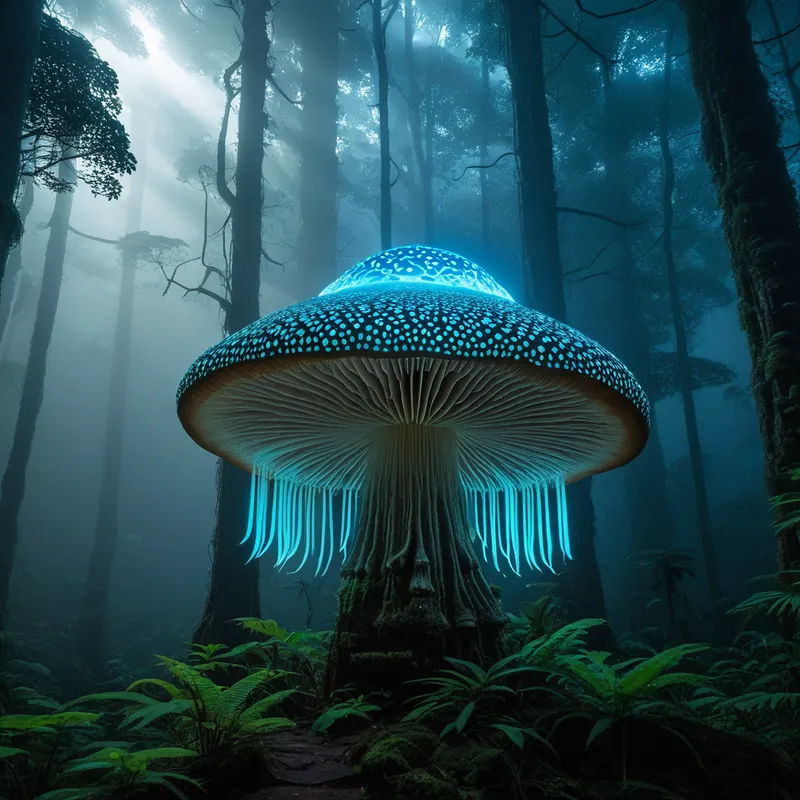
Teonanácatl Myth Meaning & Symbolism
A myth of sacred mushrooms, divine flesh, and the perilous journey to bring the gods' consciousness into the human world.
The Tale of Teonanácatl
Listen, and let the mists of the highlands gather. Let the scent of damp earth and copal smoke fill the air. This is not a story of stone and blood alone, but of the soft, silent things that grow in the shadows, the flesh that is not flesh, the food of the gods.
In the time before time was counted, when the world was still soft from the hands of the creators, the gods walked a razor’s edge. They had shaped the sun and coaxed it into motion with the ultimate sacrifice. They had raised mountains and filled the valleys with maize. Yet, a profound silence lingered in the hearts of the people they had made from ground bone and maize dough. A distance remained, a veil between the human heart and the divine mind. The people lived, loved, and died, but the ecstatic terror and wonder of the cosmos—the very thoughts of the gods—were locked away.
The gods convened in the emerald gloom of the world’s first forests, in places where the rain spoke to the roots. Ometeotl, the dual-god, the source, felt this schism. From this divine anxiety, a solution was whispered not in thunder, but in the soft decay of fallen wood. It was said that where the gods had shed their sacred blood or where a god had passed into the earth in a moment of transcendent sorrow, a strange life would stir. Not a plant, not an animal, but a being of the between.
These were the Teonanácatl, the “Flesh of the Gods.” They appeared as humble, earth-clinging things, small brown caps in the detritus. But within them slept a cataclysm. They were not for the unprepared hand. To find them was a quest of purity and desperate need. The shaman, the tlamacazqui, would fast, would bleed, would chant through the night, begging for a sign. The forest itself would become the oracle; the flight of a hummingbird, the sudden patter of rain on a specific leaf, the dream of a jaguar’s spotted coat.
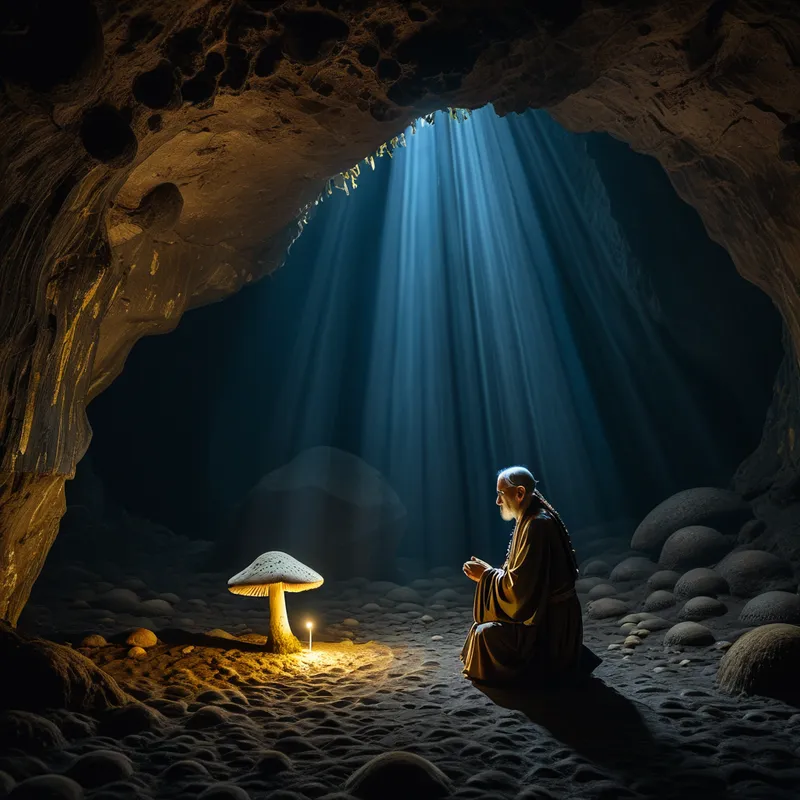
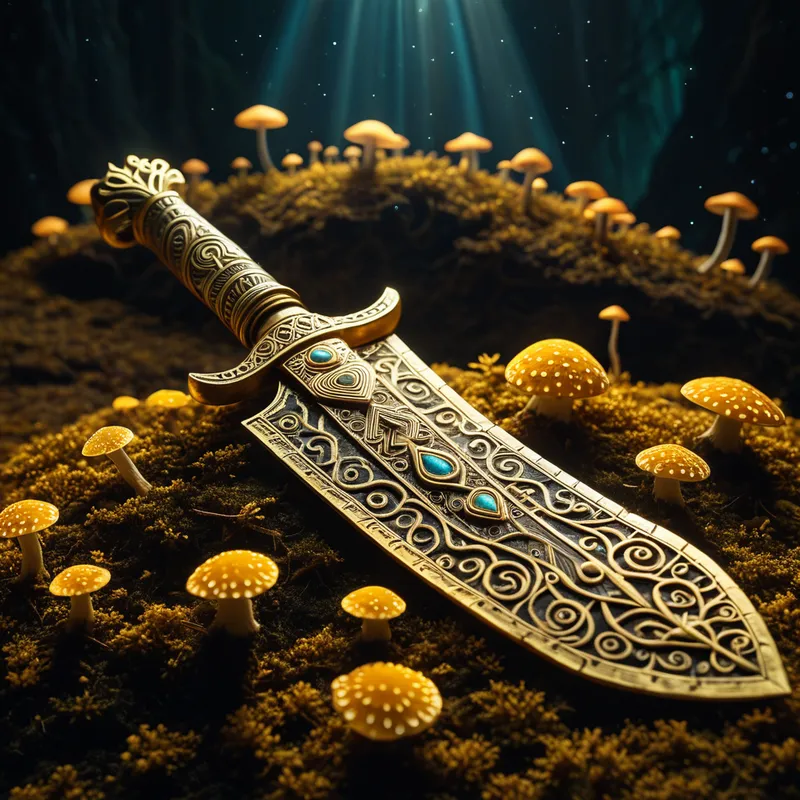
Then, in the deepest night or the first uncertain light of dawn, they would be found. The ritual was one of exquisite reverence and trembling fear. With words older than language, the priest would harvest them, sometimes with a sacred knife of obsidian, sometimes with bare, consecrated hands. They were washed, perhaps with dew, perhaps with tears. The moment of communion approached—a crossing of the final threshold.
The participant, the seeker, would consume the flesh. And then, the world would dissolve. The solid temple stones would breathe and sing. The carvings of Quetzalcoatl and Tezcatlipoca would step from their walls, speaking in colors and vibrations. Time would fold; one might witness the first sunrise or feel the dying gasp of a star. The gods were no longer distant carvings but presences—terrifying, beautiful, overwhelming. They would show the seeker their own heart as a miniature cosmos, reveal the threads of fate, or deliver prophecies in a language of pure emotion. This was not mere vision; it was being unmade and reassembled by divine hands. The journey was a perilous death, and the return, a reluctant rebirth into the world of mere corn and stone, forever altered.
Cultural Origins & Context
The mythos of Teonanácatl is woven deeply into the spiritual fabric of various Mesoamerican cultures, most notably among the Nahua peoples (including the Aztecs) and the Mixtec and Zapotec cultures. It was not a populist sacrament but a specialized tool of the priestly and noble classes, a technology of consciousness reserved for divination, healing, and direct diplomatic parlays with the divine.
Its transmission was oral and experiential, passed from master shaman to initiate in strict secrecy, away from the communal plazas and in the secluded spaces of ritual. The Spanish colonizers, encountering these practices, were horrified. Friars like Bernardino de Sahagún documented them with a mixture of ethnographic curiosity and profound condemnation, labeling the mushrooms as a diabolical tool. This violent suppression drove the practice deep underground, where it survived in fragmented, syncretic forms in remote indigenous communities, a whispered lineage clinging to the roots of a conquered world. The myth functioned as both a map and a warning: a map to navigate the non-ordinary realms of existence, and a warning of the psychic perils awaiting the arrogant or impure who dared to consume the flesh of the gods without proper guidance and intent.
Symbolic Architecture
At its core, the myth of Teonanácatl is a profound symbol of the mediated revelation. The divine truth is not given freely; it is encrypted in the humblest, most overlooked form—a mushroom growing in dung and decay. This embodies the alchemical principle of the stone that the builders rejected.
The god is not in the distant star, but in the dark, fecund earth. To meet the highest, one must first consent to the lowest.
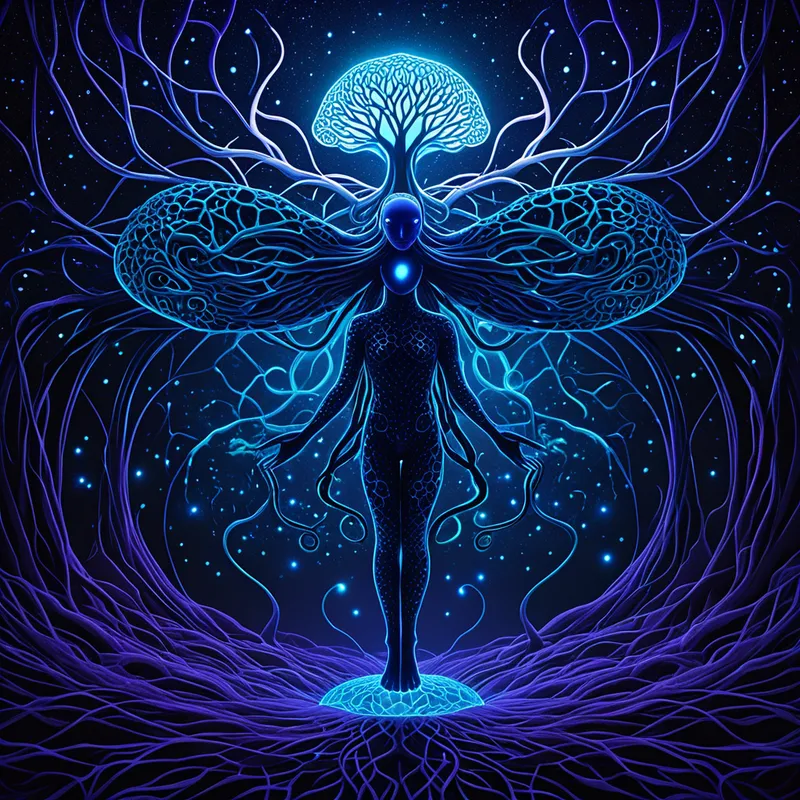
The mushroom itself is a perfect biological metaphor: a fruiting body of a vast, hidden, underground network (mycelium). The visible cap is the conscious revelation, but it is utterly dependent on the unseen, interconnected web—a symbol of the collective unconscious from which individual visions and insights (“fruits”) emerge. The journey it precipitates is one of ego death. The stable, day-to-day identity (the tonalli, or animating spirit) is deliberately dissolved so that the larger, cosmic patterns can be perceived. The seeker becomes a temporary vessel for the teotl—the diffuse, animating sacred force—to manifest and speak.
The Dreamer’s Resonance
When this mythic pattern stirs in the modern dreamer, it often signals a profound, non-negotiable call from the psyche for radical reorientation. To dream of finding strange, glowing fungi in a dark forest or basement; of consuming something that triggers a terrifying yet awe-inspiring dissolution of reality; of meeting entities that are both alien and deeply familiar—these are somatic experiences of the psyche initiating its own ritual.
The dreamer is not “having a weird dream.” They are undergoing a psychic ordeal. The body in the dream may tremble with the somatic memory of expansion and terror. This is the unconscious insisting that the current conscious framework is too small, too rigid. It is forcing a confrontation with contents that cannot be integrated through logic alone. The dream is the sacred cave; the psychedelic imagery, the Teonanácatl itself. The dreamer is both the shaman-priest administering the dose and the terrified initiate consuming it. The process is one of breaking down to make space for a more complex, and often more painful, truth about the self and one’s place in the web of life.
Alchemical Translation
For the modern individual pursuing individuation—the process of becoming an integrated, whole self—the myth of Teonanácatl models the essential, terrifying phase of solutio (dissolution) and mortificatio (psychological death). Our culturally-sanctioned persona, our carefully constructed identity, is our day-world temple. The alchemical work requires us to voluntarily leave that temple and enter the dark, damp forest of the unconscious.
The sacred is not found by building higher towers, but by having the courage to let the ground beneath you rot, so that new, stranger life can emerge from the decay.
The “divine flesh” we must consume is the repressed shadow material, the unlived life, the grief, trauma, and wild creativity we have buried. Consuming it is not an intellectual exercise; it is an experience that dismantles our perceived reality. The “gods” who appear are the archetypal forces of our own psyche—the inner Tyrant, the wounded Healer, the ecstatic Lover—now perceived with overwhelming autonomy and power. The triumph is not in controlling this experience, but in surviving it with humility and returning.
The integration is the rebirth. One does not return “enlightened” in a simplistic sense, but sobered and re-weighted. The world of “corn and stone”—of daily chores, relationships, and work—is the same, but the dreamer now perceives the teotl shimmering within it. They have learned that consciousness itself is a ritual space, and that to be human is to be the fragile, courageous vessel through which the cosmos, in all its terrifying beauty, occasionally chooses to speak. The myth teaches that wholeness is found not by avoiding the dissolution, but by recognizing it as the sacred, if brutal, precondition for any genuine communion with the depths of being.
Associated Symbols
Explore related symbols from the CaleaDream lexicon: