Surtr & The New World Myth Meaning & Symbolism
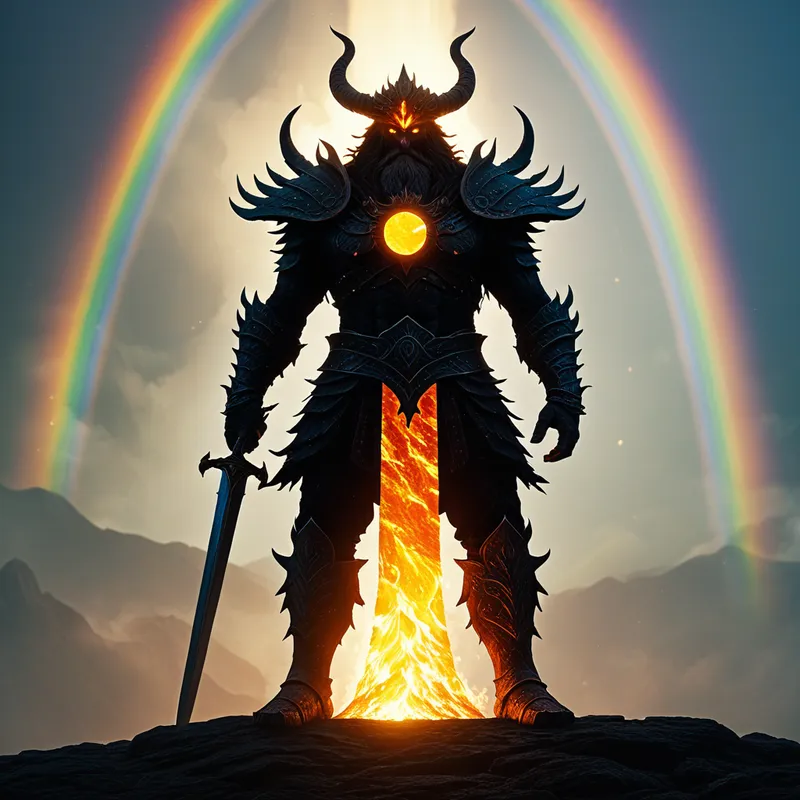
The fire giant Surtr ends the world at Ragnarök, cleansing it with his sword to allow a new, green world to rise from the ashes.
The Tale of Surtr & The New World
Hear now of the ending that is a beginning. Listen, and feel the deep cold of Ginnungagap stir once more.
The final winter, Fimbulwinter, has gnawed at the roots of the world for three generations. The sun is a pale, weak ghost; the moon is stained with blood. Brother turns on brother, and oaths shatter like ice. In this long twilight, the great wolf Fenrir breaks his bonds. The Midgard Serpent churns the oceans into poison. And from the south, a glow begins—a dawn that promises not day, but dissolution.
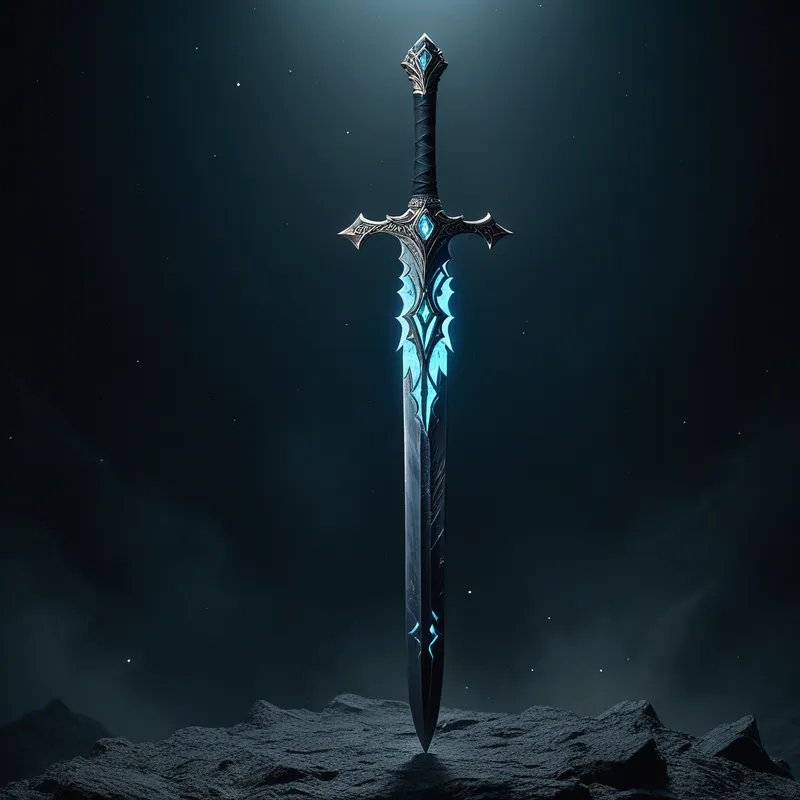
This is the march of Surtr. He comes from Muspelheim, the primal realm of flame that existed before the worlds. He is not a god of chaos, but of absolute, purifying finality. His form is mountain-tall, forged of black rock and living fire. In his hand is a sword that has no name, for its only purpose is to be the last blade. It shines brighter than a hundred suns, and where its light falls, the air itself screams and burns.
The gods, knowing their doom is woven into the tapestry, ride out to meet it. The great horn Gjallarhorn shatters the silence. On the plain of Vígriðr, the last host assembles. Odin faces Fenrir. Thor battles the Serpent. And Surtr advances, an inexorable tide. He does not rage; he consumes. The beautiful bridge Bifröst cracks and collapses under his step, its colors swallowed by his fire.
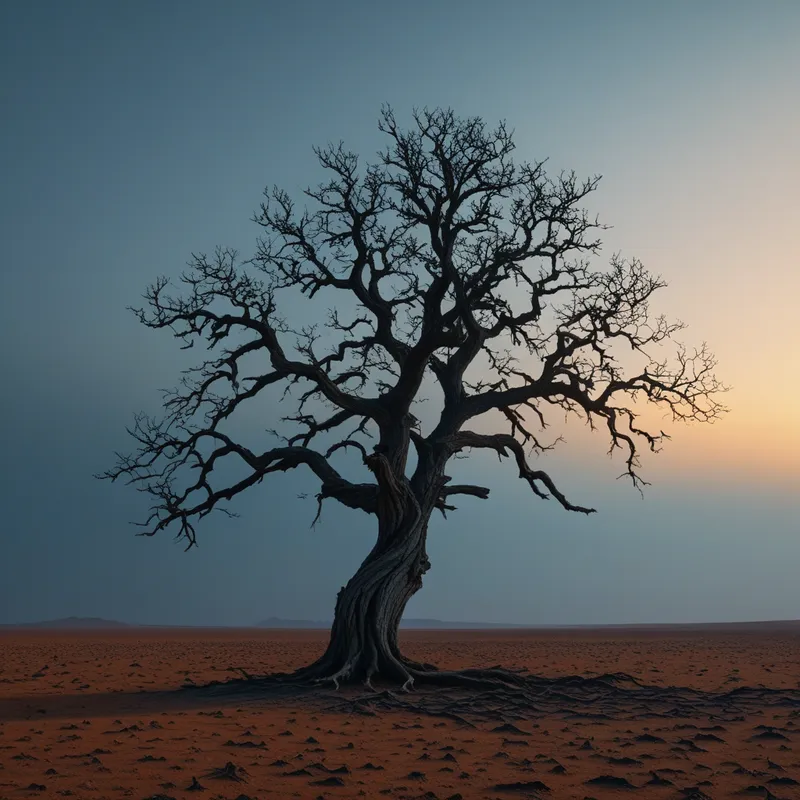
His fire meets the sea, and the waters boil away. It meets the earth, and the soil turns to glass. It meets the great tree Yggdrasil, and the ash trembles to its roots. The stars go out. The sky falls. In this totality, Surtr fulfills his purpose. He swings his sword in a final, all-encompassing arc. Flame washes over all the Nine Worlds. Asgard’s golden towers melt. Midgard’s mountains flow like wax. Every deed, every hall, every memory of the old order is rendered down to essential ash.
Then, silence. A silence deeper than any before it. The fire recedes, leaving a world smoothed and blackened, steaming in the void.
And from the sea, new land emerges, green and fertile beyond imagining. Waters cascade from renewed heights. In this verdant silence, the survivors—Baldr returned from Hel, the sons of the gods, two human survivors hidden in the wood—step forth. The sun, born anew, is carried by a daughter more radiant than her mother. They find in the grass the golden playing pieces of the gods, as if waiting for new hands to lift them. The cycle does not repeat; it recommences, purified, on the foundation of the end that Surtr wrought.
Cultural Origins & Context
This apocalyptic vision is preserved primarily in two 13th-century Icelandic texts: the Poetic Edda, a collection of older mythological poems, and the Prose Edda of Snorri Sturluson, which systematized the lore. For the pre-Christian Norse, this was not a distant theological event but a cosmological principle woven into the fabric of reality. The myth was likely recited by skalds and elders, a narrative anchor in a world perceived as fundamentally unstable, held in a precarious balance between the forces of order (Æsir) and chaos (giants, monsters).
Its societal function was multifaceted. It was a memento mori for an entire culture, a reminder that even the gods are subject to fate (örlög). It fostered a specific heroic ethos: if the end is certain and glorious victory is impossible, then the only meaningful act is to face it with courage and integrity. The myth also served as an explanation for natural cataclysms—volcanic eruptions, brutal winters, and wildfires—giving them a place and a purpose within a sacred narrative. The world was not meant to last forever; its destruction was a necessary prelude to renewal.
Symbolic Architecture
At its core, the myth of Surtr is an archetypal drama of the necessary destruction that precedes creation. Surtr is not evil; he is an elemental force, the embodiment of the transformative fire that cannot be bargained with, only endured and, ultimately, required for rebirth.
Surtr represents the psychic principle that some structures must be utterly annihilated, not merely repaired, for new consciousness to emerge.
He symbolizes the deus absconditus of the end—the hidden god within the catastrophe. His fire is alchemical, reducing complexity to primal essence. The old world, with its entrenched conflicts, betrayals, and decaying order, is too corrupted for evolution. It must be returned to the state of Ginnungagap, the fertile void, before new life can be imagined. Psychologically, Surtr is the force of a crushing depression that obliterates a false personality, or the searing insight that burns away a lifelong illusion. He is the rebellion of the deep Self against an ego-structure that has outlived its usefulness.
The Dreamer’s Resonance
When this myth stirs in the modern unconscious, it often manifests not as a literal dream of fire giants, but as an atmosphere of inescapable, beautiful ruin. One may dream of their childhood home burning down with a sense of awe, not terror. They may dream of a tidal wave or an earthquake that levels a city, and upon waking, feel a strange sense of relief.
These dreams signal a profound somatic and psychological process: the ego’s capitulation to a transformative process it cannot control. The somatic experience can be one of intense heat, pressure, or a feeling of structures collapsing within the body. Psychologically, it is the recognition that a life phase, a relationship, a career, or a core identity is undergoing not a change, but a dissolution. The dreamer is in the grip of what James Hillman called the “Senex” energy in its most destructive and thus renewing aspect. The process is terrifying because it is total, yet the myth assures us that this totality is the very condition for the “green land” that rises after.
Alchemical Translation
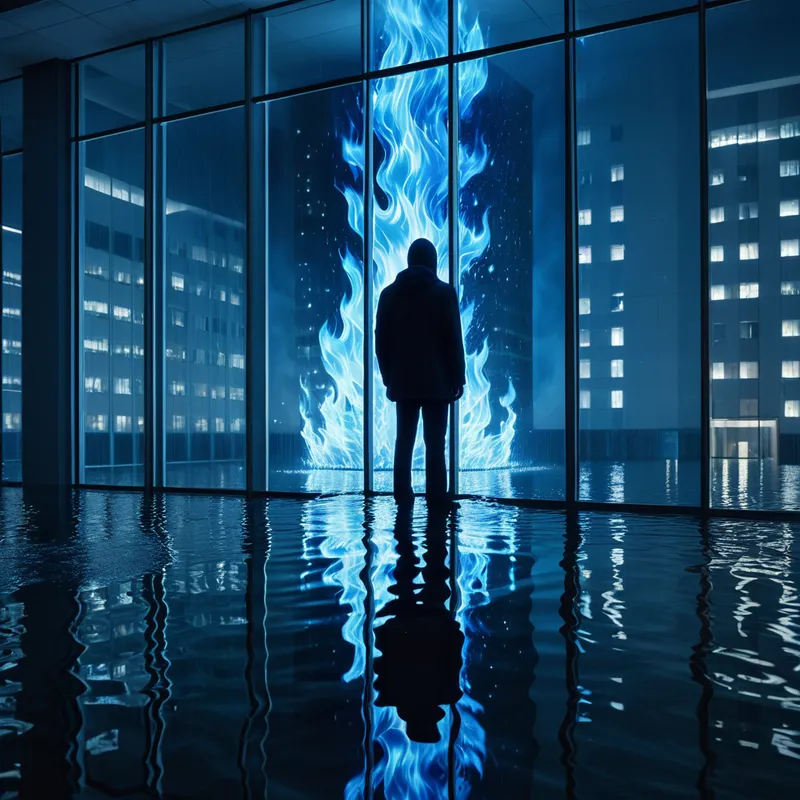
For the individual on the path of individuation, the Surtr myth models the stage of calcinatio and solutio taken to their absolute extreme. This is the alchemy of the spirit, where the base metal of the conditioned self is not just heated, but subjected to the divine fire that reduces it to its original, undifferentiated state—the prima materia.
The triumph is not in surviving the fire, but in becoming the vessel in which the fire does its necessary work.
The modern seeker’s “Ragnarök” is the collapse of a personal cosmology: the death of a foundational belief, the end of a defining story, the burnout of a driving ambition. Surtr’s sword is the ruthless application of truth that cuts away all self-deception. The process demands the courage of the gods who ride to their doom: to stand present in the annihilation, to honor the old world as it burns, and to trust in a continuity of consciousness that is not based on form, but on essence. The “new world” that emerges is not a better version of the old self; it is a fundamentally different mode of being, grounded in the fertile ash of what was utterly consumed. It is the Self, reborn from its own necessary end.
Associated Symbols
Explore related symbols from the CaleaDream lexicon: