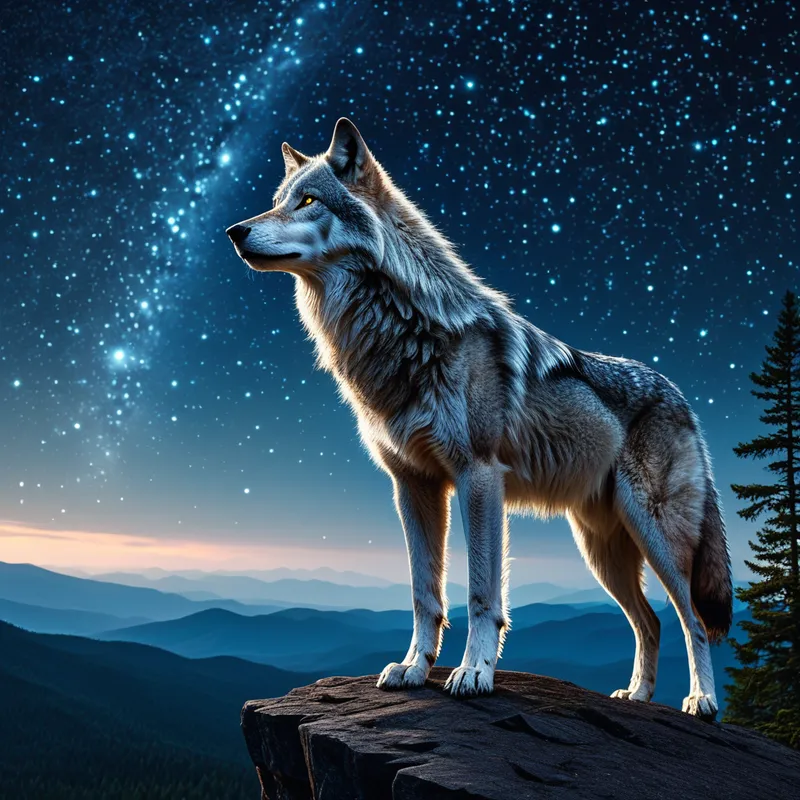
Spirit Animals Myth Meaning & Symbolism
A universal myth of animal guides emerging from the primordial dream to offer wisdom, protection, and a map to the soul's hidden terrain.
The Tale of Spirit Animals
In the time before time, when [the world](/myths/the-world “Myth from Tarot culture.”/) was a single, breathing dream, the [Great Spirit](/myths/great-spirit “Myth from Native American culture.”/), the Wakan Tanka, spoke not in words, but in forms. It dreamed the towering mountains, the whispering rivers, and the deep, silent forests. But the dream was lonely. The mountains did not know their own strength, the rivers did not understand their purpose, and the first humans, newly shaped from clay and starlight, wandered [the earth](/myths/the-earth “Myth from Hindu culture.”/) with hearts full of longing and eyes blind to the connections that bound all life.
So, from the heart of the dream, the Great Spirit breathed a second breath. This breath did not create new things, but awakened the soul within the things that were. It swept across the land, and where it touched, a spark ignited. In the lumbering bear, a spark of fierce protection and introspective healing. In the soaring eagle, a spark of piercing vision and freedom. In the cunning fox, a spark of adaptability and silent knowing. In the patient [spider](/myths/spider “Myth from Native American culture.”/), a spark of intricate creation.
These sparks were not merely instincts; they were voices. They were songs. And they yearned to be heard.
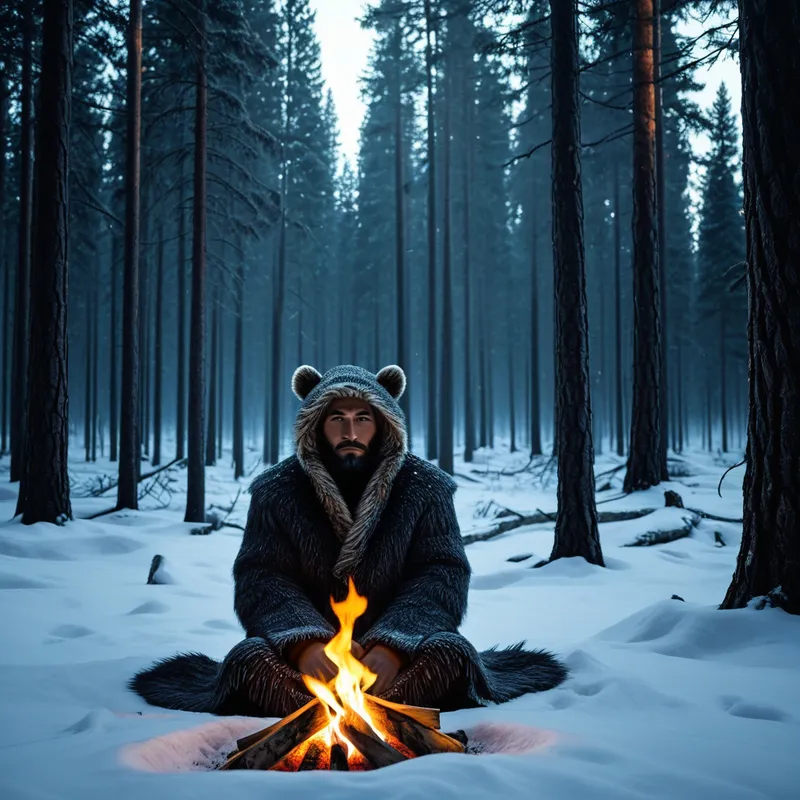
One night, a hunter, cold and desperate after a long fruitless chase, collapsed at the edge of a frozen lake. His spirit was as thin as the ice. As he lay dying, the dream of the world grew loud. The howl of a distant wolf was not just sound, but a thread of loneliness that pulled at his own. The track of a hare in the snow was not just a sign, but a story of fragility and swiftness. He felt the bear’s sleep in his bones and the salmon’s upstream struggle in his blood.
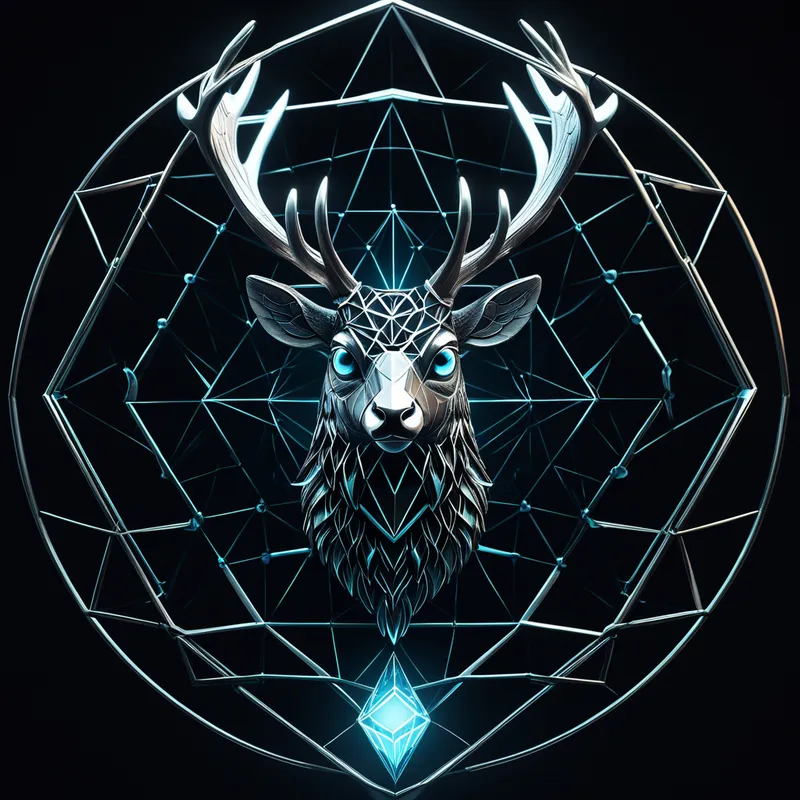
In that liminal space between breath and silence, the animals came. Not in flesh, but in spirit-light. The wolf sat beside him, sharing its warmth and pack-resilience. [The owl](/myths/the-owl “Myth from Celtic culture.”/) landed on a branch, offering its moonlit wisdom for the dark questions. The stag approached, its antlers a crown of forest knowledge, and bowed its head.
They did not speak with human tongues. They showed him. The wolf showed him the map of the hunt, not for prey, but for his own lost courage. The owl showed him the hidden burrow of his fears, illuminated in the silver light of awareness. The stag showed him the path through the tangled woods of his life, a trail only the heart could follow.
[The hunter](/myths/the-hunter “Myth from African culture.”/)’s breath returned, warm and steady. He awoke at dawn, not just alive, but awakened. He knew the wolf was his brother in solitude, the owl his sister in mystery, the stag his guide through the inner wilderness. He returned to his people not just with food, but with a new language—the language of the animal souls. He taught that every person, at the moment of their deepest need or truest seeking, might find such a guide waiting in the dream-time, a nagual or tuurngaq, a piece of the world’s soul offered as a mirror to their own.
Cultural Origins & Context
The myth of the spirit animal is not a single story with one origin, but a profound archetypal pattern emerging independently across the globe, from the shamanic traditions of Siberia and the Inuit to the vast cultures of the Americas, Africa, and ancient Europe. It is a foundational pillar of animistic worldviews, where the universe is ensouled and communicative.
This knowledge was traditionally transmitted not through written texts, but through oral storytelling, vision quests, and initiatory rites. Elders, shamans, or medicine people served as intermediaries, helping individuals interpret dreams, signs in nature, or experiences during altered states of consciousness induced by ritual, solitude, or fasting. The function was deeply societal: it provided a personal cosmology, a source of strength and identity, and a sacred ethical framework. To have a bear as a spirit guide implied responsibilities—to protect, to heal, to know when to retreat. It wove the individual into the ecosystem’s moral fabric, making human action part of a sacred conversation with the more-than-human world.
Symbolic Architecture
At its core, the [spirit animal](/symbols/spirit-animal “Symbol: A spirit animal represents the core qualities and guidance that aid individuals in understanding their life path and societal roles.”/) myth addresses the [human](/symbols/human “Symbol: The symbol of a human represents individuality, complexity of emotions, and social relationships.”/) [crisis](/symbols/crisis “Symbol: A crisis symbolizes turmoil, urgent challenges, and the need for immediate resolution or change.”/) of disconnection and the yearning for wholeness. The animals represent autonomous complexes of the [psyche](/myths/psyche “Myth from Greek culture.”/)—instinctual, powerful, and wiser than the conscious ego in their own domains.
The spirit animal is the psyche’s native tongue, a language of image and instinct that speaks from below the words we know.
The hunter’s near-[death](/symbols/death “Symbol: Symbolizes transformation, endings, and new beginnings; often associated with fear of the unknown.”/) experience symbolizes [the ego](/myths/the-ego “Myth from Jungian culture.”/)’s collapse, a necessary [dissolution](/symbols/dissolution “Symbol: The process of breaking down, dispersing, or losing form, often representing transformation, release, or the end of a state of being.”/) of the conscious [personality](/symbols/personality “Symbol: Personality in dreams often symbolizes the traits and characteristics of the dreamer, reflecting how they perceive themselves and how they believe they are perceived by others.”/)’s arrogance and [isolation](/symbols/isolation “Symbol: A state of physical or emotional separation from others, often representing a need for introspection or signaling distress.”/). Only in this state of humility and need can the deeper, instinctual layers of [the Self](/myths/the-self “Myth from Jungian culture.”/) make contact. The animals that appear are not random; they symbolize specific psychic functions needed for [integration](/symbols/integration “Symbol: The process of unifying disparate parts of the self or experience into a cohesive whole, often representing psychological wholeness or resolution of internal conflict.”/). The [wolf](/symbols/wolf “Symbol: Wolves in dreams symbolize instinct, intelligence, freedom, and a deep connection to the wilderness and primal instincts.”/) embodies the loyal, social, yet fiercely independent pack instinct. The owl is the faculty of [intuition](/symbols/intuition “Symbol: The immediate, non-rational understanding of truth or insight, often described as a ‘gut feeling’ or inner knowing that bypasses conscious reasoning.”/) that sees in the dark, the wisdom of the unconscious. The stag is the [symbol](/symbols/symbol “Symbol: A symbol can represent an idea, concept, or belief, serving as a powerful tool for communication and understanding.”/) of spiritual [authority](/symbols/authority “Symbol: A symbol representing power structures, rules, and control, often reflecting one’s relationship with societal or personal governance.”/) and [connection](/symbols/connection “Symbol: Connection symbolizes relationships, communication, and bonds among individuals.”/) to the cyclical, animating [life](/symbols/life “Symbol: The symbol of ‘Life’ represents a journey of growth, interconnectedness, and existential meaning, encompassing both the joys and challenges that define human experience.”/) force.
The myth teaches that our wholeness depends on acknowledging these non-human aspects within us. We are not just thinking beings; we are also cunning, protective, migratory, and nurturing beings, patterned by the same ancient forces that shape the animal [kingdom](/symbols/kingdom “Symbol: A kingdom symbolizes authority, belonging, and a sense of identity within a larger context or community.”/).
The Dreamer’s Resonance
When this myth pattern activates in the modern dreamer, it often signals a call from the instinctual Self. To dream persistently of a particular animal—especially in a guiding, communicative, or awe-inspiring context—is to receive a summons from the depths.
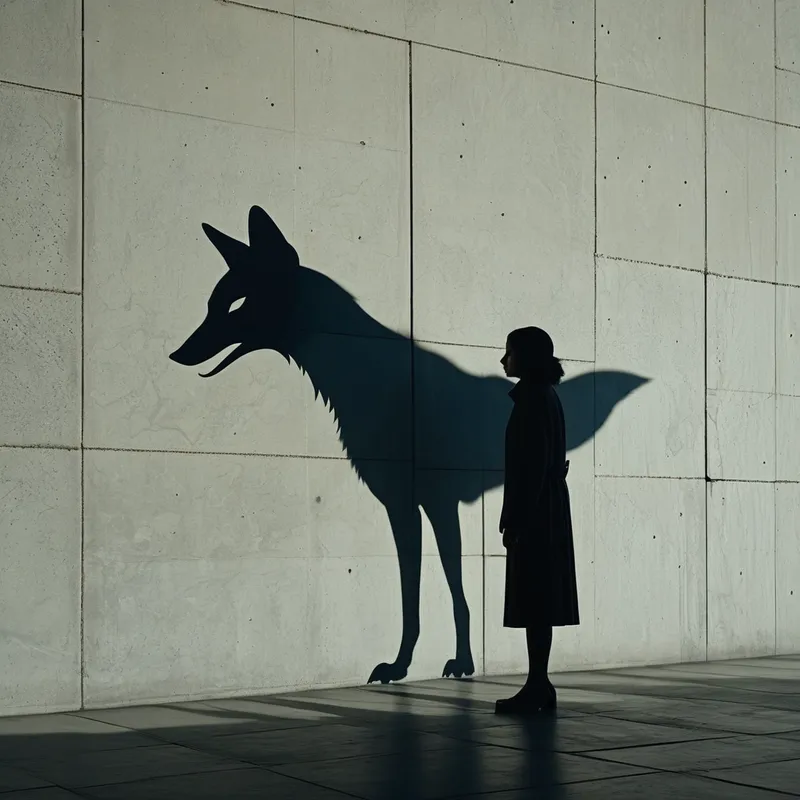
Psychologically, this is a process of reclamation. The conscious mind, over-civilized and identified with rationality, has exiled these potent animal energies, often branding them as primitive or unacceptable. The dream animal emerges to correct this imbalance. If one dreams of a trapped bird, the psyche may be highlighting a stifled longing for freedom or expression. A dream of a prowling big cat might point to repressed power, anger, or sensual vitality. The somatic experience is key: the dreamer may wake with the felt sense of wings, the memory of running on four legs, or the echo of a growl in their throat. This is the body remembering its psychic ancestry, the “animal within” demanding recognition and a place in the waking life.
Alchemical Translation
The alchemical journey modeled by this myth is one of coniunctio—[the sacred marriage](/myths/the-sacred-marriage “Myth from Various culture.”/) between the human conscious mind and the animal soul. The modern individual’s “hunter in the snow” is a state of psychological crisis, burnout, or profound meaninglessness—a feeling of being severed from one’s own instincts and vitality.
The quest for one’s spirit animal is, in truth, the animal’s quest for its lost human.
[The first stage](/myths/the-first-stage “Myth from Alchemical culture.”/) is the [nigredo](/myths/nigredo “Myth from Alchemical culture.”/), the dark night: the ego must acknowledge its poverty and loneliness, its disconnection from the natural world and its own nature. This is the collapse by the frozen lake. The appearance of the spirit guide initiates the albedo, the whitening: illumination by the instinctual image. Here, one does not “choose” a spirit animal; one engages in a respectful dialogue with the image that presents itself. This involves research, meditation, artistic expression, and mindful observation of the actual animal in nature, seeking to understand its symbolic message.
The final stage is the [rubedo](/myths/rubedo “Myth from Alchemical culture.”/), the reddening or integration: the animal’s qualities are consciously embodied. This is not literal imitation, but a psychic transmutation. The energy of the bear is integrated as the capacity for healthy boundaries and deep introspection. The fox’s cunning becomes strategic adaptability. This integration creates [the Philosopher’s Stone](/myths/the-philosophers-stone “Myth from Alchemical culture.”/) of the psyche: an individual who is both fully cultured and fully instinctual, a conscious participant in the ancient, dreaming dialogue between humanity and the animate earth. The spirit animal becomes an inner compass, guiding one not through a literal wilderness, but through the equally complex and wild terrain of a soul becoming whole.
Associated Symbols
Explore related symbols from the CaleaDream lexicon: