Spirit Animal / Familiar Myth Meaning & Symbolism
A timeless tale of a human soul forging a sacred, psychic bond with a wild animal spirit, gaining a guide, protector, and mirror to the inner self.
The Tale of Spirit Animal / Familiar
Listen. [The world](/myths/the-world “Myth from Tarot culture.”/) is not as silent as it seems. Beneath [the wind](/myths/the-wind “Myth from Various culture.”/) in the pines, under the babble of the stream, behind the crackle of [the hearth](/myths/the-hearth “Myth from Norse culture.”/)-fire, there is another song. It is the song of the bone, the blood, the breath that you share with all that runs, flies, and swims. This is the tale of hearing that song, and of the one who answers.
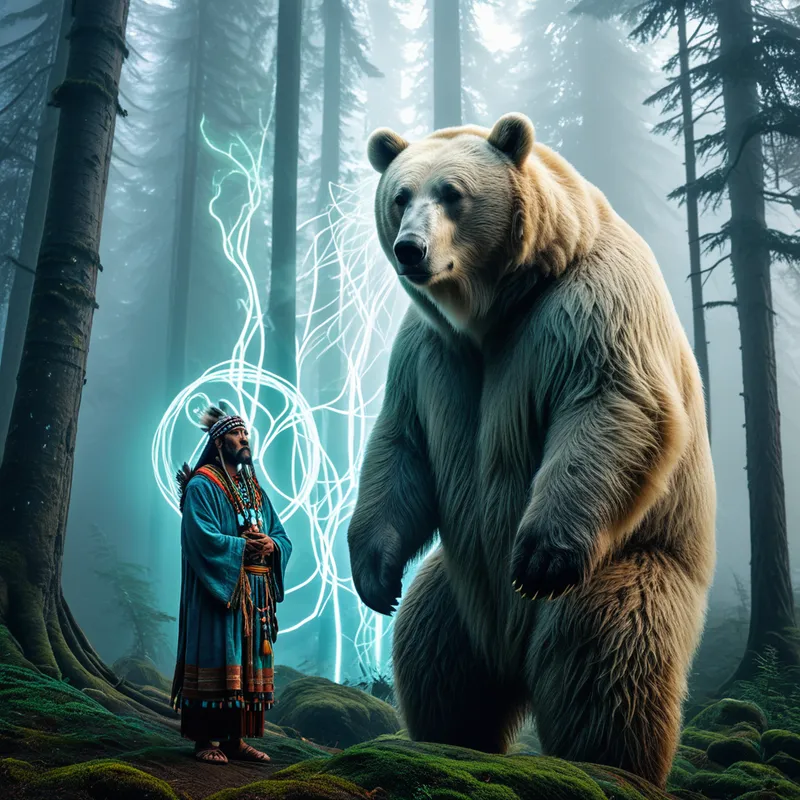
Once, in the time when [the veil](/myths/the-veil “Myth from Various culture.”/) between the worlds was thin as morning mist, there was a person whose soul was a lonely hunter. They walked [the earth](/myths/the-earth “Myth from Hindu culture.”/), but their feet did not truly touch it. Their eyes saw the forest, but not the life within the shadows. A great emptiness echoed inside them, a hollow shaped like a question they could not name. One night, driven by this silent yearning, they left the warmth of the village and walked into the heart of the wildwood, where the oldest trees whispered secrets to the stars.
They walked until their human strength failed, until the familiar paths were swallowed by root and thorn. Lost, cold, and with a heart pounding like a trapped bird, they collapsed at the base of a great [World Tree](/myths/world-tree “Myth from Global culture.”/). In that place of utter vulnerability, as sleep and waking blurred, the world shifted. The air grew thick and resonant. The scent of damp earth and ozone filled their nostrils. This was no longer the forest of daylight.
This was the Spirit World.
Trembling, they perceived movement in the spectral gloom. Eyes gleamed from the darkness—not one pair, but many. [The forms](/myths/the-forms “Myth from Platonic culture.”/) of all the animals they had ever seen, and ones born only of dream, circled them. There was the patient, grounding presence of the Stone Bear; the sharp, piercing gaze of the Sky Hawk; the sly, fluid shadow of the River Otter. Each spirit called to a different part of the lonely soul—to strength, to vision, to cunning.
But the call was not a gentle invitation. It was a test. The Hawk’s cry was a demand for courage to see painful truths. The Bear’s growl asked for the strength to be still and endure. The person’s fear rose, a bitter taste on the tongue. To answer meant to surrender a piece of their solitary humanity, to let the wild in. In a moment of pure instinct, beyond thought, they did not choose with their mind, but answered with their soul. They met the gaze of one spirit, and in that locking of eyes, a circuit was completed.
A surge of energy, neither hot nor cold but vibrantly alive, coursed between them. The person felt the spirit’s memories—the rush of the hunt, the patience of the stalk, the freedom of the run—flood into their own. They felt their own loneliness, their longing, their hidden strengths reflected back. A pact was forged not in words, but in essence. The animal spirit stepped forward, its form now both solid and shimmering, and stood beside them. The emptiness within the person was filled not with another, but with a profound connection. They were no longer just a human in the woods. They were a human with the woods. Together, they turned, and the path home, once invisible, was now clear, lit by the light of their shared spirit.
Cultural Origins & Context
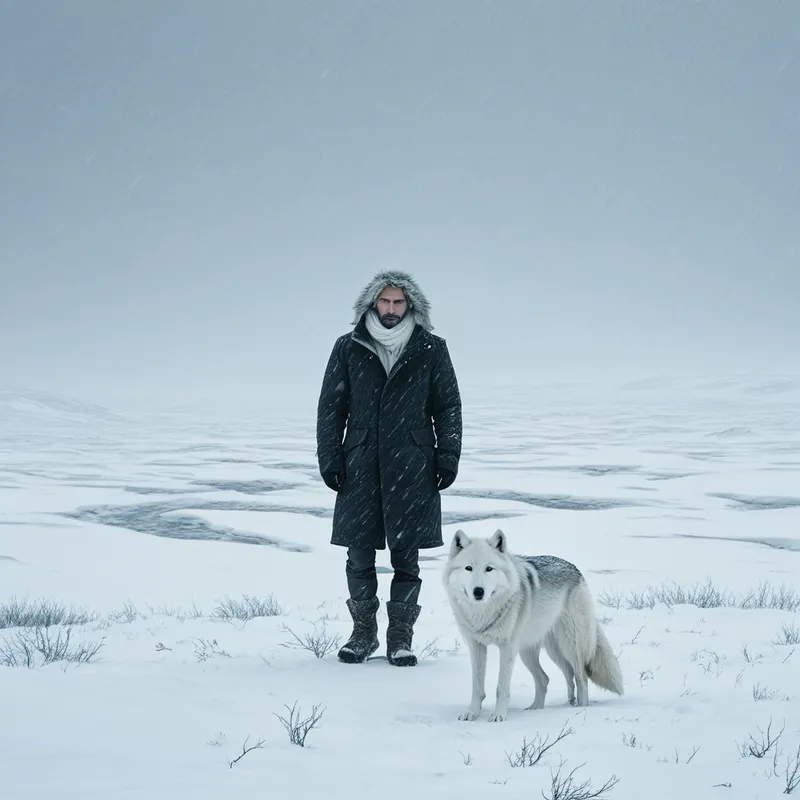
This is not one myth from one place, but a foundational pattern woven into the shamanic worldview found from the Siberian tundra to the Amazon rainforest, from the Australian outback to the Norse fjords. It is a core narrative of the shaman’s calling. The story was not written, but experienced—passed down through oral tradition, drumbeat, and the direct visionary journeys of initiates.
Typically, this “myth” was lived during a [vision quest](/myths/vision-quest “Myth from Native American culture.”/) or a spontaneous psychic crisis. The elder or shaman would guide the seeker to [the threshold](/myths/the-threshold “Myth from Folklore culture.”/), but the journey into the spirit world and the encounter itself was intensely personal. Its societal function was multifaceted: it explained the source of a shaman’s unique power (their alliance), provided a model for navigating psychological crisis (the descent and guided return), and reinforced a cosmology where humans are not separate from, but in continuous relationship with, the conscious, ensouled natural world. The familiar spirit was a guide, a protector in non-ordinary reality, and the embodiment of specific powers needed by the community.
Symbolic Architecture
At its [heart](/symbols/heart “Symbol: The heart symbolizes love, emotion, and the core of one’s existence, representing deep connections with others and self.”/), the myth symbolizes the [integration](/symbols/integration “Symbol: The process of unifying disparate parts of the self or experience into a cohesive whole, often representing psychological wholeness or resolution of internal conflict.”/) of the unconscious, instinctual self with the conscious ego. The lonely [human](/symbols/human “Symbol: The symbol of a human represents individuality, complexity of emotions, and social relationships.”/) represents the conscious mind, competent in the ordinary world yet feeling an existential lack—the call of the neglected [psyche](/myths/psyche “Myth from Greek culture.”/). The [spirit world](/symbols/spirit-world “Symbol: A realm beyond the physical, inhabited by spirits, ancestors, or supernatural beings, often representing the unconscious, afterlife, or mystical connection.”/) is the vast, unknown territory of the unconscious.
The spirit animal is the embodied archetype of the instinct; it is the part of our own nature that is whole, functional, and wise in ways the thinking self has forgotten.
The menagerie of spirits represents the plurality of latent potentials within us—the [warrior](/symbols/warrior “Symbol: A spiritual archetype representing inner strength, discipline, and the struggle for higher purpose or self-mastery.”/), the nurturer, the [trickster](/symbols/trickster “Symbol: A boundary-crossing archetype representing chaos, transformation, and the subversion of norms through cunning and humor.”/), the sage—all vying for recognition. The “test” is [the ego](/myths/the-ego “Myth from Jungian culture.”/)’s [resistance](/symbols/resistance “Symbol: An object or tool representing opposition, struggle, or the act of pushing back against external forces or internal changes.”/) to surrendering its illusion of total control. The forging of the bond is the [moment](/symbols/moment “Symbol: The symbol of a ‘moment’ embodies the significance of transient experiences that encapsulate emotional depth or pivotal transformations in life.”/) of [acceptance](/symbols/acceptance “Symbol: The experience of being welcomed, approved, or integrated into a group or situation, often involving validation of one’s identity or actions.”/), where [the ego](/myths/the-ego “Myth from Jungian culture.”/) aligns itself with a specific stream of innate, psychic [energy](/symbols/energy “Symbol: Energy symbolizes vitality, motivation, and the drive that fuels actions and ambitions.”/). This is not possession, but partnership. The familiar becomes a [psychopomp](/myths/psychopomp “Myth from Greek culture.”/), guiding the individual into the [depths](/symbols/depths “Symbol: Represents the subconscious, hidden emotions, or foundational aspects of the self, often linked to primal fears or profound truths.”/) of their own [soul](/symbols/soul “Symbol: The soul represents the essence of a person, encompassing their spirit, identity, and connection to the universe.”/) and back again. It symbolizes a recovered wholeness, where instinct informs [action](/symbols/action “Symbol: Action in dreams represents the drive for agency, motivation, and the ability to take control of situations in waking life.”/) and [spirit](/symbols/spirit “Symbol: Spirit symbolizes the essence of life, vitality, and the spiritual journey of the individual.”/) grounds being.
The Dreamer’s Resonance
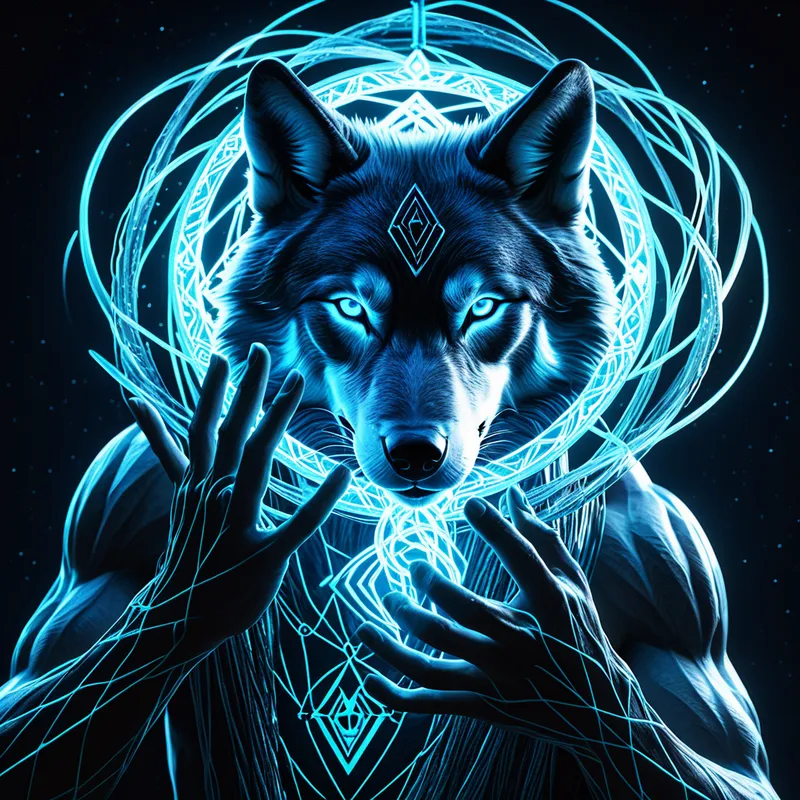
When this mythic pattern stirs in modern dreams, it signals a profound somatic and psychological process: the emergence of a guiding complex from the deep psyche. Dreaming of a specific animal repeatedly, especially one that feels numinous or commanding, often marks a crossroads.
The somatic process is one of recognition—a gut feeling, a chill, a sense of awe in the dream that lingers upon waking. Psychologically, the dreamer is often in a state of transition, feeling “lost in the woods” of their own life—career, identity, relationship. The appearing animal represents the innate quality needed to navigate this transition. A dream of bonding with a wolf might emerge when one needs to learn about loyalty to [the self](/myths/the-self “Myth from Jungian culture.”/) and the pack (community); an eagle, when a higher, broader perspective is required. The conflict in the dream—fear of the animal, or the act of reaching out—mirrors the dreamer’s internal resistance to embracing this new, powerful aspect of their own character. The resolution, the bond, is the psyche’s blueprint for integration.
Alchemical Translation
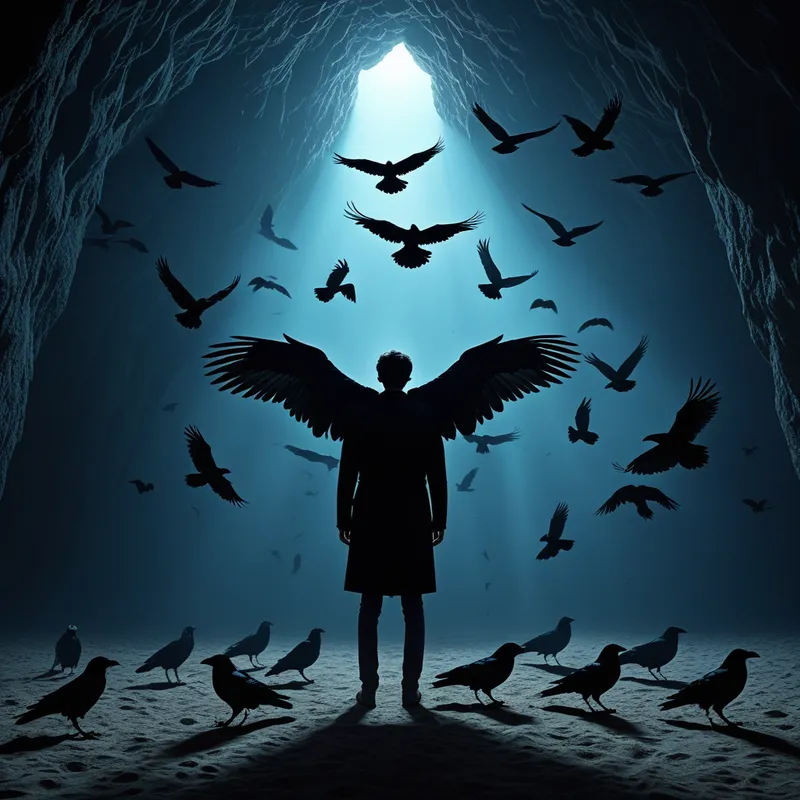
The myth models the alchemical process of individuation—the journey toward becoming the unique, whole individual one is meant to be. The “base metal” of the lonely, fragmented ego is transmuted into the “gold” of the integrated self through the catalyst of the spirit animal.
[The first stage](/myths/the-first-stage “Myth from Alchemical culture.”/), the [nigredo](/myths/nigredo “Myth from Alchemical culture.”/) or descent into darkness, is the lonely walk into the wildwood, the feeling of being lost and empty. The confrontation with the spirits is the albedo, the whitening, where the contents of the unconscious are revealed in their raw, contrasting forms. The critical act of forging the bond is the [rubedo](/myths/rubedo “Myth from Alchemical culture.”/), the reddening, a marriage of opposites—conscious and unconscious, human and animal, culture and nature.
This alliance does not make one less human, but more completely so; it is the reclamation of the animal soul as the foundation of authentic being.
For the modern individual, this translates to a disciplined engagement with the inner world. It is the practice of identifying one’s core, instinctual strengths (the “animal” one resonates with), not through whimsy, but through honest reflection on one’s dreams, passions, and innate reactions. It is about consulting this inner guide—this familiar—when making decisions, allowing instinct and intuition to partner with logic. The [triumph](/myths/triumph “Myth from Roman culture.”/) is not domination over nature, either outer or inner, but the creation of a sacred pact with one’s own deepest, most vital nature. One becomes [the shaman](/myths/the-shaman “Myth from Siberian culture.”/) of one’s own life, journeying into the interior wilderness with a trusted companion, and returning with wisdom to heal both oneself and the world.
Associated Symbols
Explore related symbols from the CaleaDream lexicon: