Somnambulist Seers Myth Meaning & Symbolism
A myth of seers who walk in sleep, their souls journeying beyond the world tree to bring back hidden knowledge from the roots of reality.
The Tale of Somnambulist Seers
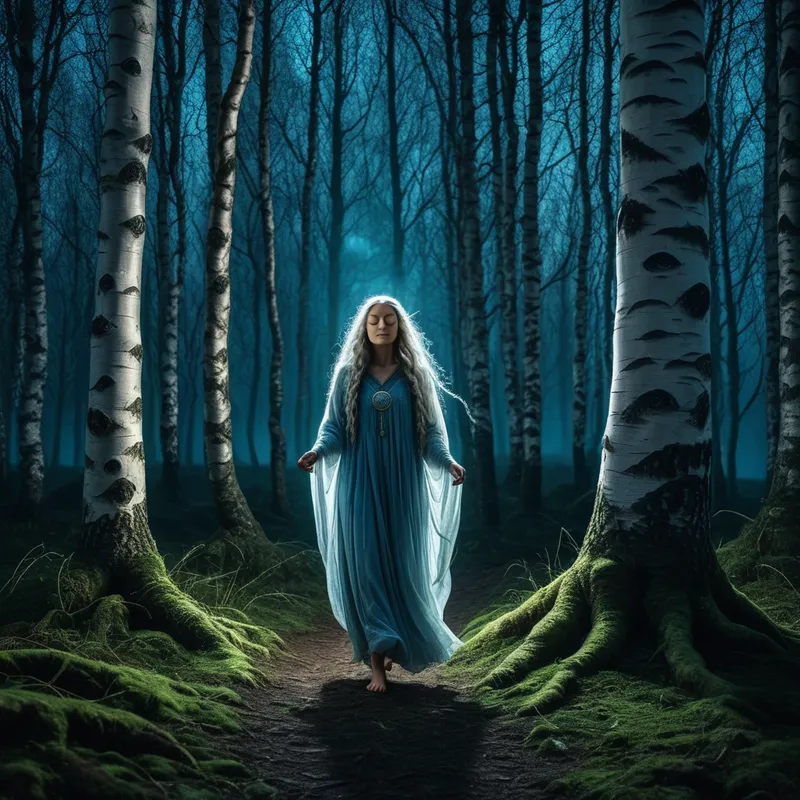
Hear now a tale not of roaring battles or gleaming gods, but of the quiet ones, the walkers in the borderlands. In the hush of the deep northern night, when the landvættir sleep and even the wind holds its breath, they would rise.
Their bodies remained in the langhús, nestled in furs by the dying embers, chests rising and falling with the rhythm of deepest slumber. But their hugr—their soul, their conscious mind—did not rest. It slipped free, like mist from a still lake. And their empty shells would stand. Eyes shut, faces smooth as undisturbed water, they would walk. Out past the threshold stone, into the silvered world beneath the moon.
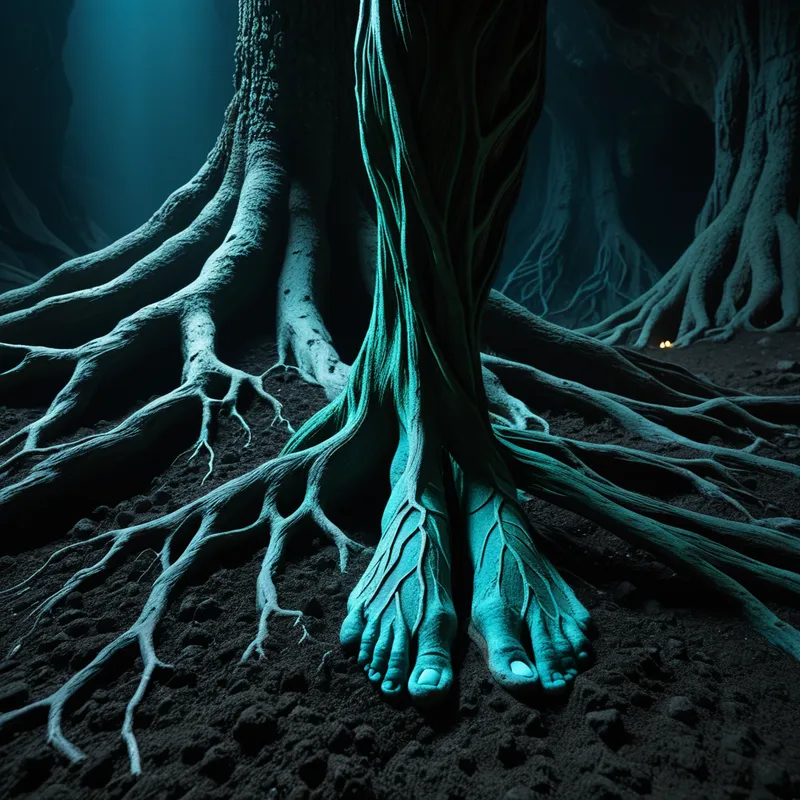
They were the svefn-ganga, the sleep-walkers, and theirs was a path trodden by soul alone. Their bare feet felt not the frost-rimed grass nor the sharp stone, for their senses were turned inward, downward, elsewhere. They walked the hidden roads, the paths that coil around the roots of Yggdrasil. They passed into Ásgarðr and saw the gods at their silent councils; they descended into Hel and heard the whispers of ancestors not as echoes, but as clear speech. They journeyed to the well of Urðr, where the Norns carved runes of what is, what was, and what may yet be.
Their sleeping forms were guided by unseen hands—the fetch of an animal spirit, a wisp of ancestral memory, the pull of a thread in the great web of ørlög. They would return as the first grey light touched the eastern hills, their bodies sliding back into their beds, cold as stone. Upon waking, their eyes would hold a distant, heavy knowledge. They would speak of a coming storm, a hidden betrayal, the location of lost livestock, or the true name of a newborn child’s spirit. Their words were not guesses; they were reports from a journey the waking could never take.
Cultural Origins & Context
The concept of the somnambulist seer is not the stuff of grand, codified epics like the tales of Þórr or Óðinn. It lives in the margins, in the sagas and folklore—a whispered practice of the völva (seeress) and the seiðmaðr (practitioner of magic). This was a deeply rooted, shamanistic strand within the Norse worldview, predating the more structured mythic pantheon. It belonged to the hearth and the hidden grove more than the hall of the gods.
These tales were likely passed down in familial or apprenticeship lines, from elder practitioner to chosen successor. Their societal function was profoundly practical and psychological. In a world perceived as woven through with invisible forces and impending fates, the sleep-walker was a vital scout. They provided actionable intelligence—weather, health, social dynamics—gleaned from a source considered infallible: the fabric of reality itself. They were the community’s direct line to the unconscious of the world, offering a semblance of control in a cosmos ruled by capricious giants and immutable fate.
Symbolic Architecture
The myth presents a powerful map of the human psyche. The sleeping body represents the conscious ego, dormant and passive. The journeying hugr is the active unconscious, the part of the self that navigates the interior, archetypal landscapes.
The greatest truths are not found in the glare of day, but gathered in the soul’s moonlit wanderings, where the self walks empty to be filled by the world.
The act of sleepwalking itself is the ultimate symbol of autonomous unconscious process. The seer’s body moves, performs complex navigation, yet is utterly guided by a intelligence beyond waking volition. This mirrors how our deepest insights, creative breakthroughs, and transformative realizations often arise not from forced effort, but from a state of surrender, when the controlling ego steps aside.
The landscapes visited—Ásgarðr, Hel, the roots of Yggdrasil—are not external places but internal states: the realm of ideal order and spirit (the Superego), the realm of repressed memory, shadow, and the past (the Id), and the core structuring principle of the psyche itself (the Self). The seer’s ability to traverse all without harm signifies a rare psychic wholeness, a non-resistant relationship with all aspects of existence.
The Dreamer’s Resonance
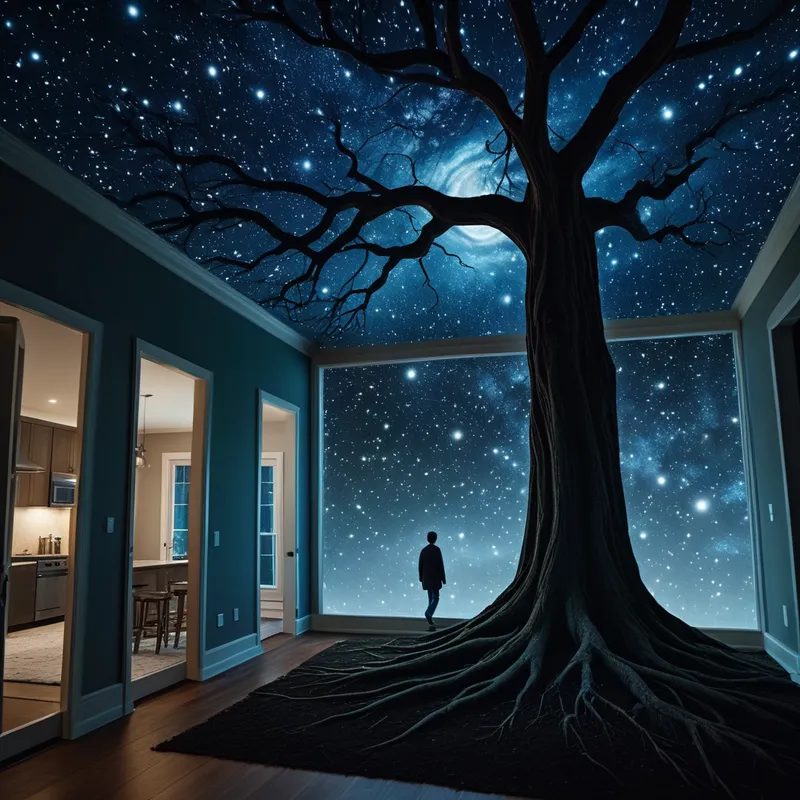
When a modern individual dreams of sleepwalking, or of being a passive witness in their own body as it is guided through strange landscapes, they are touching the archetype of the Somnambulist Seer. This is not a dream of anxiety, but of profound somatic and psychological process.
Somatically, it often correlates with a period where the body-knowledge is leading the way—through illness, recovery, pregnancy, or deep artistic practice—while the conscious mind struggles to catch up. Psychologically, it signals that a major process of integration is underway autonomously. The dream-ego is not in the driver’s seat because the transformative work is happening at a level too deep for conscious direction. The dreamer is being “walked” by the Self through the necessary stages of their own development. They may feel fear at the loss of control, but the myth assures that this guided journey, though it visits the underworld, has a purpose: to retrieve vital knowledge for the waking life.
Alchemical Translation
The alchemical process mirrored here is the Nigredo—the blackening, the descent into the unconscious matter. The seer’s journey into Hel and along the dark roots is this necessary first step of dissolution. The conscious identity (the waking self) must be rendered passive, “asleep,” for the old structures to be broken down.
Individuation begins not with building a tower of light, but with the humble, nightly pilgrimage into one’s own foundations, to listen to what the roots have always known.
The retrieval of prophecy is the Albedo—the whitening, the extraction of the valuable prima materia from the chaos. The hidden knowledge—be it a traumatic memory, a buried talent, or a stark truth about one’s life direction—is brought back from the shadowy journey. This is the “silver” of the moonlit walk.
Finally, the integration of this knowledge into the waking community represents the Rubedo—the reddening, the return of the transformed essence to daily life. The seer does not keep the vision private; it is uttered, made conscious, and applied. For the modern individual, this translates to the hard work of taking the unconscious insight—the dream symbol, the sudden intuition, the recovered memory—and consciously weaving it into one’s decisions, relationships, and self-understanding. One becomes both the sleeping journeyer and the waking interpreter, completing the sacred circuit between the depths of the soul and the demands of the world.
Associated Symbols
Explore related symbols from the CaleaDream lexicon: