Sōjōbō Myth Meaning & Symbolism
A legendary warrior, exiled and lost, finds a terrifying mentor in the mountain's depths, trading his humanity for supernatural power and a new destiny.
The Tale of Sōjōbō
Listen, and hear the tale whispered on the winds that scour the peaks of Mount Kurama. It begins not with a hero, but with a boy marked for death. His name was Ushiwaka-maru, later known as Yoshitsune, and he was a fugitive in his own land, a scion of a vanquished clan hidden away in the cold, silent halls of a mountain temple. [The world](/myths/the-world “Myth from Tarot culture.”/) of men offered him only [the shadow](/myths/the-shadow “Myth from Jungian culture.”/) of the executioner’s blade.
But the mountain offered a different path—a path into the deep, uncharted dark. Driven by a fury he could not name and a destiny he could not see, the boy fled [the temple](/myths/the-temple “Myth from Jewish culture.”/)’s confines. He ventured beyond the torii gates, past the last stone lantern, into the primordial forest where the air grew thick with the scent of damp earth and ancient pine. The chants of monks faded, replaced by the creak of towering cedars and the cry of unseen birds. Here, the rules of Kyoto held no sway.
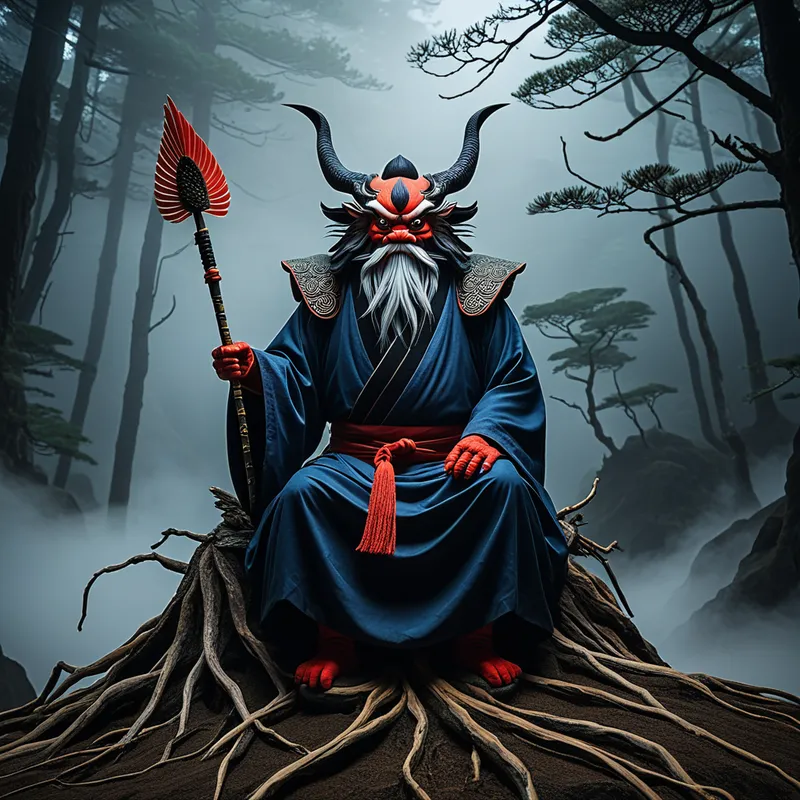
It was in this liminal realm that he encountered the true sovereign of the mountain. Not in a blaze of light, but in a gathering of profound, intelligent shadow. He was Sōjōbō. His form was a paradox: the severe, crimson visage of a tengu, with eyes like smoldering coals and a nose of impossible length, yet he was clad in the sacred robes of a [yamabushi](/myths/yamabushi “Myth from Japanese culture.”/), a master of esoteric arts. He did not attack. He assessed. In the boy’s defiant stance and desperate eyes, Sōjōbō saw not a victim, but a vessel.
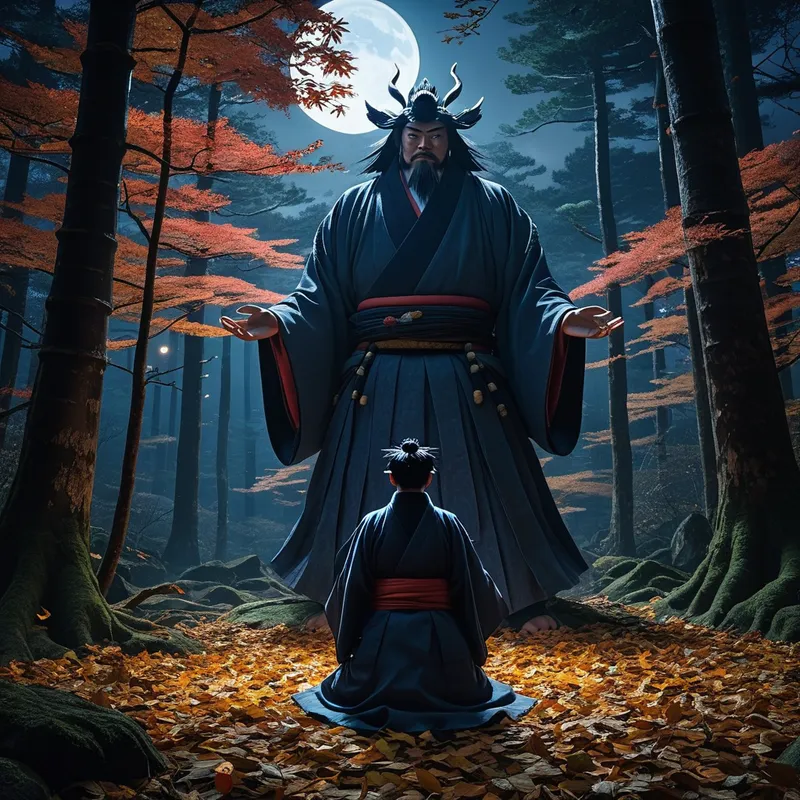
Thus began an education unlike any other. Under the gnarled roots of thousand-year-old trees and in caverns lit by foxfire, Sōjōbō became the ultimate, terrifying mentor. He taught the boy the dance of the blade—not the tidy forms of the dojo, but the hiten mitsurugi-ryū, the heavenly, flowing sword that moved like [the wind](/myths/the-wind “Myth from Various culture.”/) itself. He imparted strategies that bent the minds of men, tactics drawn from the cunning of animals and the patience of mountains. He offered the lore of the land, the secret names of the winds, and the art of walking unseen. The price? The boy’s old self. His simple humanity was shed like a skin, replaced by something fiercer, sharper, touched by the wild spirit of the mountain. When Ushiwaka-maru descended years later, he was Yoshitsune, the peerless general, a storm made flesh. His victories were not just his own; they were the manifest will of the tengu king, a power born from the shadowed heart of the world.
Cultural Origins & Context
The myth of Sōjōbō and Yoshitsune is a cornerstone of Japanese gunki monogatari and folklore, most famously enshrined in the medieval epic Heike Monogatari and later Noh and Bunraku plays. It emerged from a specific cultural crucible: the collision of esoteric Shugendō mountain asceticism with the [samurai](/myths/samurai “Myth from Japanese culture.”/) ethos. The mountains were not empty wilderness but reizan, potent spiritual realms where one could acquire genjutsu.
The tengu, originally seen as disruptive bird-demons or fallen devas, evolved in the public imagination. In the Kamakura period, they transformed into protectors of the Dharma and, crucially, masters of martial arts. Sōjōbō, as their king, became the archetypal source of hidden, transgressive knowledge. The story was told by itinerant monks (etoki) and performed by troupes of actors, serving a dual function. For the commoner, it was a thrilling origin story for a beloved folk hero. For the warrior class, it provided a mystical lineage and justification for their prowess, rooting their skill not merely in practice, but in a sacred, shadowy initiation from the wild spirit of Japan itself.
Symbolic Architecture
At its core, the myth is a profound map of an unconventional [path](/symbols/path “Symbol: The ‘path’ symbolizes a journey, choices, and the direction one’s life is taking, often representing individual growth and exploration.”/) to mastery. Sōjōbō represents the [Shadow](/symbols/shadow “Symbol: The ‘shadow’ embodies the unconscious, repressed aspects of the self and often represents fears or hidden emotions.”/) as mentor—not a [monster](/symbols/monster “Symbol: Monsters in dreams often symbolize fears, anxieties, or challenges that feel overwhelming.”/) to be slain, but a terrifying repository of denied power, instinct, and cunning. The [mountain](/symbols/mountain “Symbol: Mountains often symbolize challenges, aspirations, and the journey toward self-discovery and enlightenment.”/) (Kurama) is the [psyche](/myths/psyche “Myth from Greek culture.”/) itself, with its civilized, sunlit temples (the conscious ego) and its deep, untamed forests (the personal and [collective unconscious](/symbols/collective-unconscious “Symbol: The Collective Unconscious refers to the part of the unconscious mind shared among beings of the same species, embodying universal experiences and archetypes.”/)).
The true master does not await in the hall of accolades, but dwells in the cave of repressed potential. To find him, one must willingly become lost.
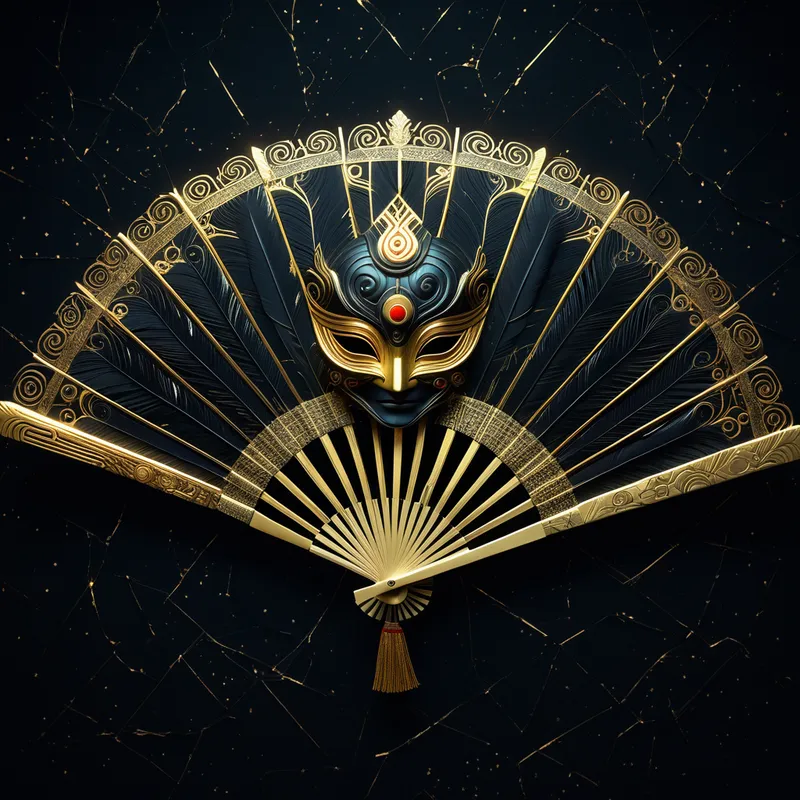
Yoshitsune’s [exile](/symbols/exile “Symbol: Forced separation from one’s homeland or community, representing loss of belonging, punishment, or profound isolation.”/) is the necessary failure of the old [identity](/symbols/identity “Symbol: Identity represents the sense of self, encompassing personal beliefs, cultural background, and social roles.”/). His [journey](/symbols/journey “Symbol: A journey in dreams typically signifies adventure, growth, or a significant life transition.”/) into the [forest](/symbols/forest “Symbol: The forest symbolizes a complex domain of the unconscious mind, representing both mystery and potential for personal growth.”/) is the descent into the unconscious. Sōjōbō’s terrifying [appearance](/symbols/appearance “Symbol: Appearance in dreams relates to self-image, perception, and how you present yourself to the world.”/)—the [fusion](/symbols/fusion “Symbol: The merging of separate elements into a unified whole, often representing integration of self, relationships, or conflicting aspects of identity.”/) of demonic and ascetic—symbolizes the paradoxical [nature](/symbols/nature “Symbol: Nature symbolizes growth, connectivity, and the primal forces of existence.”/) of deep wisdom: it is often frightening, [alien](/symbols/alien “Symbol: Represents the unknown, otherness, and the exploration of new ideas or experiences.”/), and demands the surrender of our comfortable self-[image](/symbols/image “Symbol: An image represents perception, memories, and the visual narratives we create in our minds.”/). The martial arts transmitted are not just physical techniques; they are psychological capacities—the agility to navigate complexity, the strategic mind to see hidden patterns, the “supernatural” speed of transformative [insight](/symbols/insight “Symbol: A sudden, deep understanding of a complex situation or truth, often arriving unexpectedly and illuminating hidden connections.”/). The fan Sōjōbō often holds can be seen as the tool that stirs the winds of change and obscures, then reveals, [truth](/symbols/truth “Symbol: Truth represents authenticity, honesty, and the quest for knowledge beyond mere appearances.”/).
The Dreamer’s Resonance
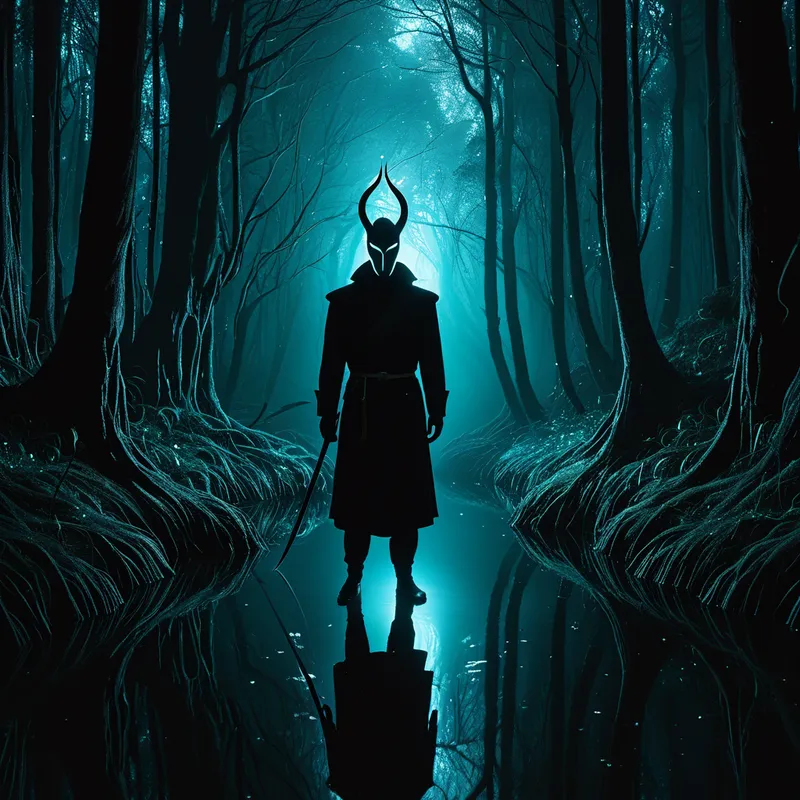
When this myth pattern activates in the modern dreamer, it signals a profound psychic crossroads. Dreaming of a terrifying yet compelling non-human figure (a tall shadow with a mask-like face, a creature of the woods) offering a gift or demanding a test points to the emergence of the Shadow as a guiding force. The somatic experience is often one of both dread and exhilarating awe—a pounding heart not solely from fear, but from the recognition of immense, untapped power.
This dream marks the psyche’s readiness to move beyond the limitations of conventional “self-help” or approved paths. It indicates a deep, often frustrated, knowing that one’s authentic capability lies buried under layers of social conditioning and personal history. The dreamer is being invited, like Yoshitsune, to leave the “temple” of their current identity and venture into the disorienting but fertile ground of their own unknown depths. The process is one of radical re-education, where [the ego](/myths/the-ego “Myth from Jungian culture.”/) must submit to a wisdom that feels alien and demanding to be remade.
Alchemical Translation
The alchemy here is the transmutation of raw, chaotic potential (the exiled, angry youth) into disciplined, world-altering power (the master strategist), catalyzed by [the prima materia](/myths/the-prima-materia “Myth from Alchemical culture.”/) of the Shadow (Sōjōbō). For the modern individual, this myth models the path of individuation through the doorway of what we fear or reject in ourselves.
[The first stage](/myths/the-first-stage “Myth from Alchemical culture.”/) is Exile—the felt sense of not belonging, of one’s conventional life becoming a prison. The second is the Descent—the courageous, often desperate, decision to confront the unconscious, to seek answers not in external authorities but in the interior “mountain.” The meeting with Sōjōbō is the Coniunctio with the Shadow—the terrifying, sacred union with one’s own repressed fierceness, intelligence, and wildness.
The feather of the tengu is both a weapon and a writing quill; it scripts our destiny with the ink of our own reclaimed darkness.
The final stage is not a return, but an Ascent with a Difference. One does not go back to the old temple. One emerges, like Yoshitsune, bearing the mountain within. The integrated Shadow becomes an inner mentor, a source of resilience, unconventional insight, and the power to navigate life’s battles with a grace that seems, to the outside world, almost supernatural. The goal is not to become a demon, but to integrate the demon’s power into a complete, formidable, and authentic human being. The myth of Sōjōbō assures us that our greatest teacher may wear the face of our deepest fear.
Associated Symbols
Explore related symbols from the CaleaDream lexicon: