Sita's Birth Myth Meaning & Symbolism
A king discovers a divine infant in a furrow of the earth, a daughter not born of woman but of the planet itself, destined for a sacred and arduous fate.
The Tale of Sita’s Birth
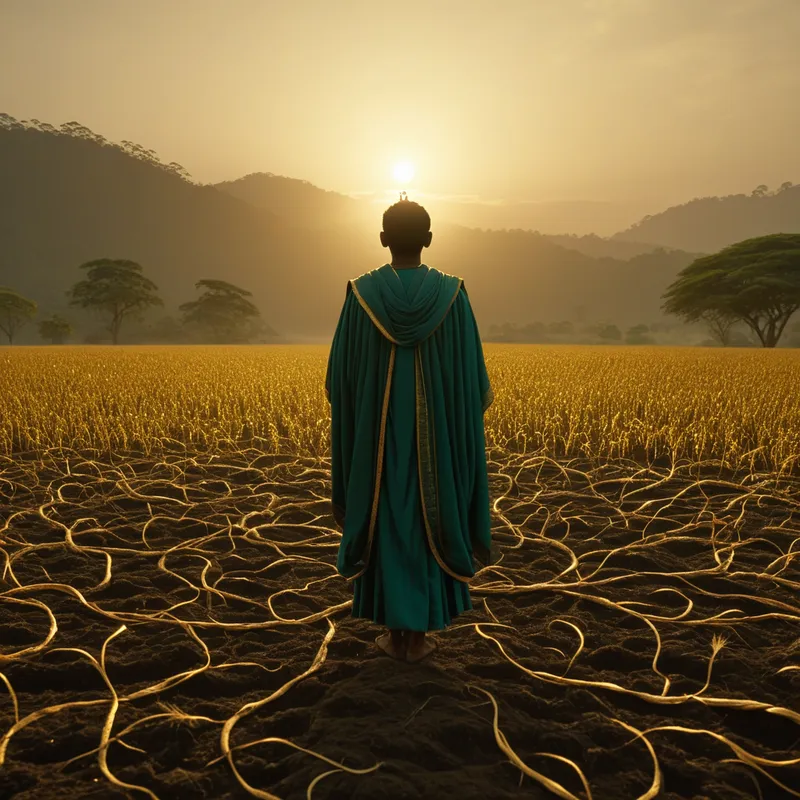
Hear now the tale of a birth that was not a birth, but a revelation. In the kingdom of Mithila, a land blessed by ancient rites, there ruled a king named Janaka. He was a sovereign of the plow as much as the scepter, a king who knew that true sovereignty springs from the nourishing earth. A great drought had gripped the land, a spiritual aridity that mirrored the parched fields. The kingdom’s lifeblood, its connection to the divine, was fading.
Driven by duty and desperation, King Janaka undertook a mighty yajna, a sacrifice to invoke the rains and restore the sacred covenant between king, people, and cosmos. The air grew thick with the scent of ghee and sacred wood, the chants of priests weaving a tapestry of sound meant to pierce the heavens. As the final offerings were made, a profound silence descended, heavier than any drumbeat.
The next morning, with the first grey light of dawn, Janaka walked the fields, seeking a sign. He took up the royal plow himself, its blade a sacred instrument of creation. He drove it into the heart of the sacrificial ground, the earth parting with a sigh. The furrow opened, dark and deep. And there, in that cleft of sacred soil, he beheld a miracle.
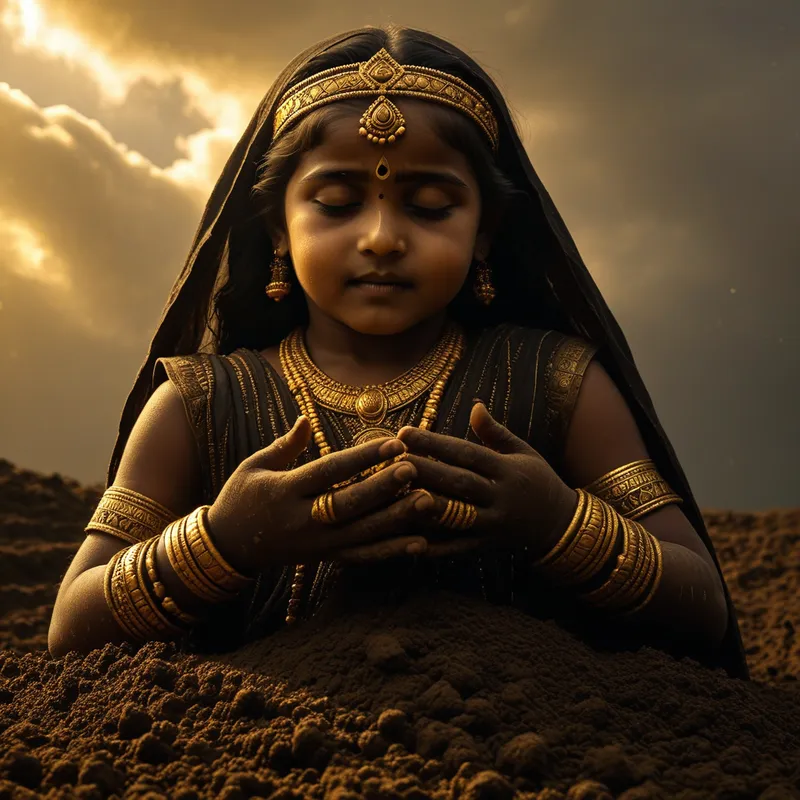
It was not water that welled up, but light. Cradled in the earth, as if she had always been sleeping there, was an infant girl. She radiated a serene luminosity, her skin the color of polished gold, untouched by the soil that embraced her. She did not cry, but gazed at the king with eyes that held the calm of ancient oceans. A voice, neither male nor female, seemed to resonate from the earth itself: “She is your daughter, sprung from my womb. She is Sita.”
Janaka’s heart, once burdened by kingly worry, overflowed with a awe that transcended fatherly love. He lifted her from the earth, this child of the furrow, and the very ground seemed to bless the act. The rains began then, a gentle, life-giving shower that washed the kingdom clean. Sita, the earth-born, had arrived, and with her, the promise of a destiny that would shake the foundations of the world.
Cultural Origins & Context
The myth of Sita’s birth is primarily enshrined within the epic Ramayana, attributed to the sage Valmiki. However, its roots likely delve deeper into the pre-Vedic, agrarian substratum of the Indian subcontinent, where the earth (Prithvi or Bhumi) was worshipped as the ultimate mother and source of all life. The story functions as a divine genealogy, establishing Sita not as a mere mortal princess but as an avatara of the goddess Lakshmi, born directly from the essence of the planet.
Passed down orally for centuries by bards and within temple traditions, the tale served multiple societal functions. It legitimized King Janaka’s lineage as divinely blessed and connected to the sovereign earth. It established an ideal of womanhood and sovereignty that was inherently sacred, grounded, and resilient. Most importantly, it wove the human drama of the Ramayana into the very fabric of the cosmos, making Sita’s subsequent trials—her abduction, her ordeal by fire, her final return to the earth—not just a personal story, but an allegory for the relationship between consciousness (humanity) and its sacred source (the Earth).
Symbolic Architecture
The symbolism of Sita’s birth is an intricate map of the soul’s emergence into conscious existence. The plowed field represents the prepared psyche, broken open by effort, sacrifice, and spiritual discipline (sadhana). The furrow is the wound that becomes a womb, the necessary cleft in the ego through which the deeper Self can emerge.
The divine child is never born in the palace of the complacent ego, but always in the furrowed field of the soul that has been broken open by longing.
Sita herself symbolizes the Atman, the indwelling divine essence, which is not created by human lineage but discovered as our fundamental, pre-existent nature. She is the soul’s inherent purity, wisdom, and connection to the ground of all being. Her discovery by Janaka, the righteous king, represents the moment the conscious mind (buddhi) recognizes and accepts this profound inner reality, vowing to protect and nurture it. Her birth from Bhumi forever ties the individual soul’s journey to the fate of the world itself, suggesting that individuation is not an escape from the world, but a deeper commitment to it.

The Dreamer’s Resonance
When this myth stirs in the modern unconscious, it often manifests in dreams of discovery in the earth: finding a precious gem, a lost child, or a mysterious artifact buried in soil or sand. The dreamer may feel a profound sense of responsibility, awe, or even anxiety upon this discovery. Somatically, this can correlate with a felt sense of “grounding” or a sudden, deep connection to the body after a period of dissociation or intellectual abstraction.
Psychologically, this dream pattern signals the emergence of a new, foundational aspect of the Self. The “child in the earth” is often a nascent talent, a long-buried truth, or a core identity that has been repressed or overlooked because it did not fit the personal or familial narrative (“human birth”). The dream marks the beginning of a process where this authentic self must be acknowledged, lifted from the unconscious (the earth), and integrated into one’s life. Resistance to this can feel like a drought—a creative or emotional barrenness.
Alchemical Translation
The alchemical process modeled here is the opus contra naturam—the work against one’s assumed, “natural” birth. It is the transmutation of identity from one based on personal history, trauma, and social conditioning (the “adopted” or constructed self) to one rooted in a transpersonal, sacred origin (the “true” self).
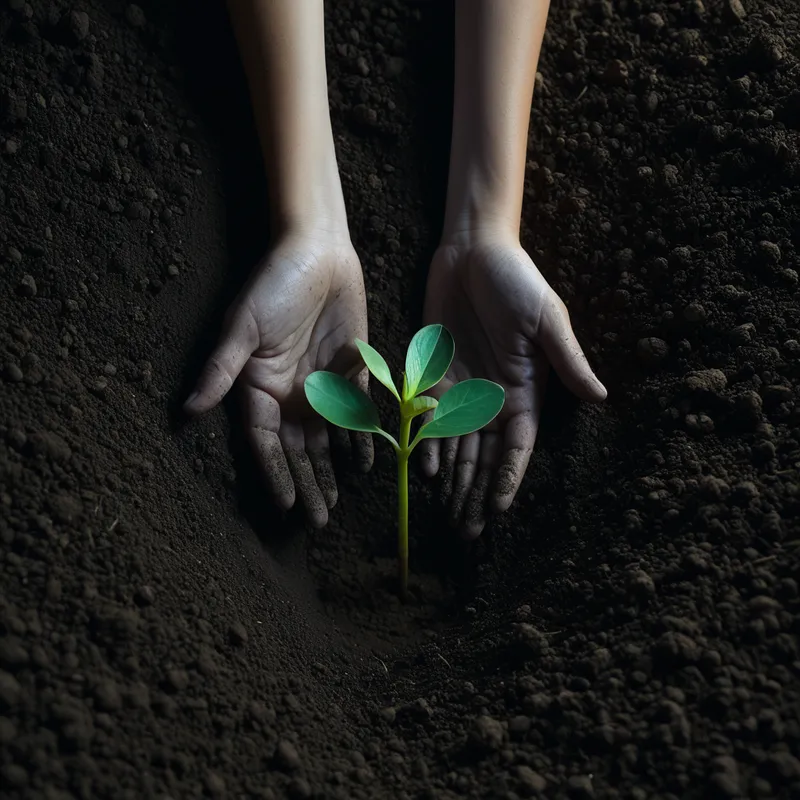
The first stage is the sacrificial plowing: the conscious, often painful work of self-examination, therapy, or spiritual practice that breaks up the hardened soil of the persona. This creates the fertile, receptive space—the vas or vessel—for the new.
Individuation begins not with building a tower, but with digging a well.
The second stage is the discovery and lifting: the moment of insight, often grace-filled and unexpected, where the core Self is revealed in its pristine, unblemished form. This is not an act of creation, but of recognition. The final, lifelong stage is the stewardship: like Janaka, the conscious ego must now become the guardian and king to this divine child. It must navigate a world that will test, challenge, and often fail to understand this earth-born truth. The ultimate triumph is not in keeping the child safe in a palace, but in allowing its destiny to unfold, even through ordeal, knowing its origin and its end are one and the same—a return to, and a transfiguration of, the very ground from which it came.
Associated Symbols
Explore related symbols from the CaleaDream lexicon: