
Sisyphus eternally rolling his Myth Meaning & Symbolism
The cunning king condemned by the gods to forever push a boulder up a mountain, only to watch it roll back down, in an endless cycle of effort and futility.
The Tale of Sisyphus eternally rolling his
Hear now the tale of the cleverest of mortals, a king whose wit was a match for the gods themselves, and whose pride became his eternal chain. In the sun-baked land of Corinth, [Sisyphus](/myths/sisyphus “Myth from Greek culture.”/) ruled. He was not a king of brute force, but of a sharp, silver tongue and a mind that saw the seams in fate’s tapestry. He built a great city, but his gaze often turned upward, to the realm of Zeus, with a smirk that whispered of secrets stolen.
The conflict began with a river god’s daughter, abducted. When her father, Asopus, came seeking, Sisyphus—for a price of a sweet-[water](/myths/water “Myth from Chinese culture.”/) spring for his citadel—revealed the kidnapper was Zeus. The lord of [the sky](/myths/the-sky “Myth from Persian culture.”/), enraged at this betrayal by a mortal, sent Thanatos, Death himself, in iron chains, to drag Sisyphus to [Tartarus](/myths/tartarus “Myth from Greek culture.”/). But Sisyphus was ready. He feigned curiosity about the strange shackles, tricking Death into demonstrating their use, and in a flash, bound the binder. With Death imprisoned, no mortal on earth could die. Wars raged without end, the wounded writhed in unending agony—a chaos that shook the cosmos.
The gods intervened. Ares, furious, freed Thanatos. This time, there was no trick. Sisyphus was seized. Yet, even in his final moments, his cunning did not sleep. He whispered to his wife, Merope, a final, desperate scheme: “Leave my body unburied. Cast it in the public square. Do not perform the rites.”
Arriving in the sunless halls of [Hades](/myths/hades “Myth from Greek culture.”/), Sisyphus did not plead. He complained. With righteous indignation, he appealed to [Persephone](/myths/persephone “Myth from Greek culture.”/). “A great insult has been done! My wife, in her neglect, has denied me the proper rites. My soul cannot rest. Grant me but three days to return to [the world](/myths/the-world “Myth from Tarot culture.”/) of light and chastise her, to see my body given to [the earth](/myths/the-earth “Myth from Hindu culture.”/).” Moved by this apparent breach of sacred law, the rulers of the dead consented.
Sisyphus walked back into the sunlight, breathed the air of Corinth, saw his wife, and smiled. He had no intention of returning. He lived on, feasting, ruling, defying the order of life and death a second time. But the gods are not fooled twice. When his borrowed days were spent, [Hermes](/myths/hermes “Myth from Global/Universal culture.”/) himself, grip firm and unyielding, dragged the laughing king back to judgment.
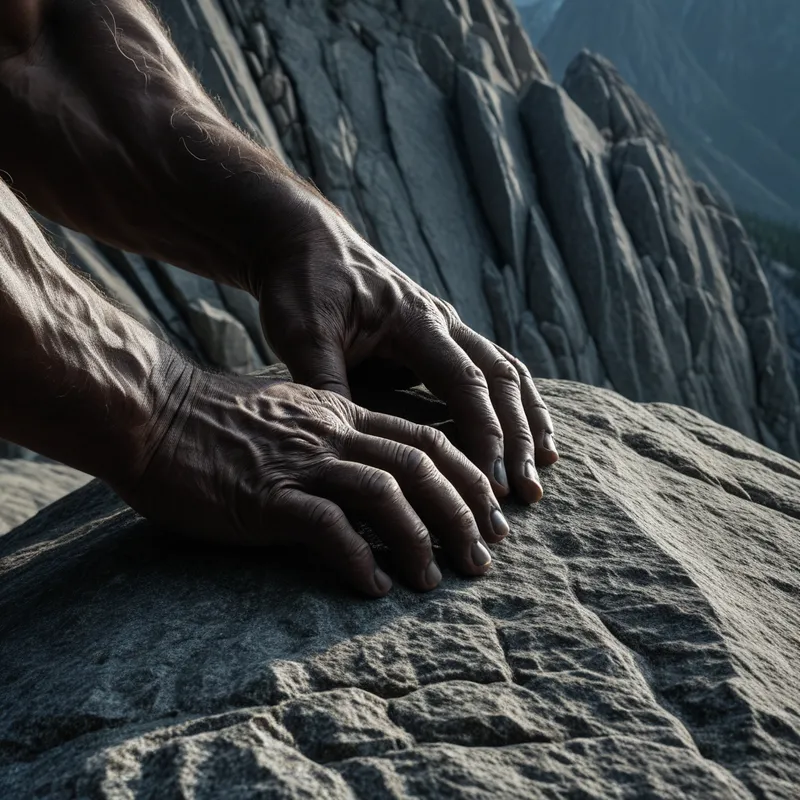
The sentence was pronounced by Zeus, a punishment to fit the crime of a mind that sought to outwit cosmic law. Not mere torment, but a task of perfect, elegant futility. Sisyphus was taken to a barren mountainside in the deepest pit of Tartarus. There waited a massive boulder, hewn from the mountain’s own heart. His charge: to push this stone up the steep, scree-covered slope to [the summit](/myths/the-summit “Myth from Taoist culture.”/). He would strain, muscles cracking, breath a ragged fire in his chest, feet slipping on the loose stones. For hours, days, he would labor, nearing the crest where the sky of [the underworld](/myths/the-underworld “Myth from Greek culture.”/) hung heavy. And then, at the very moment of [triumph](/myths/triumph “Myth from Roman culture.”/), the weight would shift. The boulder would tremble, roll from his bleeding hands, and thunder back down to the plain, crushing all his effort into dust. And he would turn, walk down, and begin again. Forever. No end, no purpose, no victory—only the push, the almost, and [the fall](/myths/the-fall “Myth from Biblical culture.”/).
Cultural Origins & Context
[The myth of Sisyphus](/myths/the-myth-of-sisyphus “Myth from Modern culture.”/) is a cornerstone of ancient Greek storytelling, primarily preserved in the epic poetry of [Homer](/myths/homer “Myth from Greek culture.”/)’s Iliad and later elaborated by poets like Pseudo-Apollodorus. It was not a religious text in a doctrinal sense but a powerful cultural narrative shared by bards and tragedians. Its function was multifaceted: it was a cautionary tale about the dangers of hubris and deceit against the divine order, a folk-explanation for the inevitability of death, and a profound philosophical parable. In the Greek worldview, which prized cleverness ([metis](/myths/metis “Myth from Greek culture.”/)) but revered cosmic balance (dike), Sisyphus represented the ultimate transgressor. His story served to reinforce the boundaries between mortal and immortal, and the futility of attempting to cheat the fundamental conditions of existence. It was a story told to remind people of their place, yet it also immortalized a uniquely human spirit of defiance.
Symbolic Architecture
At its core, the myth maps the [psyche](/myths/psyche “Myth from Greek culture.”/)’s confrontation with absurdity—the gap between our [human](/symbols/human “Symbol: The symbol of a human represents individuality, complexity of emotions, and social relationships.”/) need for meaning, order, and [achievement](/symbols/achievement “Symbol: Symbolizes success, mastery, or reaching a goal, often reflecting personal validation, social recognition, or overcoming challenges.”/), and a [universe](/symbols/universe “Symbol: The universe symbolizes vastness, interconnectedness, and the mysteries of existence beyond the individual self.”/) that appears indifferent to those needs. Sisyphus is the archetypal modern [consciousness](/symbols/consciousness “Symbol: Consciousness represents the state of awareness and perception, encompassing thoughts, feelings, and experiences.”/) avant la lettre.
The boulder symbolizes the [weight of existence](/symbols/weight-of-existence “Symbol: This symbol embodies the burden of consciousness and the inherent challenges of being aware and alive, often leading to feelings of gravity and introspection.”/) itself: our burdens, responsibilities, ambitions, and the sheer inertia of [life](/symbols/life “Symbol: The symbol of ‘Life’ represents a journey of growth, interconnectedness, and existential meaning, encompassing both the joys and challenges that define human experience.”/). It is tangible, heavy, and real. The [mountain](/symbols/mountain “Symbol: Mountains often symbolize challenges, aspirations, and the journey toward self-discovery and enlightenment.”/) represents the struggle for elevation, for significance, for reaching a [summit](/symbols/summit “Symbol: The highest point of a mountain, representing achievement, perspective, and the culmination of effort.”/) of understanding, success, or [peace](/symbols/peace “Symbol: Peace represents a state of tranquility and harmony, both internally and externally, often reflecting a desire for resolution and serenity in one’s life.”/). The eternal rollback is the experience of futility—the project that fails, the habit that returns, the [insight](/symbols/insight “Symbol: A sudden, deep understanding of a complex situation or truth, often arriving unexpectedly and illuminating hidden connections.”/) that slips away, the feeling that all [effort](/symbols/effort “Symbol: Effort signifies the physical, mental, and emotional energy invested toward achieving goals and personal growth.”/) is ultimately erased by time or circumstance.
Sisyphus is not punished by the stone, but by the consciousness of the stone’s inevitable descent. His hell is in the moment he must turn and face the fruitlessness of his labor.
Psychologically, he represents the part of [the ego](/myths/the-ego “Myth from Jungian culture.”/) that refuses to accept limits, that rebels against any “given” [condition](/symbols/condition “Symbol: Condition reflects the state of being, often focusing on physical, emotional, or situational aspects of life.”/), whether it be [mortality](/symbols/mortality “Symbol: The awareness of life’s finitude, often representing transitions, impermanence, or existential reflection in dreams.”/), societal norms, or personal failure. This rebellious [energy](/symbols/energy “Symbol: Energy symbolizes vitality, motivation, and the drive that fuels actions and ambitions.”/) is both our greatest [source](/symbols/source “Symbol: The origin point of something, often representing beginnings, nourishment, or the fundamental cause behind phenomena.”/) of vitality and the cause of our deepest [despair](/symbols/despair “Symbol: A profound emotional state of hopelessness and loss, often signaling a need for transformation or surrender to deeper truths.”/) when it meets an immovable [reality](/symbols/reality “Symbol: Reality signifies the state of existence and perception, often reflecting one’s understanding of truth and life experiences.”/).
The Dreamer’s Resonance
When this myth surfaces in modern dreams, it rarely appears as a classical Greek tableau. Instead, the dreamer may find themselves in an endless, fluorescent-lit office corridor, pushing a heavy cart of paperwork that spills just as they reach the boss’s door. They may be running on a treadmill that speeds up, or trying to climb a sand dune that collapses beneath them. The somatic feeling is one of profound exhaustion, frustration, and trapped energy—a grinding, soul-deep fatigue.
This dream pattern signals that the psyche is processing a state of burnout, a feeling of being stuck in a meaningless cycle, or an investment in a goal that has become an empty idol. The body in the dream carries the literal weight of a psychological burden the dreamer feels they must carry, but which yields no fulfillment. It is the mind’s way of screaming, “This effort is not sustainable! This path leads nowhere!” The dream is an invitation to examine the nature of the “boulder” one is pushing. Is it a true calling, or a conditioned expectation? Is the mountain one of one’s own choosing, or one erected by others?

Alchemical Translation
The alchemical process here is not about removing the boulder or leveling the mountain. That is the ego’s wish, the very pride that created the punishment. The transmutation lies in changing one’s relationship to the task itself. This is the move from despair to a form of tragic, conscious freedom.
[The first stage](/myths/the-first-stage “Myth from Alchemical culture.”/), [nigredo](/myths/nigredo “Myth from Alchemical culture.”/) (blackening), is the crushing realization of the cycle, the despair as the stone rolls down. This is necessary; one must fully feel the absurdity to move through it. The albedo (whitening) is the moment of walking down the mountain. This is not defeat, but the space between efforts. It is a moment of lucidity, of pause. Here, Sisyphus is free. The gods did not chain him to the stone; they chained him to the cycle. But in the descent, he is temporarily unchained. He can feel the cool air, see the landscape, be aware of his own existence.
The supreme alchemical act is to find meaning not in the summit, but in the integrity of the push, and the clarity of the return.
The final stage, the elusive [rubedo](/myths/rubedo “Myth from Alchemical culture.”/) (reddening), is the conscious embrace of one’s fate. Imagine Sisyphus, in that moment of turning, not with dread, but with a quiet, defiant resolve. He acknowledges the stone, the mountain, the fall. He accepts them as the conditions of his being. In doing so, he steals the punishment’s sting. The task remains, but the inner experience is transformed. He is no longer a slave to a futile hope of completion, but a sovereign being who chooses, again and again, to engage fully with the struggle that defines him. For the modern individual, this translates to finding dignity, purpose, and even joy not in guaranteed outcomes, but in the quality of our engagement with life’s inherent struggles. We must imagine Sisyphus happy, not because he wins, but because he chooses to push.
Associated Symbols
Explore related symbols from the CaleaDream lexicon: