Silver Branch Myth Meaning & Symbolism
A sacred branch of silver apple blossoms calls a mortal to the Otherworld, bridging the seen and unseen realms in a journey of initiation.
The Tale of Silver Branch
Listen, and let the fire’s crackle become the crash of waves on a hidden shore. In the time when the world was thinner, and the veil between what is and what might be was a mere shimmer in the air, there lived a mortal. He was a poet, or perhaps a king in waiting, whose soul carried a quiet hunger, a melody half-remembered from a dream.
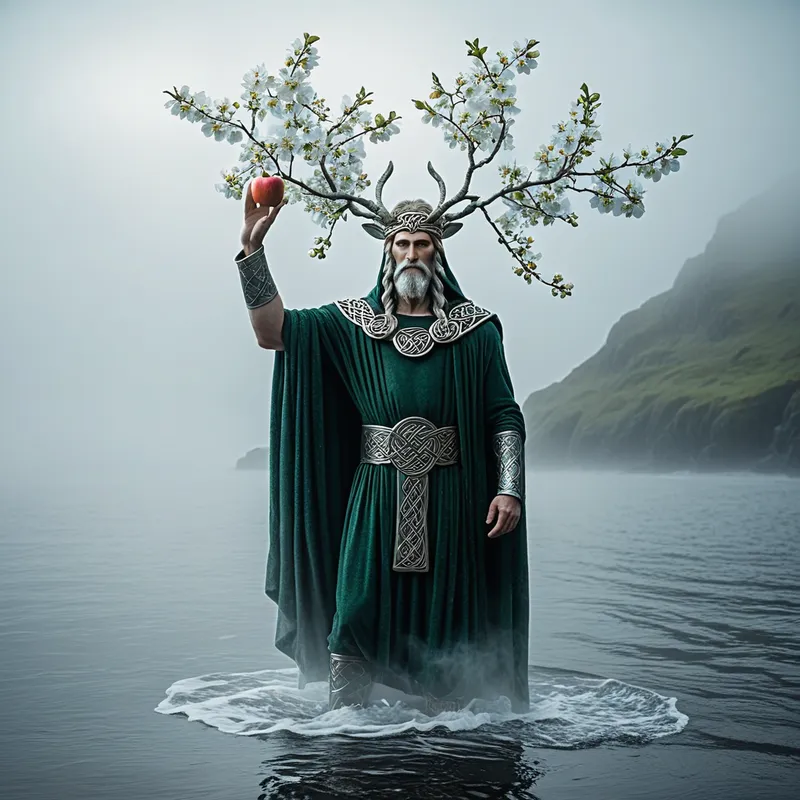
One day, as he walked a lonely strand where the grey sea met the grey sky, a mist began to gather—not from the ocean, but from the very air itself. It thickened, swirling with the scent of salt and apple blossom, a perfume that spoke of a land beyond seasons. From within this luminous fog, a figure emerged. He was Manannán mac Lir, lord of the sea and master of mists. His cloak was the colour of a storm-tossed wave, and his presence held the deep, patient rhythm of the tides.
In his hand, he held not a weapon, but a wonder. It was a branch, wrought from the purest silver. From it sprang nine perfect blossoms, each petal a sliver of moonbeam, and from those blossoms hung nine apples of red-gold, humming with a light that was their own. The air around it shimmered, and a sound emanated from it—a sound that was not a sound, but a ringing silence, a chord of such profound peace and poignant beauty that it pierced the mortal’s heart like a spear of longing.
Manannán spoke, and his voice was the whisper of receding tides. He did not offer a threat, but an invitation. The branch was the key, the passport, the irresistible summons. Its music was the call of Tír na nÓg, the Land of the Young. To hear it was to be chosen; to see it was to have one’s destiny irrevocably altered. The mortal’s old life—the solid earth, the familiar hearth, the known loves—fell away like a discarded shell. The conflict was not against a monster, but within his own soul: the terror of the unknown against the soul’s deep, answering cry to the call.
He reached out. His fingers closed not around cold metal, but around the very essence of the call itself. As he took the Silver Branch, the mist enveloped him wholly. The crash of waves faded, replaced by a sweeter, more distant music. The grey shore dissolved. He stepped not onto a boat, but across a threshold unseen, following the branch’s guiding light into the emerald hills and everlasting sunlight of the Otherworld, leaving the world of men behind, not as a loss, but as a homecoming to a home he never knew he had.
Cultural Origins & Context
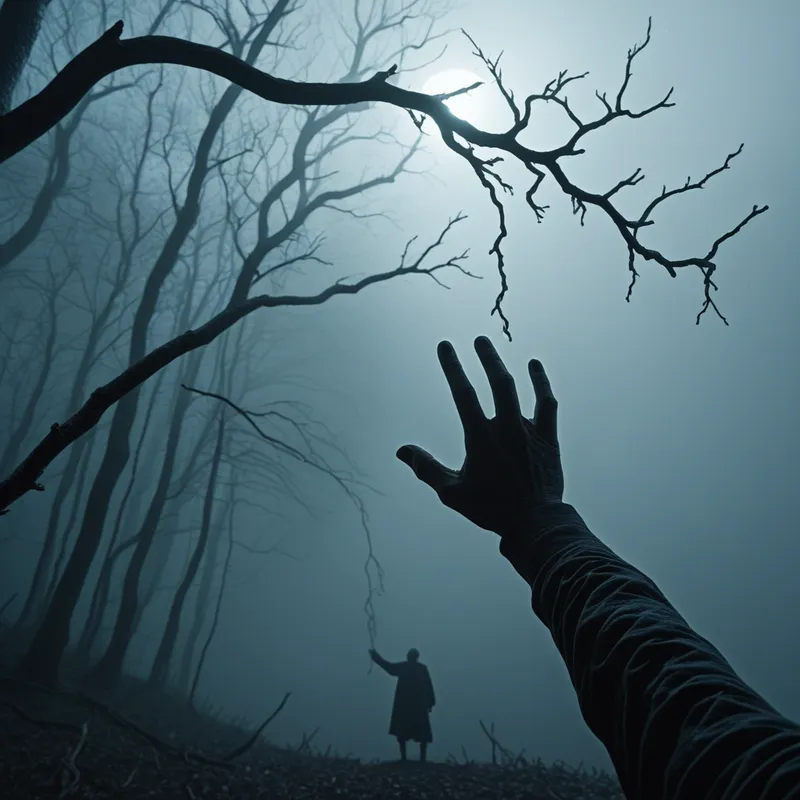
The Silver Branch is not a single, codified myth from a sacred text, but a potent, recurring motif woven through the tapestry of Irish and Welsh mythological cycles. We encounter it in tales like The Voyage of Bran and the adventures of Cú Chulainn. It was an image carried in the oral tradition, preserved by the filid, the poet-seers who were the custodians of history, law, and sacred lore.
In a culture that perceived reality as layered—with our world (Midgard in a Celtic sense) interpenetrated by the Otherworld—the Silver Branch functioned as a crucial symbolic technology. It was a societal metaphor for poetic inspiration, sovereignty, and divine sanction. The branch legitimized the journey of the hero or the vision of the poet. Its appearance signaled that what followed was not mere fantasy, but a transaction with the ultimate reality. It served as a narrative device that authenticated ecstatic experience, showing that a journey to the sidhe (the fairy mounds) or Tír na nÓg was undertaken not by whim, but by summons. It upheld the social function of the mystic: their visions were valid because they were invited.
Symbolic Architecture
The Silver Branch is a master symbol of the liminal, the threshold itself made manifest. It is not the destination, but the means of passage.
- The Silver and the Apple Blossom: Silver is the metal of the moon, of reflection, intuition, and the subconscious. The apple, especially in Celtic lore, is the fruit of immortality, wisdom, and sacred knowledge (as in the Welsh Avalon, the Isle of Apples). The combination creates a symbol of immortal, intuitive wisdom—knowledge that comes not from study, but from direct revelation.
- The Number Nine: In Celtic numerology, nine is a number of completion and sacred potency, often associated with the Otherworld. Nine blossoms suggest a full, perfect, and divine manifestation.
- The Sound: Its haunting, beautiful music is the call of the Self—what Jung termed the Self—to the conscious ego. It is the sound of a part of the psyche that is richer, more eternal, and more complete than daily life, and it creates an unbearable longing for integration.
The Silver Branch is the psyche’s own signal, broadcast from the depths, that a state of provisional wholeness has been achieved in the unconscious and is now demanding recognition by the conscious mind.
Psychologically, the mortal who receives the branch represents the ego at a point of stagnation or potential. The branch is presented by Manannán, an archetypal figure of the Senex or guide, the aspect of the deep psyche that facilitates transition. The conflict is the ego’s resistance to the terrifying, life-altering process of individuation.
The Dreamer's Resonance
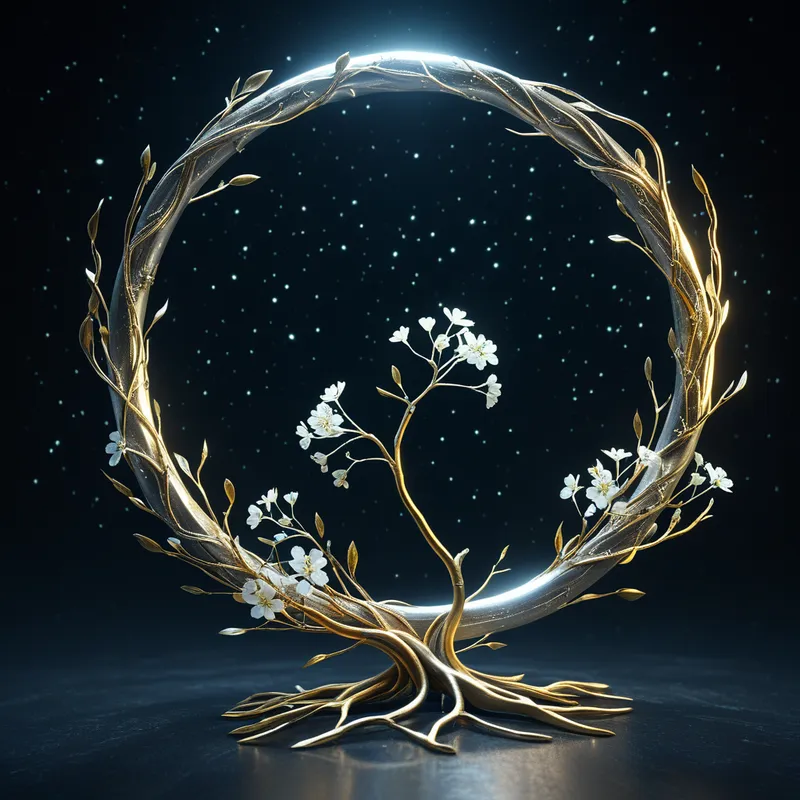
When the pattern of the Silver Branch emerges in modern dreams, it rarely appears as a literal Celtic artifact. Its essence manifests in potent symbols of call and passage.
A dreamer might find a key that glows with a soft light, hear a piece of music that stirs a devastating homesickness for a place they’ve never been, or encounter a doorway in a familiar house that leads to a breathtaking, unknown landscape. The somatic experience is crucial: a palpable feeling of awe, a tightening in the chest, tears that arise from profound recognition rather than sadness. There is often a figure—a stranger, an ancestor, an animal—who silently presents the object or indicates the path.
This dream signals that the unconscious is issuing a powerful summons to the dreamer’s conscious life. It marks a psychological threshold. The dreamer is being invited, or compelled, to move from one stage of life or understanding to another. The resistance felt in the dream—the fear to take the key, to step through the door—mirrors the soul’s resistance in waking life to a necessary but frightening transformation: leaving a job, ending a relationship, embracing a creative calling, or confronting a deep-seated truth. The branch’s music is the call to become more whole, and the terror is the ego’s rightful fear of dying to its old, limited form.
Alchemical Translation
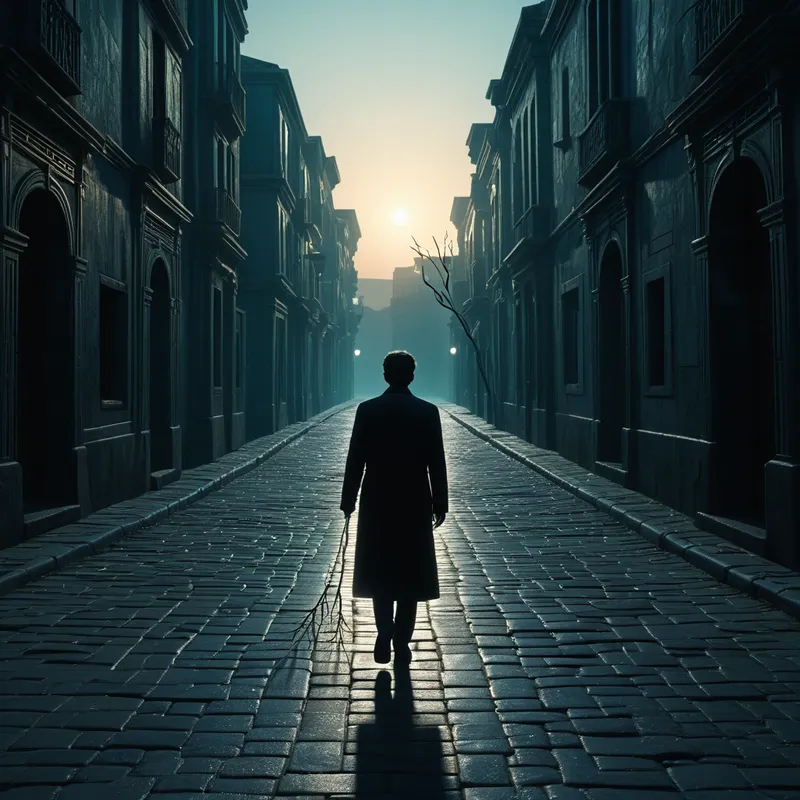
The myth of the Silver Branch is a precise map for the alchemical process of psychic transmutation, the journey of individuation.
- The Call (The Appearance of Manannán): This is the nigredo, the initial blackening. Life feels grey, stagnant, or arid (the grey shore). The guide emerges from the mist of the unconscious, representing the first stirring of the Self, introducing the possibility of change.
- The Token (The Branch Itself): This is the albedo, the whitening. The silver branch represents the lucid, clarifying symbol that emerges from the chaos. It is the conscious idea, the image, the “aha” moment that captures the nature of the call. It is not yet integration, but it is the perfect, radiant plan for it.
- The Acceptance (Taking the Branch): This is the critical moment of sacrificium intellectus—the sacrifice of the intellect’s need for control and safety. The ego must consent to be led by the symbol, to trust the deeper wisdom of the psyche over the known comforts of the familiar world.
- The Passage (The Mist): This is the coniunctio, the union. The enveloping mist symbolizes the dissolution of old ego boundaries. The dreamer enters the liminal space where the old self is de-structured so the new can be formed.
- The New Realm (Tír na nÓg): This is the potential rubedo, the reddening, or the realization of the Philosopher’s Stone. It symbolizes a new, more expansive psychic attitude. It is not a literal paradise, but a state of being where the soul’s reality is integrated into daily life. The mortal becomes the poet-king of his own inner landscape.
To heed the Silver Branch is to consent to the death of who you were, in service to the birth of who you are meant to become. The journey to the Otherworld is, in truth, the journey into the deepest strata of the Self.
For the modern individual, the myth teaches that profound life transitions are not accidents, but summonses. The “grey shore” of dissatisfaction, depression, or longing is often the necessary precondition for the guide to appear. The work is to recognize the “branch” when it is offered—in a sudden insight, a recurring dream, an undeniable pull—and, despite the terror, to have the courage to reach out and take it, allowing its unearthly music to guide you through the mist and into a vaster life.
Associated Symbols
Explore related symbols from the CaleaDream lexicon: