Shiva's Damaru Myth Meaning & Symbolism
In the cosmic silence, the god Shiva's drumbeat births language, order, and the universe from the primal void, a rhythm of creation and dissolution.
The Tale of Shiva’s Damaru
In the beginning, before time had a name, there was only the boundless, dark, and silent ocean of [Pralaya](/myths/pralaya “Myth from Hindu culture.”/). No wind stirred its surface. No star pierced its depth. It was a profound, pregnant stillness, a sleep so deep it dreamed of nothing. In that infinite potential, adrift upon the waters, lay [Shiva](/myths/shiva “Myth from Hindu culture.”/), the great Yogi, immersed in the absolute silence of his own being. His [third eye](/myths/third-eye “Myth from Hindu culture.”/) was closed, his matted locks still, his form the only anchor in the formless void.
This was not a peace, but a completion so total it bordered on oblivion. The universe had inhaled, and held its breath for an eternity. Yet, within the heart of that stillness, a subtle tension grew—the first faint itch of a thought, the whisper of a possibility. It was the divine feminine, [Shakti](/myths/shakti “Myth from Hindu culture.”/), the latent energy coiled at the base of Shiva’s spine. She stirred, not as a separate force, but as the inherent pulse of his own consciousness, yearning for expression, for play, for form.
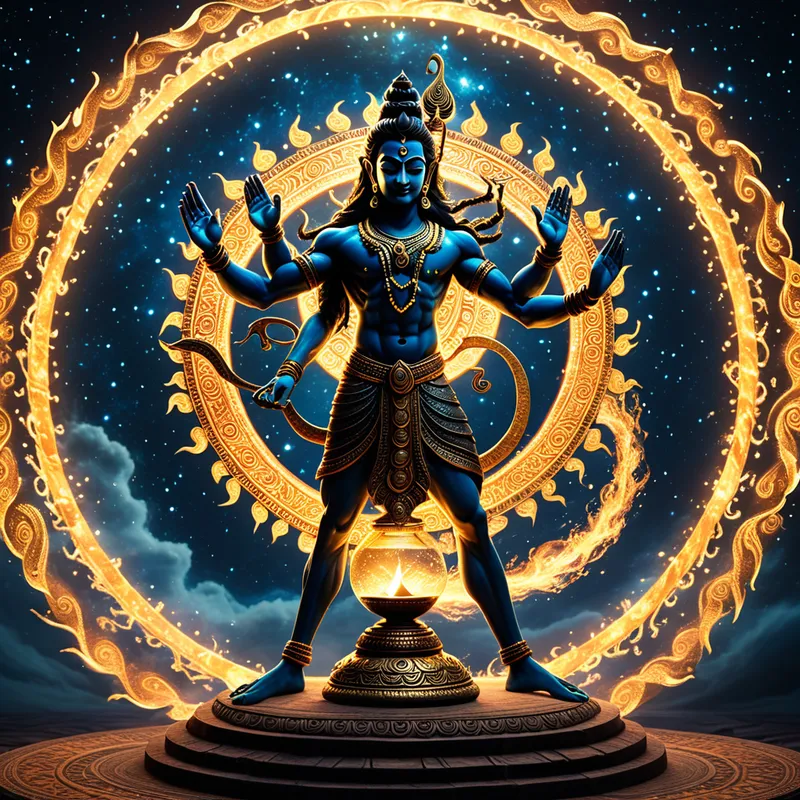
And so, the dance began. Not with a leap, but with the slow, inevitable uncoiling of grace. Shiva, the [Nataraja](/myths/nataraja “Myth from Hindu culture.”/), arose within [the void](/myths/the-void “Myth from Buddhist culture.”/). One foot planted firmly, crushing the dwarf-demon of ignorance, Apasmara. The other lifted in the bliss of cosmic motion. Fire encircled him, the flame of transformation. One hand gestured “fear not,” another pointed to his raised foot, symbol of liberation. And in his upper right hand, he held it aloft: the Damaru.
It was a tiny [thing](/myths/thing “Myth from Norse culture.”/), shaped like two triangles joined at their points—an hourglass of cosmic potential. As the dance of Tandava reached its crescendo, as Shakti’s energy surged through his form, Shiva flicked his wrist. A single, sharp tak shattered the eternal silence.
The sound was not loud, but it was fundamental. It was the first vibration, Nada, the seed of all that is. From that initial beat, rhythm was born. Tak-tak, tak-tak-tak. The drumming accelerated, a staccato heartbeat for the cosmos. And with each beat, from the very skin of [the drum](/myths/the-drum “Myth from West African / Diasporic culture.”/), there spilled forth not just sound, but structure. The sacred syllables of the Maheshwara Sutras—“a i u ṇ,” “ṛ ḷ k”—tumbled into the void like luminous pearls. These were the building blocks of language, of thought, of the laws that would govern reality.
The dark waters of Pralaya began to churn. From the rhythm, form coalesced. From the syllables, meaning emerged. The universe unfolded from that single point of sound, expanding in waves dictated by the drum’s immutable tempo. Creation was not a silent event, but a symphony conducted by the relentless, joyful percussion in the hand of the dancing god.
Cultural Origins & Context
The image of [Shiva as Nataraja](/myths/shiva-as-nataraja “Myth from Global/Universal culture.”/), wielding the Damaru, finds its most profound expressions in the devotional traditions of Shaivism, particularly in Southern India from around the 10th century CE onwards. While the concept of Shiva’s drum is ancient, referenced in texts like the [Natya Shastra](/myths/natya-shastra “Myth from Hindu culture.”/), it was through the ecstatic hymns of the Nayanars and the sublime bronze castings of the Chola period that this iconography reached its zenith.
The myth was not merely a story to be told, but a cosmological truth to be embodied. It was passed down through temple rituals, where the idol of Nataraja was an object of daily worship, and through classical dance forms like Bharatanatyam, where dancers physically enact the rhythms of creation. The Damaru’s sound was understood to be the root of all taal (rhythm), making it the divine source of music, poetry, and ordered time itself. Its societal function was to provide a sonic and visual anchor for understanding the universe as a dynamic, rhythmic process of manifestation emanating from a conscious, dancing source, rather than a static creation.
Symbolic Architecture
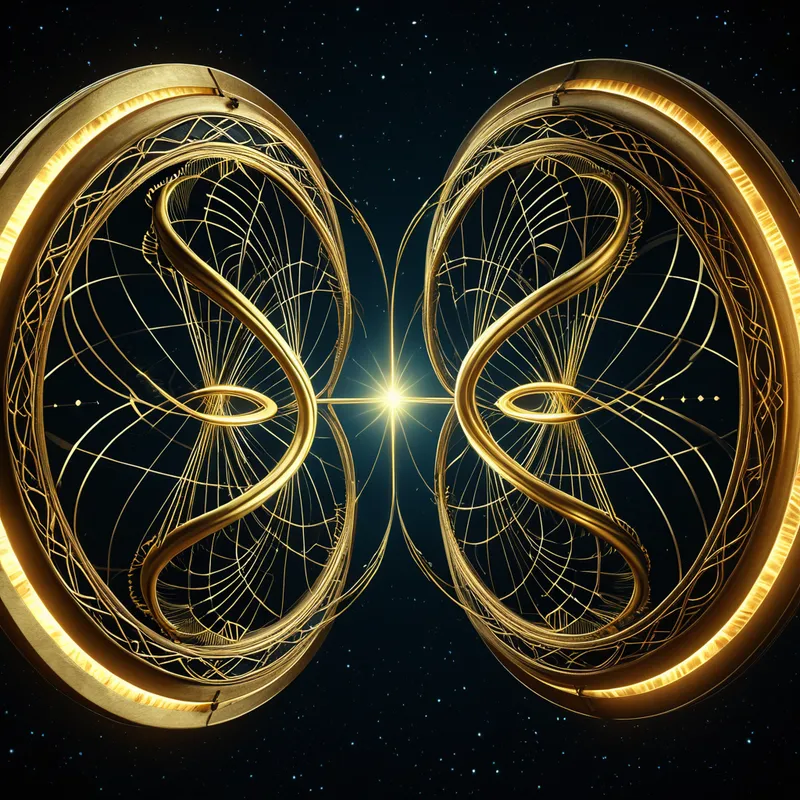
The Damaru is a [universe](/symbols/universe “Symbol: The universe symbolizes vastness, interconnectedness, and the mysteries of existence beyond the individual self.”/) in miniature. Its [hourglass](/symbols/hourglass “Symbol: The hourglass symbolizes the passage of time and the inevitability of change, urging one to consider the value of each moment and the choices made within that time frame.”/) shape symbolizes the inseparable union of the masculine and feminine principles ([Purusha](/myths/purusha “Myth from Hindu culture.”/) and Prakriti), the upward and downward pointing triangles representing the continuous flow of [energy](/symbols/energy “Symbol: Energy symbolizes vitality, motivation, and the drive that fuels actions and ambitions.”/) between the unmanifest and the manifest. The two drumheads signify the fundamental dualities of existence—creation and destruction, sound and silence, order and [chaos](/symbols/chaos “Symbol: In Arts & Music, chaos represents raw creative potential, uncontrolled expression, and the breakdown of order to forge new artistic forms.”/)—held in [tension](/symbols/tension “Symbol: A state of mental or emotional strain, often manifesting physically as tightness, pressure, or unease, signaling unresolved conflict or anticipation.”/) by the central [axis](/symbols/axis “Symbol: A central line or principle around which things revolve, representing stability, orientation, and the fundamental structure of reality or consciousness.”/), the [spine](/symbols/spine “Symbol: The spine symbolizes strength, support, and the foundational structure of one’s life and identity.”/) of [consciousness](/symbols/consciousness “Symbol: Consciousness represents the state of awareness and perception, encompassing thoughts, feelings, and experiences.”/).
The first word was not spoken, but struck. It was a percussion that cracked the egg of potential, from which all language and law hatched.
Psychologically, the Damaru represents the [moment](/symbols/moment “Symbol: The symbol of a ‘moment’ embodies the significance of transient experiences that encapsulate emotional depth or pivotal transformations in life.”/) of [insight](/symbols/insight “Symbol: A sudden, deep understanding of a complex situation or truth, often arriving unexpectedly and illuminating hidden connections.”/), the “aha!” that structures chaos. It is the archetypal [pattern](/symbols/pattern “Symbol: A ‘Pattern’ in dreams often signifies the underlying structure of experiences and thoughts, representing both order and the repetitiveness of life’s situations.”/) emerging from the formless waters of the unconscious. The [rhythm](/symbols/rhythm “Symbol: A fundamental pattern of movement or sound in time, representing life’s cycles, emotional flow, and universal order.”/) it beats is the rhythm of thought itself—the pulsating, binary code of [differentiation](/symbols/differentiation “Symbol: The process of distinguishing or separating parts of the self, emotions, or identity from a whole, often marking a developmental or psychological milestone.”/) that allows us to [parse](/symbols/parse “Symbol: In dreams, ‘parse’ symbolizes analyzing, breaking down, or interpreting complex information, structures, or emotions to find meaning and understanding.”/) [reality](/symbols/reality “Symbol: Reality signifies the state of existence and perception, often reflecting one’s understanding of truth and life experiences.”/) into knowable parts. Shiva, as the wielder, is the transcendent Self that can observe and initiate this process without being identified with any single beat or [syllable](/symbols/syllable “Symbol: A basic unit of sound in language, representing communication, rhythm, and the building blocks of expression.”/). He is consciousness itself, and the drum is its first creative act.
The Dreamer’s Resonance
To dream of a drumbeat in a vast silence, or to find a small, potent object like an hourglass or a rattle, often signals a profound internal process. Somaticly, it may correlate with a sudden shift in heartbeat or a pulsing sensation in the head or spine—the body resonating with a new, internal rhythm.
Psychologically, this dream pattern emerges when the [psyche](/myths/psyche “Myth from Greek culture.”/) is transitioning from a state of undifferentiated confusion, depression, or creative block (the Pralaya) towards a new structure. The dreamer is experiencing the birth pangs of a new understanding, a new way of organizing their life or identity. The drum is the call to order. It signifies the unconscious beginning to articulate itself, to form the “syllables” of a new narrative or a solution to a prolonged struggle. It is the sound of the psyche preparing to dance, to move from inertia into a new, coherent expression.
Alchemical Translation
The myth of Shiva’s Damaru models the individuation process as an act of sacred percussion. The modern individual often finds themselves in their own personal Pralaya—a stagnant career, a dissolved relationship, a fog of meaninglessness. This is the necessary, if painful, dissolution phase.
The alchemical work begins not with frantic action, but with finding the inner Shiva, the still, observant center within the void. From that centered silence, one must “take up the drum”: identify the first, small, rhythmic action that can break the spell of inertia. This could be a daily writing practice, a commitment to study, a simple creative act. This initial beat is the [prima materia](/myths/prima-materia “Myth from Alchemical culture.”/), the first differentiation.
Individuation is not a silent meditation, but a rhythmic dance. You must become the drummer of your own becoming, striking the tension between who you are and who you are becoming until a new language of the Self is born.
Each consistent action is another beat of the Damaru. From this rhythm, structure emerges—new habits, new insights, new “syllables” of self-knowledge that form the grammatical rules of a transformed life. The dual drumheads remind us that this creation necessarily involves destruction—letting go of old patterns, outdated self-concepts. The goal is not to become a different person, but to become the conscious dancer who orchestrates the rhythm, integrating both the sound and the silence, the form and the formless, into a coherent, dynamic whole. You are not the universe being created; you are the consciousness from which the creative beat originates.
Associated Symbols
Explore related symbols from the CaleaDream lexicon: